Airdrop

An Airdrop is a distribution of free tokens to a community, typically used as a marketing tool or a reward for early protocol adopters and testers. In 2026, the "points-to-airdrop" model has matured into merit-based incentive programs that utilize Sybil-resistance and Proof-of-Humanity to filter out bots. Airdrops remain a primary method for decentralized governance (DAO) bootstrapping. Follow this tag for the latest on retroactive rewards, eligibility criteria, and how to participate in the most anticipated token distributions in the ecosystem.

5369 Articles
Created: 2026/02/02 18:52
Updated: 2026/02/02 18:52
Which Best Altcoin To Buy Now Will Deliver 285% ROI in the Next Bull Run? Tapzi, HBAR, CRO Showcase Promising Growth

Which Best Altcoin To Buy Now Will Deliver 285% ROI in the Next Bull Run? Tapzi, HBAR, CRO Showcase Promising Growth

   When discussing which altcoin has the potential to 100x in the next bull run, three tokens stand out: Hedera (HBAR), Cronos (CRO), and the emerging project Tapzi. Both HBAR and CRO have proven themselves with solid ecosystems, Hedera excelling in enterprise-level blockchain adoption and Cronos strengthening its foothold in exchange-driven utilities.     These established projects are expected to generate steady growth, but investors seeking outsized returns often look beyond legacy names to rising innovators. This is where Tapzi takes center stage. Built around skill-based gaming and real-world crypto utility, Tapzi is rapidly attracting attention for its unique model and limited token supply.     Analysts note that its early-stage positioning, combined with growing demand for blockchain gaming, makes it one of the most promising assets heading into the next market cycle. While HBAR and CRO offer stability, Tapzi’s potential for exponential adoption positions it as the altcoin most likely to achieve 100x gains when the bull market accelerates. Let’s discuss more about the best altcoin to buy now!    Tapzi’s Vision: Redefining Web3 Gaming Through Skill and Fair Play – Best Altcoin To Buy Now    While the best altcoins to buy now, like HBAR and CRO, are known for their strong ecosystems, Tapzi has carved a unique identity by becoming the world’s first Web3 gaming platform where skill decides the winner.     Unlike speculative GameFi models, Tapzi prioritizes real-time, skill-based Player-vs-Player (PvP) competition, offering a fairer and more engaging alternative for players. Its mission is clear: to eliminate luck-driven mechanics, token inflation, and feature bloat, replacing them with a transparent, sustainable, and skill-focused system.        Click Here – The $TAPZI Presale Won’t Last Forever!    The project’s roadmap is designed with scalability in mind. Beginning with simple but competitive classics such as Chess, Checkers, Rock-Paper-Scissors, and Tic Tac Toe, Tapzi ensures that accessibility is never compromised.     The platform intends to expand into larger tournaments, mobile integrations, and even a developer ecosystem where indie creators can launch new games within Tapzi’s infrastructure. This phased approach makes the project distinct from most GameFi competitors, which often rush into overcomplicated ecosystems without a working product.    What sets Tapzi apart is its commitment to sustainability. Prize pools are funded directly by players who stake TAPZI tokens to enter matches, with winners claiming the pot. This removes reliance on inflationary emissions or treasury drains, ensuring that the token economy remains stable in the long run.     At a time when many Web3 projects struggle with inflated tokenomics, Tapzi positions itself as a platform that values fairness, stability, and transparency, making it an attractive top altcoin to invest in for both gamers and investors alike.    Token Utility and Economic Model: Why TAPZI Stands Out?    In the crowded altcoin market, the utility of a token often determines whether it can achieve long-term success or fade into obscurity. TAPZI has carefully crafted a utility-first model that integrates directly into the gaming experience. Players must stake tokens to compete in PvP matches, with prize pools distributed fairly between winners and the ecosystem.     Beyond gaming, TAPZI tokens will serve multiple purposes, including access to exclusive tournaments, the purchase of cosmetic NFTs, and developer incentives for integrating new games.    The project’s tokenomics are another major advantage. With a fixed supply of 5 billion TAPZI tokens distributed strategically: 20% to presale, 20% to liquidity, 10% each to the team, treasury, development, and marketing, alongside airdrops and rewards, the system minimizes the risks of uncontrolled inflation.         Vesting schedules and smart contract audits further ensure long-term trust and transparency, key features for investors concerned about sustainability. Additionally, Tapzi introduces smooth onboarding mechanisms rarely seen in Web3 gaming.    Gasless gameplay, web and mobile accessibility without downloads, and even free-to-play options eliminate the traditional friction that deters casual gamers from entering blockchain ecosystems. This opens the door to a global audience, from professional Web3 investors in the U.S. or Singapore to mobile-first gamers in India, Brazil, and the Philippines.    By combining practical utility, fair distribution, and accessibility, TAPZI offers an ecosystem where token demand is directly tied to player engagement. This creates a self-sustaining growth cycle: more players mean more staking, larger prize pools, and higher token value; an equation that could drive the exponential growth analysts associate with 100x opportunities in the next bull run.    Market Timing and Investor Potential: Why Tapzi Could 100x    When comparing Tapzi to established best altcoins to buy now, like HBAR and CRO, one critical difference emerges: timing. HBAR and CRO already have entrenched ecosystems, which give them stability but also limit their upside.     Tapzi, on the other hand, is entering the market at a time when Web3 gaming is forecasted to grow from $25 billion in 2024 to over $124 billion by 2032, representing a massive expansion opportunity. By targeting both casual gamers and competitive players through accessible and fair systems, Tapzi positions itself to capture a significant share of this market.        The current token price of $0.0035, with the next presale phase set at $0.0045, reflects its early-stage positioning. For investors, this provides a rare chance to enter a project before major exchange listings and global marketing campaigns begin.     Considering its deflationary tokenomics, skill-driven gameplay, and large addressable market, Tapzi offers a stronger upside potential compared to CRO’s exchange-focused ecosystem or HBAR’s enterprise partnerships.     Another compelling factor is Tapzi’s global adoption strategy. By combining multilingual support, guild partnerships, and cross-chain deployments to networks like Ethereum and Polygon, Tapzi ensures that it won’t be limited to a niche user base.     Instead, it’s being built as a global platform with the capacity to onboard millions of users, backed by transparent audits and anti-bot systems that foster trust.    For investors seeking the best altcoin to invest in today, which is capable of 100x returns, Tapzi offers the right mix of early entry, clear demand drivers, and market timing.  With the global gaming industry projected to surpass $400 billion by 2028 and Web3 platforms still in their infancy, Tapzi stands out as the most promising candidate among upcoming altcoins. It not only fixes the flaws of GameFi but also creates a scalable, sustainable ecosystem where skill, fairness, and real-world value converge.    Hedera (HBAR): Enterprise-Grade Blockchain with Proven Utility    Hedera Hashgraph, known by its native token HBAR, has consistently stood out as one of the most enterprise-friendly blockchain platforms. Unlike traditional blockchains, Hedera uses a hashgraph consensus mechanism, offering higher throughput, lower fees, and strong security.     This technical edge has helped it secure partnerships with major corporations and government entities, making it a trusted option for applications like supply chain, payments, and digital identity.        For investors, HBAR’s strength lies in its real-world adoption and network stability. With a growing roster of enterprise clients and a governance model that includes industry giants like Google, IBM, and LG, Hedera provides reassurance of long-term reliability.     While HBAR may not deliver the explosive 100x growth that newer projects promise, it represents a solid investment for those seeking exposure to blockchain technology with a lower risk profile.     Its upside in the next bull run will likely come from expanding enterprise adoption and continued integration into global business systems.    Cronos (CRO): Exchange-Backed Ecosystem with Expanding Reach    Cronos is the native token of the Crypto.com ecosystem, one of the world’s most popular cryptocurrency exchanges. Built on the Cosmos SDK, Cronos is designed to support decentralized finance (DeFi), NFTs, and other applications while benefiting from Crypto.com’s massive user base.     Its key utility comes from powering transactions, staking, and rewards within the Crypto.com platform, making it deeply integrated into a rapidly growing financial ecosystem.    One of CRO’s strengths is its brand visibility. With high-profile marketing campaigns, including sports sponsorships and mainstream advertising, Crypto.com has positioned itself as a household name in the digital asset space.     CRO’s growth potential stems from this brand reach, combined with the expanding DeFi and NFT projects being built on its blockchain.     However, as a token heavily tied to an exchange, CRO’s performance can be closely linked to Crypto.com’s overall market success. This makes it a relatively stable, yet slightly limited, growth option compared to more innovative altcoins.        Conclusion On The Best Altcoin To Buy Now    Both HBAR and CRO bring proven utility and established ecosystems, making them valuable altcoins for steady growth. However, for investors looking at the next 100x opportunity, Tapzi clearly takes the lead. Its skill-based gaming model, transparent tokenomics, and global adoption strategy position it for explosive demand in a sector projected to grow fivefold this decade.    While HBAR offers enterprise security and CRO provides exchange-driven growth, Tapzi combines innovation with timing, launching at the perfect moment in Web3 gaming’s expansion. With a current presale price still under a cent, Tapzi offers early investors a rare chance to capture outsized returns while supporting a project designed for long-term sustainability.

Author: Coinstats
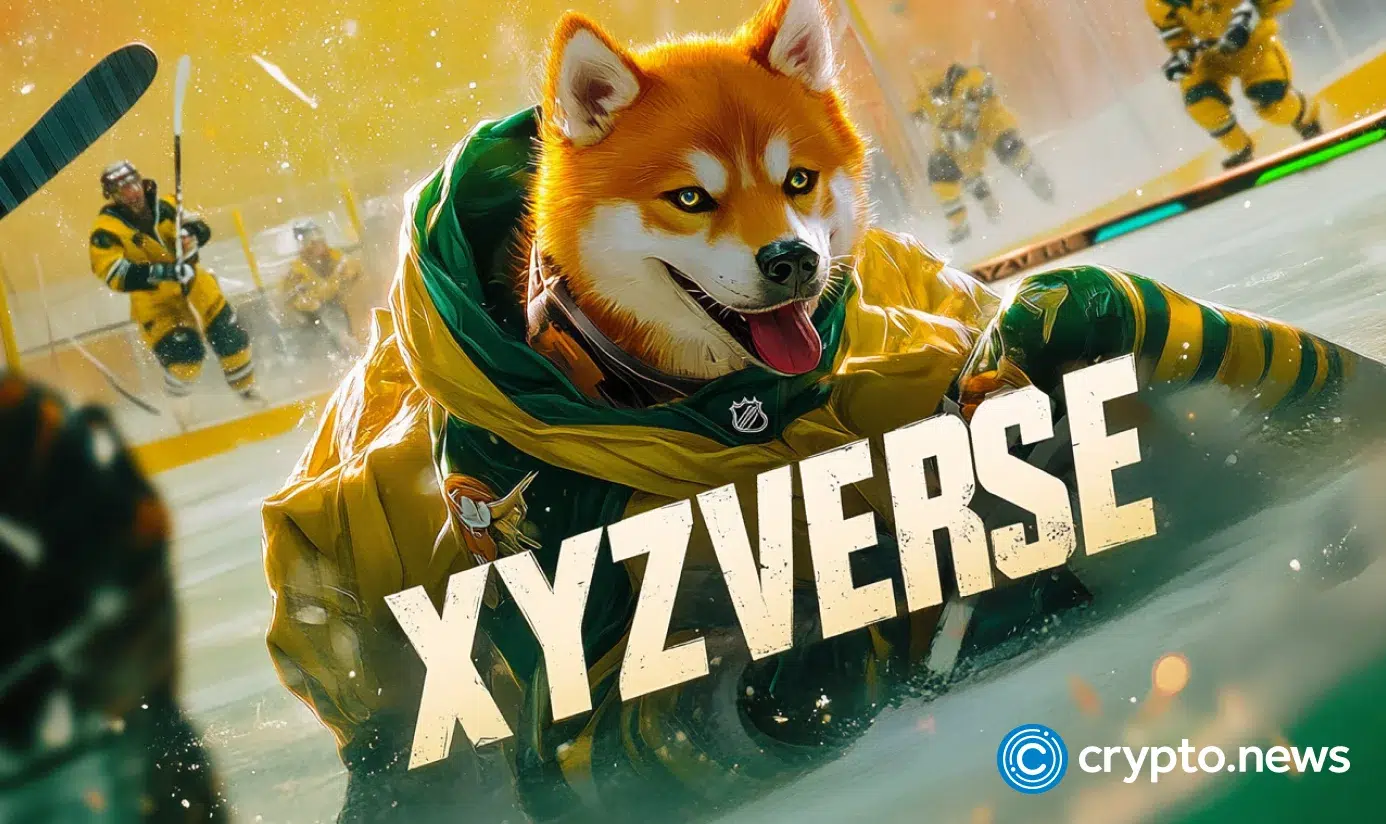
XYZVerse presale fuses memes and sports

XYZVerse presale fuses memes and sports

Investors seek substance over hype, fueling demand for real-world crypto projects like XYZVerse. The landscape of crypto presales has undergone a significant shift in recent years. Previously characterized by launches driven solely by hype, the space is now prioritizing transparency…

Author: Crypto.news
When Ethereum Forks, What Happens to ETH/USD CFDs?

When Ethereum Forks, What Happens to ETH/USD CFDs?

Ethereum forks reshape CFD trading differently than spot wallets. Brokers’ policies, margins, and liquidity shifts define risks and rewards around splits.

Author: Blockchainreporter
NFT Trading Volume And Sales Climb Again

NFT Trading Volume And Sales Climb Again

The post NFT Trading Volume And Sales Climb Again appeared on BitcoinEthereumNews.com. The non-fungible token (NFT) market has just closed its two strongest months since February as adoption and renewed interest have driven trading volumes to its highest levels this year. NFT trading volumes were up 9%, but sales counts dipped 4%, showing that while “fewer assets traded hands, collectors are paying more per sale,” according to a report published by blockchain analytics platform DappRadar on Thursday. CoinGecko shows that trading volumes for NFTs spiked in the last 24 hours, rising more than 25% to reach a high of $7.9 million. Resurgence driven by adoption A key driver of the uptick in the NFT market comes from adoption, according to DappRadar analyst Sara Gherghelas. She pointed to cases such as the nightclub Hï in Ibiza, an island near Spain, which opened the first permanent NFT art gallery inside a club, showcasing works from NFT artists like Beeple and Mad Dog Jones. Another driver is the Coinbase layer-2 network Base, which climbed to become the third-largest chain by trading volume, sparked by low minting costs and airdrop speculation. Source: DappRadar However, Gherghelas said Ethereum “remains the powerhouse,” commanding 61% dominance in the NFT industry. In August, developers also introduced trustless agents.” “This could allow AI systems and DApps to safely recognize and interact with one another using NFT-based IDs and reputation layers,” Gherghelas added. In July, American rapper Snoop Dogg sold out a collection of almost 1,000 NFTs on Telegram in 30 minutes, which also sparked discussions about a possible market resurgence. Investors, degens are trading NFTs again NFTs saw $578 million in trading volumes and 5.5 million sales in August, up slightly from July, which saw $530 million in trading and 5.2 million sales, according to DappRadar. January was the biggest month for 2025 so far in trading volumes, with $997 million,…

Author: BitcoinEthereumNews
Best Crypto to Buy Now Before Market Moves Higher – Next 10X Potential Coins

Best Crypto to Buy Now Before Market Moves Higher – Next 10X Potential Coins

Altcoin momentum is starting to heat up, and with the altcoin season index climbing, traders are keeping a close eye on what could be the next explosive run. While not every project will go parabolic, market sentiment is holding steady, and overall conditions suggest an exciting window for high-potential plays. Some of the best cryptos […]

Author: The Cryptonomist
The Crypto Transparency Revolution Nobody Asked For

The Crypto Transparency Revolution Nobody Asked For

The OECD’s Crypto-Asset Reporting Framework (CARF) establishes global standards for monitoring, reporting, and exchanging information on crypto transactions. Designed to combat tax evasion, CARF mandates reporting from exchanges, intermediaries, and service providers on activities involving NFTs, crypto-fiat trades, and wallet transfers. While the framework expands definitions beyond FATF standards and promotes international cooperation, challenges remain around decentralized platforms, reliable identification of wallet owners, and enforcement in cross-border contexts.

Author: Hackernoon
Why the World Needs a Unified Plan for Crypto Tax and Regulation

Why the World Needs a Unified Plan for Crypto Tax and Regulation

Crypto’s borderless nature makes it a challenge for tax administrations worldwide, enabling potential tax evasion and regulatory arbitrage. International organizations—including the IMF, UNCTAD, FATF, OECD, and G20—are calling for coordinated global policies to close loopholes, improve compliance, and enhance transparency. The FATF Travel Rule, in particular, requires VASPs to collect and share detailed sender and recipient data, but implementation faces hurdles like interoperability, data privacy, and unhosted wallet transactions. Despite these challenges, efforts continue to build a unified global framework for regulating virtual assets while balancing financial integrity with innovation.

Author: Hackernoon
3 Coins to Buy as Cardano Founder Hints at XRP Partnership After Midnight Airdrop

3 Coins to Buy as Cardano Founder Hints at XRP Partnership After Midnight Airdrop

The post 3 Coins to Buy as Cardano Founder Hints at XRP Partnership After Midnight Airdrop appeared on BitcoinEthereumNews.com. Crypto News Cryptocurrency lives off speculation, and recent XRP partnership developments that Cardano founder teased out after the Midnight airdrop have sparked a resurgence in investor interest in alternative assets. Among the projects that can be considered beneficiaries of this new interest in the market, one can note Little Pepe (LILPEPE), Tron (TRX), and Toncoin (TON). Both have different value propositions, but initial indicators show that one recent entry may live in the memory of meme investors and blockchain enthusiasts. Little Pepe (LILPEPE): The Meme Layer 2 Evolution Little Pepe (LILPEPE) is positioning itself as more than just another meme coin. Currently in Stage 12 of its presale at $0.0021, the project has already raised $23.5 million of a $25.47 million target, selling over 14.8 billion tokens. With a planned listing price of $0.003, analysts suggest that early backers could benefit from strong presale momentum. Little Pepe is, in its essence, a next-generation Layer 2 blockchain specialized in memes. In contrast to conventional meme coins, whose growth relies on the sentiment of the community, LILPEPE combines meme culture with high-performance capabilities, delivering ultra-low transaction and finality fees, high speed, and excellent security through this unique combination. Its roadmap, separated as Pregnancy, Birth, and Growth, entails a community approach toward exchange listings, ecosystem growth, and eventual market awareness. The tokenomics are structured to reinforce stability and reward holders: 10% Liquidity to secure exchange trading, 26.5% Presale allocation for early believers, 30% Chain Reserves for ecosystem strength, 13.5% Staking & Rewards for community incentives, 10% Marketing, 10% DEX allocation, and 0% tax on transactions. What makes LILPEPE unique is its world’s only meme-focused Layer 2 chain, equipped with a Memes Launchpad and sniper-bot resistance to protect fair trading. Backed by anonymous experts with a proven track record of supporting top meme coins,…

Author: BitcoinEthereumNews
PEPE GAMES launches the first batch of MEME token staking and lock-up products, including $Redbit, $JOKER and $BOSS

PEPE GAMES launches the first batch of MEME token staking and lock-up products, including $Redbit, $JOKER and $BOSS

PANews reported on September 5th that PEPE GAMES, the Solana ecosystem's MEME-themed game aggregation platform, announced the launch of its first batch of token staking and lock-up products, starting September 3, 2025. Strategic partnerships include $Redbit, $JOKER, and $BOSS. According to the official introduction, users holding relevant MEME tokens can stake them on the official website to earn Weighted Points (WP). The platform will distribute high-value airdrops based on WP rankings. Users can also actively consume WP to redeem official token incentives. Currently, the total locked-up amount of these first batches of staking and lock-up products has exceeded 100 million tokens. PEPE GAMES stated that with the launch of its staking and lock-up products, its unique "customized games + token burn + staking and lock-up" combined empowerment model has officially formed a closed loop. With the launch of more customized games and staking products, PEPE GAMES will continue to accelerate the construction of a closed ecosystem that deeply empowers MEME tokens, bringing more application scenarios and growth opportunities to global players and investors.

Author: PANews
Who Pays the Taxes in a DAO?

Who Pays the Taxes in a DAO?

Decentralized Autonomous Organizations (DAOs) operate without traditional management structures, but their legal recognition remains complex. Unregistered DAOs, as seen in the Ooki DAO case, risk being treated as unincorporated associations or general partnerships—exposing members to unlimited liability. Registered DAOs may gain benefits like limited liability through LLC or foundation structures, yet still face hurdles in tax compliance, cross-border reporting, and identifying pseudonymous members. Jurisdictions worldwide—from Wyoming to Switzerland—are experimenting with frameworks, but uncertainty persists around liability, taxation, and enforcement.

Author: Hackernoon