CEX

CEXs are platforms managed by centralized organizations that facilitate the trading of cryptocurrencies, offering high liquidity and user-friendly fiat on-ramps. Leaders like Binance, OKX, and Coinbase serve as the primary gateways for institutional and retail entry. In 2026, the industry focus is on Proof of Reserves (PoR), enhanced regulatory compliance, and hybrid models that offer self-custody options. This tag provides updates on exchange security, listings, and global market trends.

4251 Articles
Created: 2026/02/02 18:52
Updated: 2026/02/02 18:52

AI Forecast: Blazpay Named Best Crypto Presales to Buy Now While Bitcoin Awaits a Breakout

AI Forecast: Blazpay Named Best Crypto Presales to Buy Now While Bitcoin Awaits a Breakout

The crypto market is turning into a battlefield where early-stage winners are being crowned faster than ever. While Bitcoin analysts debate whether a $150K breakout is approaching, Blazpay is quietly doing what big caps can’t: offering a low entry point, an accessible presale, and explosive upside potential that only early adopters get to experience. Bitcoin […] The post AI Forecast: Blazpay Named Best Crypto Presales to Buy Now While Bitcoin Awaits a Breakout appeared first on TechBullion.

Author: Techbullion
Crucial Update: OKX to Delist Spot Trading for 5 Major Altcoins – What You Must Know

Crucial Update: OKX to Delist Spot Trading for 5 Major Altcoins – What You Must Know

BitcoinWorld Crucial Update: OKX to Delist Spot Trading for 5 Major Altcoins – What You Must Know In a significant move for crypto traders, OKX has announced it will delist spot trading for five digital assets. This decision impacts the trading pairs for ACA, CLV, FOXY, PSTAKE, and RACA on one of the world’s leading exchanges. If you hold any of these tokens, understanding the timeline and your options is essential to […] This post Crucial Update: OKX to Delist Spot Trading for 5 Major Altcoins – What You Must Know first appeared on BitcoinWorld.

Author: bitcoinworld
Crypto Trading Volumes Hit November Low, Hinting at Unpredictable Market Swings

Crypto Trading Volumes Hit November Low, Hinting at Unpredictable Market Swings

The post Crypto Trading Volumes Hit November Low, Hinting at Unpredictable Market Swings appeared on BitcoinEthereumNews.com. Crypto trading volumes in November 2025 dropped to $1.6 trillion, marking the lowest level since June and signaling reduced market activity across major exchanges like Binance and Coinbase. This decline reflects fading trader confidence amid ongoing price volatility. Crypto trading volumes hit a yearly low in November 2025, falling 20% from October to $1.6 trillion. Both centralized exchanges (CEXs) and decentralized exchanges (DEXs) experienced significant drops in activity. DEX volumes totaled around $399 billion over 30 days, down 22% week-over-week, according to DeFiLlama data. Crypto trading volumes plunge in November 2025: Discover why activity hit $1.6 trillion low and what it means for market momentum. Stay informed on key trends—read more now! What Caused the Decline in Crypto Trading Volumes in November 2025? Crypto trading volumes in November 2025 plummeted to approximately $1.6 trillion, the lowest since June, as traders pulled back from the market following months of erratic price movements. This drop was widespread, affecting major platforms and indicating a broader slowdown in participation. Data from The Block highlights a consistent downward trend since the late-2024 surge, with no significant recovery in sight. The reduction stems from heightened uncertainty in the cryptocurrency sector, where investors await clearer regulatory signals and macroeconomic improvements. Centralized exchanges, which dominate trading, saw uniform declines, underscoring a lack of fresh catalysts to drive engagement. How Do DEX Volumes Compare to CEXs in This Downturn? Decentralized exchanges (DEXs) mirrored the struggles of centralized ones, with daily volumes hovering at $8.1 billion and monthly totals reaching $399 billion—a 22% decrease from the prior week, per DeFiLlama. This is a stark contrast to earlier 2025 peaks, where DEX activity routinely exceeded $30 billion daily in January and February. Supporting data shows that even brief upticks, like in October, failed to sustain momentum, leaving volumes in the $5-15…

Author: BitcoinEthereumNews
Crypto News Today [Live] Updates On December 2,2025 : Federal Reserve News, Bitcoin Price Today, Ethereum Price And XRP Price

Crypto News Today [Live] Updates On December 2,2025 : Federal Reserve News, Bitcoin Price Today, Ethereum Price And XRP Price

The post Crypto News Today [Live] Updates On December 2,2025 : Federal Reserve News, Bitcoin Price Today, Ethereum Price And XRP Price appeared first on Coinpedia Fintech News December 2, 2025 07:43:44 UTC Bitcoin News Today: Grayscale Says BTC Could Break Tradition and Hit New Highs in 2026 Grayscale Research believes Bitcoin may set fresh all-time highs in 2026, challenging the usual four-year cycle pattern. The firm notes that this cycle lacks the typical retail-driven parabolic surge, with institutional inflows taking the lead …

Author: CoinPedia
LatAm’s Largest Crypto Exchange to Help Boost Crypto in 2026 with Multiplatform Perps Aggregator and Token Launch

LatAm’s Largest Crypto Exchange to Help Boost Crypto in 2026 with Multiplatform Perps Aggregator and Token Launch

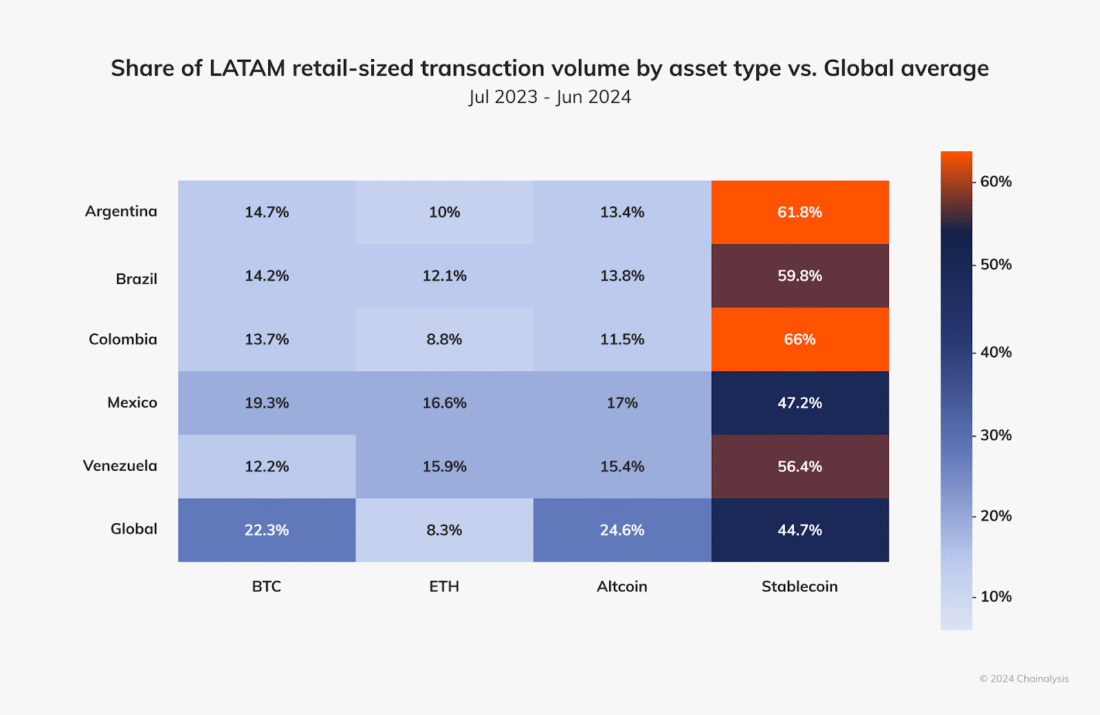
Bitso has been an active player in the mainstream adoption of crypto assets in Latin America (LATAM). The veteran cryptocurrency exchange founded in 2014 reports that its customers across LATAM  increased by 12% to 9 million in 2024 compared to the prior year. According to Bitso Business, the blockchain technology and crypto assets will play […] The post LatAm’s Largest Crypto Exchange to Help Boost Crypto in 2026 with Multiplatform Perps Aggregator and Token Launch appeared first on Live Bitcoin News.

Author: LiveBitcoinNews
Who's making a fortune in a bear market? Unveiling the money-printing logic of CEXs, stablecoins, and KOLs.

Who's making a fortune in a bear market? Unveiling the money-printing logic of CEXs, stablecoins, and KOLs.

Author: Viee, a core contributor to Biteye Edited by: Denise, a core contributor to Biteye After the bubble bursts, what will be the bottom line for the survival of crypto projects? In an era where anything could be told a story and anything could be overvalued, cash flow didn't seem essential. But things are different now. Venture capitalists are withdrawing, and liquidity is tightening. In this market environment, the ability to make money and generate positive cash flow has become the first sieve to test the fundamentals of a project. In contrast, other projects rely on stable income to weather economic cycles. According to DeFiLlama data, in October 2025, the top three highest-grossing crypto projects generated $688 million (Tether), $237 million (Circle), and $102 million (Hyperliquid) respectively in a single month. In this article, we'll discuss projects with real cash flow. They mostly revolve around two things: transactions and attention. These two fundamental sources of value in the business world are no exception in the cryptocurrency arena. 01. Centralized Exchanges: The Most Stable Revenue Model In the cryptocurrency world, it's no secret that "exchanges are the most profitable." Exchanges primarily generate revenue from transaction fees and listing fees. Take Binance, for example; its daily spot and futures trading volume has consistently accounted for 30-40% of the entire market. Even in the sluggish market of 2022, its annual revenue reached $12 billion, and during this bull market cycle, revenue will only be higher. (Data from CryptoQuant) In short: as long as there are transactions, the exchange can generate revenue. Another example is Coinbase, which, as a publicly traded company, has clearer data disclosure. In the third quarter of 2025, Coinbase's revenue was $1.9 billion, with a net profit of $433 million. Transaction revenue was the main source, contributing more than half, with the remaining revenue coming from subscriptions and services. Other leading exchanges such as Kraken and OKX are also steadily making money; Kraken reportedly had revenue of approximately $1.5 billion in 2024. The biggest advantage of these centralized exchanges (CEXs) is that trading naturally generates revenue. Compared to many projects that are still struggling to make their business models viable, they are already genuinely charging for services. In other words, in this phase where storytelling is becoming increasingly difficult and hot money is becoming increasingly scarce, CEXs are among the few players who can survive on their own without needing to raise funds. 02. On-chain projects: PerpDex, stablecoins, public chains According to DefiLlama data as of November 27, 2025, the top ten on-chain protocols with the highest revenue over the past 30 days are shown in the figure. This reveals that Tether and Circle firmly hold the top positions. Leveraging the interest rate spread between US Treasury bonds and USDT and USDC, these two stablecoin issuers earned nearly $1 billion in a single month. Hyperliquid follows closely behind, firmly holding the title of "most profitable on-chain derivatives protocol." Furthermore, the rapid rise of platforms like Pumpfun further validates the old logic that "selling coins is worse than trading them, and selling tools is worse than selling shovels" still holds true in the crypto industry. It is worth noting that some dark horse projects, such as Axiom Pro and Lighter protocols, have already shown positive cash flow paths, even though their overall revenue is not large. 2.1 PerpDex: Real-world returns from on-chain protocols This year, the best performing PerpDex is Hyperliquid. Hyperliquid is a decentralized perpetual contract platform with its own independent blockchain and built-in matching mechanism. Its explosive growth was quite sudden; in August 2025 alone, it completed $383 billion in transactions and generated $106 million in revenue. Furthermore, the project uses 32% of its revenue to buy back and burn platform tokens. According to a report yesterday by @wublockchain12, the Hyperliquid team unlocked 1.75 million HYPE tokens (out of 60.4 million), without external funding or selling pressure, using protocol revenue to buy back tokens. For an on-chain project, this is approaching the revenue efficiency of a centralized exchange. More importantly, Hyperliquid actually earns money and then gives it back to the token economy system, establishing a direct link between protocol revenue and token value. Let's talk about Uniswap. In recent years, Uniswap has been criticized for taking tokens for free, for example, charging 0.3% on each transaction but giving it all to LPs, and UNI holders receiving no income at all. Until November 2025, Uniswap announced plans to implement a protocol fee-sharing mechanism and use a portion of its historical revenue to buy back and burn UNI tokens. Calculations suggest that if this mechanism had been implemented earlier, the funds available for burning in the first ten months of this year alone would have reached $150 million. Upon the announcement, UNI surged 40% that day. Although Uniswap's market share has fallen from a peak of 60% to 15%, this proposal could still reshape UNI's fundamentals. However, after the proposal was released, @EmberCN detected that an investment institution (possibly a Variant Fund) transferred millions of $UNI ($27.08 million) to Coinbase Prime, suggesting a possible pump-and-dump scheme. Overall, the old DEX model that relied on airdrops to hype up prices is becoming increasingly unsustainable. Only projects that truly generate stable revenue and complete their business cycle are likely to retain users. 2.2 Stablecoins and Public Blockchains: Earning Money Passively Through Interest Beyond transaction-related projects, a number of infrastructure projects are also attracting investment. Among these, stablecoin issuers and frequently used public blockchains are the most typical examples. Tether: The Giant That Continues to Print Money Tether, the company behind USDT, has a very simple profit model: whenever someone deposits $1 in exchange for USDT, Tether uses that money to buy low-risk assets such as government bonds and short-term notes to earn interest, which it keeps for itself. As global interest rates rise, Tether's profits also increase. Its net profit reached $13.4 billion in 2024 and is projected to exceed $15 billion in 2025, approaching that of traditional financial giants like Goldman Sachs. @Phyrex_Ni recently posted that despite its rating downgrade, Tether remains a cash cow, earning over $130 billion in collateral from US Treasury bonds. While USDC issuer Circle has a slightly smaller circulating supply and net profit, its total revenue in 2024 still exceeded $1.6 billion, with 99% coming from interest income. It's worth noting that Circle's profit margin isn't as exorbitant as Tether's, partly due to its revenue-sharing partnership with Coinbase. In short, stablecoin issuers are essentially money-printing machines; they don't raise funds through storytelling, but rather by having users willing to deposit their money with them. In a bear market, these savings-oriented projects actually thrive. @BTCdayu also believes stablecoins are a good business, printing money and collecting interest worldwide, and is optimistic that Circle will be the king of passive income in the stablecoin market. Public blockchains: Relying on traffic, not incentives. Looking at the mainnet public blockchain, the most direct way to monetize is through gas fees. The data in the following chart is from Nansen.ai: Looking at total transaction fee revenue across public blockchains over the past year provides a clearer picture of which chains have truly generated practical value. Ethereum's annual revenue was $739 million, remaining its primary source of income, but it declined by 71% year-over-year due to the Dencun upgrade and L2 cache diversion. In contrast, Solana's annual revenue reached $719 million, a 26% increase year-over-year, driven by the popularity of memes and AI agents, resulting in a significant boost in user activity and interaction frequency. Tron's revenue was $628 million, an 18% increase year-over-year. Bitcoin's annual revenue, however, was only $207 million, primarily affected by a decline in inscription trading activity, resulting in a significant overall drop. BNB Chain's annual revenue reached $264 million, a year-on-year increase of 38%, ranking first among mainstream public chains in terms of growth rate. Although its revenue scale is still lower than ETH, SOL, and TRX, the growth in its transaction volume and active addresses indicates that its on-chain use cases are expanding and its user structure is becoming more diversified. BNB Chain as a whole demonstrates strong user retention and genuine demand. This stable revenue growth structure also provides clearer support for the continued evolution of its ecosystem. These public blockchains are like "water sellers"; whoever is panning for gold in the market will always need their water, electricity, and roads. While these infrastructure projects may not have short-term explosive growth potential, their strength lies in their stability and resilience to economic cycles. 03. Businesses surrounding KOLs: Attention can also be monetized If transactions and infrastructure are the overt business models, then the attention economy is the "hidden business" in the crypto world, such as KOLs and agencies. This year, crypto KOLs have become the center of attention and traffic. Influential figures active on platforms like Twitter, Telegram, and YouTube leverage their personal influence to develop diversified revenue streams: from paid promotions and community subscriptions to monetizing courses. Industry rumors suggest that mid-tier and above crypto KOLs can earn up to $10,000 per month through promotions. Meanwhile, audiences are demanding higher-quality content, so KOLs who weather economic cycles are often those who have earned user trust through professionalism, sound judgment, or deep engagement. This has also subtly reshaped the content ecosystem during bear markets, eliminating those who are short-sighted and retaining those who prioritize long-term commitment. Of particular note is the third layer of attention monetization: KOL (Key Opinion Leader) funding rounds. This makes KOLs key participants in the primary market: acquiring project tokens at a discount, undertaking traffic exposure tasks, and exchanging "early-stage leverage through influence"—a model that bypasses venture capital. A whole suite of matchmaking services has emerged around KOLs themselves. Agencies have begun to act as traffic intermediaries, matching projects with suitable KOLs, making the entire process increasingly resemble an advertising placement system. If you are interested in the business models of KOLs and agencies, you can refer to our previous long article, "Unveiling the KOL Round: A Wealth Experiment Driven by Traffic" (https://x.com/BiteyeCN/status/1986748741592711374), to gain a deeper understanding of the true profit structure behind it. In short, the attention economy is essentially a monetization of trust, and trust is even scarcer in a bear market, making the threshold for monetization even higher. 04. Conclusion Projects that have managed to maintain cash flow during the crypto winter largely demonstrate the two cornerstones of "transactions" and "attention". On the one hand, whether centralized or decentralized, trading platforms can generate continuous revenue through transaction fees as long as they have stable user trading activity. This direct business model allows them to remain self-sufficient even when capital exits. On the other hand, KOLs (Key Opinion Leaders) who focus on user attention monetize user value through advertising and services. In the future, we may see more diverse models, but in any case, projects that have accumulated real revenue during periods of poor market conditions will have a greater chance of leading new development. Conversely, some projects that rely solely on storytelling and lack the ability to generate revenue may experience a short-term surge in popularity, but ultimately they may be forgotten.

Author: PANews
Everything can be "contractualized": A revelation from pre-IPO on-chain experiments

Everything can be "contractualized": A revelation from pre-IPO on-chain experiments

How many types of assets are being traded on the blockchain? Most of them are native crypto tokens and stablecoins. This year, however, there has been an increase in high-growth RWAs (Real-World Assets) such as bonds, stocks, and gold. Innovation continues: Recently, leading decentralized exchange Hyperliquid launched a perpetual contract for artificial intelligence unicorn OpenAI. Yes, based on the Hyperliquid HIP-3 infrastructure, the decentralized derivatives platform Ventures has deployed perpetual contracts with SpaceX, OpenAI, and Anthropic. The platform offers 3x leverage, and the open interest cap has been increased from $1 million to $3 million. This token can be seen as a "perpetual contract" of pre-IPO assets. This definition is highly imaginative. In traditional financial markets, pre-IPO equity transactions are strictly regulated and extremely restricted. Combining pre-IPO with perpetual contracts, without involving actual equity delivery, but rather engaging in "contractual valuation games," allows assets that would otherwise lack liquidity to "create something from nothing," thus gaining greater market potential. The positive signs are: after the launch, the trading activity of the contracts has increased slightly, and both the trading volume and price have fluctuated within a certain range, reflecting a certain market demand for Pre-IPO asset trading. However, the early low-liquidity market still faces many challenges: Are oracles stable? Are risk control mechanisms reliable? These are all key prerequisites for its continued development. Regardless, the PerpDEX sector has accelerated significantly this year, and Pre-IPO Tokens have the potential to reshape the on-chain derivatives landscape. Hyperliquid founder Jeff predicts that the perpetual contract market for "any asset" will create a billion-dollar market opportunity as finance becomes fully on-chain, with mobile applications designed for non-crypto users. What are your thoughts on "contractual" Pre-IPO Tokens? Core: The authenticity and credibility of price data As part of the RWA asset range, its feasibility depends on the standardization of the underlying assets. Pre-IPO assets have a reliable price source to some extent. How to continuously, stably, and verifiably provide a price for Pre-IPO assets that is closer to the true valuation requires rigorous observation of the oracle mechanism (a third-party service tool used to obtain, verify external information and transmit it to smart contracts running on the blockchain), which is also the key to the sustainability of the entire track. Policy arbitrage opportunities The regulatory environment remains ambiguous. The US CFTC's "innovation exemption" provides a regulatory sandbox for innovative derivatives; the EU's MiCA primarily focuses on spot trading; and perpetual contracts still have some room for innovation. Hyperliquid provides liquidity to unlisted assets through the "contractual, non-physical delivery" approach offered by HIP-3, which can be seen as providing an on-chain alternative to "restricted transactions". The "innovation" brought about by native encryption The on-chain contract speculative valuation brought about by Pre-IPO Tokens can, to some extent, reflect retail investors' views on the valuation of private companies, thus generating a wider impact. If the market continues to develop, it has the potential to form a "shadow market for restricted trading instruments," a new market brought about by Web3 technological innovation. Competition intensifies on the PerpDEX track Looking at the Perp DEX sector, in order to compete for market share and liquidity, DEXs are constantly exploring new, high-growth trading instruments to attract more users. In the initial data, trading volume of pre-IPO assets such as OpenAI was relatively limited, with the main impact concentrated on innovative experiments. However, if RWA-like perpetual contracts continue to be introduced, it could potentially lead to a redistribution of liquidity between crypto assets and traditional assets. The wave of "contracting everything for perpetual sustainability" 2025 will be a turbulent year. On the one hand, the crypto market is in a period of intense events and is very volatile. On the other hand, RWA is on the rise and RWA + perpetual contracts are also evolving rapidly. This is a trend of "full perpetual contractification" from crypto assets to traditional financial instruments: Prior to this, the public chain Injective had been working hard in the field of tokenized stock perpetual contracts. As of the first half of 2025, through its Helix DEX, it had accumulated a trading volume of more than $1 billion and could provide leverage of up to 25 times. Although the current trading volume of RWA perpetual contracts is relatively limited, it is demonstrating that decentralized infrastructure has the capability to support complex financial products, laying the technical and community foundation for the large-scale on-chaining of traditional assets in the future. This innovation will force traditional financial institutions to seriously consider how to use blockchain technology to reduce transaction costs and improve efficiency, and may ultimately drive the development of RWA tokenization and on-chain derivatives.

Author: PANews
Pi Network Price Prediction Ahead of DEC 190M Scheduled Unlock

Pi Network Price Prediction Ahead of DEC 190M Scheduled Unlock

The post Pi Network Price Prediction Ahead of DEC 190M Scheduled Unlock appeared on BitcoinEthereumNews.com. Today’s sharp market crash pushed major assets lower, and the Pi Network price also moved into the red as fear spread across the market. The liquidity became diluted in a number of pairs and the response was stiffer than normal. In the meantime, the Pi coin price fell by almost 10% and bounced back to a comfortable support level. The downturn put Pi within a delicate zone that currently influences short-term anticipations. Now attention goes to the unlock in December that brings about a supply window that affects the short-term direction of Pi. Pi December Unlock Opens Supply Pressure Window The Pi December unlock adds 190 million new tokens, and this event now sets short-term expectations for the Pi Network price. The unlock is worth around $43 million at the moment, as traders pay attention to the timing. At the moment, there is not much liquidity, and new supply flows through the chart faster than normal. Over time, such an environment makes things more volatile since modest orders cause big swings. Unlock cycles have stayed the same since early 2025, but this timeframe is more important because sentiment has already dropped. 🚨December’s ~190M PI token unlock is not just about supply; it’s a measure of our ecosystem’s maturity. With MiCA compliance securing our EU footing and new gaming utility via CiDi Games, we’re building the demand to meet it. The focus is on long-term value.🗣 #PiNetwork pic.twitter.com/D0cexaf1SM — PiNetwork DEX⚡️阿龙 (@fen_leng) December 1, 2025 Besides the unlock, the Pi team recently announced a partnership with CiDi Games to make Pi more useful in the real world through gaming. CiDi wants to add Pi to its games so that players may spend and use the token in more ways. The developers said that gaming would fit well with Pi’s ecology. This…

Author: BitcoinEthereumNews
Why Ripple’s RLUSD stablecoin thrives on Ethereum over XRPL

Why Ripple’s RLUSD stablecoin thrives on Ethereum over XRPL

The post Why Ripple’s RLUSD stablecoin thrives on Ethereum over XRPL appeared on BitcoinEthereumNews.com. Ripple’s RLUSD stablecoin is rapidly expanding on Ethereum rather than the company’s native XRP Ledger (XRPL). According to CryptoSlate data, RLUSD’s total circulating supply has surged to $1.26 billion within 12 months of its launch. Of this, roughly $1.03 billion, or 82% of the total supply, resides on Ethereum, while the $235 million balance is on XRPL. Graph showing Ripple RLUSD supply on Ethereum and XRPL from November 2024 to November 2025 (Source: DeFiLlama) These numbers show that the market seems to favor the deep liquidity and composability of the Ethereum Virtual Machine over the more compliance-focused architecture of the XRPL. Why RLUSD is growing on Ethereum The primary driver of this disparity is the maturity of the underlying financial stack. On Ethereum, RLUSD entered an environment where dollar liquidity is already entrenched. Data from DeFiLlama confirms that Ethereum continues to lead all chains in total value locked (TVL) and stablecoin supply, providing a turnkey ecosystem for new assets. Screengrab showing Ethereum’s key DeFi metrics on Nov. 29, 2025 (Source: DeFiLlama) So, any new stablecoin that can plug into major DeFi protocols like Aave, Curve, and Uniswap immediately benefits from existing routing engines, collateral frameworks, and risk models. RLUSD’s presence on Aave and Curve confirms this. The USDC/RLUSD pool on Curve now holds approximately $74 million in liquidity, ranking it among the larger stablecoin pools on the platform. For institutional treasuries, market makers, and arbitrage desks, this depth is non-negotiable. It ensures low-slippage execution for trades in the tens of millions, facilitating basis trades and yield-farming strategies that drive modern crypto capital markets. On the other hand, the XRPL is still in the nascent stages of building a DeFi foundation. Its protocol-level automated market maker (AMM) went live only in 2024. So all RLUSD-related pools on the ledger, such as the…

Author: BitcoinEthereumNews
Ethereum quietly becomes the real home of RLUSD — leaving XRPL users stuck in the slow lane

Ethereum quietly becomes the real home of RLUSD — leaving XRPL users stuck in the slow lane

Ripple’s RLUSD stablecoin is rapidly expanding on Ethereum rather than the company’s native XRP Ledger (XRPL). According to CryptoSlate data, RLUSD’s total circulating supply has surged to $1.26 billion within 12 months of its launch. Of this, roughly $1.03 billion, or 82% of the total supply, resides on Ethereum, while the $235 million balance is on […] The post Ethereum quietly becomes the real home of RLUSD — leaving XRPL users stuck in the slow lane appeared first on CryptoSlate.

Author: CryptoSlate