CEX

CEXs are platforms managed by centralized organizations that facilitate the trading of cryptocurrencies, offering high liquidity and user-friendly fiat on-ramps. Leaders like Binance, OKX, and Coinbase serve as the primary gateways for institutional and retail entry. In 2026, the industry focus is on Proof of Reserves (PoR), enhanced regulatory compliance, and hybrid models that offer self-custody options. This tag provides updates on exchange security, listings, and global market trends.

4196 Articles
Created: 2026/02/02 18:52
Updated: 2026/02/02 18:52
DeFiance Capital CEO: It will take time for DeFi to catch up with CeFi in terms of distribution and user base

DeFiance Capital CEO: It will take time for DeFi to catch up with CeFi in terms of distribution and user base

PANews reported on October 12th that DeFiance Capital CEO Arthur Cheong tweeted that DeFi outperforms CeFi in terms of transparency and fairness, the most critical aspects of the market. That said, it will still take some time for DeFi to catch up with CEX in terms of distribution and user base.

Author: PANews
How to empower the most popular L2 network? A look at the BASE token economics proposal

How to empower the most popular L2 network? A look at the BASE token economics proposal

By Achim Struve, Outlier Ventures Compiled by AididiaoJP, Foresight News Since several of our portfolio companies are building on Base, we have a strong interest in the success of this ecosystem. This proposal aims to build community engagement by outlining a token design that challenges traditional L2 models. It solves the fundamental revenue-growth paradox through an adaptive quote currency mechanism. The BASE token represents an opportunity to redesign L2 economics from first principles. BASE Token Discussion: Redesigning L2 Token Economics Layer 2s face a fundamental economic challenge: competitive pressure to keep transaction fees low erodes revenue generation. Base boasts $4.95 billion in TVL, 1 million daily active users, and $5.1 million in monthly transaction fees, primarily due to its native connection to Coinbase, competitively low fees of just $0.02 per transaction, and deep integration with the broader EVM-based ecosystem. source This proposal outlines solutions for designing a possible token for Base. It's not just about staying ahead, it's about establishing leadership. A key recommendation is to reduce reliance on fees as a primary revenue source. Combining a quote currency mechanism implemented with a proven bribery mechanism with adaptive economics creates sustainable value capture for Coinbase, Base, and the BASE token. BASE Token Opportunities Traditional L2 focus on transaction fees ignores the primary value driver of successful cryptoassets. As @mosayeri observed, "The crypto community has long misjudged the value accumulation narrative for L1 assets, assuming that the primary driver is transaction fees." The value of ETH and SOL primarily comes from being locked in AMM pools as the quote currency, not from gas fees. This presents an opportunity for BASE to establish itself as the primary quote currency on whitelisted approved Base Ecosystem DEXs. Rather than competing for dwindling fee revenue, BASE can generate demand through real liquidity demand across trading pairs. Quote currency mechanism Users lock up BASE tokens to receive veBASE (voted escrow BASE), which provides governance rights over the fee distribution algorithm. VeBASE holders channel rewards to an AMM pool that uses BASE as its quote currency, with the distribution ratio automatically adjusted based on network health metrics. Ecosystem growth directly increases demand for locked BASE tokens, as they are tied to liquidity incentives. This system builds on the established quote currency concept of Virtuals, while adding a voting escrow mechanism similar to Aerodrome, but without redistributing liquidity pool fees to voters. A portion of sequencer revenue is used to sustainably generate incentives for voting on the BASE denominated pool. This applies even after the initial launch phase. Furthermore, unlike static allocation models, dynamic fee allocation responds to real-time conditions via fine-tuned machine learning algorithms. These algorithms analyze network utilization, DEX trading volume patterns, and ecosystem growth metrics to determine overall incentive distribution. This mechanism will trigger a Curve Wars-like liquidity competition, with protocols accumulating BASE governance tokens to ensure liquidity incentives. As the Base ecosystem expands, more protocols will demand BASE liquidity, reducing the circulating supply and creating natural demand pressure. This approach also provides opportunities for large-scale token swaps with leading protocols already established on Base, further strengthening decentralized ownership within the ecosystem. Base can use tokens from other ecosystems to build its own BASE quote liquidity pool. Trading fees collected from the protocol's own liquidity can serve as a sustainable, long-term revenue stream. Adaptive economic system Current L2 token designs use fixed distribution schedules and are unable to respond to changing market conditions. BASE introduces a complex adaptive system that goes beyond simple fee adjustments like Ethereum’s EIP-1559. Building on previously published adoption-adjusted attribution principles, BASE implements a dynamic emissions plan that responds to ecosystem demand signals through two strategic allocation pools: Distribution-focused allocation pools (Coinbase Strategic Reserve, Protocol Treasury, Community, and User): receive increased emissions during periods of strong KPI performance to optimize value distribution when adoption is high. Growth and Construction Allocation Pools (Ecosystem Fund and Builders, Validators, and Infrastructure): Receive increased incentives during periods of weak KPI performance to stimulate development and network security when additional support is most needed. The Growth and Construction Allocation Pool includes all quote currency pool incentives, distributed through the Ecosystem Fund to protocols using BASE as their primary trading pair. This directly aligns the adaptive emission system with quote currency value capture. Emissions never reach zero during the vesting period of any allocation pool, and the system adjusts the relative weights between allocation pools based on market conditions and ecosystem health. Machine learning models analyze multiple factors to prevent governance bottlenecks while ensuring optimal stakeholder alignment across market cycles. BASE token distribution framework Examples of BASE token distribution and maximum vesting periods. Actual vesting periods may change depending on the precise adaptive emission parameterization. Key Features: Adaptive Emission System: All allocations use a dynamic schedule, with the allocation-focused allocation pool receiving increased emissions during periods of strong adoption, and the Growth & Build allocation pool receiving increased incentives during periods of weakness. COIN Shareholder Alignment: Coinbase’s 20% Strategic Reserve creates direct value alignment without regulatory complexities. Progressive decentralization: Validator incentives (20%) ensure network security during the launch phase, while community allocation supports sustainable decentralized ownership of BASE tokens. Balanced Development: Equal weight between community rewards and ecosystem development ensures success in both adoption and builder retention. The final distribution requires extensive token engineering analysis, legal review, and community input to achieve economic sustainability, regulatory compliance, and user alignment. Strategic value and impact on Coinbase Tokenizing Base represents a fundamental shift in revenue diversification. While Base currently generates modest sequencer fees (kept low for competitive reasons), tokenization could immediately create over $4 billion in value through strategic reserve holdings. The current model faces limitations. Brian Armstrong mentioned the emphasis on low fees, recognizing that higher fees drive users to competitors offering token incentives, creating a revenue-growth paradox. Tokenization breaks this paradox by shifting incentives from fee extraction to ecosystem acceleration and value accumulation. A 20% strategic reserve aligns Coinbase's interests with the long-term success of Base while removing the pressure to maximize fees. Token emission funds growth without impacting the balance sheet, enabling competitive rewards that match other L2 incentives. The strategic impact goes beyond immediate returns through multiple revenue diversification opportunities. Tokenization enables Coinbase to offer institutional custody services for BASE holdings, generating recurring custody fees while positioning itself as the premier institutional gateway for BASE exposure. The Coinbase One integration reduces customer acquisition costs by offering subscribers BASE rewards, discounts, and platform perks, creating stickier customer relationships and higher lifetime value. Allocation Strategy The distribution strategy should balance Coinbase's customer base with Base ecosystem participants. While @Architect9000 suggested "airdropping only to Coinbase One members" for Sybil protection and customer alignment, a fair distribution needs to include active Base chain users and verified builders from the Discord community. Roles earned on the Base community Discord server can be used to measure user consistency and commitment and are tied to an individual's BASE airdrop allocation. This dual approach ensures CEX user retention and true L2 ecosystem participation. Tokenization positions BASE as institutional-grade collateral bridging TradFi and DeFi. As @YTJiaFF noted, "With COIN backing, the BASE token will serve as a secure bridge between public companies and crypto assets." Institutions can custody their BASE holdings at Coinbase and simultaneously use them as both on-chain collateral in DeFi protocols and off-chain collateral in traditional credit markets. This dual-collateralization capability creates the first crypto token designed specifically for the corporate credit market, enabling traditional financial institutions to access crypto liquidity while maintaining regulatory compliance through established custodial relationships. The path to progressive decentralization The transition follows a three-phase approach, balancing innovation with stability. As @SONAR observes, Base has achieved “decentralization in Phase 1 of 3,” and “once Phase 2 arrives, fees will need to be paid to third-party sequencers,” making tokenization a strategic necessity. Phase 1: Coinbase maintains control of the sequencer while initiating token incentives and community governance for fee allocation. In this controlled environment, the quote currency model is validated through some basic KPI-driven incentive allocation. Phase 2: A hybrid model, with an initial set of decentralized validators requiring BASE staking, with Coinbase reserving three permanent seats to ensure transitional stability. This phase introduces prediction market governance (Futarchy), where veBASE holders stake on the success of the implementation, and market proof-of-stake proposals are fast-tracked for approval. Phase 3: Full decentralization, open validator participation, and complete community control. Coinbase transitions to a regular network participant while maintaining strategic token holdings. Advanced cross-chain MEV coordination becomes operational, and institutional credit markets expand into traditional finance. Market positioning and competitive advantages BASE enters a landscape where existing L2 tokens struggle to capture network value. Despite significant ecosystem growth, ARB, OP, and MATIC continue to underperform ETH, highlighting structural issues in traditional L2 token design. These protocols face selling pressure from token unlocks without matching demand. BASE's quote money model solves these structural problems by creating real utility demand through AMM-quoted liquidity deposits. This generates organic buying pressure that scales as the ecosystem grows, moving beyond speculative utility to necessary infrastructure participation. Competitive differentiation goes beyond token design and extends to regulatory clarity, institutional access, and enterprise-grade compliance. Coinbase’s regulatory expertise provides an advantage unmatched by decentralized competitors, while the quote currency model creates a clearer definition of utility and reduces securities classification risk. Conclusion: A Decisive Choice Between Fee Capture and Exponential Value The fundamental question is not whether Coinbase should launch a token, but whether they should capture limited fee revenue or create exponential value through tokenization. The current revenue structure indicates that $180 million will be generated over three years ($5 million per month x 12 months x 3 years). On the other hand, strategic BASE tokenization can be achieved through token distribution ($10 billion initial fully diluted valuation x 0.2 = $2 billion) and due to Quote currency demand Adaptive intelligent incentive distribution POL provides revenue comparable to current sequencer fees Ecosystem acceleration Valuation of another $2 billion And create a comprehensive value of approximately US$4 billion. These are conservative estimates, assuming valuations are in line with other L2s, and adjusted for current fees and TVL data. Note that the Coinbase premium is not included. This represents a significant value creation opportunity for Coinbase. The quote currency model solves the growth-revenue paradox while positioning BASE as the infrastructure for the expanding BASE ecosystem. The early dominance afforded by this L2 token design creates a competitive advantage that can further strengthen BASE's leading market position. For the broader crypto ecosystem, BASE tokenization could signal a further maturation of L2 economics, moving beyond a reliance on transaction fees toward true utility-driven value capture. As @jack_anorak observed, “The BASE token was a product decision. Base needed a token incentive, and it had to be blockspace neutral.” Coinbase’s choice between constrained fee capture and exponential tokenized value represents a defining moment that will determine the trajectory of BASE and Coinbase’s position in the crypto landscape.

Author: PANews
OpenAI becomes a $500 billion private powerhouse, reshaping Silicon Valley with secretive spending and nonstop expansion

OpenAI becomes a $500 billion private powerhouse, reshaping Silicon Valley with secretive spending and nonstop expansion

The post OpenAI becomes a $500 billion private powerhouse, reshaping Silicon Valley with secretive spending and nonstop expansion appeared on BitcoinEthereumNews.com. OpenAI has changed how Silicon Valley operates, turning the old startup survival game into something far more unpredictable. The company, which remains privately held and secretive about its finances, has built a reputation for spending other people’s money faster and louder than any tech giant has ever done before. According to CNBC, its expansion up and down the stack (from massive data centers to coding tools and consumer devices) has left the startup scene struggling to find breathing space. In less than three years, OpenAI has gone from a startup led by ex–Y Combinator head Sam Altman to a $500 billion heavyweight. It is now building data centers approved by the White House and teaming with Nvidia, the world’s most valuable company. OpenAI’s flagship ChatGPT chatbot now serves 800 million users every week, while its new Sora video app hit one million downloads in under five days. At DevDay in San Francisco, attended by around 1,500 developers, Sam announced that Codex, the company’s software engineering agent, is now fully available, and Sora 2 can be accessed through the API. Investors chase niches as OpenAI dominates every lane Nina Achadjian, a partner at Index Ventures, said the biggest question for entrepreneurs is, “Where is the white space?” Her firm just led a $25 million round in Quilter, a startup using AI for printed circuit boards, founded in 2019 by ex-SpaceX engineer Sergiy Nesterenko. Nina described the company as “pretty niche” and “not built on top of any model.” She explained that OpenAI probably won’t compete in such a deep engineering space dominated by firms like Cadence Design and Synopsys, but still, “there is no predictability,” she said. Relative to past cycles, “it’s more opaque and hard to predict which direction those guys are going to go.” At DevDay, Sam appeared on…

Author: BitcoinEthereumNews
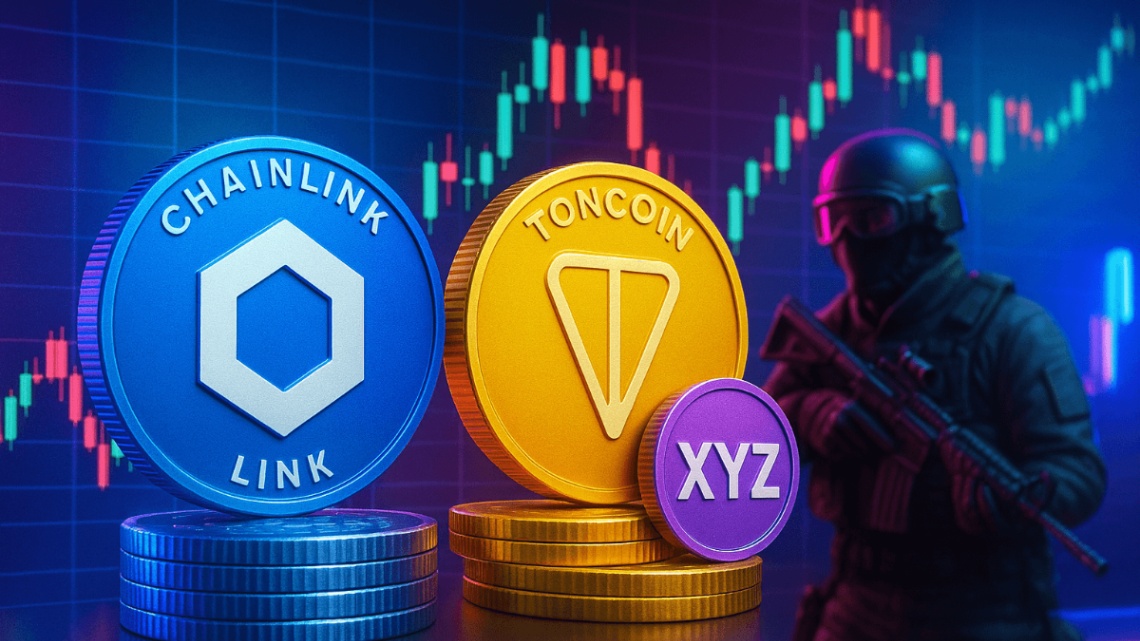
Chainlink Powers Oracles, Toncoin Gains Institutional Backing, XYZVerse Launches Esports 5.5M CS2 League

Chainlink Powers Oracles, Toncoin Gains Institutional Backing, XYZVerse Launches Esports 5.5M CS2 League

The post Chainlink Powers Oracles, Toncoin Gains Institutional Backing, XYZVerse Launches Esports 5.5M CS2 League appeared on BitcoinEthereumNews.com. Fresh moves reshape the digital asset space. A major infrastructure project sees growing adoption. A rising token attracts support from large investors. A new gaming venture unveils a multimillion-dollar tournament for a top action title. These events hint at changing trends and opportunities. More details reveal the forces driving these shifts and who stands to benefit. Chainlink: The Bridge Bringing Real-World Data to Smart Contracts Blockchains are powerful, yet they cannot read the outside world. Chainlink fixes this. Its network of oracles pulls data, checks it twice, and sends it to smart contracts. Each oracle earns a reputation score, so only the most honest stay active. The system works both on the chain, where requests sit, and off the chain, where data lives. The LINK token oils the machine. Node operators get paid in LINK, users pay fees in LINK, and holders can stake LINK to guard the network. After a slow 2022, the market is warming up. Coins with clear use cases now lead the rally. Chainlink fits this trend. It already feeds prices to many top apps, while rivals still chase pilots. New staking rounds cut supply, and big firms like SWIFT test the tech. If the next cycle rewards real demand, LINK could stand out, much like Ether did in 2017. Prices move with the crowd, but a bridge that others depend on often grows faster than the road itself. Undervalued $XYZ Meme Coin Gears Up for Listing on a Major CEX XYZVerse ($XYZ) is the meme coin that has grabbed headlines with its ambitious claim of rising from $0.0001 to $0.1 during a presale phase. So far, it has gone halfway, raising over $15 million, and the price of the $XYZ token currently stands at $0.0055. At the next stage of the presale, the $XYZ token…

Author: BitcoinEthereumNews
Ethereum Outperformed Solana, XRP, and Dogecoin in Q3 with a 66% Price Surge, This Token Could 66x in Q4

Ethereum Outperformed Solana, XRP, and Dogecoin in Q3 with a 66% Price Surge, This Token Could 66x in Q4

Ethereum had a great third quarter, rising 66.55% in just three months. This was its best quarter ever. Its competitors, Solana, XRP, and Dogecoin, on the other hand, hardly kept up.  However, while Ethereum’s meteoric rise is fueling excitement, market experts are now turning their attention to a new sensation, Little Pepe (LILPEPE), a meme coin that analysts believe could skyrocket 66x in Q4 2025. Ethereum’s 66% Surge Leaves Solana, XRP, and Dogecoin Behind According to Coinglass data, Ethereum rose 66.55% in the third quarter of 2025, following a 36.5% rise in the second quarter. In contrast, XRP went up almost 31% from July to the end of September. Ethereum Quarterly Price Change | Coinglass Solana had a hard time keeping up with Ethereum, and Dogecoin’s climb was very little compared to Ethereum’s huge gain. But now, many who invest are waiting for the next token that will increase quickly and make them a lot of money. That’s where Little Pepe (LILPEPE) enters the spotlight. Little Pepe (LILPEPE): The Meme Coin Poised for a 66x Breakout in Q4 Little Pepe (LILPEPE) is rapidly emerging as the most anticipated token of Q4, with many analysts predicting a 66x return potential based on its current presale momentum and strong investor demand. The project’s community-first approach and transparent ecosystem have made it one of the standout meme coins in 2025. During its presale, LILPEPE raised over $25.47 million by the end of Stage 12, selling out ahead of schedule. The current Stage 13 is priced at $0.0022 and has already raised over $1.30 million, reflecting a surge in community participation and confidence. Investors are treating LILPEPE as the next big meme revolution on the Ethereum blockchain. With an enthusiastic community, solid tokenomics, and real-time engagement incentives, it stands as a project capable of making early backers smile all the way to the bank. To celebrate the presale success, Little Pepe (LILPEPE) launched an extraordinary $777,000 giveaway, where 10 lucky winners will each receive $77,000 worth of LILPEPE tokens, which has already drawn over 439,000 entries. But the excitement doesn’t stop there. A new mega giveaway is also running across presale stages 12–17, rewarding the top 3 biggest buyers with 5, 3, and 2 ETH, respectively. This event will continue until Stage 17 is fully sold out, motivating strong early participation. Such marketing strategies have amplified LILPEPE’s visibility and attracted investors eager for a project that blends fun, fairness, and real potential for exponential growth. Little Pepe (LILPEPE) is More Than Just a Meme Coin LILPEPE’s roadmap paints an exciting picture. The project playfully refers to its current phase as the “pregnancy stage,” humorously describing itself as “Cooking in the cryptowomb with Mumma Pepe got a baby on the way!” This creative branding has captured the internet’s attention, driving a viral following across social media. LILPEPE has been fully audited by CertiK, achieving an impressive security score of 95.49%, a major milestone for investor confidence. Few meme tokens can boast such credibility this early in their lifecycle. Exchange Listings and Future Plans The Little Pepe (LILPEPE) team has already confirmed a listing on CoinMarketCap, signaling growing recognition within the crypto ecosystem. Plans are in motion to list on two major centralized exchanges (CEX) following the presale, with an ambition to secure a spot on the largest global exchange soon after. These upcoming listings could trigger a surge in trading volume and visibility, potentially aligning with the projected 66x price growth analysts are forecasting for Q4 2025. Conclusion With Ethereum outperforming Solana, XRP, and Dogecoin last quarter, the stage is perfectly set for the next explosive meme coin to capture the spotlight. As Little Pepe (LILPEPE) continues to climb through its presale stages, early adopters could be positioning themselves for one of Q4’s biggest success stories.  If Ethereum’s 66% surge impressed you, keep your eyes on Little Pepe (LILPEPE), because this token could 66x in Q4 and rewrite the meme coin narrative forever. For more information about Little Pepe (LILPEPE) visit the links below: Website: https://littlepepe.com Whitepaper: https://littlepepe.com/whitepaper.pdf Telegram: https://t.me/littlepepetoken Twitter/X: https://x.com/littlepepetoken

Author: Coinstats
How One Trader Made $160 Million Shorting Crypto Before Trump’s China Tariff Bombshell

How One Trader Made $160 Million Shorting Crypto Before Trump’s China Tariff Bombshell

TLDR A crypto whale made over $160 million in profit by shorting Bitcoin and Ethereum on Hyperliquid ahead of Trump’s 100% China tariff announcement The trader closed all ETH short positions for $72.33 million profit and still holds $92.84 million in BTC shorts with 5.38x leverage Trump announced a 100% tariff on China starting November [...] The post How One Trader Made $160 Million Shorting Crypto Before Trump’s China Tariff Bombshell appeared first on CoinCentral.

Author: Coincentral
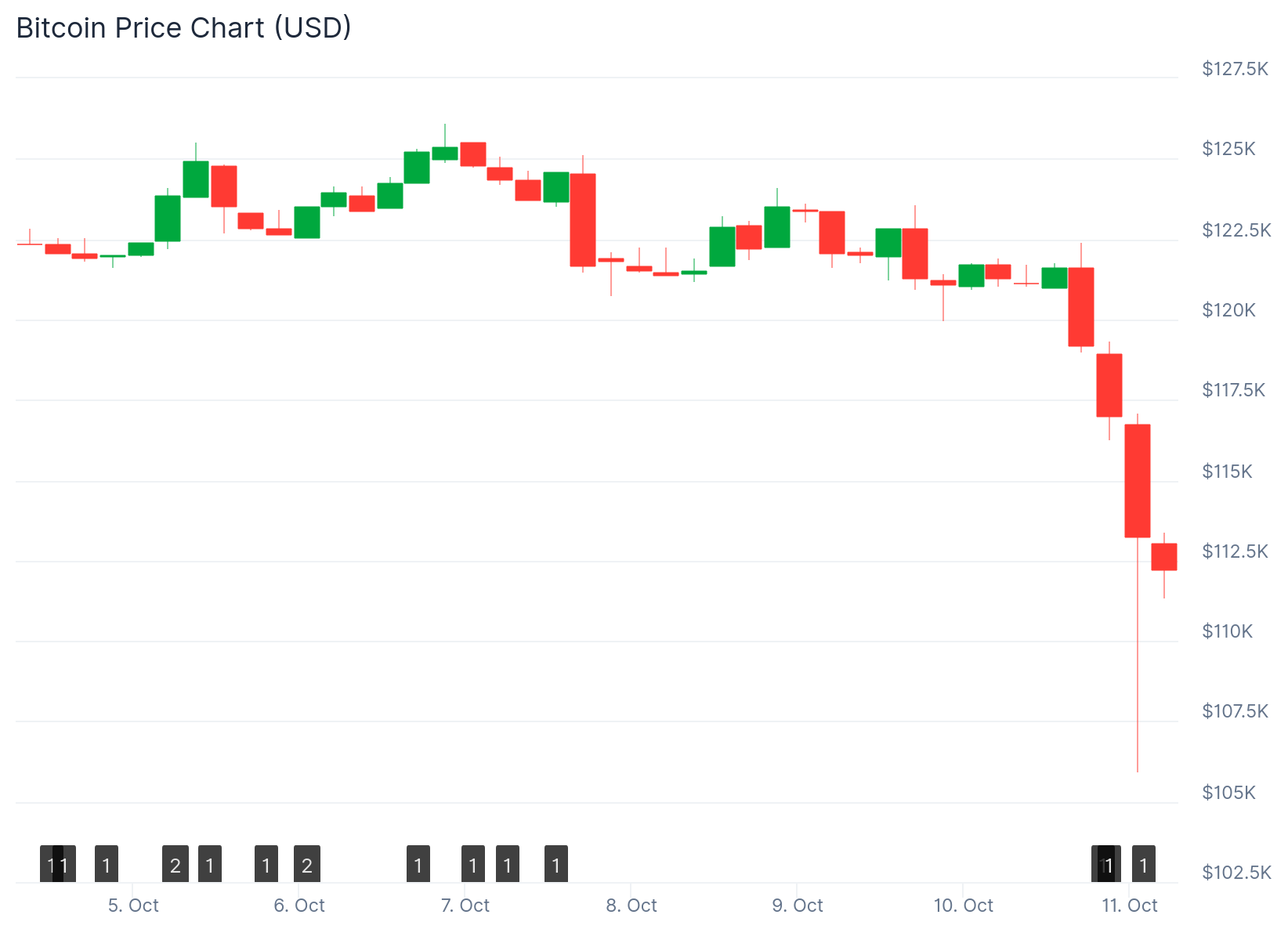
Crypto Market Loses $670 Billion on CEX Auto Liquidations, Altcoins Crash Intensifies

Crypto Market Loses $670 Billion on CEX Auto Liquidations, Altcoins Crash Intensifies

                         Read the full article at                             coingape.com.                         

Author: Coinstats
Arthur Hayes Links Altcoin Price Decline to CEX Liquidations

Arthur Hayes Links Altcoin Price Decline to CEX Liquidations

Detail: https://coincu.com/altcoin/arthur-hayes-altcoin-liquidations/

Author: Coinstats
Best Crypto to Invest In: Top Picks for Q4 2025

Best Crypto to Invest In: Top Picks for Q4 2025

History tells us this is the phase when high-beta altcoins outperform the majors, and once again the setup looks primed […] The post Best Crypto to Invest In: Top Picks for Q4 2025 appeared first on Coindoo.

Author: Coindoo
The play-to-earn project reports significant growth

The play-to-earn project reports significant growth

The post The play-to-earn project reports significant growth appeared on BitcoinEthereumNews.com. Disclosure: This article does not represent investment advice. The content and materials featured on this page are for educational purposes only. Meta Games Coin has witnessed significant growth in a year as adoption soars across NFT, P2E, and metaverse ecosystems. Summary Meta Games Coin (MGC) has grown 15x in 12 months, driven by organic DEX demand and strong community engagement. It has rejected CEX listings to uphold decentralization and transparency, focusing solely on community-driven DEX pools. Trading at $3.53, MGC ‘s growth reinforces its role in P2E, NFT, and metaverse ecosystems. Meta Games Coin (MGC), a cryptocurrency within the RZ Oasis ecosystem developed by Coin Factory, has reported a consistently impressive adoption growth. This blockchain-based play-to-earn token has seen a 15X growth over the last 12 months.  MGC, a BEP-20 token, operates on the BNB Smart Chain and serves as a utility token for play-to-earn environments, non-fungible token (NFT) marketplaces, and gaming-related virtual events. According to the project team, MGC is designed to support players who wish to trade in-game assets, participate in decentralized tournaments, and engage with emerging metaverse applications. Sustainable market activity Project representatives have pointed out that the MGC’s growth has been ‘organic’, which is a result of consistent demand within decentralized exchanges rather than centralized trading avenues. Over the last 12 months, MGC witnessed a 15-fold increase. The team attributes this growth to long-term community participation rather than momentary hype or speculative spikes.  Meta Games coin, unlike other blockchain projects that depend on centralized exchange (CEX) listings to inflate visibility, has deliberately avoided this course. MGC reasons the move with issues over non-transparent practices such as listing fees, preferential allocations, and potential exposure to pump-and-dump schemes. Instead, MGC chooses to focus solely on decentralized exchange (DEX) pools, which complies with its ‘community-focused’ approach. The project is…

Author: BitcoinEthereumNews