Dapp

Dapps are digital applications that run on a P2P network of computers rather than a single server, typically utilizing smart contracts to ensure transparency and uptime. In 2026, Dapps have achieved mass-market appeal through Account Abstraction, allowing for a "Web2-like" user experience with the security of Web3. This tag covers the entire ecosystem of decentralized software—from social media and productivity tools to governance platforms and identity management.

4983 Articles
Created: 2026/02/02 18:52
Updated: 2026/02/02 18:52
Unlocking Trust and Security in Web3 Smart Contracts: Audit Wizard

Unlocking Trust and Security in Web3 Smart Contracts: Audit Wizard

auditwizard.io In this article, I will explore the key features and benefits of Audit Wizard, examining how it revolutionizes smart contract development by providing comprehensive auditing solutions. I will also delve into the need for robust security measures in the Web3 space and discuss how Audit Wizard is poised to address this critical requirement, empowering developers to allay user concerns and elevate the overall security of decentralized applications (dApps). In the beginning, I would like to express my heartfelt gratitude to the Web3 Security builders, community, bug-bounty hunters, everyone who supports its vibes and the authors of all resource materials! It is therefore crucial for developers to have their code thoroughly audited before deploying it to a live environment. Web3 Security Distilled Building Trust Through Comprehensive Auditing When it comes to decentralized applications, one of the most common concerns is the potential for vulnerabilities or flaws in the underlying smart contracts. A single vulnerability can expose users’ funds to significant risks, undermining the entire purpose of decentralized finance. The problem of security has recently become very urgent due to the enormous number of hacks and security incidents in the Web3 sphere. Everyone has very different ideas and suggestions on this topic, so we will only attempt to describe a portion of them today. New bug-bounty platforms try to solve several problems that previous versions obviously lack. For instance, they more actively interact with the community, and often their structure is built so that people are allowed to participate even without KYC (as in more classic sites where such conditions are determined by the end customer represented by the project or protocol). GitHub - OffcierCia/tips-solidity-code-auditors: Gaining the most elusive of tips. Add your input and let's collect them all! However, they are still short on functionality and possess numerous shortcomings that should be addressed. The next generation of Web3 security platforms will go beyond current limited solutions, applying advanced tools and technologies and providing superior usability to all industry players! This could result in the discovery of known and unknown security flaws in any organization. With this many targets, it is impossible for a single security team to test them all. As a result, they choose to externalize the issues by launching bounty campaigns on platforms with large communities of experts. But I would like to raise another important point. Logically, cybersecurity must be considered on every level of project development — with contests on the guard at the initial stage, followed by audits, and then bug bounties — at the final stage. No doubt, a new generation of cybersecurity products are already on the way that will cover all these aspects in one user-friendly interface. Certain layers of the web3 security stack remain underutilized, which will most likely change as the industry matures. DeFi projects, in particular, may begin to broaden the scope of security activities to include proactive threat monitoring and response, as well as automated risk management (rather than focusing solely on vulnerability assessments). Nowadays, in my opinion, the ability to effectively inform clients of the specifics and status of an audit is seriously lacking in so-called “сlassic” auditing firms. Clients are often unaware of the precise steps taken during the audit or the process’s current status as a result of this lack of transparency. This lack of visibility consequently leads to a variety of problems. Comprehensive audits are frequently unaffordable for startups due to traditional auditing firms’ high service fees. These costs are typically determined by the project’s complexity and scope, as well as by the auditing firm’s standing and size. One may even state that existing solutions like manual audits, static analysis, and fuzz testing lack mathematical soundness and scalability… As you now know, there isn’t a single button or service that will solve all security issues, but there are things we can work toward. At the same time, there have already been dozens of vulnerabilities discovered using Web3 bug-bounty platforms! That said, Web3 bug-bounty programs also can be (and they actually are) an effective way to incentivize the identification and reporting of vulnerabilities in blockchain protocols and decentralized applications. All this leads us to the idea that in the end it will be important for the project to have multiple levels of protection — several audits from different companies and several bug-bounty programs on platforms with different features.https://medium.com/media/64671510692e6920b39a02c1257d6580/href This is where Audit Wizard steps in as a game-changer. The Audit Wizard beta includes a number of new features, stability increases, and UI improvements. Findings: Using the ‘Add finding’ tool, you can add security findings. Each finding includes a title, code location (highlight affected code), severity, description, and recommendation. Once you create a finding, it can be viewed within the ‘Findings’ list. Entries within this list can be filtered by severity, edited, or deleted at any time. In addition to being displayed within the ‘Findings’ list, entries are automatically added to your audit report; Reports: Once you’ve added your findings and are ready to deliver your audit report, toggle to the Audit Wizard report editor. Your findings have been automatically added to your audit report and are ready to be exported. Click ‘Generate Report’ when you are ready to export your audit report. A generated audit report document will download to your browser. The goal of Audit Wizard is to be the easiest and fastest way to perform smart contract audits. It’s built to give auditors and developers superpowers!Source | Slitherin By leveraging advanced automated security analysis and manual code reviews, the platform provides developers with a comprehensive auditing solution that identifies potential vulnerabilities, bugs, or inefficiencies in smart contracts. Now you also can: Direct code import from c4/sherlock/hats or from GitHub/contract address; Add findings and generate a report; Generate contract interaction graphs; Slither & Slitherin scan, Integrated AI chat, notes and more; Results from dependencies have also been filtered out from Slither to remove unnecessary results. Slitherin, an extended version of Slither with even more vulnerability detectors, has also been added to increase scanner coverage! auditwizard.io Projects can be imported from multiple sources. You can import audit contests from platforms like Code4rena and Sherlock by simply clicking on the contest in the Contests list. You can import projects via the import box from the following sources: GitHub repo URLs; Ethereum mainnet contract addresses; Etherscan contract URLs; Code4rena contest URLs; Sherlock contest URLs. To import from a private GitHub repo, first add a GitHub Personal Access Token to your Audit Wizard account, then you can import private repos via their URL. The Framework to help you securing your protocol You can also leverage the power of ChatGPT directly from Audit Wizard with the AI tool. Ask the AI to summarize a complex contract, or chat with the AI about about your project, solidity, or anything security related. Read more about it here: Audit Wizard FAQ; Become an AuditWizard: Complete Overview of the New All-in-One Auditor Toolkit; Audit Wizard Release. With its thorough assessment of code logic and execution paths, Audit Wizard ensures that the smart contract is secure, reliable, and meets best practices for development! Given the increasingly sophisticated nature of cyber threats and the hefty financial stakes involved in DeFi, robust security measures have become essential for the overall sustainability of the ecosystem.auditwizard.io Audit Wizard recognizes this urgency and equips developers with a suite of security tools and analytics to fortify their smart contracts against potential attacks. The platform’s security analysis encompasses an array of vulnerabilities, including but not limited to reentrancy, arithmetic overflows/underflows, access control issues, and unhandled exceptions. The detailed security reports provided by Audit Wizard empower developers to identify and address potential risks, resulting in more reliable and resilient smart contracts:https://medium.com/media/b213314de2e650a485fbbe5c29c75fd8/href As we venture deeper into the world of Web3, the need for robust security measures becomes increasingly evident. Audit Wizard emerges as a pioneering platform that empowers developers to create secure, trustworthy smart contracts that inspire confidence among users. By combining automation, manual code reviews, and collaboration tools, Audit Wizard revolutionizes the auditing process and strengthens the security posture of the DeFi ecosystem:Source In the upcoming sections, we will further explore the various features and benefits of Audit Wizard, highlighting its effectiveness in detecting vulnerabilities, enhancing risk management, and fostering collaboration. Web3 Security Distilled 2.0 Join us as we unravel the transformative potential of this Web3 smart contract auditing platform that is poised to elevate the standards of security in the decentralized finance space! Stay safe! Unlocking Trust and Security in Web3 Smart Contracts: Audit Wizard was originally published in Coinmonks on Medium, where people are continuing the conversation by highlighting and responding to this story

Author: Medium
Details of the Expected Airdrop Have Been Announced – Here’s the Distribution Date

Details of the Expected Airdrop Have Been Announced – Here’s the Distribution Date

The post Details of the Expected Airdrop Have Been Announced – Here’s the Distribution Date appeared on BitcoinEthereumNews.com. Yei Finance, one of the leading protocols in the Sei ecosystem, has published the official Token Generation Event (TGE) registration page. Users and liquidity providers can register for airdrop eligibility starting at 4:00 PM on September 4, 2025. The symbol for the new token is CLO (Clovis). Clovis is a new cross-chain DeFi protocol developed by Yei. The company announced that the Clovis pre-deposit vault will reopen next week. In the statement made by Yei Finance, it was stated that the TGE process will operate in three stages: Phase 1 (Registration): This will continue until 4:00 PM on September 30, 2025. Late registrations will not be accepted for TGE claims. Phase 2 (Allocation Confirmation): The Yei team will finalize the airdrop distribution. Phase 3 (CLO Claim): Users will be able to claim CLO tokens and begin using them in the Clovis ecosystem. The Yei Finance team argued that Clovis has evolved from being merely the largest dApp on Sei to a comprehensive DeFi operating system that integrates cross-chain liquidity. *This is not investment advice. Follow our Telegram and Twitter account now for exclusive news, analytics and on-chain data! Source: https://en.bitcoinsistemi.com/details-of-the-expected-airdrop-have-been-announced-heres-the-distribution-date/

Author: BitcoinEthereumNews
NFT Trading Surges in 2025 as Collector Demand and Blockchain Adoption Drive Volume

NFT Trading Surges in 2025 as Collector Demand and Blockchain Adoption Drive Volume

TLDR NFT trading volumes rose 9% in August while total sales dropped slightly, per DappRadar data. Collector spending increased as fewer NFTs changed hands but sold at higher average values. Base network became the third-largest by NFT volume due to low fees and airdrop activity. Ethereum maintained a 61% market share as new features enabled [...] The post NFT Trading Surges in 2025 as Collector Demand and Blockchain Adoption Drive Volume appeared first on CoinCentral.

Author: Coincentral
Cosmos Labs: A Pivotal New Era for the Interchain Ecosystem

Cosmos Labs: A Pivotal New Era for the Interchain Ecosystem

BitcoinWorld Cosmos Labs: A Pivotal New Era for the Interchain Ecosystem The cryptocurrency world is abuzz with a significant development for one of its most innovative ecosystems. The Interchain Foundation, the driving force behind the robust Cosmos (ATOM) network, recently announced a pivotal rebranding. Its key subsidiary, Interchain Labs, will now operate under the powerful new identity of Cosmos Labs. This move isn’t just a name change; it signals a strengthened commitment to the future of the interchain vision. What Does the Rebranding to Cosmos Labs Signify? This strategic rebranding aligns the development arm more closely with the overarching Cosmos brand, fostering a unified and recognizable identity. By embracing the name Cosmos Labs, the entity solidifies its position at the heart of the Cosmos ecosystem’s technological advancement. It’s a clear statement of intent: to be the primary innovator for the network’s foundational components. Cosmos Labs is entrusted with a critical mandate: Cosmos SDK: This robust framework allows developers to build custom blockchains quickly and efficiently. Cosmos Labs will continue to enhance and maintain this essential toolkit, making blockchain development more accessible. Inter-Blockchain Communication (IBC): IBC is the groundbreaking protocol that enables different blockchains to communicate and exchange data seamlessly. Cosmos Labs will drive its evolution, further connecting the fragmented blockchain landscape. Cosmos EVM: Integrating Ethereum Virtual Machine (EVM) compatibility into Cosmos opens up immense possibilities for developers and users. Cosmos Labs will ensure this crucial bridge functions flawlessly, attracting more projects to the Cosmos ecosystem. Why is This Evolution for Cosmos Labs So Important? The transition to Cosmos Labs is more than cosmetic; it’s a strategic enhancement designed to bolster the entire Cosmos ecosystem. By having a dedicated entity explicitly named after the network, it simplifies understanding for new entrants and strengthens brand recognition globally. This clarity is crucial in the fast-paced world of blockchain, where distinct identities can significantly impact adoption and trust. Furthermore, this rebranding streamlines communication and resource allocation. With a unified vision under the Cosmos Labs banner, development efforts for core technologies can be more focused and efficient. This ultimately benefits all projects and users within the interchain network, leading to faster innovation and a more stable, secure platform. Key benefits include: Enhanced Brand Identity: A stronger, more cohesive brand makes Cosmos more recognizable. Streamlined Development: Centralized focus on core technologies under one name. Improved Community Engagement: Clearer messaging about who is building what. Increased Adoption: A unified brand can attract more developers and projects. What’s Next for the Cosmos Ecosystem with Cosmos Labs at the Helm? With Cosmos Labs now leading the charge, the future of the Cosmos ecosystem appears brighter than ever. The focus will remain on fostering interoperability, scalability, and usability across various blockchains. Developers can anticipate continuous improvements to the Cosmos SDK, making it even easier to launch application-specific blockchains tailored to unique needs. Moreover, the ongoing development of IBC by Cosmos Labs promises an even more interconnected digital future. Imagine a world where assets and data flow freely between countless blockchains, regardless of their underlying architecture. This vision is precisely what Cosmos Labs is working to realize, pushing the boundaries of what’s possible in decentralized technology. The integration of the Cosmos EVM will also play a crucial role in expanding the ecosystem’s reach, inviting a wider array of dApps and users. In essence, the rebranding of Interchain Labs to Cosmos Labs is a significant milestone. It reinforces the commitment to building a truly interoperable and scalable blockchain network. This strategic move is poised to accelerate innovation, enhance collaboration, and ultimately solidify Cosmos’s position as a leader in the decentralized future. Frequently Asked Questions (FAQs) 1. What is Cosmos Labs? Cosmos Labs is the rebranded entity of Interchain Labs, responsible for the development and maintenance of core Cosmos ecosystem technologies like the Cosmos SDK, Inter-Blockchain Communication (IBC), and the Cosmos EVM. 2. Why did Interchain Labs rebrand to Cosmos Labs? The rebranding aims to align the development arm more closely with the overall Cosmos brand, creating a unified identity, streamlining development efforts, and strengthening brand recognition for the entire Cosmos ecosystem. 3. What is the Cosmos SDK? The Cosmos SDK is a framework that allows developers to build custom, application-specific blockchains quickly. Cosmos Labs plays a key role in its ongoing development and maintenance. 4. How does this rebrand affect the Cosmos (ATOM) token? While the rebranding is a strategic organizational change, it signifies a stronger, more focused development effort for the Cosmos ecosystem, which can positively impact the long-term health and adoption of the ATOM token and the network as a whole. 5. What is the significance of the Cosmos EVM? The Cosmos EVM integrates Ethereum Virtual Machine compatibility into the Cosmos ecosystem, allowing developers to deploy Ethereum-based applications and smart contracts within Cosmos, thereby expanding its utility and user base. Share this exciting news! If you found this article insightful, consider sharing it with your network on social media. Help us spread the word about the exciting developments within the Cosmos ecosystem and the pivotal role Cosmos Labs will play in its future! To learn more about the latest Cosmos ecosystem trends, explore our article on key developments shaping Cosmos institutional adoption. This post Cosmos Labs: A Pivotal New Era for the Interchain Ecosystem first appeared on BitcoinWorld and is written by Editorial Team

Author: Coinstats
NFTs ‘heating up’ as nightclubs, rappers jump back on bandwagon

NFTs ‘heating up’ as nightclubs, rappers jump back on bandwagon

                                                                               DappRadar analyst Sara Gherghelas said the data shows clear signs that people are returning to the NFT space.                     The non-fungible token (NFT) market has just closed its two strongest months since February as adoption and renewed interest have driven trading volumes to its highest levels this year. NFT trading volumes were up 9%, but sales counts dipped 4%, showing that while “fewer assets traded hands, collectors are paying more per sale,” according to a report published by blockchain analytics platform DappRadar on Thursday.CoinGecko shows that trading volumes for NFTs spiked in the last 24 hours, rising more than 25% to reach a high of $7.9 million.Read more

Author: Coinstats
Ethereum Layer 2 Linea to Launch Token Next Week

Ethereum Layer 2 Linea to Launch Token Next Week

The post Ethereum Layer 2 Linea to Launch Token Next Week appeared on BitcoinEthereumNews.com. The LINEA token is trading at a $2.7 billion pre-market valuation on Hyperliquid. Ethereum Layer 2 network Linea is gearing up for its long-awaited token release, but it appears that pre-market traders are bearish on the Consensys-backed blockchain. Linea announced its upcoming token generation event (TGE) on Sept. 3, with a target launch date of Sept. 10. A pre-market derivative was quickly launched on Hyperliquid and opened at $0.06 per token, implying a $6 billion valuation, but has since fallen to $0.027, or $2.7 billion. Linea Pre-Market – Hyperliquid The TGE will feature an airdrop event with 10% of the total supply distributed to early users and builders, with another 75% slated for Linea’s ecosystem fund, which is meant to promote and incentivize growth of the network and its Ethereum-alignment mission. Since Linea unveiled the 85% allocation to its ecosystem fund, chain metrics have started to pick up, with stablecoin supply hitting an all-time high and native dApps experiencing substantial inflows. Linea is backed by Consensys, a digital infrastructure firm led by Joe Lubin, an Ethereum co-founder and the chairman of the Ethereum treasury company, Sharplink Gaming. The network aims to maximize value returned to Ethereum by designating 20% of all net transaction fees at Linea’s protocol level to be paid in ETH and subsequently burned. This buy-and-burn mechanism is one of Linea’s solutions to liquidity fragmentation in the Ethereum ecosystem. In the past, Layer 2s have been accused of cannibalizing economic value from the base layer. While activity on the chain has picked up, its total value locked (TVL) has struggled throughout all of 2025, falling to as low as $120 million in July from a high of $722 million in July 2024. However, network TVL has exploded over the last month to a new high of $1.17 billion,…

Author: BitcoinEthereumNews
Tom Talk Join Forces with EVX Protocol to Connect DePIN to their Web3 Social-Gaming Ecosystem

Tom Talk Join Forces with EVX Protocol to Connect DePIN to their Web3 Social-Gaming Ecosystem

Through collaboration with EVX Protocol, Tom Talk offers better opportunities for Web3 users to earn rewards for contributing to the DePIN economy.

Author: Blockchainreporter
BullZilla, Cardano, and Floki Leading the Way in 2025

BullZilla, Cardano, and Floki Leading the Way in 2025

The post BullZilla, Cardano, and Floki Leading the Way in 2025 appeared on BitcoinEthereumNews.com. Crypto News iscover the best meme coin presales with 100x potential in 2025! BullZilla, Cardano, and Floki offer immense growth opportunities. Learn why these coins are the future. 2025 is shaping up to be a groundbreaking year for cryptocurrency, with several promising projects gaining attention from investors. Among them, Bull Zilla, Cardano, and Floki stand out as the best meme coin presales with 100x potential. Each of these coins is not just a meme coin but a project with innovative features and strong community support that could result in significant returns for early investors. In this article, we will dive deep into these three projects, exploring their tokenomics, ROI potential, and what makes them special in the crowded crypto space. Whether you’re a financial student, crypto enthusiast, blockchain developer, or meme coin lover, these coins offer huge upside and early-stage investment opportunities. Let’s explore why BullZilla, Cardano, and Floki should be on your radar for 2025. BullZilla: The Explosive Meme Coin with Game-Changing Presale Features BullZilla ($BZIL) is creating a significant buzz in the cryptocurrency space, thanks to its innovative presale system and its unique tokenomics. Built on the Ethereum blockchain, BullZilla takes the meme coin concept to a whole new level with features like the mutation presale system, Roar Burn Mechanism, and HODL Furnace staking rewards. The BullZilla presale is currently in Stage 1-C, with over $147k raised and over 400 token holders. The current presale price stands at $0.00001908, with an ROI potential of 27,527% from the current price to the expected listing price of $0.008. Early investors have already seen 231% ROI, and with the price set to increase, it’s clear that BullZilla offers one of the best meme coin presales with 100x potential. Key Features of BullZilla: Current Stage: Stage 1 (The Project Trinity Boom) Current…

Author: BitcoinEthereumNews
Last Chance to Buy BZIL at $0.00001908 Before Price Jumps: Join The Best Meme Coin Presale With 100x Potential, as ADA and FLOKI Grow

Last Chance to Buy BZIL at $0.00001908 Before Price Jumps: Join The Best Meme Coin Presale With 100x Potential, as ADA and FLOKI Grow

2025 is shaping up to be a groundbreaking year for cryptocurrency, with several promising projects gaining attention from investors. Among […] The post Last Chance to Buy BZIL at $0.00001908 Before Price Jumps: Join The Best Meme Coin Presale With 100x Potential, as ADA and FLOKI Grow appeared first on Coindoo.

Author: Coindoo
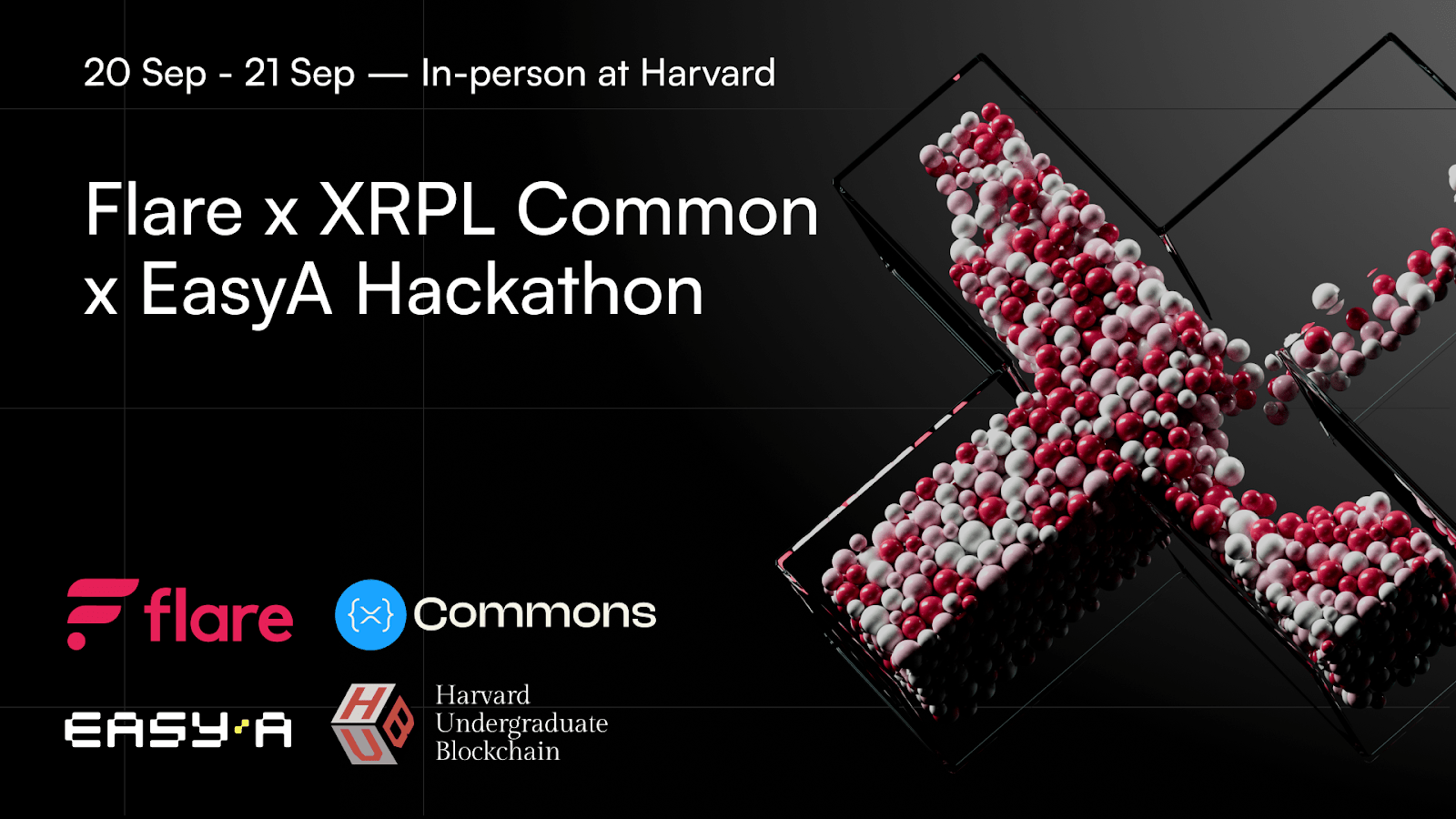
Flare, EasyA, and XRPL Commons to Host $35K Hackathon at Harvard

Flare, EasyA, and XRPL Commons to Host $35K Hackathon at Harvard

The post Flare, EasyA, and XRPL Commons to Host $35K Hackathon at Harvard appeared on BitcoinEthereumNews.com. Participants will not only have the opportunity to win a prize pool of $35,000, but they will also have the opportunity to receive hands-on experience. The event will demonstrate how Flare’s interoperability protocols and XRP Ledger (XRPL) technologies can be used to power the next generation of decentralized finance, payments, and consumer applications. The cooperation between Flare and EasyA, the biggest Web3 education app in the world, is the foundation around which this hackathon is built. In collaboration with EasyA and XRPL Commons, Flare will be hosting a hackathon at Harvard University on September 20 and 21, 2025, which will last for a total of 36 hours. An event that will bring together 200 developers is a critical milestone in the process of expanding the XRPFi ecosystem. The event will demonstrate how Flare’s interoperability protocols and XRP Ledger (XRPL) technologies can be used to power the next generation of decentralized finance, payments, and consumer applications. Participants will not only have the opportunity to win a prize pool of $35,000, but they will also have the opportunity to receive hands-on experience in cross-chain programming, meet with mentors from the Flare and XRPL communities, and participate in specialized in-person workshops that are given by developers from both ecosystems. Event details To register for the event, please visit the following website: https://www.easya.io/events/easya-x-flare-harvard-hackathon. 🥇 PrizesTotal prize pool: $35,000$10,000 dedicated track from XRPL Commons 🗓️ DatesSeptember 20 – 21, 2025 ⌚️ TmeSat, 20 Sep 2025 09:30 – Sun, 21 Sep 2025 17:30 GMT-4 📍 LocationHarvard University Hackathon tracks Participants in the competition will compete over three different tracks: 1) Cross-Chain Finance & Real-World Assets (XRPFi) By integrating the asset issuance and liquidity of XRPL with Flare’s decentralized data and proofs, you can build the future of finance. Develop event-driven financial applications that are grounded in real-world…

Author: BitcoinEthereumNews