Dapp

Dapps are digital applications that run on a P2P network of computers rather than a single server, typically utilizing smart contracts to ensure transparency and uptime. In 2026, Dapps have achieved mass-market appeal through Account Abstraction, allowing for a "Web2-like" user experience with the security of Web3. This tag covers the entire ecosystem of decentralized software—from social media and productivity tools to governance platforms and identity management.

4962 Articles
Created: 2026/02/02 18:52
Updated: 2026/02/02 18:52
Excellion Finance Scales Market-Neutral DeFi Strategies with Fordefi’s MPC Wallet

Excellion Finance Scales Market-Neutral DeFi Strategies with Fordefi’s MPC Wallet

Singapore, Singapore, 2nd September 2025, Chainwire

Author: CryptoPotato
Starknet Is Back Online After Outage: What Happened?

Starknet Is Back Online After Outage: What Happened?

The post Starknet Is Back Online After Outage: What Happened? appeared on BitcoinEthereumNews.com. Key Notes Starknet restored services after an hours-long outage. The network stopped producing blocks after its Grinta upgrade. STRK token slipped 4.5% as users reacted to the disruption. Ethereum ETH $4 329 24h volatility: 1.6% Market cap: $524.89 B Vol. 24h: $28.18 B Layer 2 blockchain, Starknet STRK $0.12 24h volatility: 2.0% Market cap: $500.79 M Vol. 24h: $27.68 M , is back online after suffering an unexpected outage that left users unable to send or confirm transactions for more than four hours. Developers have confirmed that block production has resumed and services are running normally again. The disruption began shortly after Starknet’s Grinta upgrade, also known as version 0.14.0, was deployed. The upgrade was meant to improve performance, but instead the network stopped producing blocks beyond #1961878. While developers had issued a warning for a brief 15-minute pause, the outage stretched into several hours, leaving transactions stuck and wallets disconnected. Between 2:23 am and 4:36 am UTC, transactions submitted to the network were not processed. Starknet is currently experiencing downtime.Our team is actively investigating the issue and working to restore full functionality as quickly as possible.We’ll share updates as soon as we know more.Thank you for your patience. — Starknet (@Starknet) September 2, 2025 To restore services, developers had to initiate a rollback, or “reorg,” to block #1960612. This meant that all transactions beyond that point were erased and now need to be resubmitted by users. Starknet is back online and fully operational.Block production is back to normal. Most RPC providers are up-and-running, and the remaining ones will upgrade shortly.To restore service, transactions submitted between 2:23am and 4:36am UTC were not processed.A reorg from block… https://t.co/nrziivCiuK — Starknet (@Starknet) September 2, 2025 RPC providers are also gradually coming back online, ensuring wallet and dApp connections are stable again. The…

Author: BitcoinEthereumNews
This New Meme Coin Is Tipped For 65x Gains Before Dogecoin (DOGE) Hits $1

This New Meme Coin Is Tipped For 65x Gains Before Dogecoin (DOGE) Hits $1

The race to $1 has always been part of the Dogecoin narrative. It’s the meme coin benchmark. But lately, a growing number of analysts are quietly suggesting that the Dogecoin price prediction could take years to materialize—and in the meantime, other meme coins may offer far better returns. One name that keeps popping up? Layer [...] The post This New Meme Coin Is Tipped For 65x Gains Before Dogecoin (DOGE) Hits $1 appeared first on Blockonomi.

Author: Blockonomi
Snowball Launches $300K Buzzdrop on ChainGPT Pad

Snowball Launches $300K Buzzdrop on ChainGPT Pad

Dubai, UAE, UAE, 2nd September 2025, Chainwire

Author: Blockchainreporter
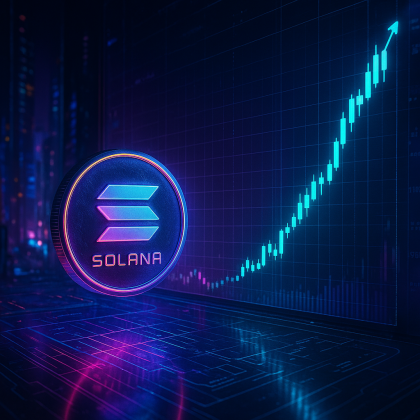
Analysts Update Solana and Litecoin Price Targets As New ETH Layer 2 Token Bursts Onto Scenes With A Bang

Analysts Update Solana and Litecoin Price Targets As New ETH Layer 2 Token Bursts Onto Scenes With A Bang

Analysts lift SOL and LTC targets, but Layer Brett’s $0.0053 presale with L2 speed, DeFi utility, and staking rewards is tipped as the next 100x altcoin.

Author: Blockchainreporter
Starknet Block Production: Urgent Halt Hits Ethereum Layer 2 Again

Starknet Block Production: Urgent Halt Hits Ethereum Layer 2 Again

BitcoinWorld Starknet Block Production: Urgent Halt Hits Ethereum Layer 2 Again The world of decentralized finance (DeFi) thrives on reliability, but sometimes, even the most advanced networks hit a snag. This is precisely what happened recently when Starknet block production, a critical component of its ZK-rollup-based Ethereum Layer 2 network, experienced an unexpected halt. This incident has naturally raised questions and concerns among users and developers alike, highlighting the ongoing challenges in scaling blockchain technology. Understanding the Impact of a Starknet Block Production Halt Starknet (STRK), known for its innovative approach to scaling Ethereum, announced on X (formerly Twitter) that its block production had stopped. For a Layer 2 network, this means that new transactions cannot be processed or confirmed on the blockchain. Imagine a busy highway suddenly closing down; traffic comes to a standstill. Similarly, a halt in Starknet block production prevents any new activity, from token transfers to smart contract interactions, from being recorded. Transaction Delays: Users experience significant delays as their pending transactions remain unconfirmed. DApp Inactivity: Decentralized applications (dApps) built on Starknet become temporarily unusable. User Confidence: Repeated incidents can erode trust in the network’s stability. This isn’t the first time Starknet has faced such an issue. An earlier incident saw the network’s block production paused for over two hours before operations resumed. These occurrences underscore the complexities involved in maintaining high-performance, secure Layer 2 solutions. Why is Consistent Starknet Block Production Vital? ZK-rollups like Starknet are designed to process a large volume of transactions off the main Ethereum chain, bundling them into a single proof that is then submitted to Ethereum. This significantly reduces gas fees and increases transaction throughput. However, the effectiveness of this scaling solution hinges on its continuous operation. Reliable Starknet block production is the backbone of its utility. Without it, the network cannot fulfill its promise of efficient and cost-effective transactions. For users and developers, consistent uptime is non-negotiable, as it directly impacts their ability to engage with the DeFi ecosystem and build robust applications. The entire crypto community watches closely, as the stability of leading Layer 2 solutions like Starknet influences broader adoption. Developers choose these platforms for their speed and scalability, but stability is equally, if not more, important for real-world use cases. Starknet’s Response to the Block Production Challenges Upon detecting the halt in Starknet block production, the team swiftly communicated the issue to its community. Transparency during such incidents is crucial for maintaining user trust and keeping stakeholders informed. The team confirmed they are actively working to identify and implement a fix. While the exact cause of the recent halt is under investigation, these situations often stem from various technical complexities, including: Software bugs or unforeseen code interactions. Consensus mechanism issues among validators. Infrastructure overloads or external dependencies. The rapid response from the Starknet team demonstrates their commitment to resolving these critical issues. Their ongoing efforts are focused on not just restoring service but also on implementing measures to prevent future recurrences, thereby enhancing the network’s resilience. The Road Ahead for Layer 2 Reliability Incidents affecting Starknet block production serve as important reminders for the entire Layer 2 ecosystem. Building scalable and secure solutions for Ethereum is an intricate process, often involving groundbreaking technology that is still maturing. Every challenge presents an opportunity for learning and improvement. The goal for Starknet and other Layer 2 networks is to achieve near-perfect uptime, similar to traditional financial systems, while retaining the decentralized ethos of blockchain. This involves continuous innovation in network architecture, rigorous testing, and robust disaster recovery protocols. The community’s support and understanding during these periods are vital as these technologies evolve. Ultimately, the long-term success of Starknet, and other scaling solutions, will depend on their ability to deliver consistent performance and reliability, making the user experience seamless and trustworthy. Summary: Navigating Network Hurdles The recent halt in Starknet block production is a significant event for its community, underscoring the ongoing technical challenges in the fast-evolving Layer 2 space. While the team works diligently to restore full functionality, these incidents highlight the critical importance of network stability for user confidence and the broader adoption of decentralized technologies. As Starknet continues its journey, overcoming such hurdles will be key to solidifying its position as a leading Ethereum scaling solution. Frequently Asked Questions (FAQs) 1. What is Starknet? Starknet is a ZK-rollup-based Layer 2 network built on Ethereum. It aims to scale Ethereum by processing transactions off-chain and then submitting a single proof to the mainnet, leading to lower fees and higher throughput. 2. What does a Starknet block production halt mean? A block production halt means that the network temporarily stops processing new transactions and creating new blocks. This effectively pauses all activity on the network until the issue is resolved. 3. How often has this happened to Starknet? This recent incident follows an earlier halt in Starknet’s block production, indicating that it has occurred more than once. The team is actively working to address the root causes of these recurring issues. 4. What is Starknet doing to fix the issue? The Starknet team announced on X that they are aware of the issue and are actively working to identify the cause and implement a fix to restore normal block production as quickly as possible. 5. How does this affect my funds on Starknet? While a halt in block production prevents new transactions, your funds on Starknet remain secure. They are not lost, but you will be unable to move or interact with them until the network resumes normal operation. To learn more about the latest crypto market trends, explore our article on key developments shaping Ethereum price action. If you found this article insightful, consider sharing it with your network on social media. Your support helps us keep the crypto community informed and engaged! This post Starknet Block Production: Urgent Halt Hits Ethereum Layer 2 Again first appeared on BitcoinWorld and is written by Editorial Team

Author: Coinstats
Ethereum Layer 2 Starknet Resumes Operations After Network Outage

Ethereum Layer 2 Starknet Resumes Operations After Network Outage

The post Ethereum Layer 2 Starknet Resumes Operations After Network Outage appeared on BitcoinEthereumNews.com. Key Points: Starknet restored block production after downtime between 2:23 a.m. and 4:36 a.m. UTC. Developers committed a reorg from block 1,960,612, requiring resubmission of excluded transactions. Team pledged a detailed retrospective with root cause analysis and preventive measures. Starknet restored block production early Tuesday after several hours of downtime that disrupted transaction processing across the Layer 2 network. Most RPC providers are operational again, while remaining nodes continue upgrading to stabilise services. The outage forced a reorganisation beginning at block 1,960,612, covering roughly one hour of chain activity. Transactions submitted between 2:23 a.m. and 4:36 a.m. UTC were excluded and require resubmission. Block Production Returns Following Multi-Hour Interruption The incident halted on-chain activity for builders and users relying on the ZK-rollup. Developers prioritized restoring production and mitigating further disruption. Network monitoring platforms confirmed widespread delays in transaction confirmations during the outage. However, activity normalized quickly once block production resumed, ensuring dApps could reconnect and continue processing. Developers Commit to Retrospective and Long-Term Stability Measures The Starknet team confirmed it will publish a full retrospective with the timeline, root cause, and long-term prevention strategies. This commitment aims to reassure users and strengthen operational reliability. Starknet is back online and fully operational.Block production is back to normal. Most RPC providers are up-and-running, and the remaining ones will upgrade shortly. To restore service, transactions submitted between 2:23am and 4:36am UTC were not processed.A reorg from block… https://t.co/nrziivCiuK — Starknet (@Starknet) September 2, 2025 During restoration, the team emphasized that network security was not compromised. The reorganization removed unprocessed transactions but ensured consistent state integrity across validators and applications. Disruption Highlights Broader Layer 2 Operational Risks The outage highlighted operational risks facing Ethereum Layer 2 platforms, even as they promise scalability and lower transaction costs. Such disruptions can impact trust when critical systems…

Author: BitcoinEthereumNews
Ethereum Ends Holesky Testnet, Eyes Q4 Momentum

Ethereum Ends Holesky Testnet, Eyes Q4 Momentum

The post Ethereum Ends Holesky Testnet, Eyes Q4 Momentum appeared on BitcoinEthereumNews.com. Key Notes Ethereum is all set to decommission Holesky testnet in November. New testnet Hoodi launched to replace Holesky and support future upgrades. Ethereum activity surges to 19.45M active addresses, near 2021 highs. Ethereum ETH $4 382 24h volatility: 0.7% Market cap: $528.92 B Vol. 24h: $28.37 B developers have confirmed the shutdown of the Holesky testnet, the network’s largest public testing ground, two years after its launch. Launched in 2023, Holesky was designed to stress-test Ethereum’s proof-of-stake infrastructure at scale, providing a staging ground for upgrades like Dencun and Pectra that made transactions cheaper and validators more efficient. At its peak, Holesky became the largest public testnet ever, powering thousands of validators. However, soon after Pectra went live earlier this year, Holesky suffered from inactivity leaks. Validators dropped offline and created exit queues that stretched for months. For developers who needed fast feedback loops, the network became more of a bottleneck than a tool. As a result, developers confirmed that Holesky will be fully decommissioned two weeks after the Fusaka upgrade finalizes in November. At that point, client, infrastructure, and testing teams will cease maintaining the network. Hoodi and the New Testnet Era Ethereum is not leaving developers stranded. In March 2025, the foundation rolled out Hoodi, a next-generation testnet designed to replace Holesky’s role while eliminating its pain points. Hoodi introduces a refreshed validator set, supports all Pectra features, and is designed to handle upcoming updates such as Fusaka. Ethereum to Close Its Largest Testnet, Holesky, After Fusaka Upgrade. Fusaka is set to make Ethereum rollups cheaper and faster by spreading out the “data storage work” more evenly across validators. What to know: ➥. Ethereum is shutting down the Holesky testnet after two… pic.twitter.com/vKbXqr5Eln — Themytea (@Themytea1) September 2, 2025 Meanwhile, Sepolia remains the primary testnet for dApps…

Author: BitcoinEthereumNews
XVS price slips after $27M Venus Protocol phishing attack

XVS price slips after $27M Venus Protocol phishing attack

A Venus network user suffered massive losses after authorizing a malicious transaction. The perpetrator took seconds to drain vUSDT, BTCB, vETH, vXRP, and vUSDC. The native token plunged sharply after the news. While the crypto market displayed stability on Tuesday, XVS painted its daily chart red after news surfaced that a Venus Protocol user had […] The post XVS price slips after $27M Venus Protocol phishing attack appeared first on CoinJournal.

Author: Coin Journal
Openverse Joins Arichain to Minimize Web3 Fragmentation with Robust Infrastructure

Openverse Joins Arichain to Minimize Web3 Fragmentation with Robust Infrastructure

The main purpose of this partnership between Arichain and Openverse is to resolve Web3 fragmentation with the provision of next-gen infrastructure.

Author: Blockchainreporter