DeFi

DeFi eliminates intermediaries by using smart contracts on blockchains to provide financial services like lending, borrowing, and trading. In 2026, the "DeFi 3.0" era is defined by Institutional DeFi and the integration of Real-World Assets (RWA). From liquidity provisioning on Uniswap to advanced lending on Aave, this tag tracks the evolution of autonomous financial systems, yield optimization, and the rise of AI-driven portfolio management in the decentralized economy.

67482 Articles
Created: 2026/02/02 18:52
Updated: 2026/02/02 18:52
U.S. Senators Release Legislative Principles for Digital Asset Market Structure

U.S. Senators Release Legislative Principles for Digital Asset Market Structure

PANews reported on June 24 that according to the official website of U.S. Senator Cynthia Lummis of Wyoming, and Tim Scott, Chairman of the Senate Banking Committee, jointly issued the

Author: PANews
Leading coin to watch as Ethereum and Bitcoin stall amid geopolitical tensions

Leading coin to watch as Ethereum and Bitcoin stall amid geopolitical tensions

Little Pepe gains traction as macro tensions shift investor focus from Bitcoin to emerging crypto projects. #partnercontent

Author: Crypto.news
PEPE falters, Neo Pepe Coin sets new presale benchmark with DAO and gamified ecosystem

PEPE falters, Neo Pepe Coin sets new presale benchmark with DAO and gamified ecosystem

Neo Pepe raises over $2m in gamified presale, challenging Pepe Coin with DAO-driven governance and community rewards. #partnercontent

Author: Crypto.news
Web3 lawyers’ in-depth analysis: one article details the stablecoin regulatory framework in the EU, UAE, and Singapore

Web3 lawyers’ in-depth analysis: one article details the stablecoin regulatory framework in the EU, UAE, and Singapore

In previous articles, the Crypto Salad team introduced the stablecoin regulatory frameworks in the United States and Hong Kong from multiple perspectives. In addition to the United States and Hong

Author: PANews
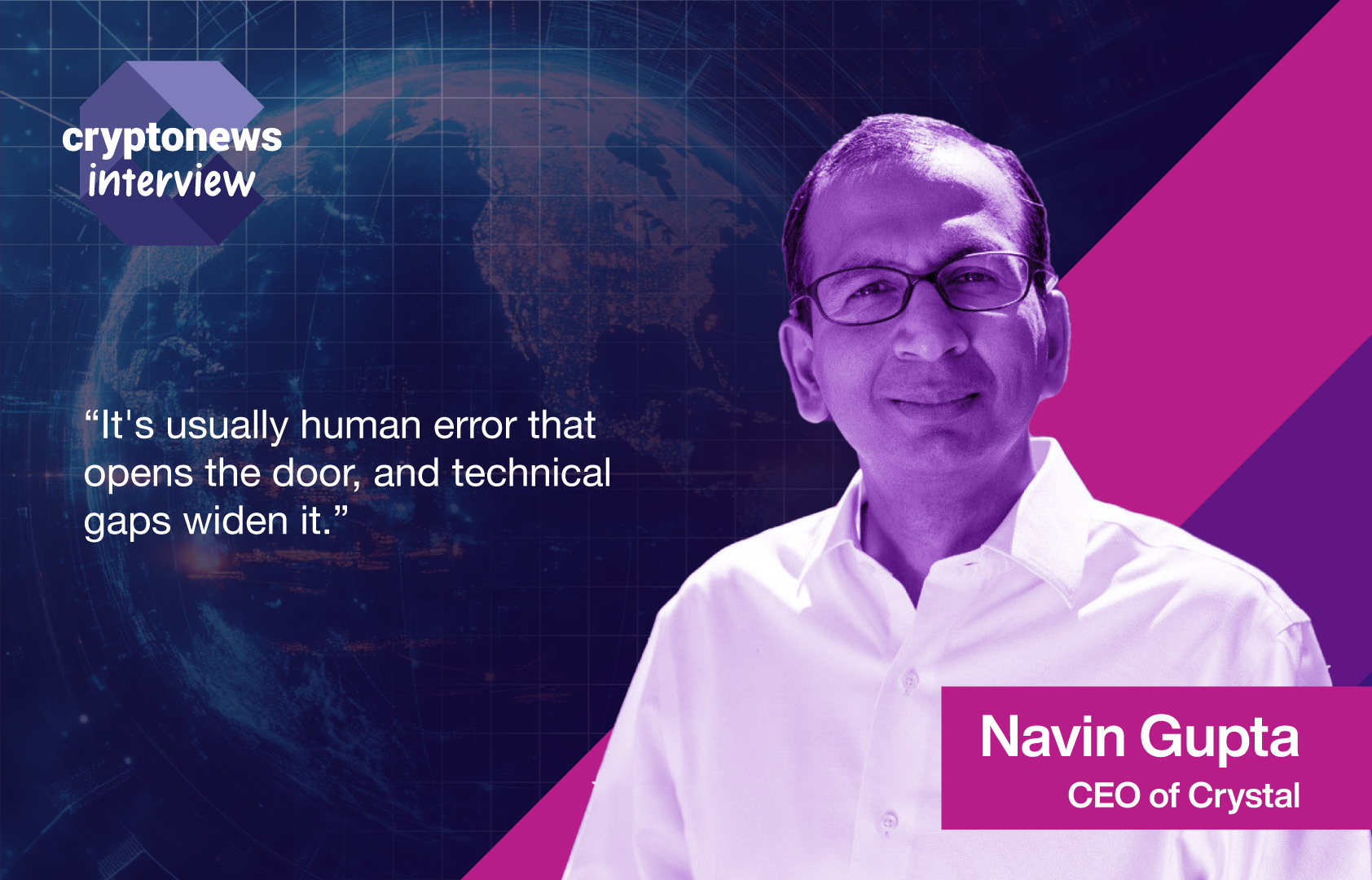
“80% of Crypto Scams Could Be Stopped by One Mental Shift” — Crystal CEO | Interview

“80% of Crypto Scams Could Be Stopped by One Mental Shift” — Crystal CEO | Interview

The crypto industry’s rapid growth has created massive opportunities for innovation and a fertile ground for crypto scams . The scale of this exploitation became starkly apparent in 2024, when Americans alone lost a record $9.3 billion to crypto-related crimes , representing a devastating 66% increase from the previous year’s $5.6 billion. The FBI’s Internet Crime Complaint Center received nearly 150,000 crypto-related complaints in 2024, indicating that what once seemed like isolated incidents has now metastasized into a systematic threat to digital finance. Source: Chainalysis Perhaps most alarming is the demographic targeting, with people over 60 reporting the highest losses at $2.8 billion . At the same time, Chainalysis data suggests that North Korean hackers alone stole $1.34 billion from crypto platforms in 2024, representing 61% of all stolen funds. Crystal, a leading blockchain analytics platform, sits at the frontline of this battle. The company’s tools help track illicit cryptocurrency flows and provide crucial intelligence for investigations. We spoke with Navin Gupta, CEO of Crystal since early 2024, about the sophisticated manipulation tactics driving modern crypto fraud. With over 23 years of leadership experience across fintech giants including Citigroup, HSBC, and Ripple, Gupta brings a unique perspective on how traditional financial crime prevention applies to the decentralized world of cryptocurrency. Our conversation reveals how scammers exploit fundamental human psychology, why technical solutions alone aren’t enough, and what individuals and businesses can do to protect themselves. The Psychology Behind Crypto Manipulation CN: From your experience, what are the most common psychological tactics scammers use to build trust with their victims? Gupta: The most common tactics revolve around urgency, authority and familiarity. Scammers impersonate figures of perceived authority, such as project founders, influencers, or even support staff, to create an illusion of legitimacy. They exploit FOMO by creating time pressure “You’ll miss your chance if you don’t act now.” They also mimic the visual identity of real platforms, tapping into a victim’s trust in brands. These attacks are carefully orchestrated campaigns that understand human psychology at a deep level. What makes crypto particularly vulnerable is that many users are already operating in a high-risk, high-reward mindset, making them more susceptible to urgency-based manipulation. CN: How do scammers exploit personal relationships or social closeness – the so-called “trust trap” in modern crypto fraud schemes? Gupta: We’ve seen a surge in what we call “social infiltration.” Attackers slowly embed themselves into communities Discord servers, Telegram groups, even private DMs, posing as helpful members. They build rapport over time, sometimes for weeks, before proposing a scam investment or fake tool. The trap works because it doesn’t feel like fraud. It feels like a friend giving advice. The victim’s guard is down because of emotional familiarity. This is particularly insidious because it exploits one of crypto’s greatest strengths: community . These tight-knit communities built around shared interests and investment strategies become perfect hunting grounds for patient predators. Source: Chainalysis Recent Chainalysis data shows that “pig butchering” scams , which rely heavily on building fake relationships, have seen an 85-fold increase since 2020 . Victims often lose between $2-4 million individually, precisely because the emotional manipulation makes them willing to transfer larger amounts over time. The psychology is devastatingly effective because it taps into fundamental human needs for belonging and trust. When someone who has been helpful and friendly for weeks suddenly presents an “exclusive opportunity,” victims might evaluate the investment and try to maintain a relationship they value. Evolution of Social Engineering Tactics CN: Social engineering is evolving fast. What new behaviors or emotional triggers are attackers using in 2024–2025 that we didn’t see five years ago? Gupta: In 2024–2025, we’re seeing more hyper-personalized attacks. Thanks to leaked data and AI-powered profiling, scammers tailor messages that reflect the victim’s language, portfolio history, or even past interactions. Another trigger that has grown is empathy. Scammers fake medical emergencies or family-related causes to solicit crypto under emotional pretenses. There’s also a rise in “VIP scams” — attackers pretending to offer exclusive investment opportunities, exploiting status-driven FOMO. AI has been a massively destructive tool for scammers. They can now generate convincing personas, mimic writing styles, and even create deepfake videos of trusted figures. Just a few years ago, the level of personalization we’re seeing would have required teams of social engineers; now, it can be automated. Chainalysis research indicates that AI is making fraud “more scalable and affordable for bad actors to conduct,” which explains why we’re seeing such dramatic increases in both sophistication and volume. This hybrid approach has contributed to investment fraud becoming the costliest category, accounting for $5.7 billion in losses in 2024 alone, a 24% increase from the previous year. CN: Could you walk us through a case where the victim was manipulated using privileged or sensitive personal data? How do attackers usually get hold of such data? Gupta: In one case, Crystal analyzed, a victim received a phishing email that included a reference to a private wallet address and transaction from three years ago. The scammers had scraped blockchain data and cross-referenced it with leaked emails from old exchange breaches. This made the phishing message look highly legitimate. They even used the victim’s city and device type in the email footer. Data like this is often bought on darknet forums or extracted via malware and SIM-swaps. What’s particularly concerning is how the transparency of blockchain data, which is generally a feature, becomes a vulnerability when combined with traditional data breaches. Scammers can build incredibly detailed profiles by connecting on-chain activity with off-chain personal information. High-Stakes Social Engineering CN: Could you share a case Crystal worked on that holds a strong lesson about how social manipulation works in scams? Gupta: We investigated a case where a mid-sized crypto fund’s top manager was tricked by someone posing as their CEO on Telegram. The attacker spoofed the CEO’s Telegram ID, mimicked writing style, and asked for an “urgent liquidity transfer.” What’s shocking is that the attacker waited until the real CEO was traveling — information likely taken from social media. It’s a clear example of how scammers blend social engineering with timing and reconnaissance. The breach was emotional and contextual. This particularly shows why traditional corporate security training often fails in the crypto space. The speed and irreversibility of crypto transactions don’t allow for the usual verification processes that might catch such attacks in traditional finance. CN: Have you noticed an increase in scams targeting high-net-worth individuals or companies through tailored, “luxury” phishing attempts? If yes, how do these differ from mass-market scams? Gupta: Absolutely. High-net-worth targets are approached with sophistication. These phishing attempts often arrive via LinkedIn, private invite-only communities, or even through introductions from compromised contacts. The language is polished, the visuals mimic premium branding, and the attackers often reference private investment rounds or bespoke DeFi tools. The difference lies in the prep work. Mass-market scams are fast and generic — contrary, “luxury” scams are slow, curated, and often involve weeks of social engineering. Attackers invest months in building relationships with high-value targets. They’ll attend virtual events, contribute to discussions, and establish credibility before making their move. The ROI justifies this level of effort when a single successful attack can net millions. This trend is part of broader market data showing that people aged 50-59 lost $164 million in Q1 2025 alone to investment scams, despite representing a smaller victim pool than younger demographics. The sophistication extends beyond the approach, as these attackers often compromise legitimate contacts within a target’s network first and then use those trusted relationships as entry points. The patience and resources required suggest these aren’t individual bad actors, but organized operations with substantial backing. Technical Vulnerabilities and Human Error CN: What are some of the less obvious but dangerous mistakes individuals or businesses make that put their funds at risk? Gupta: One major issue is excessive platform trust. People assume that because a dApp looks slick or a Telegram bot has thousands of users, it must be safe. Another is poor key compartmentalization. Teams often store keys in shared environments like cloud folders or message threads. Businesses also overlook decentralized approval flows: if one person can sign large transactions, you’re just one social hack away from a breach. The decentralized nature of crypto means there’s no customer service department to call when things go wrong. This finality demands a completely different security mindset than traditional finance, but many users haven’t adapted their behaviors accordingly. CN: SIM-swap attacks remain a terrifyingly effective method. Can you break down how a SIM-swap can lead to a full asset drain? Gupta: In a SIM-swap, attackers convince a telecom provider to transfer your number to a SIM they control. From there, they intercept 2FA codes, reset email passwords, and gain access to exchange accounts. Within minutes, they can drain wallets, liquidate NFTs, or even use saved cards to steal fiat. To protect against this, one should use hardware security keys, avoid SMS-based 2FA, and set up a separate device/email for financial operations that isn’t tied to public contact points. The speed of a SIM-swap attack is what makes it so devastating in crypto. Unlike traditional finance, where there might be fraud detection systems or transaction delays, crypto moves at the speed of the blockchain, usually within minutes or even seconds. Building Scam-Resistant Behaviors CN: When looking at crypto scam victims, what’s more often the root cause: technical gaps or human error? Gupta: It’s usually human error that opens the door and technical gaps widen it. Think of it as a chain: an emotional decision leads to a click, then poor architecture (like no withdrawal whitelist) lets funds leave instantly. Human behavior is the spark, and weak security design is the accelerant. The most effective scam prevention needs to address both: behavioral hygiene and technical barriers. This is why education is emphasized alongside other technical solutions. You can build the most sophisticated security system, but if a user willingly provides their private keys because they trust a convincing impersonator, no technology can protect them. CN: What tools should users look for to detect early signs of social engineering or potential scams? Gupta: We recommend tools that analyze behavioral anomalies — for example, extensions that flag new domains mimicking existing dApps, or wallets that show risk scores on new token contracts. Also, always look for inconsistencies: slightly off URLs, urgency in language, or unexpected account activity. And most importantly: no tool replaces pause and verification. Slow is safe in crypto. The crypto industry needs to develop better user experience patterns that naturally encourage verification without being overly cumbersome. The current state often forces users to choose between security and convenience, which is a losing proposition. The Ultimate Defense Against Crypto Fraud CN: If you could install one reflex in every crypto holder’s brain to make them scam-proof, what would it be? Gupta: Assume every unsolicited message is a potential attack. That mental shift alone filters out 80% of threat vectors. If someone reaches out with urgency, secrecy, or flattery — stop. Your best defense is deliberate doubt. The crypto space moves fast, but your money doesn’t have to. The few minutes you spend verifying a request could save you from losing everything you’ve worked to build in this space. About Navin Gupta Navin Gupta has been the CEO of Crystal since early 2024. He is a seasoned international executive with over 23 years of leadership experience in fintech and financial services. Prior to joining Crystal, Navin held key roles including Vice President at Citigroup, Head of Growth at HSBC, and Managing Director at Ripple.

Author: CryptoNews
Fed Cracks Down: U.S. Banks Can No Longer Block Crypto Over “Reputational Risk”—Now What?

Fed Cracks Down: U.S. Banks Can No Longer Block Crypto Over “Reputational Risk”—Now What?

The United States Federal Reserve has removed “reputational risk” from its supervisory framework for banks, a decision that could reshape how financial institutions engage with the crypto sector. In a policy update released Monday, the Fed said it will now focus on more specific financial risk discussions instead of the vague and often criticized reputational risk metric. For years, crypto firms have argued that reputational risk has been used as a vague and unfair justification to block or sever banking relationships with crypto firms, contributing to what many referred to as “debanking.” @federalreserve announces that reputational risk will no longer be a component of examination programs in its supervision of banks: https://t.co/7Gwn1UuyNx — Federal Reserve (@federalreserve) June 23, 2025 With the change, banks may now find it easier to do business with digital asset companies without fear of supervisory pushback. Fed Clarifies Banks Risk Ratings, Dropping Barrier Long Blamed for Crypto Exclusion The policy shift may ease access to financial services for companies operating in the digital asset space, many of which have faced challenges in maintaining banking ties over the past several years. “This is a win, but there is still more work to be done,” said U.S. Senator Cynthia Lummis in response to the announcement. Lummis, a pro-crypto lawmaker from Wyoming, has been vocal about the need for regulatory clarity in the crypto space and has criticized what she called the “assassination” of digital asset businesses in the U.S. through aggressive regulatory practices. In February, I exposed the Fed’s aggressive reputation risk policies that assassinated American bitcoin & digital asset businesses. Today, the Fed announced it will scrap reputation risk as a factor in its bank supervision. This is a win, but there is still more work to be done. https://t.co/AOZSr0IFcp pic.twitter.com/1FtsIcNJsI — Senator Cynthia Lummis (@SenLummis) June 23, 2025 According to the Federal Reserve, the removal of reputational risk is meant to clarify how examiners evaluate a bank’s risk management practices. The updated guidance emphasizes that the formal rating will now reflect both quantitative and qualitative elements tied directly to financial performance and safety. “This change does not alter the Board’s expectation that banks maintain strong risk management,” the Fed said, adding that the adjustment is not meant to prevent banks from using the concept of reputational risk in their own internal assessments. Historically, reputational risk was defined by the Fed as the possibility that negative publicity, true or not, could lead to customer losses, litigation, or a drop in revenue. Critics in the crypto industry have long argued that the term was too broad and too subjective, allowing regulators to apply inconsistent standards, especially when it came to digital assets. Fed Ends ‘Operation Chokepoint 2.0’ Tactics with Reputational Risk Reform The decision comes after years of what some have described as “ Operation Chokepoint 2.0 ,” a period during which more than 30 crypto and fintech firms reported being cut off from banking services. Rob Nichols, president of the American Bankers Association, welcomed the change. “The supervisory process will now be more transparent and consistent,” he said. “We have long believed banks should be able to make business decisions based on prudent risk management and the free market, not the individual perspectives of regulators,” he added. The Fed has already begun reviewing and removing references to reputational risk from its guidance materials. It is also planning to train examiners on the new framework and coordinate with other federal banking regulators to ensure consistent application. The removal of reputational risk references will be done gradually as existing guidance is updated. Although banks are still required to manage risks in line with existing regulations, the shift could provide relief for crypto firms seeking stable banking relationships in the U.S. It also follows a broader trend of regulatory recalibration, as several federal agencies appear to be easing crypto-related restrictions introduced in previous years . The crypto industry scored several wins in recent months as federal regulators eased long-standing banking barriers. The FDIC removed “reputational risk” from its bank oversight criteria , following the Senate Banking Committee’s approval of the FIRM Act. In May, the OCC confirmed banks can handle crypto trading and delegate services. The FDIC also greenlit crypto activities without prior approval. On June 17, the Senate passed the GENIUS Act , focused on stablecoin regulation, with strong bipartisan support. The bill now heads to the House, potentially cementing the first comprehensive US crypto framework. Still, some observers warn the change could reduce oversight and open the door to riskier bank behavior if not properly monitored. But for the digital asset industry, the removal of reputational risk marks a moment of progress after years of regulatory uncertainty.

Author: CryptoNews
Bitcoin's "State HODL" is now online. Why is Texas the first stop?

Bitcoin's "State HODL" is now online. Why is Texas the first stop?

In the vast state of Texas, a grand experiment on the digital future is moving forward at full speed with a clear goal and in unison. With a stroke of

Author: PANews
a16z: 5 core indicators reveal the current state of the crypto market

a16z: 5 core indicators reveal the current state of the crypto market

Author: Daren Matsuoka , a16z crypto Compiled by: Tim, PANews The crypto industry is maturing, and late last year we outlined five indicators to watch closely in 2025 to track

Author: PANews
The bottleneck problem: Why ‘fast’ blockchains fail when it counts most | Opinion

The bottleneck problem: Why ‘fast’ blockchains fail when it counts most | Opinion

The reality is that many first-generation high-speed blockchains were built without accounting for these interlocking constraints

Author: Crypto.news
Crypto tax Australia: How does Australia tax their crypto?

Crypto tax Australia: How does Australia tax their crypto?

A recent ruling in a criminal court case classified crypto assets as money, which goes against the long-held crypto tax Australian office that counts crypto as capital gains. A court decision involving a federal police officer who allegedly stole 81.6…

Author: Crypto.news