DEX

DEXs are peer-to-peer marketplaces where users trade cryptocurrencies directly from their wallets via Automated Market Makers (AMM) or on-chain order books. By removing central authorities, DEXs like Uniswap and Raydium prioritize privacy and user sovereignty. The 2026 DEX landscape is dominated by intent-based trading, MEV protection, and cross-chain liquidity aggregation. Follow this tag for the latest in on-chain trading volume, liquidity pools, and the technology behind permissionless swaps.

34608 Articles
Created: 2026/02/02 18:52
Updated: 2026/02/02 18:52
Xiao Feng's Bitcoin Asia 2025 speech: "ETFs are good! DATs are better!"

Xiao Feng's Bitcoin Asia 2025 speech: "ETFs are good! DATs are better!"

On August 28th, Dr. Xiao Feng, Chairman and CEO of HashKey Group, delivered a keynote speech titled "ETF is good! DAT is better!" at Bitcoin Asia 2025. This speech was compiled from on-site shorthand, with some deletions that do not affect the original meaning. In recent months, many friends have asked me a question. From on-chain Bitcoin trading to off-chain stock exchanges, Bitcoin has become a very popular investment tool in stock trading. So, is it more appropriate for such an investment tool to be in the form of an ETF or a DAT (Digital Asset Treasury)? My personal conclusion is that perhaps a model like DAT, just like when ETF first came out, is a revolution in new financial instruments. We know that stocks evolved from individual stocks traded on stock exchanges to index funds, and then to exchange-traded funds (ETFs). Innovations in financial instruments have created a vast new asset class. Cryptocurrency has evolved from on-chain to off-chain, allowing all stock market investors to easily and habitually access crypto assets through the stock market, a method that is now accessible to 99% of the population. So, which approach is better? ETFs or DATs? My personal opinion is that DATs may be the best way for crypto assets to move from on-chain to off-chain. We can see that currently, the only single commodity, single-asset investment tool in the global capital market is gold, the largest ETF. There aren't single-stock ETFs for stocks, because stocks are already traded on stock exchanges and are easily accessible. If you want to buy a basket of stocks, such as an index fund, you need other investment tools. Index funds or ETFs are the most convenient tools for traditional investors. Previously, single-asset ETFs were limited to gold, but with the launch of the BTC ETF, we now have a second type of single-asset ETF. This is a natural and natural progression, as ETFs are commonly used to create investment vehicles, making it easier for traditional stock market investors to invest in alternative assets, such as crypto. However, when valuing ETFs, we use Net Asset Value (NAV); while for DATs, we use Market Value (MMV). These two concepts are completely different. Market Value leads to greater price volatility, while NAV fluctuations are much smaller than Market Value. Therefore, as a single investment tool for crypto, I believe DATs are the preferred approach. Better liquidity The biggest advantage of DAT is that it has better liquidity than ETF, which is the most important and core point for any investor. My observation is that the smoothest and most effective way to convert cryptocurrencies into traditional financial assets is through exchanges. The growth of ETFs, on the other hand, comes from subscriptions and redemptions, which require three or more intermediaries and take one to two days to complete. This is clearly inferior to transactions on a distributed ledger, which can take as little as two or ten minutes. Therefore, transactions may be the primary method for converting between traditional financial and crypto assets in the future, making greater liquidity a core advantage of DATs over ETFs. Better price elasticity At the same time, market capitalization offers greater price elasticity than net asset value. We know that one of the key reasons MicroStrategy has been able to consistently build its financing structure through various financing instruments and hold a significant amount of Bitcoin is the inherent volatility of BTC. Furthermore, hedge funds and other alternative investors are drawn to investing because they can own a more volatile asset through shares, allowing them to split equity and bond over-the-counter, turning volatility into another tool for both price protection and arbitrage. Convertible bonds (CBs) are particularly popular, as they are often structured and broken down over-the-counter by hedge funds and alternative investment firms. Therefore, these institutions favor investing in companies like MicroStrategy, buying its shares or convertible bonds, because they can structure their investments. This offers greater price elasticity, something ETFs lack. More appropriate leverage ratio Third, it offers more appropriate leverage. Previously, single-asset investing was limited to two extremes: holding spot BTC or ETH, or buying futures or CME contracts. A significant gap exists in between. This gap allows listed companies to design appropriate leveraged financing structures. By simply holding shares, the company manages the leveraged structure, allowing you to enjoy a higher premium than the price growth of the cryptocurrency itself. Built-in fall protection Instruments like DATs offer a premium and inherent downside protection. Imagine if the stock price drops by more than the net asset value, this effectively provides investors with an opportunity to buy BTC or ETH at a discount. This market price fluctuation will quickly be eliminated by the market, providing a strong downside protection. Otherwise, you'd rather buy stocks, effectively buying BTC or ETH at a discount. Taking all these factors into consideration, DATs may be a more suitable financing tool for crypto assets. Just as ETFs were well-suited to index or basket investment strategies in the stock market, DATs may be a new trend we will see over the next three to five years. The scale of assets held by DATs may approach the scale covered by current stock market ETFs, perhaps within another ten years. Therefore, I believe DATs are a new investment tool with the greatest growth potential in the future. They are more suitable for crypto assets, while ETFs may be more suitable for stock assets. Of course, this is just my personal opinion. Thank you everyone.

Author: PANews
Excellion Finance Launches MAX Yield: A Multi-Chain, Actively Managed DeFi Strategy

Excellion Finance Launches MAX Yield: A Multi-Chain, Actively Managed DeFi Strategy

Singapore, Singapore, 28th August 2025, Chainwire

Author: Blockchainreporter
Is Altcoin Season Finally Arriving? – Revealing Best Altcoins That Can Boost Your Capital in September Altcoin Mania

Is Altcoin Season Finally Arriving? – Revealing Best Altcoins That Can Boost Your Capital in September Altcoin Mania

Excitement is building as signs point to a new wave of gains for non-Bitcoin tokens. Market trends suggest attention is turning toward lesser-known digital coins with big potential. Investors are searching for the projects that could lead the next rally. Which coins stand out, and what could make them soar in the coming weeks? Solana [...]]]>

Author: Crypto News Flash
Institutions Weighing In Heavily on Ethereum as Market Flips Neutral

Institutions Weighing In Heavily on Ethereum as Market Flips Neutral

The broader crypto market has taken a cautious pause, with the Fear and Greed Index dropping to 45, but institutions are betting heavily on ETH. The post Institutions Weighing In Heavily on Ethereum as Market Flips Neutral appeared first on Coinspeaker.

Author: Coinspeaker
Active vs. Passive ETFs: Which is Right for Canadian Investors

Active vs. Passive ETFs: Which is Right for Canadian Investors

The post Active vs. Passive ETFs: Which is Right for Canadian Investors appeared on BitcoinEthereumNews.com. Exchange-traded funds (ETFs) have become one of the most popular investment methods in Canada. Many feel that in the past couple of years, these funds have replaced the practice of opening a TFSA for retirees managing RRIF withdrawals. The ETFs combine the diversification options and liquidity, which is what the investors are after. The main dilemma for Canadian investors is now whether to invest in active or passive ETFs. In this article, we’ll explain the difference between the two and provide guidance for investors on how to choose the one that suits them, based on their circumstances. The Canadian Context Before diving into the difference between passive and active ETFs, we should explain the Canadian investment context and how it differs from similar countries. Being pooled investment funds, ETFs trade on stock exchanges like individual stocks. When investors buy an ETF, they buy a bundle of securities, including stocks, bonds, commodities, and even other funds, without buying any of the assets directly. The Canadian financial sector is heavily concentrated in the domestic market, and this allows for diversification. Canada is a pioneer in the ETF markets. The world’s first ETF was created in Canada in 1990. At this point, Canada has about $400 billion in ETF assets. Their value also grows at a double-digit rate. The major players in the Canadian market include BlackRock’s iShares, Vanguard, BMO Global Asset Management, and new companies such as Purpose Investments and Horizons ETFs. Crypto ETFs Crypto ETFS are a recent introduction in the world of tradable assets. These funds allow the owners to trade with cryptos without buying any of the coins themselves. Instead, the value of the ETF remains tied to the market value of the cryptos it contains. For a while now, crypto experts such as Cryptomaniaks have been writing about…

Author: BitcoinEthereumNews
Solana DEX Traders Continue to Decline Amid a Rise in Meme Coin Scams

Solana DEX Traders Continue to Decline Amid a Rise in Meme Coin Scams

Solana DEX traders are looking elsewhere for gains, with experts citing a rise in meme coin scams and a shift in perspectives.

Author: Coinstats
Amount of Solana (SOL) Held by US Companies Has Been Revealed – Here’s the Total Value

Amount of Solana (SOL) Held by US Companies Has Been Revealed – Here’s the Total Value

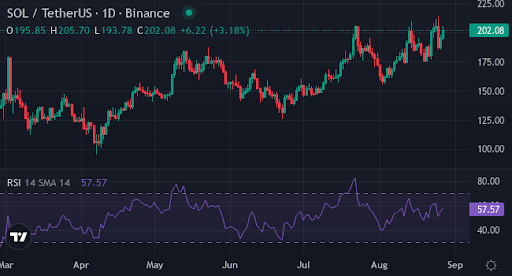
The post Amount of Solana (SOL) Held by US Companies Has Been Revealed – Here’s the Total Value appeared on BitcoinEthereumNews.com. According to data from the Strategic SOL Reserve platform, a total of 13 companies or institutions hold a total of 8.27 million Solana (SOL), or approximately $1.72 billion. This amount corresponds to 1.44% of Solana’s total supply, with 585,000 SOL of these assets already staked. Solana price is currently trading at $207.75, marking a 2.3% increase over the last 24 hours. According to the list, the following companies stand out among those holding the most SOL: Sharps Technology, Inc. – 2.14 million SOL ($444.6 million) Upexi, Inc. – 2 million SOL ($415.5 million) DeFi Development Corp – 1.42 million SOL ($295 million, plus 158,886 SOL staked) Mercurity Fintech – 1.08 million SOL ($225.1 million) iSpecimen Inc. – 1 million SOL ($207.8 million) These 5 companies account for almost all of the top 13 institutions, with a total of 764 million SOL. On the other hand, the amount of SOL staked was 585,059 SOL, worth approximately $104.1 million, and the average annual return rate was reported as 6.86%. *This is not investment advice. Follow our Telegram and Twitter account now for exclusive news, analytics and on-chain data! Source: https://en.bitcoinsistemi.com/amount-of-solana-sol-held-by-us-companies-has-been-revealed-heres-the-total-value/

Author: BitcoinEthereumNews
GBP/USD may regain its ground amid concerns over Fed independence.

GBP/USD may regain its ground amid concerns over Fed independence.

The post GBP/USD may regain its ground amid concerns over Fed independence. appeared on BitcoinEthereumNews.com. GBP/USD maintains position around 1.3500 ahead of Q2 US GDP Annualized GBP/USD remains steady after two days of gains, trading around 1.3500 during the Asian hours on Thursday. The pair may further appreciate as the US Dollar (USD) struggles amid rising concerns over the US Federal Reserve’s (Fed) independence. Traders await the Q2 US Gross Domestic Product (GDP) Annualized due later in the day. Focus will shift toward July Personal Consumption Expenditures (PCE) Price Index data, the Fed’s preferred inflation gauge. Read more… GBP/USD dips to 1.3457 as Fed turmoil boosts US Dollar rebound GBP/USD drops over 0.16% on Wednesday as the US Dollar (USD) continues to recover some ground, courtesy of the White House’s threats to the independence of the Federal Reserve (Fed), which triggered a rise on the long end of US Treasury bond yields. The pair trades at 1.3457 after slipping from a daily peak of 1.3482. There is a mixed market mood due to rumors that US President Donald Trump fired Fed Governor Lisa Cook, allegedly over allegations of mortgage fraud. Initially, the US Dollar weakened, but it has so far recovered, as depicted by the US Dollar Index (DXY), which tracks the performance of the US Dollar’s value against a basket of six currencies, up 0.24%, at 98.45. Read more… Source: https://www.fxstreet.com/news/pound-sterling-price-news-and-forecast-gbp-usd-may-regain-its-ground-amid-concerns-over-fed-independence-202508280550

Author: BitcoinEthereumNews
Deribit Chief Commercial Officer: The Altcoin Index 44 is far below the key level of 75, and macroeconomic factors are still not enough to start the Altcoin season

Deribit Chief Commercial Officer: The Altcoin Index 44 is far below the key level of 75, and macroeconomic factors are still not enough to start the Altcoin season

PANews reported on August 28th that, according to BeInCrypto, despite positive macroeconomic signals from China's economic stimulus policies and the Federal Reserve's potential September rate cut, an altcoin season has yet to arrive. Deribit Chief Commercial Officer Jean-David Péquignot stated that accommodative central bank policies could indeed increase market liquidity and drive speculative inflows into risky assets. However, the market currently lacks sufficient trading volume and broad-based growth momentum. Ethereum's recent price increase relative to Bitcoin is seen as a potential signal of a market shift, but it is not yet sufficient to trigger a full-blown altcoin season. In addition, according to CoinMarketCap Altcoin Season Index monitoring, the indicator is currently 44, far below the key level of 75. Bitcoin's market dominance remains at 58%, continuing to occupy a core position in the crypto market.

Author: PANews
Deneyimli Analist Timothy Peterson Uyardı: “FED Faiz İndirse Bile Sorunlar Çözülmeyecek, Hayatta Kalmak İstiyorsanız Bitcoin ve…”

Deneyimli Analist Timothy Peterson Uyardı: “FED Faiz İndirse Bile Sorunlar Çözülmeyecek, Hayatta Kalmak İstiyorsanız Bitcoin ve…”

Bitcoin (BTC) yanlısı analist Timothy Peterson, FED para politikası ve piyasa görünümü hakkında çarpıcı değerlendirmelerde bulundu. Peterson, faiz oranlarının mevcut seviyelerde kalmasının yapısal sorunları çözmeyeceğini, aksine ekonomiyi daha da zora sokacağını savundu. Peterson’a göre, Leading Economic Index (LEI) göstergesi son 50 yılın tüm resesyonlarından önce %5 veya daha fazla düşüş göstermiş ve FED her seferinde […] Kaynak: Bitcoinsistemi.com

Author: Coinstats