GameFi

GameFi merges blockchain technology with the gaming industry, enabling Play-to-Earn (P2E) and "Play-to-Own" economies. Through decentralized assets, players have true ownership of in-game items as NFTs. In 2026, the sector has matured into High-Quality AAA Gaming experiences with seamless on-chain integration. Explore this tag for insights into Web3 gaming guilds, metaverse infrastructure, and how blockchain is redefining player incentives and virtual economies in the 2026 gaming landscape.

1175 Articles
Created: 2026/02/02 18:52
Updated: 2026/02/02 18:52
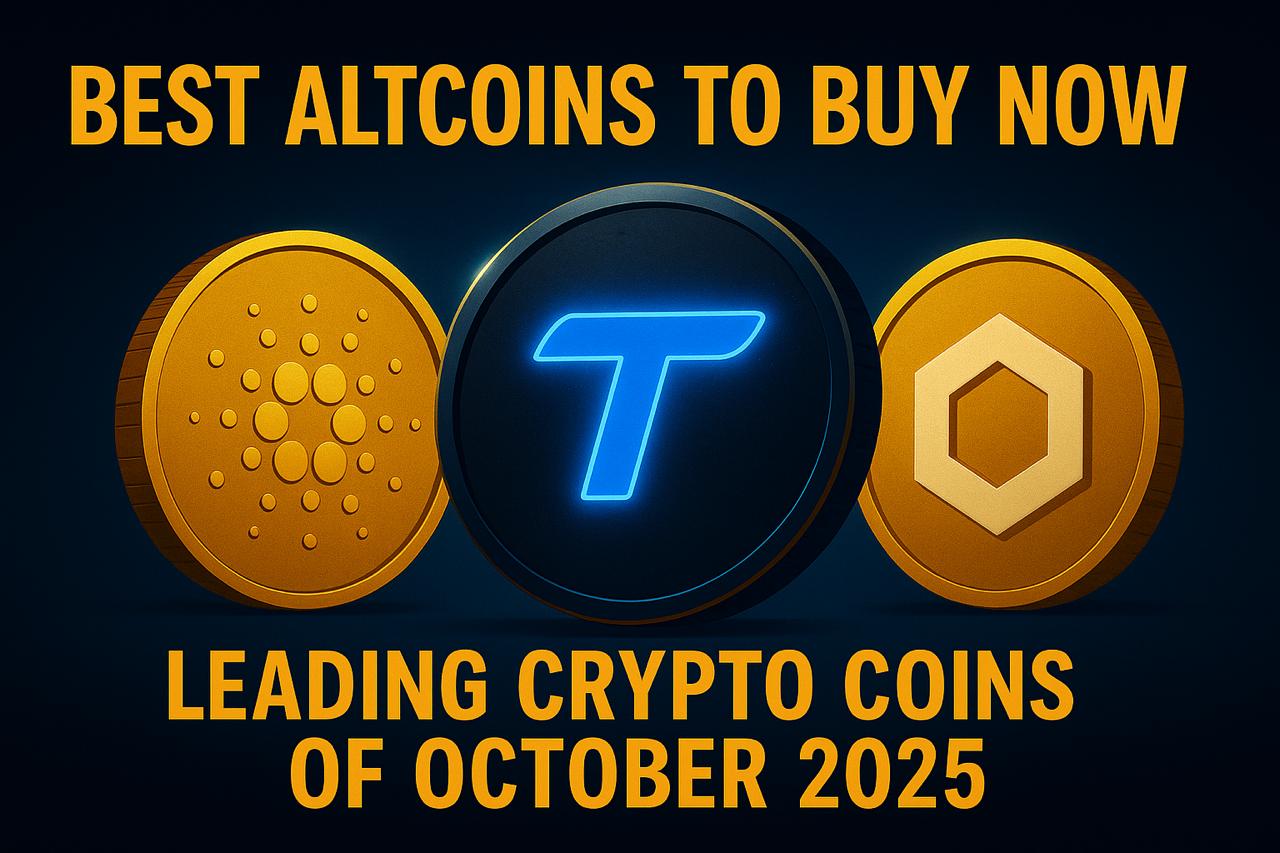
Best Altcoins To Buy Now: Leading Crypto Coins of October 2025

Best Altcoins To Buy Now: Leading Crypto Coins of October 2025

Meanwhile, Bitcoin recently broke above the supply zone at $114K–$117K, reaching a new all-time high near $126K, supported by strong […] The post Best Altcoins To Buy Now: Leading Crypto Coins of October 2025 appeared first on Coindoo.

Author: Coindoo
Cardano’s Rival in the Making? This Best Crypto Presale Under $1 Could Deliver 5000x Gains This Year

Cardano’s Rival in the Making? This Best Crypto Presale Under $1 Could Deliver 5000x Gains This Year

Tapzi, the best crypto presale under $1, blends skill-based gaming, fixed supply, and audited security, positioning for up to 5000x gains in 2025.

Author: Blockchainreporter
DDC Insights: Beyond Custody, How Wallets Are Becoming the Super Entry Point of Web3

DDC Insights: Beyond Custody, How Wallets Are Becoming the Super Entry Point of Web3

On August 26, 2025, MetaMask announced that users can now log into their wallets with options like Google or Apple accounts. For years, crypto wallets have relied on 12-word seed phrases for setup and access. To keep them secure, these words couldn’t be copied or screenshotted, forcing users to write them down manually. While effective for security, this process has long been a barrier for mainstream adoption. MetaMask’s latest update, though small in appearance, sends a clear signal: wallets are starting to borrow Web2-style onboarding to make Web3 more accessible. The evolution of wallets makes this move feel less like an experiment and more like the next step in a broader trend. What began as simple tools for storing and transferring crypto soon expanded into gateways for dApps. Later, they became integral to decentralized identity and reputation systems. Each stage has pushed the boundaries of what a wallet can do, and the shift toward easier login methods is another piece of that ongoing transformation. Crypto Wallets: The Gateway to Assets From the very beginning, one of crypto’s core principles has been personal sovereignty and disintermediation. Instead of relying on banks or centralized platforms to safeguard their assets, users demand direct ownership and full control. This principle has shaped the first-order requirement of the crypto ecosystem: self-custody. To make self-custody possible, crypto needed a reliable tool to manage assets and handle interactions — signing transactions, receiving funds, checking balances. This is how crypto wallets came into existence. According to CoinLaw’s report Cryptocurrency Wallet Adoption Statistics 2025, there are now over 820 million active crypto wallets worldwide. Hot wallets account for 78% of them, and more than 31 million wallets are used for daily payments. The same report projects that by 2029, the crypto wallet market will expand to $57.61 billion, with a compound annual growth rate of 31.9%, representing a fourfold increase in size compared to 2024. Within the crypto wallet space, a few names stand out: MetaMask: the most widely used wallet globally, with an estimated 140 million users and over 30 million monthly active users (MAU). Ledger: the leading hardware wallet brand, which reports more than 7 million devices sold, securing roughly 20% of global crypto assets. Whether hot or cold, single-chain or multi-chain, wallets have fundamentally developed as “asset containers” and “transaction tools”. At this stage, their primary goal has been straightforward: secure custody and seamless transfer of digital assets. But the industry focus is shifting. Once driven by the expansion of public blockchains, attention has now turned to lowering barriers to use. On one hand, as MetaMask has demonstrated, onboarding is being “Web2-ified”, replacing seed phrases with more familiar login flows to reduce friction and security anxiety. On the other hand, the transfer and payment experience is being simplified through stablecoin compliance, QR-code payments, social account transfers, and even integration with offline POS systems. Each of these steps narrows the gap between “crypto assets” and everyday payments. Still, asset management and payments, while critical, are no longer the full picture. With the rise of Ethereum, smart contracts, and especially dApps, crypto assets are now designed to interact with far more complex systems, from contract calls and DeFi participation to governance voting. A wallet, therefore, can no longer remain just a static vault. It must become the gateway to the decentralized ecosystem. Crypto Wallets: The Gateway to Applications Not long ago, DDC posted a tweet asking: “What do you think wallets are really the gateway to?” Almost every reply pointed to the same answer: dApps. With the rise of Ethereum and smart contracts, DeFi quickly became the most popular and most frequently used application in crypto. This was soon followed by waves of innovation, like NFTs, GameFi, SocialFi, and more. In step with this shift, wallets expanded from being mere asset containers to becoming application gateways. Users were no longer just storing or transferring assets. They now needed to interact with contracts, farm liquidity, trade NFTs, and participate in DAO governance. To support these behaviors, wallets began evolving in two distinct directions: Login Identity: From the early days of simple address mapping to innovations like ENS domains and DID systems, wallets have become the account layer for users entering dApps. Today, almost every dApp begins with a familiar button: “Connect Wallet”. All interactions within those dApps, along with any assets acquired, such as NFT items, are then bound to the wallet address. Application Aggregation: In the past, users had to find a dApp’s standalone website and connect through a browser extension wallet. Now, wallets themselves are evolving into aggregation platforms, streamlining the entire process. Open a wallet today, and you can execute swaps, bridges, staking, or GameFi “gold farming” directly inside it — no extra tabs required. Many wallets also feature built-in dApp marketplaces, letting users discover and access DeFi, NFT, or GameFi applications all in one place. As the Web3 application ecosystem expands, users are no longer satisfied with fragmented entry points. Instead, they expect the wallet itself to become a comprehensive operations hub. In other words, the wallet’s job is no longer just to answer “Can I connect?” but also “How can I connect faster, more smoothly, and with richer features?” This is why dApp aggregation, built-in interactions, and even bundled DeFi and cross-chain functions are emerging as the core selling points of the next generation of wallets. Quietly but decisively, wallets are shifting their role, from simple connectors to full-fledged distribution centers within the Web3 ecosystem. According to WalletConnect’s official figures, the project now supports over 50 million unique active wallets, has facilitated more than 350 million connections, and enables login across 70,000+ applications. Meanwhile, CoinLaw reports that about 48% of crypto wallets worldwide have interacted with a dApp at least once. Global Growth Insights, in its Crypto Wallet Market Size, Share, Growth, and Industry Analysis, By Types (Hot Wallets, Cold Wallets) , Applications (Commercial, Individual) and Regional Insights and Forecast to 2033, further notes that over 41% of newly launched wallets already come with DeFi integration and cross-chain compatibility. Taken together, these numbers show that the idea of wallets as application gateways is no longer a fringe feature, it has become industry standard. The next phase of competition will not be about how many dApps a wallet can aggregate, but rather how seamless, contextual, and intuitive that aggregation feels. Ultimately, the race is to define which wallet can truly become the super entry point to the Web3 world. Crypto Wallets: The Gateway to Data If the “asset gateway” made wallets indispensable in Web3, and the “application gateway” turned them into operational hubs, then the “data gateway” is now opening the next frontier. In Web3, nearly every interaction must pass through a wallet. This means every on-chain action a user takes ultimately settles under their wallet address. As a result, wallets naturally accumulate the most comprehensive and direct user data. With the narrative of data assetization gaining momentum, wallets can increasingly be seen as native data gateways — securely channeling usable signals to applications and brands that need them. Under this lens, the boundaries of wallets are expanding once again, this time into the front-end interface for generating and leveraging data assets. On-chain transaction histories are just the starting point. The deeper question is how wallets can structure these behavioral signals, package them into verifiable proofs, and enable controlled external access under user authorization. At the same time, the scope of data is no longer confined to on-chain activity. From purchase histories and browsing patterns to content preferences, a vast pool of off-chain data can also be surfaced through wallets. Once structured, these datasets can enter verifiable, tradable flows, blurring the line between crypto assets and data assets. To achieve this, DataDanceChain has built its native DataDance Wallet as an engine for generating and distributing data proofs. The design follows a three-layer architecture that maps the full lifecycle of “generation” and “distribution”: Data Capture Layer This layer interfaces with both on-chain interactions (assets, NFTs, transactions) and off-chain inputs (such as purchase records or social media data), unifying them through secure APIs. Proof Generation Layer Here, multiple privacy-preserving computations, such as ZK, MPC, and TEE, are executed locally. Raw data is transformed into structured signals and then encapsulated as verifiable proofs. Importantly, external parties never see the underlying data; they can only validate outcomes, ensuring user privacy is protected by design. Distribution Control Layer Within the wallet, users define authorization rules, such as purpose, time limits, or scope of use. Proofs are then distributed to applications or brands strictly according to these settings. What the applications receive is the result, not the process. At the same time, to ensure that data can truly enter market circulation, DDC has built an additional assetization layer beyond the wallet. In this layer, proofs generated by the wallet are aggregated, packaged, and NFT-ized, then embedded within a market framework that enables pricing, liquidity, and settlement. This turns proofs from mere “access credentials” into tradable data assets. That said, it’s important to acknowledge that the “data gateway” narrative is still in its early stage. Today, very few wallets have managed to connect the full chain, from data generation, encapsulation, and authorization all the way to assetization. Most wallets remain positioned as tools for assets and applications. Yet the trajectory is clear. As data assetization markets expand, privacy-preserving computation technologies mature, and users grow more aware of the economic potential of their data, crypto wallets are poised to become the core entry point for data circulation, and the frontline where data value is unlocked. Conclusion From the asset gateway to the application gateway, and now toward the emerging data gateway, crypto wallets are no longer just private key containers. They are steadily taking on broader and more complex roles. Looking back at this trajectory, the wallet industry has always revolved around three core questions: User Experience: How do we lower barriers, from seed phrases to one-click logins? Privacy Protection: How do we ensure verifiability without exposure, from key custody to local proof generation? Value Capture: How do we close the loop of assets, applications, and data within the wallet, rather than letting value leak elsewhere? These questions will define the competitive landscape of wallets in the years ahead. Put differently, the defining advantage of the next generation of wallets will not be how many chains or dApps they support. It will be about who can deliver on all three fronts: providing the most familiar experience, enforcing the strictest privacy, and creating the clearest pathways for value capture. About DataDanceChain DataDance is a consumer chain built for personal data assets. It enables AI to utilize user data while ensuring the privacy of that data. DataDance caters to both individual users and commercial organizations (brands). Through the DataDance Key Derivation Protocol, the network’s nodes achieve multi-layered privacy protection while being EVM-compatible. This ensures absolute data privacy while enabling rights management, data exchange, asset airdrops, and claims. Website: https://datadance.ai/ X (Twitter): https://x.com/DataDanceChain Telegram: https://t.me/datadancechain GitHub: https://github.com/DataDanceChain GitBook: https://datadance.gitbook.io/ddc DDC Insights: Beyond Custody, How Wallets Are Becoming the Super Entry Point of Web3 was originally published in Coinmonks on Medium, where people are continuing the conversation by highlighting and responding to this story

Author: Medium
Sorare Moves to Solana to Upgrade Its On-Chain Fantasy Sports Platform

Sorare Moves to Solana to Upgrade Its On-Chain Fantasy Sports Platform

The post Sorare Moves to Solana to Upgrade Its On-Chain Fantasy Sports Platform appeared on BitcoinEthereumNews.com. Key Notes The platform chose Solana for its speed and scalability, processing 3,500+ transactions per second with 3.7M daily wallets. All cards automatically reissue as Solana NFTs with external marketplace trading while ETH balances transfer to Base L2. Nine public companies now hold 13M+ SOL collectively as Solana Company reports $525M+ holdings with 190% stock surge. Fantasy sports platform Sorare is migrating its entire NFT card collection to Solana SOL $228.2 24h volatility: 3.0% Market cap: $124.53 B Vol. 24h: $7.54 B by the end of October, bringing 5 million users to the blockchain in one of the largest consumer application migrations in Web3 history. The migration is fully automatic. All Sorare cards will be reissued as Solana NFTs, unlocking the ability to trade them on external marketplaces and store them in wallets like Phantom. User ETH balances will simultaneously move from StarkEx to Coinbase’s Base L2. According to Sorare, the decision centers on Solana’s speed, scalability, and openness as a public blockchain, calling it more than a technical upgrade and a step toward building the most open and flexible platform for digital sports collectibles. The network processes over 3,500 transactions per second and maintains 3.7 million daily active wallets, infrastructure designed for consumer-scale applications. ✨ We are moving to @solana 🚀 Our goal is to accelerate our vision of an open & on-chain sports platform for Sorare, where speed, liquidity and utility are at a core of a new digital sports economy. It’s not a replacement, it’s an upgrade A thread 🧵 pic.twitter.com/VVhRik7gU5 — Sorare (@Sorare) October 8, 2025 Public Companies Pile Into Solana The timing aligns with Solana Company (HSDT) reporting holdings exceeding $525 million in SOL and cash this week, part of a broader trend of public companies accumulating SOL in corporate treasuries. More than nine public…

Author: BitcoinEthereumNews
U2DPN and REI Network Ally to Elevate Web3 Connectivity and Ignite Blockchain Innovation

U2DPN and REI Network Ally to Elevate Web3 Connectivity and Ignite Blockchain Innovation

U2DPN and GXChain working together to enhance Web3 scalability to empower builders and communities to create real-world blockchain applications.

Author: Blockchainreporter
Tapzi’s Best Crypto Presale Surges, XRP Targets $3.40 Upside Break

Tapzi’s Best Crypto Presale Surges, XRP Targets $3.40 Upside Break

The post Tapzi’s Best Crypto Presale Surges, XRP Targets $3.40 Upside Break appeared on BitcoinEthereumNews.com. Crypto News Tapzi’s token sale continues to gain momentum while most large-cap altcoins pause. The presale dashboard shows 74 million TAPZI crypto coins sold out of 150 million, which is more than 51 percent progress. The presale price remains fixed at $0.0035, with the launch price set at $0.01. The project operates on BNB Smart Chain and lets users stake TAPZI tokens to join games such as Chess, Checkers, Tic-Tac-Toe, and Rock-Paper-Scissors. Winners collect the full prize pool, creating a player-funded system with no token inflation. This structure has helped position Tapzi among the best crypto presale to buy now for those seeking verified, utility-driven presales. From Play-to-Earn to Play-to-Win: Best Crypto Presale The earlier wave of blockchain games relied on continuous token minting. Most collapsed when supply overwhelmed demand. Tapzi’s model avoids that trap. Players use their own stakes, ensuring rewards come from gameplay, not printed tokens. Each match result is verified on-chain after players confirm outcomes with digital signatures. The process keeps results transparent and prevents manipulation. Tapzi already has an alpha version live, allowing wallet connections and test matches. The platform displays real-time player data, total matches, and leaderboard rankings. By focusing on skill and fair payouts, Tapzi attracts users who prefer transparency. The design also appeals to traditional gamers skeptical of chance-based rewards. Investors looking for the best crypto coin to buy now see Tapzi as a fresh approach to GameFi. The platform runs regular updates under its “Live” section, showing sales progress and available supply. With every batch of tokens sold, interest continues to grow among retail investors searching for the best presale crypto coins to invest in today before listings begin. XRP Holds Near $3 While Traders Watch for Breakout While Tapzi’s presale moves higher, XRP remains stable near $2.97 after a minor daily…

Author: BitcoinEthereumNews
1inch Hits $500B in Volume on Ethereum — Milestone Unlocked

1inch Hits $500B in Volume on Ethereum — Milestone Unlocked

The post 1inch Hits $500B in Volume on Ethereum — Milestone Unlocked appeared on BitcoinEthereumNews.com. Key Notes 1inch Network announced it had surpassed $500 billion in all-time trading volume on the Ethereum network since its launch in 2019. The milestone figure differs from other platforms, with DeFiLlama showing ~$235B in total volume while some Dune dashboards report over $716B. The milestone comes as 1inch faces increased competition from rivals like CoW Swap and questions about the value accrual of its token. DeFi protocol 1inch Network, a decentralized exchange (DEX) aggregator, announced it passed a major volume milestone, routing $500 billion in trades on the Ethereum network since its inception in 2019. The team shared the update on X on October 8. $500B routed via 1inch on Ethereum. A major milestone — and only halfway to $1T. We move forward as 1” pic.twitter.com/oKhCFVMAnV — 1inch (@1inch) October 8, 2025 The announcement adds to a complex picture of the protocol’s total activity. On July 15, the project announced it had surpassed $700 billion in total swap volume across all chains. These self-reported figures contrast with various third-party analytics platforms. Data from DeFiLlama, for instance, shows a cumulative volume of approximately $235 billion across all blockchains. Meanwhile, a dashboard on Dune Analytics reports a total trade amount of over $716 billion. The differences are likely due to varying data aggregation start dates and methodologies. Coinspeaker has contacted the 1inch team for clarification but has not yet received a response. Competition and Economic Headwinds Image source: DUNE Analytics The milestone arrives as 1inch continues to lead the DEX aggregator space in total volume, navigating an increasingly competitive market. While 1inch is the established leader, other protocols are gaining traction. For instance, reports from January 2025 showed that CoW Swap captured over 26% of the market share on Ethereum. As new models, such as the rise of dark pools on…

Author: BitcoinEthereumNews
Crypto Watch: Tapzi’s Best Crypto Presale Surges, XRP Targets $3.40 Upside Break

Crypto Watch: Tapzi’s Best Crypto Presale Surges, XRP Targets $3.40 Upside Break

The presale price remains fixed at $0.0035, with the launch price set at $0.01. The project operates on BNB Smart […] The post Crypto Watch: Tapzi’s Best Crypto Presale Surges, XRP Targets $3.40 Upside Break appeared first on Coindoo.

Author: Coindoo
Tapzi Price Prediction: $0.33, $1 or Higher — Could TAPZI 100x by 2030?

Tapzi Price Prediction: $0.33, $1 or Higher — Could TAPZI 100x by 2030?

This isn't another hype post. We’re going to dig into what Tapzi’s building, a fair, skill-first Web3 gaming platform, and why it’s not the same old play-to-earn loop that broke so many GameFi projects.

Author: Coinstats
Experts Identify the Next Big Crypto Plays: 8 New 1000x Tokens That Could Change 2025 Forever

Experts Identify the Next Big Crypto Plays: 8 New 1000x Tokens That Could Change 2025 Forever

Which new 1000x token could turn small portfolios into generational opportunities in 2025? With Bitcoin’s halving cycle reigniting optimism and new protocols emerging daily, investors are racing to identify projects with real utility and explosive ROI potential. From community-powered meme tokens to enterprise-grade blockchains, the next big movers are taking shape. At the front of […] The post Experts Identify the Next Big Crypto Plays: 8 New 1000x Tokens That Could Change 2025 Forever appeared first on Live Bitcoin News.

Author: LiveBitcoinNews