Index

A crypto Index provides a way for investors to gain diversified exposure to a specific basket of digital assets through a single tokenized product. These indices often track specific sectors, such as DeFi, DePIN, or RWA, and are automatically rebalanced via smart contracts. In 2026, AI-managed thematic indices have become the gold standard for passive investing, allowing users to track the "blue chips" of the Web3 economy without manual portfolio management. This tag covers index methodology, rebalancing frequency, and the benefits of diversified crypto baskets.

25405 Articles
Created: 2026/02/02 18:52
Updated: 2026/02/02 18:52
Bitwise: “Institutional Investors Are Jumping from Bitcoin and Investing in This Altcoin! The Rise Will Continue!”

Bitwise: “Institutional Investors Are Jumping from Bitcoin and Investing in This Altcoin! The Rise Will Continue!”

The post Bitwise: “Institutional Investors Are Jumping from Bitcoin and Investing in This Altcoin! The Rise Will Continue!” appeared on BitcoinEthereumNews.com. Recently, the intense institutional demand for Bitcoin has shifted to Ethereum. As the number of institutions holding, staking, and purchasing Ethereum treasury strategies increases rapidly, the price of ETH is predicted to reach double-digit figures. At this point, Bitwise Chief Investment Officer (CIO) Matt Hougan evaluated the growing demand in Ethereum. Speaking on The Wolf of All Streets podcast, Bitwise’s CIO said that institutional investors are completely skipping Bitcoin and moving towards Ethereum. Stating that Ethereum is the latest trend in the market, Matt Hougan stated that ETH has attracted major institutional interest and is forcing investors to forget about Bitcoin for now. Stating that this change also affected ETFs, Hougan said that Etheruem ETFs witnessed a huge increase, recording 10 times more flow than Bitcoin ETFs. “Ethereum ETFs attracted $4 billion in investment last month and have recorded annual inflows of $50 billion. During the same period, Bitcoin ETFs experienced outflows. So, almost all the new money is flowing into Ethereum. Professional investors are skipping Bitcoin entirely and moving entirely into ETH.” Bitwise CIO Hougan explained the reasons why institutional investors prefer Ethereum and listed them as follows: “1- ETH’s tokenization story, 2- the growth potential of stablecoins and 3- they prefer ETH because of its cash flow (income-generating) model.” Finally, Hougan added that the constant buying pressure on Ethereum will continue from now on. *This is not investment advice. Follow our Telegram and Twitter account now for exclusive news, analytics and on-chain data! Source: https://en.bitcoinsistemi.com/bitwise-institutional-investors-are-jumping-from-bitcoin-and-investing-in-this-altcoin-the-rise-will-continue/

Author: BitcoinEthereumNews
Best Meme Coins to Buy That Can Turn $1,000 into $1 Million

Best Meme Coins to Buy That Can Turn $1,000 into $1 Million

Enjoy the videos and music you love, upload original content, and share it all with friends, family, and the world on YouTube.

Author: Blockchainreporter
3 Altcoins Show Declining Exchange Reserves in the Final Week of August

3 Altcoins Show Declining Exchange Reserves in the Final Week of August

The post 3 Altcoins Show Declining Exchange Reserves in the Final Week of August appeared on BitcoinEthereumNews.com. Investors strongly accumulated several altcoins during the last week of August. They withdrew assets from exchanges, leading to a significant decline in reserves. As altcoin season becomes more selective, exchange reserve data may offer useful insights for investors restructuring portfolios for the year’s final quarter. 1. Chainlink (LINK) Santiment data shows Chainlink’s (LINK) exchange reserves fell to a one-year low in the last week of August. About 186.6 million LINK remain on exchanges, down from 212 million in July. This means more than 25 million LINK have been withdrawn in just over a month. LINK Supply on Exchanges. Source: Santiment. The launch of Chainlink Reserve in early August boosted investor sentiment. As of August 28, Chainlink Reserve held 193,076 LINK tokens. By the end of August, Chainlink announced a partnership with the US Department of Commerce, which will bring macroeconomic data such as GDP and the PCE Index on-chain, further strengthening accumulation momentum. Recent charts illustrate a notable shift over the past two months. Previously, LINK reserves on exchanges increased along with price rises, indicating selling pressure. However, in recent weeks, LINK’s price has climbed while reserves have decreased, signaling ongoing optimism. 2. Numeraire (NMR) CoinMarketCap data shows NMR surged 120% in the last week of August, with 24-hour trading volume jumping from $460 million to over $1 billion. This sharp rise signals renewed investor interest. Santiment data indicates that NMR’s exchange reserves had steadily increased for years, creating selling pressure that drove its price down from above $70 to below $7. However, NMR’s exchange reserves dropped by the last week of August to 1.61 million, meaning about 350,000 tokens were withdrawn compared with highs earlier this year. Although the reduction was not massive, it marked a significant turning point that could signal an upcoming accumulation outside exchanges. NMR Supply on…

Author: BitcoinEthereumNews
Fed Turmoil Impacts Cryptocurrency Valuations

Fed Turmoil Impacts Cryptocurrency Valuations

The post Fed Turmoil Impacts Cryptocurrency Valuations appeared on BitcoinEthereumNews.com. In a volatile period for financial markets, climbing bond yields are contributing to a downturn in stock markets, which has subsequently led to a depreciation in cryptocurrency values. The release of the Personal Consumption Expenditures (PCE) price index met predictions, indicating a potential rise. Continue Reading:Fed Turmoil Impacts Cryptocurrency Valuations Source: https://en.bitcoinhaber.net/fed-turmoil-impacts-cryptocurrency-valuations

Author: BitcoinEthereumNews
US Core PCE Holds at 2.9% in July, Matches Forecasts

US Core PCE Holds at 2.9% in July, Matches Forecasts

The post US Core PCE Holds at 2.9% in July, Matches Forecasts appeared on BitcoinEthereumNews.com. Key Insights: Core PCE inflation rose to 2.9% in July, up from June’s 2.8%, meeting forecasts. Consumer spending grew 0.5% while personal income increased 0.4%, both aligning with market expectations. Markets anticipate a Fed rate cut in September as inflation holds above the 2% target. US Core PCE Holds at 2.9% in July, Matches Forecasts Core inflation in the United States rose to 2.9% in July, according to the Commerce Department. The figure matched forecasts and was slightly higher than June’s 2.8%. Inflation Stays Above Fed Target The core personal consumption expenditures (PCE) price index, which excludes food and energy, is the Federal Reserve’s preferred inflation gauge. July’s 2.9% reading remains above the Fed’s 2% goal, keeping inflationary pressure in focus. On a monthly basis, the core PCE index increased 0.3%. The broader PCE index, which includes food and energy, climbed 2.6% over the year and 0.2% from the previous month. Energy prices fell 2.7% from a year earlier, while food prices were up 1.9%. Services prices rose 3.6% annually compared with a 0.5% increase for goods. Spending and Income Growth Consumer spending rose 0.5% in July, meeting expectations and showing continued resilience. Personal income increased 0.4%, also in line with forecasts. On a monthly breakdown, energy costs dropped 1.1% and food slipped 0.1%. Services prices gained 0.3%, offsetting a 0.1% decline in goods. Fed Policy and Market Outlook The Federal Reserve targets 2% inflation as part of its long-term mandate. Core PCE is viewed as a better guide than the headline measure because it strips out volatile items. Market expectations point to another interest rate cut when the Fed meets next month. Fed Governor Christopher Waller said he would consider a larger move if labor market data weakens further. Ellen Zentner, chief economic strategist at Morgan Stanley Wealth Management,…

Author: BitcoinEthereumNews
State And Federal Officials Contend With Rising Medicaid Costs

State And Federal Officials Contend With Rising Medicaid Costs

The post State And Federal Officials Contend With Rising Medicaid Costs appeared on BitcoinEthereumNews.com. Medicaid remains the fastest growing spending item for most states, even those where budgets are currently in the black. getty Lawmakers in New York, California, and Illinois have been contending with budget deficits this year, but that’s not the case in most states. Yet, even in states with budget surpluses, governors and legislators are worried about rising costs, particularly for Medicaid. Such concerns are warranted, considering how Medicaid – the taxpayer-funded health insurance program for low-income people jointly run by the federal and state government – is the largest spending category in most state budgets. Furthermore, Medicaid is also the fastest growing spending item for most states, even those where budgets are currently in the black. The schemes and practices that state officials have used to draw down more federal money through the Medicaid system are getting more attention in Washington. Some are well known, such as the use of hospital provider tax hikes as a way to trigger greater federal Medicaid matching funds in order to facilitate higher levels of overall spending. The One Big Beautiful Bill Act (OBBBA) that President Donald Trump signed on July 4 includes a provision that cracks down on that practice as a cost-saving mechanism. Other Medicaid cost-increasing practices are more obscure, such as local officials’ use of public ambulance agencies to drain more taxpayer dollars from federal coffers through EMS reimbursement rates up to five times higher than what private providers get, with the difference facilitating an expansion of local government spending. Whereas hospital bed tax hikes have been used to increase the amount of federal dollars that states can access to subsidize overall state spending, local government-run ambulance agencies have been using inflated EMS reimbursement rates as a way for local governments to backfill deficits and subsidize increased local spending with federal…

Author: BitcoinEthereumNews
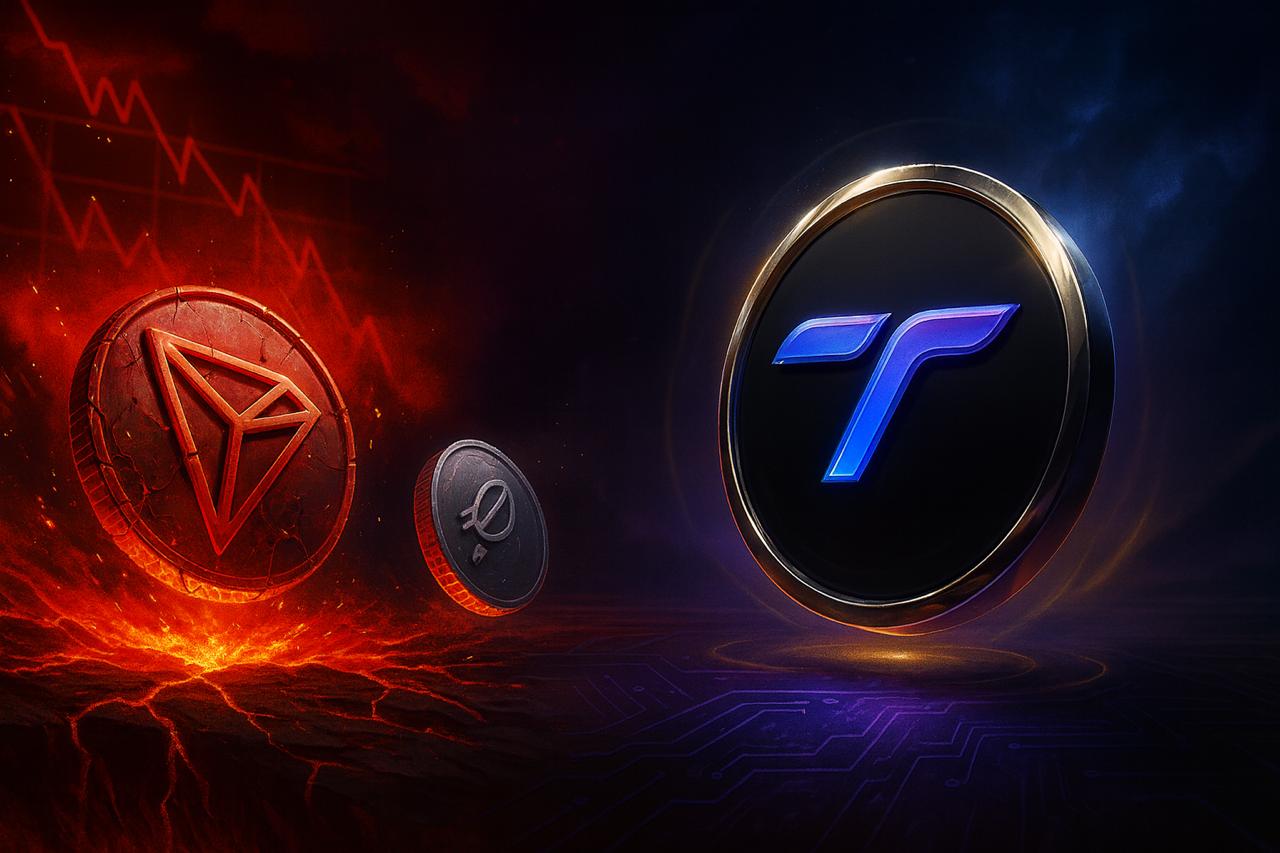
Stellar and Tron Both Bleed Red, Tapzi Emerges as the Dark Horse GameFi Play

Stellar and Tron Both Bleed Red, Tapzi Emerges as the Dark Horse GameFi Play

The post Stellar and Tron Both Bleed Red, Tapzi Emerges as the Dark Horse GameFi Play appeared on BitcoinEthereumNews.com. Crypto News Stellar (XLM) and Tron (TRX) have come under strong bearish pressure in August 2025, reflecting the wider uncertainty in the crypto market. Stellar has lost close to 12% in the last week, now trading near $0.39, as consistent outflows and weak buying activity weigh heavily on its momentum. Technical indicators like the Chaikin Money Flow (CMF) remaining below zero and a persistently weak RSI suggest sellers are still in control, limiting the scope for near-term recovery. Tron, meanwhile, has cooled after brushing overbought conditions, slipping to $0.36 with strong resistance at $0.38 and support near $0.30. Both mid-cap assets remain vulnerable to further declines unless broader market sentiment improves or new catalysts emerge. While established altcoins like XLM and TRX consolidate under pressure, investor attention is quietly shifting toward emerging niches in Web3, particularly GameFi, where skill-based ecosystems are gaining ground. Tapzi (TAPZI) has surfaced as a dark horse in this trend, positioning itself as a competitive Web3 gaming platform that moves away from luck-driven tokenomics toward sustainable, skill-focused gameplay. With staking, prize pools, and an expanding roadmap of web and mobile-based multiplayer games, Tapzi is carving out space in a segment that continues to attract both users and developers. Against the backdrop of legacy coins losing steam, such an early-stage project highlights where market participants may be looking next for growth opportunities. Tapzi (TAPZI) Emerges as the Dark Horse in GameFi While established cryptocurrencies such as Stellar and Tron struggle under sustained bearish sentiment, investor focus is gradually moving toward sectors that are less dependent on macro conditions and more driven by user engagement. GameFi, a segment at the intersection of blockchain and competitive gaming, is one such niche where new projects are beginning to capture attention. Tapzi stands out in this context as it attempts to…

Author: BitcoinEthereumNews
Best Coin to Buy Now: Stellar and Tron Both Bleed Red, Tapzi Emerges as the Dark Horse GameFi Play

Best Coin to Buy Now: Stellar and Tron Both Bleed Red, Tapzi Emerges as the Dark Horse GameFi Play

Stellar has lost close to 12% in the last week, now trading near $0.39, as consistent outflows and weak buying […] The post Best Coin to Buy Now: Stellar and Tron Both Bleed Red, Tapzi Emerges as the Dark Horse GameFi Play appeared first on Coindoo.

Author: Coindoo
Pepe Faces Bearish 2025 Outlook While BullZilla Presale Goes Live: Top Meme Coins to Join For Short Term

Pepe Faces Bearish 2025 Outlook While BullZilla Presale Goes Live: Top Meme Coins to Join For Short Term

Pepe remains one of the most recognizable meme tokens, trading with large liquidity and an established global community. Yet, short-term indicators point to turbulence. According to the latest forecast, Pepe’s price is projected to drop by -25.03% to $0.000007626 by September 28, 2025. The sentiment is currently bearish, with the Fear & Greed Index sitting […]

Author: Coinstats
How Pre-Trained Vision Models Are Revolutionizing Anatomical Structure Retrieval

How Pre-Trained Vision Models Are Revolutionizing Anatomical Structure Retrieval

This study introduces a new benchmark for 3D medical image retrieval using the TotalSegmentator dataset, showcasing how pre-trained vision embeddings—originally trained on natural images—can be repurposed for anatomical structure localization. By integrating a ColBERT-inspired re-ranking approach, the method boosts recall across diverse anatomical regions, though challenges remain in retrieving certain structures like the brain and face. The findings suggest that general image pre-training (e.g., ImageNet) can be as effective, if not slightly better, than domain-specific medical datasets. This benchmark lays the groundwork for future innovations in content-based medical image search and targeted organ retrieval.

Author: Hackernoon