Index

A crypto Index provides a way for investors to gain diversified exposure to a specific basket of digital assets through a single tokenized product. These indices often track specific sectors, such as DeFi, DePIN, or RWA, and are automatically rebalanced via smart contracts. In 2026, AI-managed thematic indices have become the gold standard for passive investing, allowing users to track the "blue chips" of the Web3 economy without manual portfolio management. This tag covers index methodology, rebalancing frequency, and the benefits of diversified crypto baskets.

25094 Articles
Created: 2026/02/02 18:52
Updated: 2026/02/02 18:52
Navigating The Market’s Crucial Neutral Stance

Navigating The Market’s Crucial Neutral Stance

The post Navigating The Market’s Crucial Neutral Stance appeared on BitcoinEthereumNews.com. Crypto Fear & Greed Index: Navigating The Market’s Crucial Neutral Stance Skip to content Home News Crypto News Crypto Fear & Greed Index: Navigating the Market’s Crucial Neutral Stance Source: https://bitcoinworld.co.in/crypto-fear-greed-index-neutral-17/

Author: BitcoinEthereumNews
AVAX Faces $40M Unlock, ETC Waits for Breakout, While Cold Wallet Users Already Cashing USDT Rewards

AVAX Faces $40M Unlock, ETC Waits for Breakout, While Cold Wallet Users Already Cashing USDT Rewards

Markets often split between two paths: speculation and real substance. Avalanche’s outlook is tied to token unlocks and price resistance, while Ethereum Classic relies on chart structures and trading volumes to justify its targets. Both depend heavily on technical readings to hold attention, but neither offers users direct rewards for participation. Cold Wallet does. Through instant USDT payouts and added CWT perks during presale, it delivers measurable returns instead of leaning only on forecasts. For anyone asking which of the top crypto coins deserve notice, Cold Wallet answers with proof instead of promises. Cold Wallet Redefines Utility With USDT Rewards & Referral Bonuses Unlike meme coins that rely on hype and temporary excitement, Cold Wallet is built around real use. It’s a working self-custody wallet where users earn rewards for engaging and for growing the network. Its referral model is already live, paying both the sender and receiver in USDT for swaps made through the app. During presale, those rewards get even stronger with added CWT bonuses, creating a system that gives participants two benefits at once, tied directly to real usage instead of hype. The structure is simple: referrers earn a 20% CWT bonus, while referees get 10%. Both bonuses vest alongside purchased tokens, aligning value with long-term use. Instead of empty promises, Cold Wallet gives consistent, fair, and transparent rewards. It builds a loop where growth is fueled by actual participation. This is not theory; the presale results already prove its strength. Cold Wallet has raised $6.3 million, with more than 740 million tokens sold. It currently sits in Stage 17 at $0.00998 and has a set launch value of $0.3517. That means current participants are entering at a fraction of the launch price while supporting a product that’s already live and running. In short, Cold Wallet blends credibility with real-time utility, putting it far ahead of speculative plays. Avalanche Price Forecast: Token Unlock Creates Supply Risk Avalanche is about to face its first token unlock in three months, releasing 1.67 million AVAX, or around $40 million, into circulation. This added supply could limit growth, capping upside near $26.10 and possibly dragging price toward $23.90 or even $22.40 if pressure grows. Even so, technical indicators are holding steady. The Relative Strength Index (RSI) remains above neutral, showing that buyers still have control. If selling pressure softens, AVAX may settle into a stable range near $24.90. While not exciting, this kind of outlook reflects measured, product-based thinking rather than meme-fueled hype. Ethereum Classic Price Outlook: Steady Growth Without Noise Ethereum Classic is shaping up as another structured play. Currently priced at $24.28, it just broke out of a falling wedge pattern, a common technical signal often followed by upward moves. Near-term goals include $25.98, $28.05, and $30.49, depending on whether trading volume holds up. Longer-term, analysts project even higher levels, with some calling for $53.40 by year-end and others targeting closer to $40.16. These numbers aren’t hype-driven but based on technical setups and trading history. For readers seeking a structured view, ETC offers chart-backed growth instead of social media noise. Cold Wallet Against Market Speculation Speculation moves prices quickly, but staying power comes from usability. Avalanche’s potential depends on how its market absorbs supply. Ethereum Classic’s growth outlook rests on chart behaviour. Cold Wallet, on the other hand, works on a clear principle: rewarding users every time they interact. With $6.3 million raised, 740 million tokens sold, a presale price of $0.00998, and a launch value of $0.3517, it already combines progress with practical rewards. For anyone exploring the top crypto coins, Cold Wallet proves it isn’t just about charts or predictions. It’s a product where user participation turns directly into value, offering both immediate and lasting appeal.  Explore Cold Wallet Now: Presale: https://purchase.coldwallet.com/ Website: https://coldwallet.com/ X: https://x.com/coldwalletapp Telegram: https://t.me/ColdWalletAppOfficial Disclaimer: This content is a sponsored post and is intended for informational purposes only. It was not written by 36crypto, does not reflect the views of 36crypto and is not a financial advice. Please do your research before engaging with the products.The post AVAX Faces $40M Unlock, ETC Waits for Breakout, While Cold Wallet Users Already Cashing USDT Rewards appeared first on 36Crypto.

Author: Coinstats
UK business activity reaches fastest pace in last 12 months

UK business activity reaches fastest pace in last 12 months

The post UK business activity reaches fastest pace in last 12 months appeared on BitcoinEthereumNews.com. UK business activity picked up to its fastest speed in a year in August, while the government borrowed less than economists had projected for July, offering a slight lift to the public finances even as growth slows and hiring stays soft. The S&P Global UK Composite Purchasing Managers’ Index rose to 53 in August from 51.5 in July. Readings above 50 points to expansion, and August marked a fourth straight month in that zone.  The gain was led by stronger demand in business services, where firms reported a clearer rise in new work. The UK’s manufacturers also reported better sentiment, but services set the pace and carried the overall index higher compared with the previous month. On the public finance side, separate figures released on Thursday showed the central government borrowed £1.1 billion in July. That was smaller than the Office for Budget Responsibility’s expectation of a £2.1 billion deficit for the month.  The gap was narrower than forecast, giving the Treasury slight relief as it deals with weaker-than-hoped revenues and a recovery that has not been even across sectors and regions. Budget choices remain tight. Chancellor Rachel Reeves is still widely expected to lift taxes in the Budget to pay for plans and to meet her rule to cover day-to-day spending from tax receipts by 2029-30. Officials are weighing different paths, including potential changes to property taxes, as ministers face a hole of at least £20 billion in the public accounts that will need to be closed. Growth has cooled. Headline GDP expanded by 0.3% in the second quarter, down from 0.7% in the first three months of 2025. On the other hand, the US economy rebounded with 3% annualized GDP growth in Q2, as reported by Cryptopolitan recently. Companies have said that expected tax rises and a steep…

Author: BitcoinEthereumNews
UK consumers grow more optimistic following BoE rate cut

UK consumers grow more optimistic following BoE rate cut

UK consumers have reportedly increased their confidence in household budgets this year compared to the previous years. This significant change resulted from the individuals’ positive attitude towards the Bank of England’s interest rate cuts. This announcement came after GfK’s index, popularly known as the GfK Consumer Confidence Index, which measures consumers’ perception regarding their household finances, expressed a notable increase of 3 points from last month’s surge to 5. For the overall consumer confidence index, which focuses on consumers’ perception of the general economy, consumer sentiment rose to -17, reflecting a 2-point increase. This shocked analysts as they had earlier predicted that the overall consumer confidence index would remain constant. Additionally, it is the highest record score since December. UK consumers embrace the BoE’s efforts to lower borrowing costs in the country  Analysts say the improvement shows that households are responding positively to lower borrowing costs, with overall sentiment now at its highest point since August of last year. This demonstrates that people have finally realized the essence of the Bank of England’s efforts to reduce borrowing costs, bringing about change for average citizens. This happened one year after the bank began lowering interest rates from 16-year highs. Another significant news for prospective buyers is that mortgage costs in the country have also started dropping. This report highlights the economy’s early stage of recovery from the damage caused by Labour’s £26bn, approximately $35 billion, hike in the cost of employing people. In addition, S&P’s business sentiment survey earlier this week showed the strongest growth in the private sector for a year. Savings intentions have fallen, undoing last month’s increase to their highest level since the financial crisis, GfK said. More people say they are ready to make expensive purchases, like cars and furniture. Despite all this, Neil Bellamy, a consumer insights director at GfK, warned that any positive sentiment around the economy could now be under threat. In a statement, Bellamy highlighted some significant challenges ahead, such as inflation, which, according to him, has been at its highest since January 2024, while unemployment is on the rise. Notably, UK inflation in July rose more than expected, with significant costs for households such as food and transport. This cautions that the squeeze on consumers could intensify if retailers raise prices to help cover higher payroll costs. The British Retail Consortium said four in ten shoppers expect to spend more on food shopping over the next three months. On the other hand, poorer households are disproportionately affected by recent rises in food prices because they spend a greater share of their income on basic goods. That creates a scenario where those struggling financially are not enjoying the benefits of appreciating real wages and lower borrowing costs. Raoul Ruparel highlights the economic effects of spending patterns Data from The Boston Consulting Group revealed that its gauge of the difference in spending patterns between those earning more than £48,000 a year and those earning less was four times higher since January. Their latest survey, released on Friday, August 22, showed that about 28% of participants plan to spend more on groceries, up from just 20 percent three months ago. In the meantime, the number of consumers with more disposable income who prefer premium brands is at the highest level observed since May. This suggests that, as the BCG report found, top earners are leading the recovery in demand. Raoul Ruparel, director of BCG’s Centre for Growth, weighed in on the situation. According to Ruparel, wealthier households are contributing factors in a scenario where spending is increasing.  “Looking ahead, this ongoing divide will significantly influence how quickly and in what way consumer recovery happens,” he said. The smartest crypto minds already read our newsletter. Want in? Join them.

Author: Coinstats
Japan’s Inflation Hovers Well Above BOJ’s Goal Even as It Slows

Japan’s Inflation Hovers Well Above BOJ’s Goal Even as It Slows

Japan’s prices remained far above the BOJ’s target in July, even with a slowdown, and traders still expect another rate hike this year. The new figures mark another month above target, stretching a streak that has challenged the view inside the bank that inflation would ease once temporary shocks faded. Investors think the pressure could […]

Author: Cryptopolitan
The S&P 500’s predictive power might've been broken beyond repair

The S&P 500’s predictive power might've been broken beyond repair

The post The S&P 500’s predictive power might've been broken beyond repair appeared on BitcoinEthereumNews.com. The S&P 500 is no longer the economic crystal ball it used to be. The index looks strong on the surface, because that small group of tech giants (you know, Nvidia, Microsoft, and Meta Platforms) are pulling all the weight harder than they ever have before. But the problem is those megacaps have grown so big that they now account for around one-third of the total value of the S&P 500. That’s seven companies distorting the signal of 500. For years, the index was considered a leading economic indicator, even used by the Conference Board in its 10-part Leading Economic Index. But now, that predictive function looks damaged. The rest of the market, the so-called “S&P 495,” has become the real indicator of what’s actually happening. Seven tech stocks pull the entire index higher So far in 2025, the S&P 500 has gained over 8%. But that number is a lie if you care about the broader market. The seven largest stocks in the index have risen more than 14% on average, and the median jump among them is above 20%. The other 493 companies? They’ve only managed an average and median rise of just over 5%. That gap shows how top-heavy the index has become. The Invesco S&P 500 Equal Weight ETF (RSP), which gives every stock the same importance, has dropped 0.1% this week. In the same time, the standard market cap-weighted index has lost more than 1%. Without the tech names dragging everything around, the picture changes. Sectors like energy, real estate, and health care, which have been underperforming all year, are finally ahead this week. Meanwhile, the same tech names that led the rally are underperforming. And it’s not just the S&P 500 that’s being distorted. The small-cap Russell 2000 index, which had been stuck with…

Author: BitcoinEthereumNews
Canadian Dollar holds steady below 1.3900 amid rising odds of BoC rate cut

Canadian Dollar holds steady below 1.3900 amid rising odds of BoC rate cut

The post Canadian Dollar holds steady below 1.3900 amid rising odds of BoC rate cut appeared on BitcoinEthereumNews.com. USD/CAD flat lines around 1.3870 in Thursday’s early Asian session. The Fed Minutes noted that almost all participants advocated for maintaining the status quo.  Investors raise bets on the BoC cutting interest rates over the coming months. The USD/CAD pair trades flat near 1.3870 during the early Asian session on Thursday. The Canadian Dollar (CAD) steadies against the US Dollar (USD) near an earlier three-month low as the latest Canadian inflation data raised odds that the Bank of Canada (BoC) would resume its easing campaign. The preliminary reading of the US S&P Global Purchasing Managers Index (PMI) reports will be in the spotlight later on Thursday.  According to the minutes of the Federal Open Market Committee’s (FOMC) July 29-30 meeting, most Federal Reserve (Fed) officials highlighted the risk to inflation as outweighing concerns over the labor market at their meeting last month, as tariffs fueled a growing divide among Fed policymakers.  Almost all participants viewed it as appropriate to maintain the benchmark interest rate in the 4.25%–4.50% range and noted that it would take time to have more clarity on the magnitude and persistence of higher tariffs’ effects on inflation.  Traders await the Fed’s annual Jackson Hole symposium later on Friday for clues on the US interest rate path. If Fed Chair Jerome Powell leans dovish on interest rates, this might drag the USD lower against the CAD in the near term.  Traders raise their bets that the BoC would deliver a rate reduction at the next policy decision in September after data on Tuesday showed a sharp deceleration in 3-month annualized measures of underlying inflation that are closely watched by the BoC. This, in turn, could weigh on the Loonie and create a tailwind for the pair.  Markets are now pricing in nearly a 70% odds of a BoC rate cut in…

Author: BitcoinEthereumNews
Altcoin Season Index: Unveiling the Crucial Shift to Bitcoin Season

Altcoin Season Index: Unveiling the Crucial Shift to Bitcoin Season

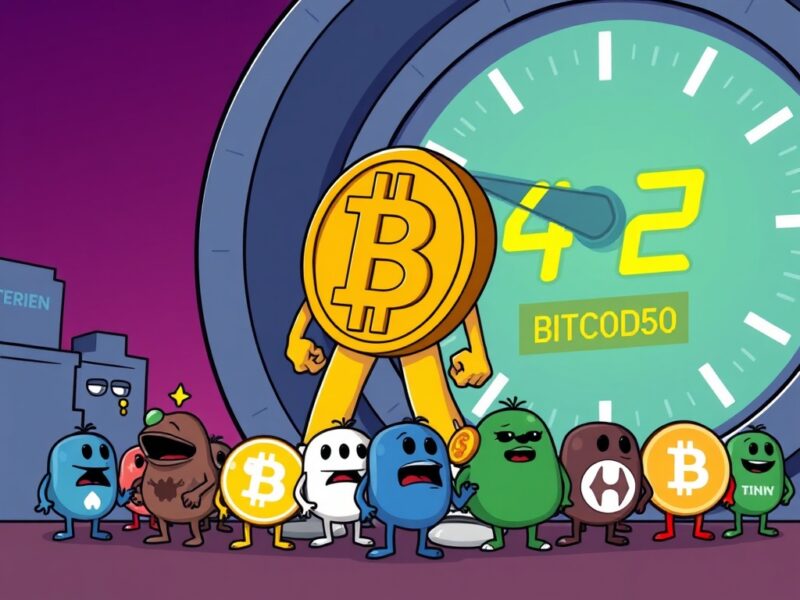
BitcoinWorld Altcoin Season Index: Unveiling the Crucial Shift to Bitcoin Season The cryptocurrency market is a dynamic landscape, constantly shifting between periods where Bitcoin leads the charge and times when altcoins shine. Understanding these cycles is crucial for any investor. Currently, the Altcoin Season Index, a key metric tracked by CoinMarketCap (CMC), indicates a clear shift, pointing towards what many call ‘Bitcoin Season’. What Does the Altcoin Season Index Tell Us? On August 22, at 00:30 UTC, the Altcoin Season Index registered a value of 42. This figure, reported by CoinMarketCap and previously noted by Bitcoin World, represents a slight dip from the previous day, signaling a strengthening Bitcoin dominance in the market. This index is a vital tool for understanding the broader market sentiment and asset performance. The Index’s Core Function: It assesses the performance of the top 100 cryptocurrencies on CoinMarketCap. Crucially, it excludes stablecoins and wrapped tokens to provide a clearer picture of market dynamics. Defining Seasons: The index determines whether the market is in ‘Altcoin Season’ or ‘Bitcoin Season’ by comparing how these top coins have performed relative to Bitcoin over the past 90 days. How is Bitcoin Season Determined by the Altcoin Season Index? The methodology behind the Altcoin Season Index is straightforward yet powerful. It sets clear thresholds to define the prevailing market condition: Altcoin Season: This period is declared when at least 75% of the top 100 altcoins (excluding stablecoins and wrapped tokens) have outperformed Bitcoin over the last 90 days. Think of it as a time when a wide array of alternative cryptocurrencies are seeing significant gains. Bitcoin Season: Conversely, we enter Bitcoin Season when 25% or fewer of these altcoins manage to outperform Bitcoin over the same 90-day period. The current index reading of 42 falls squarely into this category, confirming that Bitcoin is currently the dominant force. The index itself ranges from 1 to 100. A lower number suggests stronger Bitcoin dominance, while a higher number indicates altcoin outperformance. The current 42 clearly points to Bitcoin leading the pack. Navigating the Current Bitcoin Season: What Does it Mean for Investors? Understanding the implications of the current Bitcoin Season, as indicated by the Altcoin Season Index, is essential for informed decision-making. When Bitcoin dominates, it often means: Capital Flow: Investors may be consolidating their capital into Bitcoin, viewing it as a safer or more stable asset during uncertain times, or anticipating a major Bitcoin price movement. Reduced Altcoin Volatility (Relative): While altcoins can still be volatile, their relative performance against Bitcoin tends to be weaker. They might not see the explosive growth characteristic of an Altcoin Season. Market Bellwether: Bitcoin’s price action often dictates the overall direction of the market. A strong Bitcoin run can sometimes precede a broader market recovery, eventually lifting altcoins. For those holding altcoins, this period might present challenges, as their portfolios may lag behind Bitcoin’s performance. However, it can also be an opportunity to reassess and strategize. Strategic Insights During Bitcoin Season When the Altcoin Season Index signals Bitcoin Season, investors can consider several approaches. This isn’t financial advice, but rather observations based on market trends: Focus on Bitcoin: Some investors may choose to increase their Bitcoin holdings, riding the wave of its dominance. Re-evaluate Altcoin Holdings: It might be a good time to review altcoin portfolios, perhaps divesting from weaker performers or projects with less fundamental strength. Research for Future Opportunities: Use this period to research promising altcoin projects that could thrive once the market sentiment shifts back towards altcoins. Strong fundamentals and innovative technology remain key. The market is cyclical, and understanding the signals from metrics like the Altcoin Season Index can provide a significant edge. While Bitcoin currently holds the reins, market conditions can change, and being prepared for future shifts is always wise. The Altcoin Season Index at 42 confirms that we are firmly in a Bitcoin Season. This means Bitcoin has been outperforming most of the top altcoins over the last 90 days. For crypto enthusiasts and investors, this metric offers a crucial snapshot of the market’s current state, guiding decisions and expectations. While the crypto landscape is ever-evolving, staying informed with reliable data from sources like CoinMarketCap allows participants to navigate these cycles with greater confidence and foresight. Frequently Asked Questions (FAQs) Q1: What is the Altcoin Season Index? The Altcoin Season Index is a metric from CoinMarketCap that tracks the performance of the top 100 cryptocurrencies (excluding stablecoins and wrapped tokens) against Bitcoin over the past 90 days to determine if the market is in ‘Altcoin Season’ or ‘Bitcoin Season’. Q2: How is Altcoin Season defined by the index? Altcoin Season occurs when at least 75% of the top 100 altcoins have outperformed Bitcoin over the last 90 days. Q3: What does an Altcoin Season Index of 42 signify? An index value of 42 indicates that 25% or fewer of the top 100 altcoins have outperformed Bitcoin over the past 90 days, meaning the market is currently in Bitcoin Season. Q4: What are the implications of a Bitcoin Season for altcoin holders? During Bitcoin Season, altcoins generally tend to underperform Bitcoin. This means altcoin portfolios might see less growth compared to Bitcoin, and capital may flow more towards Bitcoin as the dominant asset. Q5: How often does the Altcoin Season Index update? The Altcoin Season Index is updated regularly, providing a near real-time snapshot of market conditions, though the 90-day lookback period remains constant for its calculation. Did you find this article insightful? Share it with your friends and fellow crypto enthusiasts on social media to help them understand the current market dynamics! To learn more about the latest crypto market trends, explore our article on key developments shaping Bitcoin price action. This post Altcoin Season Index: Unveiling the Crucial Shift to Bitcoin Season first appeared on BitcoinWorld and is written by Editorial Team

Author: Coinstats
Crypto Fear & Greed Index: Navigating the Market’s Crucial Neutral Stance

Crypto Fear & Greed Index: Navigating the Market’s Crucial Neutral Stance

BitcoinWorld Crypto Fear & Greed Index: Navigating the Market’s Crucial Neutral Stance The cryptocurrency market often feels like a rollercoaster of emotions, swinging wildly between euphoria and panic. For investors seeking clarity amidst this volatility, tools like the Crypto Fear & Greed Index offer a fascinating snapshot of prevailing market sentiment. As of August 22, this crucial index, provided by software development platform Alternative, stands firmly at 50, holding its ‘Neutral’ position from the previous day. But what does a truly neutral Crypto Fear & Greed Index reading really mean for your investment strategy? What Does the Crypto Fear & Greed Index Tell Us? The Crypto Fear & Greed Index serves as a barometer for the emotional state of the crypto market. It operates on a simple principle: when investors are too fearful, it could signal a buying opportunity. Conversely, when they are excessively greedy, it might indicate that a correction is imminent. This index ranges from 0 to 100, with 0 representing “extreme fear” and 100 indicating “extreme greed.” A score of 50, as we see currently, places the market squarely in the “Neutral” zone. This suggests a period where neither fear nor greed dominates investor decisions. It’s a moment of equilibrium, where market participants are perhaps taking a pause, waiting for clearer signals, or simply reacting to existing data without strong emotional bias. Understanding this balance is key to making informed decisions. Decoding a Neutral Crypto Fear & Greed Index A neutral reading on the Crypto Fear & Greed Index can be interpreted in several ways. It’s not necessarily a call to action, but rather an indication of the current market psychology. Here’s what it could imply: Market Indecision: Investors might be unsure about the next major price movement, leading to sideways trading. Balanced Forces: Buying and selling pressures are relatively equal, preventing significant swings in either direction. Waiting for Catalysts: The market could be anticipating a major news event, regulatory update, or technological development that will break the deadlock. Reduced Volatility: A neutral stance often accompanies periods of lower volatility, which can be a relief after intense price fluctuations. For savvy investors, a neutral Crypto Fear & Greed Index offers a chance to re-evaluate portfolios and strategies without the emotional pressure of extreme market conditions. It’s an opportunity to conduct thorough research and plan for potential future shifts. How is the Crypto Fear & Greed Index Calculated? The methodology behind the Crypto Fear & Greed Index is robust, incorporating a blend of factors to provide a comprehensive view of market sentiment. Alternative, the platform behind the index, considers six distinct components, each weighted differently: Volatility (25%): Measures the current volatility and maximum drawdowns of Bitcoin compared to its average values. Higher volatility often indicates fear. Market Momentum/Volume (25%): Compares the current volume and market momentum with long-term averages. High buying volume in a strong market suggests greed. Social Media (15%): Analyzes the number of cryptocurrency-related hashtags and interactions on various social media platforms, along with the speed of these interactions. Increased positive sentiment can indicate greed. Surveys (15%): Gathers investor sentiment through weekly polls. (Note: Surveys are currently paused, impacting this component’s contribution.) Bitcoin Dominance (10%): Assesses Bitcoin’s share of the total crypto market cap. A rising Bitcoin dominance often signals fear in altcoin markets as investors flock to the perceived safety of BTC. Google Trends (10%): Examines search queries related to Bitcoin and other cryptocurrencies. A surge in “Bitcoin price manipulation” searches, for example, might suggest fear. By combining these diverse data points, the index aims to offer a holistic and objective measure of the market’s emotional temperature, helping to cut through the noise. Navigating Market Sentiment with the Crypto Fear & Greed Index While the Crypto Fear & Greed Index is an invaluable tool, it’s essential to use it as part of a broader analytical framework. It provides insight into sentiment, but it does not predict future price movements with certainty. Investors should consider it alongside fundamental analysis, technical analysis, and macroeconomic factors. For example, during a neutral phase, you might choose to: Refine your Watchlist: Identify promising projects that are consolidating. Educate Yourself: Use this calmer period to deepen your understanding of blockchain technology and new crypto innovations. Dollar-Cost Average: Continue your regular investment schedule, taking advantage of potentially stable prices. Manage Risk: Re-evaluate your stop-loss orders and portfolio allocation. The index is a powerful indicator of human psychology in action, reminding us that emotions often drive market behavior. A neutral reading simply means that for now, the crowd is holding its breath. In Summary: The Crypto Fear & Greed Index at 50, in its neutral stance, offers a moment of calm in the often-turbulent crypto seas. It’s a period of equilibrium, reflecting balanced market sentiment rather than extreme fear or greed. While not a standalone investment guide, it serves as a crucial indicator, helping investors understand the collective psychology of the market. Use this insight to make rational, data-driven decisions, rather than being swayed by fleeting emotions. Frequently Asked Questions (FAQs) Q1: What exactly is the Crypto Fear & Greed Index? A1: The Crypto Fear & Greed Index is a tool that measures the prevailing emotional sentiment in the cryptocurrency market, ranging from 0 (extreme fear) to 100 (extreme greed). Q2: How should I interpret a “Neutral” reading of 50 on the Crypto Fear & Greed Index? A2: A “Neutral” reading of 50 indicates a balanced market where neither fear nor greed is dominant. It suggests indecision among investors and often precedes periods of consolidation or anticipation for new catalysts. Q3: What are the main factors used to calculate the Crypto Fear & Greed Index? A3: The index considers six factors: volatility, market momentum/volume, social media activity, surveys (currently paused), Bitcoin dominance, and Google Trends data. Q4: Can the Crypto Fear & Greed Index predict future price movements? A4: No, the index is a sentiment indicator, not a predictive tool. It reflects current market psychology but should be used in conjunction with other analytical methods for making investment decisions. Q5: Where can I find the latest Crypto Fear & Greed Index value? A5: The latest value of the Crypto Fear & Greed Index is typically provided by platforms like Alternative.me and is often cited by cryptocurrency news outlets. Call to Action: Did this article help you understand the Crypto Fear & Greed Index better? Share your insights with fellow crypto enthusiasts on social media! Your shares help us continue providing valuable market analysis and empower more investors with knowledge. To learn more about the latest crypto market trends, explore our article on key developments shaping Bitcoin and Ethereum price action. This post Crypto Fear & Greed Index: Navigating the Market’s Crucial Neutral Stance first appeared on BitcoinWorld and is written by Editorial Team

Author: Coinstats
How Much Could 1,000 Tokens of Polkadot, NEAR, and Chainlink Be Worth by 2030?

How Much Could 1,000 Tokens of Polkadot, NEAR, and Chainlink Be Worth by 2030?

Altcoins have had a rough week. The Altcoin Season Index slipped to 42, showing that money is moving back into Bitcoin and away from smaller tokens.  That shift has weighed on Polkadot (DOT), NEAR Protocol (NEAR), and Chainlink (LINK), all of which have seen their prices dip.  But for long-term holders, the real question isn’t

Author: Coinstats