Launchpad

Launchpads are decentralized platforms that facilitate early-stage fundraising for new Web3 projects through Initial DEX Offerings (IDOs). They provide investors with curated access to token sales while offering startups a community-driven capital injection. In 2026, launchpads have evolved into full-stack incubators, focusing on project quality and long-term sustainability. Follow this tag for the latest in token distribution models, tier-based participation, and the emergence of the next generation of "unicorn" protocols across various blockchain ecosystems.

2921 Articles
Created: 2026/02/02 18:52
Updated: 2026/02/02 18:52
ETH-Based Little Pepe Raises $26M in Presale

ETH-Based Little Pepe Raises $26M in Presale

Dubai, UAE, 23rd September 2025, Chainwire The post ETH-Based Little Pepe Raises $26M in Presale appeared first on Live Bitcoin News.

Author: LiveBitcoinNews
Polygon, Ethereum at 29% TVL each – What it means for POL at $0.22

Polygon, Ethereum at 29% TVL each – What it means for POL at $0.22

The post Polygon, Ethereum at 29% TVL each – What it means for POL at $0.22 appeared on BitcoinEthereumNews.com. Key Takeaways Why does Polygon matter now? Polygon matched Ethereum with 29% USTBL TVL, cementing its institutional role. What’s next for POL’s price? Traders watched $0.22 support and $0.2899 resistance. A rebound could extend toward $0.3426 and $0.4209 if accumulation holds. Polygon’s native token, POL (ex-MATIC) [POL], drew investor attention as it matched Ethereum [ETH] in U.S. Treasury Bill TVL, with both holding 29%. This milestone highlighted the rising demand for institutional-grade exposure through Polygon’s network, which has steadily attracted inflows due to its lower fees compared to Ethereum.  As capital rotates toward efficient blockchains, the surge in TVL has become a key driver for POL’s relevance.  Still, price action showed weakness, leaving short-term sentiment hinged on key support and resistance levels. Can POL hold $0.22 support? Price action showed that POL slipped toward $0.237 at press time and has been hovering close to its ascending trendline. The charts suggested a possible retest of $0.22 support before momentum builds again.  If buyers defend this zone, a breakout above $0.2899 resistance could unfold, unlocking targets at $0.3426 and possibly $0.4209. Failure to hold $0.22, however, risked a deeper downside. That left POL’s immediate outlook balanced between resilience and vulnerability. Source: TradingView Persistent outflows show bearish undertones Exchange data indicated that POL saw consistent negative flows at press time. The latest being outflows of around $608.78K. This trend reflects declining supply on exchanges, often a sign of accumulation by long-term holders.  While this could reduce immediate sell pressure, it also means reduced liquidity, which may amplify volatility during sharp price swings.  Even so, sustained accumulation of exchanges supported a more stable mid-term base. Source: CoinGlass POL’s Open Interest signals caution  Derivatives market data revealed that POL’s Open Interest fell 8.10% to $142.54 million at press time. Traders scaled back leveraged exposure after…

Author: BitcoinEthereumNews
88% of airdropped tokens last no more than 3 months

88% of airdropped tokens last no more than 3 months

By Sara Gherghelas Compiled and compiled by: BitpushNews While the impact of airdrops on user growth and awareness has transformed the Web3 ecosystem, whether they can create lasting ecosystems or simply spark short-lived speculative activity remains a focus of attention. Airdrops have become one of the most powerful growth tools in Web3, capable of generating massive buzz and onboarding millions of users in just a few days. Over the past two years, projects in areas like decentralized finance (DeFi), non-fungible tokens (NFTs), and blockchain gaming have distributed billions of dollars worth of tokens to reward early adopters and attract new participants. However, the real question is: do these distributions create lasting ecosystems, or are they merely short-lived speculative ventures? While airdrops continue to drive impressive spikes in user growth and transaction volume, their long-term impact on retention, engagement, and token value is far less certain. This report analyzes the outcomes of high-value airdrops in DeFi, NFTs, and gaming, focusing on how they impacted user behavior, token performance, and on-chain activity. Key Takeaways Since 2017, projects have distributed over $20 billion in airdropped tokens, with $4.5 billion in 2023 alone, making airdrops one of Web3’s most powerful, yet most expensive, growth strategies. 88% of airdropped tokens lose value within three months, highlighting the gap between short-term hype and long-term sustainability. Airdrops reliably generate massive spikes in activity: Arbitrum saw 2.5 million daily transactions at launch, and Blur captured over 70% of NFT trading volume overnight. Retention remains a weak link: on average, activity falls back to around 20% to 40% of its pre-airdrop level within a few weeks, with most recipients cashing out. 1. What are airdrops? How do they shape Web3 growth? In the Web3 ecosystem, an airdrop refers to the distribution of free tokens to a group of wallets, typically to reward past activity or incentivize future participation. Unlike ICOs (initial coin offerings), which require users to purchase tokens, airdrops place tokens directly into users' hands. The underlying logic is simple: by giving away ownership, projects can guide their communities, decentralize governance, and create immediate liquidity for their tokens. Airdrops come in different forms: Retroactive Airdrops: Reward users who have interacted with the protocol in the past (e.g. Uniswap in 2020, Arbitrum in 2023). Incentive Airdrops: Encourage ongoing behavior such as trading, staking, or referrals (e.g. Blur’s points system). Community Airdrops: Reward NFT holders, developers, or social community members (such as BONK on Solana). Since 2017, airdrops have evolved from a quirky way to spread news into one of the most effective marketing strategies in Web3. Instead of paying for advertising, projects are distributing ownership. The thinking is: users who feel like stakeholders are more likely to try a product, spread the word, and remain loyal. Key milestones in airdrop history: 2017–2018, the first wave: This first emerged during the ICO era. Many projects used airdrops to cheaply expand Telegram groups and wallet addresses. The impact was mostly speculative, with few users continuing to participate after receiving the airdrops. In 2020, Uniswap set the gold standard with its $UNI airdrop. By distributing 400 UNI (valued at approximately $1,200 at the time, peaking at over $12,000) to every historical user, Uniswap turned early adopters into evangelists. It also established that retroactive airdrops are a fair way to reward "true believers." 2021–2022: The Airdrop Playbook Era: Airdrops became part of the playbook: dYdX, ENS, LooksRare, and others used them to attract traders, domain name service users, or NFT collectors. Some projects succeeded, while others were overwhelmed by "farmers." 2023–2025, the era of super airdrops: Arbitrum ($1.97 billion), Blur ($818 million), and Worldcoin (which continues to airdrop to over 10 million users) demonstrate how large-scale distribution can change the entire ecosystem overnight. While precise tracking is difficult, estimates suggest that: Since 2017, hundreds of airdrops have occurred across DeFi, NFTs, gaming, and infrastructure. The total value distributed via airdrops exceeds $20 billion, with $4.5 billion in 2023 alone (including Arbitrum, Blur, Celestia, etc.). Major airdrops typically target between 100,000 and 1 million addresses, while global campaigns like Worldcoin target tens of millions of users. Research shows that approximately 88% of airdropped tokens lose value within 3 months of launch, highlighting that airdrops, while successful as marketing campaigns, rarely ensure the long-term strength of a token. Why do airdrops work as a marketing tool? Low barrier to entry: Users receive free tokens → try the product. Word-of-mouth effect: Large airdrops make headlines (“free money”) and generate virality. Decentralization: Tokens spread ownership, empower users with governance, and (at least in theory) align them with the future of the project. Competitive pressure: Airdrops can quickly shift market share (e.g. Blur versus OpenSea). However, they also come with challenges: airdrop farming, immediate sell-offs, and retention struggles. However, as of 2025, airdrops remain one of the most effective, albeit imperfect, marketing weapons in the dapp industry. 2. DeFi and Layer-2 airdrops: Is it promoting user growth or feeding the "wool party"? The DeFi sector has long been at the heart of the airdrop phenomenon. From decentralized exchanges to Layer-2 scaling networks, protocols are using token distribution to reward early adopters, decentralize governance, and, most importantly, attract new users. In fact, many of the largest and most discussed airdrops in Web3 history have stemmed from DeFi and network scaling solutions. L2 Network Airdrop The most notable example is Arbitrum's airdrop in March 2023. By distributing 1.16 billion ARB tokens (approximately 11.6% of the total supply) to over 600,000 addresses, Arbitrum created the industry's largest airdrop at the time. At its peak, these tokens were valued at nearly $2 billion. The impact on the chain was immediate: on the day of the redemption, daily transaction volume soared to over 2.5 million, briefly surpassing Ethereum itself. Despite the inevitable cooling of the hype, Arbitrum has retained a higher baseline of activity than before the airdrop. Two months later, the network is still processing approximately one million daily transactions, and unique active wallets (UAWs) have increased by 531%. However, the retention story is more complicated. Our data shows that only approximately 5% of transactions during this period came from wallets that actually received ARB. Many recipients simply sold their tokens and left, while real usage was driven by new or existing DeFi users attracted to Arbitrum's growing ecosystem. Unsurprisingly, the ARB token itself followed a familiar pattern: after launching at around $1.30–$1.40, it fell by over 75% in two years. Optimism offers a helpful comparison. Rather than opting for a single, large-scale event, it has been conducting airdrops in phases since 2022. A second wave of airdrops in 2023 distributed 11 million OP tokens, targeting governance participants such as DAO voters and delegates. While this approach produced smaller spikes in activity than Arbitrum, it more purposefully aligned incentives and strengthened Optimism's governance structure. Our data confirms that Optimism also experienced a sharp jump in UAWs and trading volume during its claiming period, though activity faded more quickly. The OP token has lost 42% of its value since its launch three years ago. DeFi Airdrop DeFi protocols have followed a similar pattern to L2 networks. dYdX's early airdrops to active traders created a surge in trading volume, but once incentives were reduced, activity declined, and its token has since lost approximately 70% of its value. 1inch distributed multiple waves of tokens, driving short-term wallet growth, but governance participation remained low; the token fell 52% shortly after the airdrop and over 90% five years later. ENS's retroactive airdrop in late 2021 was smaller, but its token has performed better, losing only about 40% in four years, while cultivating a relatively loyal governance community among Ethereum nameholders. Across the industry, the data shows a consistent pattern. Airdrops drive immediate user growth, often doubling or tripling daily activity, accompanied by a surge in TVL as users move assets to qualify or claim tokens. However, within a few weeks, activity typically falls back to a baseline level that's only slightly higher than before. Token prices bear this out: most DeFi airdrop tokens lose 60% to 90% of their issuance value within a few months as investors exit their positions. Airdrops are unmatched for accelerating user acquisition, but long-term retention depends on product-market fit. Arbitrum has been able to maintain high usage levels because its network already offers strong DeFi utility and lower costs. Optimism, by designing its airdrops around governance, demonstrates how mechanisms can shape user behavior beyond speculation. However, for protocols lacking a compelling ecosystem or thoughtful design, airdrops are, at best, expensive marketing campaigns that enrich opportunistic takers while failing to ensure lasting adoption. 3. NFT Airdrops: Trading Liquidity vs. Community Loyalty If DeFi and Layer-2 networks use airdrops to expand infrastructure, the NFT space uses them as a weapon to fight for market share. Blur is a prime example of this, as the exchange disrupted OpenSea’s long-held dominance through one of the most aggressive airdrop strategies in Web3 history. Blur ran a “quarterly” rewards program for months before its February 2023 token launch, with traders accumulating points by listing NFTs, providing liquidity, and demonstrating platform loyalty. When the BLUR token finally launched, 51% of its total supply was allocated to the community, and at its peak, the airdrop was worth over $800 million. The results were immediate and dramatic. Blur captured over 70% of Ethereum’s NFT trading volume within days, forcing OpenSea to cut fees and reconsider creator royalties. Our data shows the speed of the liquidity transfer; despite serving fewer active wallets, Blur sometimes saw over five times the volume of OpenSea. However, the nature of this activity tells a cautionary tale. The majority of Blur's volume was driven by a small number of high-frequency traders scalping points for future rewards. Analysis at the time showed that a few hundred wallets accounted for the majority of transactions. While this created unprecedented liquidity, tight spreads, and faster execution for NFTs, it didn't necessarily translate into broader community participation. OpenSea continued to dominate in terms of independent active wallets, favoring casual collectors and creators. The BLUR token itself followed a familiar trajectory. It debuted at around $1.20 but quickly fell as recipients sold off, dropping below $0.10 by 2025. Even consistent quarterly rewards failed to prevent the gradual erosion of value. By the end of 2023, Blur's market share had also begun to decline, stabilizing in the 20% to 40% range after an initial surge. Other NFT airdrops tell a similar story. LooksRare and X2Y2 also engaged in a “vampire attack” model in 2022, distributing tokens to OpenSea traders. Both briefly saw significant trading volume, but much of it was wash trading. Activity quickly plummeted after the rewards dried up. Their tokens, once worth hundreds of millions of dollars, now trade at a fraction of their peak value. More recently, memecoin-style NFT airdrops like Memecoin ($MEME) briefly sparked collector enthusiasm but failed to sustain any lasting ecosystem. The key lesson from NFT airdrops is that while they are highly effective at moving liquidity, they face challenges in creating sticky communities. Traders follow rewards, but collectors and creators seek trust, usability, and cultural relevance—factors that tokens alone cannot achieve. As of 2025, the NFT trading landscape is more competitive than ever, fueled by these airdrops. OpenSea has adopted new professional trading tools, Blur continues to cater to professional traders, and other platforms are experimenting with new models. But the fundamental question remains: Can token incentives in NFT markets truly foster sustainable communities, or simply fuel a temporary liquidity war? 4. Game Airdrops: Limited Impact in a Play-to-Earn World While DeFi and NFT platforms have turned airdrops into multi-billion dollar marketing campaigns, the gaming sector has been more cautious. Blockchain games typically focus on in-game economies and NFTs rather than large-scale token giveaways. As a result, high-value gaming airdrops have been relatively rare over the past two years, and their impact has been more short-lived compared to DeFi or NFT trading markets. Most other blockchain gaming projects have completely avoided major retroactive airdrops. Instead, they rely on launchpads, NFT minting, or in-game earning rewards to distribute tokens. This strategy reflects the lessons of the 2021 Play-to-Earn wave, when the inflationary token economy collapsed under speculative pressure. By 2023–2025, developers appear wary of repeating the same mistake by distributing large amounts of tokens without a sustainable mechanism. Some exceptions occur at the infrastructure level. Immutable, Polygon, and Ronin have experimented with incentives and token rewards for game developers and players, but these structures have been ongoing bounty programs rather than one-time airdrops. Similarly, smaller game studios have distributed NFTs or modest token airdrops to closed beta users, rewarding early participation without disrupting their economies. For games, the real challenge is not onboarding users with tokens, but keeping them entertained long enough to form a lasting ecosystem. Conclusion While 88% of airdropped tokens lost value within months, each airdrop reinforces the same truth: in the Web3 world, attention is the most valuable currency. Previous large-scale token distributions have proven that the true value lies not in the token itself, but in the user behavior it can influence. The challenge facing projects today is no longer about attracting attention, but rather how to convert that traffic into sustainable ecosystems and communities.

Author: PANews
Save Money with White Label Crypto Development While Keeping Quality

Save Money with White Label Crypto Development While Keeping Quality

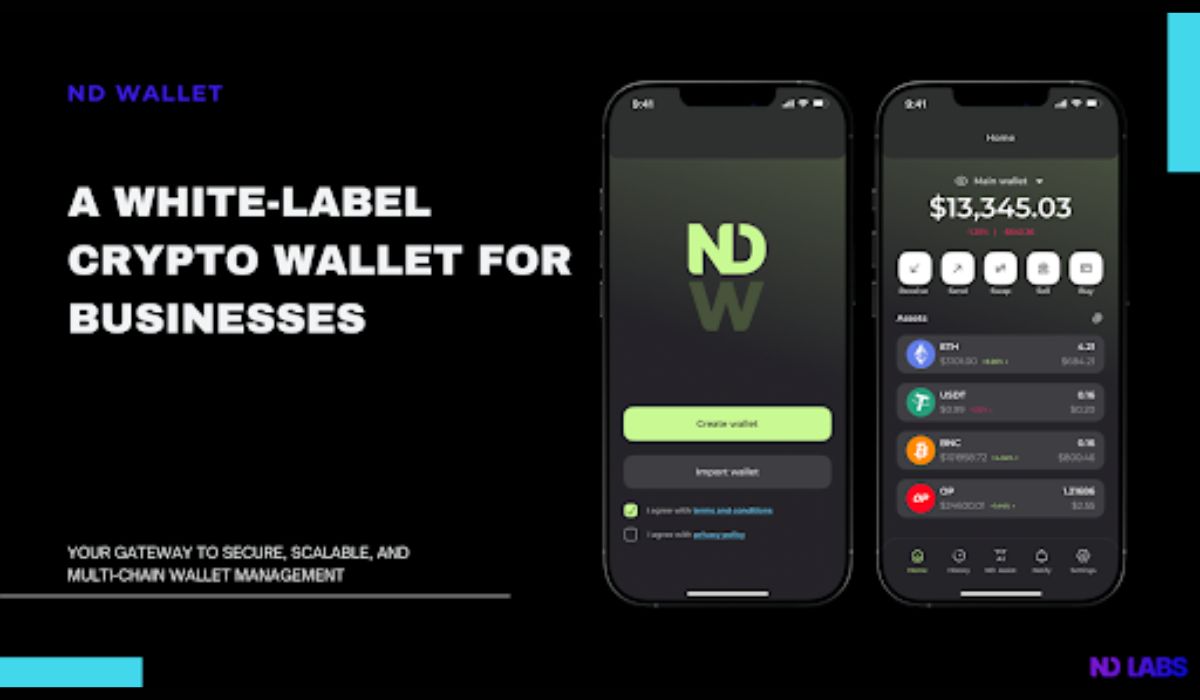
The post Save Money with White Label Crypto Development While Keeping Quality appeared on BitcoinEthereumNews.com. Advertisement &nbsp &nbsp Disclaimer: The below article is sponsored, and the views in it do not represent those of ZyCrypto. Readers should conduct independent research before taking any actions related to the project mentioned in this piece. This article should not be regarded as investment advice. Building a crypto wallet, exchange, or NFT platform no longer takes months. With White Label crypto tools, businesses can now launch in just weeks. These ready-made and proven technologies slash development expenses by up to 70% while offering quick customization to suit your branding. Solutions like White Label Cryptoсurrency Wallet Development allow companies to create secure, multi-chain wallets without building everything from scratch. Today, efficient resource management and fast time-to-market are more important than ever. For this reason, many startups and companies rely on ready-made solutions as their preferred approach. Speed Drives the New Competitive Game Speed-to-market has become a decisive factor for Web3 startups and enterprises alike. In a competitive space where users adopt (and abandon) new tools quickly, launching faster means gathering feedback earlier, iterating faster, and gaining traction before rivals do. Ready-made solutions offer exactly that: an infrastructure that eliminates the need for building from scratch, letting teams focus on core business and user growth instead of backend logic. Advertisement &nbsp Save Money While Keeping Quality For many companies, the appeal of White Label lies not only in its speed but also in its ability to reduce development costs by more than half. By using pre-built modules that have already been tested and optimized, teams can reallocate resources from engineering to growth, marketing, or user experience. At the same time, White Label does not mean generic. These platforms typically allow extensive customization, from visual design and features to blockchain integrations and user flows. Your Brand, Your Choices Modern pre-built…

Author: BitcoinEthereumNews
Shiba Inu Price Prediction Weakens, As Investors Choose Pepeto As Best Crypto To Buy

Shiba Inu Price Prediction Weakens, As Investors Choose Pepeto As Best Crypto To Buy

The Crypto Market Is Stirring back to life, After a period of slow movement, green candles are reappearing and traders are remembering why they came into crypto: the chance for big moves, real momentum, and life-changing returns. So where will those gains come from in 2025? Are legacy winners like Shiba Inu still the leaders, or […]

Author: Tronweekly
Will stablecoins break the token flywheel?

Will stablecoins break the token flywheel?

The post Will stablecoins break the token flywheel? appeared on BitcoinEthereumNews.com. This is a segment from the Empire newsletter. To read full editions, subscribe. Crypto has grown into a Kafkaesque maze of meta-bets: Bitcoin is the reserve asset of the internet, and if it can do that, then Ethereum must be the World Computer.  But if Ethereum can’t scale to be the World Computer all by itself, then perhaps Solana, Avalanche or some other layer-1 will be the global settlement layer for computation instead. That settlement layer will need apps. Lots of them. Great for the fat app thesis — the investment logic that suggests “most of the value to be found in crypto today is to be found in apps.”  And if those fat apps have tokens, then hoo boy! — Imagine the value accrual. Especially for those apps that thrive in crypto’s hyperactive attention economy. What if the apps are so successful that they overload their settlement layers, thereby proving that those blockchains can’t scale, either? Or maybe their devs, validators or other ecosystem participants are not aligned with the apps themselves. What then? Fun with flywheels Odds are you’ll then love the appchain thesis. It has everything good about the fat app thesis, with the added benefit of a very special property: ongoing utility for network participants. Tokens can be dished out as rewards (read: payment) to the people and companies keeping the network online.  And those people need to stake their tokens (and not sell them) to receive more of those rewards — reducing downward pressure on the token’s price and maybe attracting new users (and holders) along the way. The token is an integral part of that flywheel. Something that Empire host Santiago Roel Santos said on today’s podcast got me thinking about all of this. The topic of Polymarket’s trajectory had come up, and Santi…

Author: BitcoinEthereumNews
Big Pepe Coin Holders See This Token as PEPE 2.0 and Are Buying While It’s Undervalued Below $0.003

Big Pepe Coin Holders See This Token as PEPE 2.0 and Are Buying While It’s Undervalued Below $0.003

Today, early investors are turning their attention to Little Pepe (LILPEPE). Trading under $0.003, this Layer-2 meme-native token is being […] The post Big Pepe Coin Holders See This Token as PEPE 2.0 and Are Buying While It’s Undervalued Below $0.003 appeared first on Coindoo.

Author: Coindoo
Founder Outlines Vision to Bring ADA Into Daily Life

Founder Outlines Vision to Bring ADA Into Daily Life

The post Founder Outlines Vision to Bring ADA Into Daily Life appeared on BitcoinEthereumNews.com. AltcoinsBlockchain 22 September 2025 | 18:05 For years, Cardano has marketed itself as a blockchain built on patience and principles. Now, its founder Charles Hoskinson is laying out a blueprint that aims to push the project far beyond its reputation as just another smart contract platform. At the heart of Hoskinson’s plan is a push to embed Cardano into everyday financial interactions. He envisions a world where the Hydra scaling protocol powers transactions at vending machines, ATMs, and retail point-of-sale systems – a physical presence for what has so far been a mostly digital network. Another cornerstone of the roadmap is privacy through Midnight, a sidechain project designed to provide “rational privacy” for Cardano users. Hoskinson argues that without credible privacy tools, blockchains cannot achieve the resilience or freedom needed to compete with traditional systems. But his vision doesn’t stop at consumer payments. Hoskinson wants Cardano to evolve into the default launchpad for new blockchains, leveraging investments in partner chains and a security-first validator structure. He describes this as building the most reliable AVS (Actively Validated Services) experience in the space, turning ADA into an anchor for other ecosystems rather than just a standalone asset. In Hoskinson’s words, Cardano must remain faithful to its founding ethos – decentralization and resilience – while also expanding its global footprint. He even floated the idea of partnerships with Bitcoin-aligned ecosystems, a move that could bring additional liquidity and credibility. For investors, the unanswered question is whether this roadmap can finally translate into price action. ADA has been locked between $0.70 and $0.80 for months, repeatedly failing to sustain a breakout above $1. If Cardano’s expansion into payments, privacy, and partner chains gains real traction, Hoskinson believes that ceiling won’t hold for long. What emerges from this vision is not just a blockchain chasing…

Author: BitcoinEthereumNews
How Long Would It Take for $1000 in Ripple (XRP) to Make You a Millionaire, Compared to Solana (SOL) and Little Pepe (LILPEPE)

How Long Would It Take for $1000 in Ripple (XRP) to Make You a Millionaire, Compared to Solana (SOL) and Little Pepe (LILPEPE)

The ultimate dream of many crypto investors is to turn small stakes into life-changing fortunes. Ripple, Solana, and the emerging Little Pepe ($LILPEPE) are three projects attracting attention, but their millionaire potential differs drastically in both timeframe and probability. Ripple and Solana have proven track records and strong communities, while their market caps hinder exponential […]

Author: Cryptopolitan
Cardano News: Founder Outlines Vision to Bring ADA Into Daily Life

Cardano News: Founder Outlines Vision to Bring ADA Into Daily Life

Now, its founder Charles Hoskinson is laying out a blueprint that aims to push the project far beyond its reputation […] The post Cardano News: Founder Outlines Vision to Bring ADA Into Daily Life appeared first on Coindoo.

Author: Coindoo