Lending

Lending protocols form the backbone of the decentralized money market, allowing users to lend or borrow digital assets without intermediaries. Using smart contracts, platforms like Aave and Morpho automate interest rates based on supply and demand while requiring over-collateralization for security. The 2026 lending landscape features advanced permissionless vaults and institutional-grade credit lines. This tag covers the evolution of capital efficiency, liquidations, and the integration of diverse collateral types, including LSTs and tokenized RWAs.

15513 Articles
Created: 2026/02/02 18:52
Updated: 2026/02/02 18:52

Crypto lending hit a record high of $73.6 billion in the third quarter.

Crypto lending hit a record high of $73.6 billion in the third quarter.

PANews reported on November 7th that, according to Bloomberg citing data from Galaxy Digital, total crypto lending reached a record high of $73.6 billion in Q3 2025, surpassing the previous record of $69.4 billion set in Q4 2021. This figure represents nearly three times the increase since the beginning of 2024, reflecting the industry's recovery driven by ETF approvals and relaxed policies. However, with BTC recently correcting by over 20%, market concerns are rising about a new wave of risks triggered by the lending boom.

Author: PANews
UK Bank of England Plans Stablecoin Regulations with Temporary Holding Limits

UK Bank of England Plans Stablecoin Regulations with Temporary Holding Limits

The post UK Bank of England Plans Stablecoin Regulations with Temporary Holding Limits appeared on BitcoinEthereumNews.com. COINOTAG recommends • Exchange signup 💹 Trade with pro tools Fast execution, robust charts, clean risk controls. 👉 Open account → COINOTAG recommends • Exchange signup 🚀 Smooth orders, clear control Advanced order types and market depth in one view. 👉 Create account → COINOTAG recommends • Exchange signup 📈 Clarity in volatile markets Plan entries & exits, manage positions with discipline. 👉 Sign up → COINOTAG recommends • Exchange signup ⚡ Speed, depth, reliability Execute confidently when timing matters. 👉 Open account → COINOTAG recommends • Exchange signup 🧭 A focused workflow for traders Alerts, watchlists, and a repeatable process. 👉 Get started → COINOTAG recommends • Exchange signup ✅ Data‑driven decisions Focus on process—not noise. 👉 Sign up → The Bank of England is set to introduce stablecoin regulations UK-wide in 2025, focusing on widely used stablecoins with temporary holding limits of £20,000 for individuals and £10 million for businesses to protect financial stability while promoting innovation. UK stablecoin regulations will prioritize systemic stablecoins under Bank of England oversight, matching U.S. speed in implementation. Proposed rules unveil on November 10, 2025, followed by public consultation. Temporary caps address risks to commercial banks and mortgage markets, differing from U.S. structures. Discover the latest on stablecoin regulations in the UK: Bank of England proposes swift rules for digital assets, ensuring stability amid innovation. Stay informed on crypto oversight—read now for key insights! What Are the New Stablecoin Regulations in the UK? Stablecoin regulations in the UK represent a pivotal step by the Bank of England to oversee digital currencies backed by reserves like cash or assets, aiming to integrate them safely into the financial system. These rules, set for rapid implementation matching U.S. timelines, will target systemic stablecoins used for payments while subjecting smaller ones to lighter Financial Conduct Authority…

Author: BitcoinEthereumNews
A self-reflection on the cryptocurrency risk culture: Principal protection and new fundraising paradigms

A self-reflection on the cryptocurrency risk culture: Principal protection and new fundraising paradigms

In previous cycles, Andre Cronje, the founder of the Sonic (formerly Fantom) public blockchain, was known as the "King of DeFi". Now, this former king has returned, bringing a new financing paradigm to the crypto market. In the current extremely cautious market environment, Flying Tulip completed a seed round of financing of approximately $200 million last month and plans to raise another $800 million through a public offering, expanding its total fundraising to a valuation of $1 billion. How did you do that? AC's latest project, Flying Tulip, is positioned as a "full-stack on-chain financial market," aiming to integrate spot trading, lending, and perpetual contracts through a unified risk and pricing model. Technically, it emphasizes a hybrid AMM (Automated Market Maker) + order book, volatility-adjusted lending, and cross-chain support. To put it more bluntly, the goal is to reuse the "same unit of collateral" across different functions in order to improve capital efficiency. The most innovative aspect of this project is its reversible financing mechanism, namely "non-consumable financing," which mainly includes: On-chain redemption right: Flying Tulip's financing structure includes an "on-chain redemption right" mechanism (meaning investors can redeem their original investment by burning tokens under certain conditions). All private and public investors have a redemption right that can be exercised at any time (similar to a perpetual put option), and can redeem the original investment amount, achieving an asymmetric return structure of "limited downside and potential upside". Redemption mechanism: Executed through audited smart contracts, with rate limits and a queuing system to ensure solvency. Funding Deployment: The funds raised will not be spent directly, but will be invested in protocols such as Aave, Ethena, and Spark to generate an annualized return of approximately 4%. Cash flow arrangement: Part of the funds will be invested in low-risk DeFi strategies or structured products, with the yield covering operating expenses and redemption needs. Risk isolation: Redemption reserves are separated from operating funds to ensure security. This model keeps the financing funds intact, using the returns to support operations, thus maintaining the project's operation "with returns rather than principal". In terms of incentives, FT's team incentive model innovates or references the practices of leading decentralized trading platform HyperLiquid, and proposes incentive methods and buyback mechanisms based on this: Zero initial allocation: The team does not receive an initial token allocation, but earns revenue through open market buybacks funded by protocol revenue. Revenue-linked: Team earnings depend entirely on the actual use and long-term performance of the protocol. Continuous buyback: All revenue sources (transaction fees, lending spreads, stablecoin yields, etc.) are used to buy back and burn tokens. Open and transparent: The buyback program will have a clear timetable, avoiding the opaque token releases of traditional projects. Fixed supply and deflationary mechanism: The total supply of FT is capped at 10 billion tokens, with 10 tokens corresponding to every 1 US dollar of collateral. There is no inflation, and the token scarcity and holder value are continuously increased through the deflationary mechanism. The essence of this financing is that investors purchase a long-term put option that allows them to redeem their principal at any time, while the project team supports its operations with low-risk DeFi yields. In other words, in this investment, investors can exchange their tokens back to their original investment in US dollars (or equivalent stablecoins) at any time. The $200 million raised is locked in low-risk DeFi yield strategies (such as Aave, Ethena, and Spark), generating an annualized yield of approximately 4%. This means that for every $1 billion raised, approximately $40 million in yield can be generated annually to cover the project's operating expenses. This allows the raised funds to serve as initial capital, not to be consumed, but only to be used to maintain the project's operation through the passive income generated. The project's sustainability depends on the platform generating revenue to achieve long-term self-sufficiency. For investors, participating in financing involves paying the opportunity cost of using the funds. This model is a key innovation that distinguishes the project from traditional financing methods. It allows investors to only bear the opportunity cost; however, in a bull market, this form of financing, which may experience slow early development, could lead to some funds being redeemed in pursuit of higher returns. Currently, institutions that have announced or are rumored to be investors include: Brevan Howard Digital, CoinFund, DWF Labs, FalconX, Hypersphere, Lemniscap, Nascent, Republic Digital, etc. For projects, this approach establishes a sustainable funding pool and stable cash flow. In the future, if other projects wish to attract institutional funding, they may also need to offer similar principal protection and return-linked mechanisms, tying team earnings to platform usage to prevent early sell-offs. This will drive the industry towards a financing model based on "revenue buybacks" and "performance alignment." Regardless, the interests of original investors typically take precedence over those of secondary market buyers and the team, a principle emphasized in the mechanism design. This model has the potential to reshape the funding standards of the crypto primary market, providing investors with a stronger margin of safety and sustainability. Admittedly, the success of a project ultimately depends on whether its core product can prevail in fierce market competition. Even though this requires time to verify, we still expect it to generate a positive flywheel effect. This model may be setting a new and higher starting point for subsequent startups.

Author: PANews
PancakeSwap, ListaDAO Monitor USDX Collateral Risks in High-Borrowing DeFi Vaults

PancakeSwap, ListaDAO Monitor USDX Collateral Risks in High-Borrowing DeFi Vaults

The post PancakeSwap, ListaDAO Monitor USDX Collateral Risks in High-Borrowing DeFi Vaults appeared on BitcoinEthereumNews.com. COINOTAG recommends • Exchange signup 💹 Trade with pro tools Fast execution, robust charts, clean risk controls. 👉 Open account → COINOTAG recommends • Exchange signup 🚀 Smooth orders, clear control Advanced order types and market depth in one view. 👉 Create account → COINOTAG recommends • Exchange signup 📈 Clarity in volatile markets Plan entries & exits, manage positions with discipline. 👉 Sign up → COINOTAG recommends • Exchange signup ⚡ Speed, depth, reliability Execute confidently when timing matters. 👉 Open account → COINOTAG recommends • Exchange signup 🧭 A focused workflow for traders Alerts, watchlists, and a repeatable process. 👉 Get started → COINOTAG recommends • Exchange signup ✅ Data‑driven decisions Focus on process—not noise. 👉 Sign up → PancakeSwap and ListaDAO are closely monitoring lending vaults on MEV Capital and Re7 Labs due to abnormally high borrowing rates on sUSDX and USDX collateral without any repayments, raising concerns about potential DeFi instability and risks to depositors. PancakeSwap USDX vaults monitoring highlights risks from volatile synthetic stablecoins like sUSDX and USDX used as collateral for stable assets. ListaDAO notes no repayment activity in these vaults, signaling potential bad debt accumulation. Recent data shows sUSDX trading at a premium but declining, with USDX at a $0.68 discount, underscoring liquidity challenges in DeFi lending. Discover why PancakeSwap is monitoring USDX vaults amid high borrowing risks on sUSDX collateral. Learn about DeFi stability threats and protect your investments—read now for essential insights. What is PancakeSwap’s monitoring of USDX vaults revealing about DeFi risks? PancakeSwap USDX vaults are under close scrutiny by PancakeSwap and ListaDAO due to elevated borrowing rates and a lack of repayments in specific lending protocols. These vaults, hosted on platforms like MEV Capital and Re7 Labs, use volatile assets such as sUSDX and USDX as collateral for more…

Author: BitcoinEthereumNews
Next Big Crypto Under $0.05? New DeFi Coin Named Among 2025’s Most Promising Projects

Next Big Crypto Under $0.05? New DeFi Coin Named Among 2025’s Most Promising Projects

It takes a couple of years between consideration of a new crypto project that draws the attention of the market to the right reason, not hype, but quality design and steady implementation. One of those projects is in 2025 Mutuum Finance (MUTM). Priced at only $0.035, it is already turning out to be one of the potential best crypto to watch now, due to its transparent pre-sale, product roadmap, and its sustainable model of tokens.  Mutuum Finance (MUTM) Mutuum Finance is constructing a decentralized lending and borrowing protocol, intended to make markets on chains safer and more efficient. Rather than having the speculation, it adds financial mechanistic, which would reward users through participation. The protocol consists of two basic markets. The first one is that of Peer-to-Contract (P2C), a shared market system in which members place their assets and are given the return as mtTokens. These interest-save tokens are a representation of the deposit of the user as well as a part of the earnings of the pool. As an illustration, a user who deposits $1,000 in ETH will be eligible to get mtTokens that will correspondingly increase with interest earned. The second system is the Peer-to-peer (P2P), a lending system that isolates smaller or more specialized assets into their own markets. P2P market transactions allow borrowers to have a variety of loans, both in variable and fixed borrow rates. The size of the loans will be based on a prescribed Loan-to-Value (LTV) ratio.  In cases where the collateral of an individual loan holder is below the safety levels, liquidations are automatically carried out to safeguard the protocol. This mechanism would keep the system solvent and the liquidators are rewarded to repay bad debt by the system. Detailed Presale Overview The presale of Mutuum Finance has been one the most watched DeFi events of the year. Over 17,750 holders and approximately 790 million tokens sold on the project to date means that the project has already raised over $18.45 million.  The token began with Phase 1 at $0.01 in early 2025 and has since soared to a value of $0.035 in the current Phase 6, which has increased its value by 250%. The participants who entered at Phase 1 would potentially experience more than 500% appreciation at launch. At present, Phase 6 has been sold more than 83%, showing a profitable and steady demand. The momentum with each presale part is that the allocation and price are fixed so the more the investors participate the faster the sellouts will occur and the price of the tokens will go up. Engagement is another area that Mutuum Finance maintains high as it has a 24-hour leaderboard that gives the daily most significant contributor with $500 worth of MUTM tokens. This incentive plan introduces transparency and interest among investors to join in the early days at increased presale propulsion. The team has also made the process of entry to be made easy by enabling the users to purchase MUTM by card without any purchase restrictions to make it available to both large and retail investors. V1 Launch and Audit  V1 launch is one of the Mutuum Finance’s main milestones, which is stated to be live in the Sepolia Testnet in Q4 2025. The base features, Liquidity Pool, mt Token, Debt Token and Liquidator Bot will be launched with ETH and USDT as assets to lend, borrow, and use as collaterals to support assets at launch because these are the most liquid and reliable. Security is one of the key concerns. The project has passed a CertiK audit with a 90/100 Token Scan score, which proves its code reliability and the level of security. This will provide the investors with a greater assurance that the project is constructed to be long lasting. Many say that after the V1 testnet launches and the token is listed on $0.06, the visibility will increase significantly. Some analysts have estimated a 5x to 7x price rise, supported by the buy-and-distribute nature of the token, with MUTM buying on the open market redistributed to the user base who stake on the safety module with mtTokens.  Stablecoin and L-2 Growth In addition to lending, Mutuum Finance plans to have its own USD-pegged stablecoin. This secure coin shall be on demand and supported by collaterals in the protocol. The interest charged on loans will be directed to the treasury to handle the growth of the ecosystem and to offer stability whenever there is a fluctuation in the market. Layer-2 integration is the other major segment of the roadmap. The group seeks to implement Mutuum Finance on various chains to provide the quickest services and reduce costs to customers. This will not only ensure lending is done efficiently, but also ensure access to greater volumes of liquidity networks. These characteristics are very essential in terms of scalability. Stablecoins generate foreseeable utility, whereas Layer-2 implementation ensures lower expenses and more users are attracted, two factors that have led to the growth of other successful DeFi initiatives in the past, such as Aave. Mutuum Finance (MUTM) could be among the top cryptocurrency to invest in below $0.05 this year. With Phase 6 coming to its consummation, and investors scrambling to get allocations before the next price spurt, it is becoming apparent why many analysts have called MUTM one of the best potential ventures in 2025. For more information about Mutuum Finance (MUTM) visit the links below: Website: https://www.mutuum.com Linktree: https://linktr.ee/mutuumfinance

Author: Coinstats
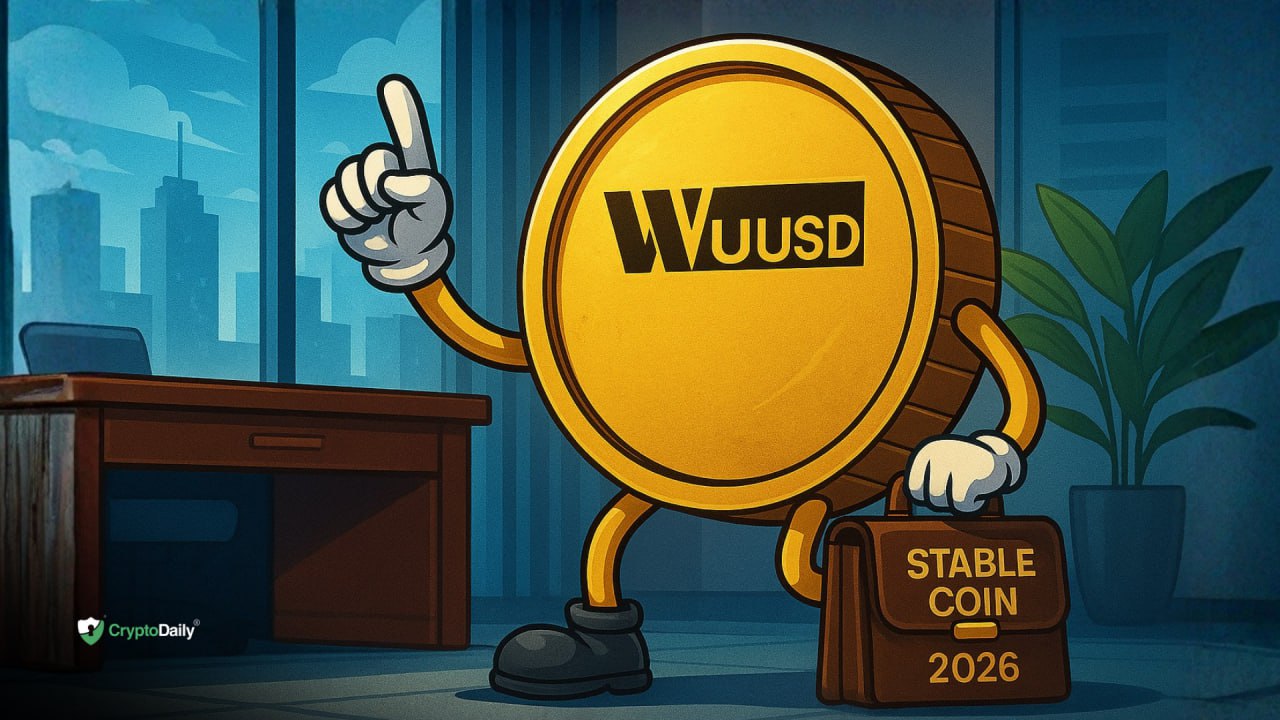
Hot on the Heels of Its Stablecoin Launch, Western Union Files ‘WUUSD’ Trademark

Hot on the Heels of Its Stablecoin Launch, Western Union Files ‘WUUSD’ Trademark

The post Hot on the Heels of Its Stablecoin Launch, Western Union Files ‘WUUSD’ Trademark appeared on BitcoinEthereumNews.com. Just days after announcing the launch of its own stablecoin set for 2026, Western Union has filed another trademark that could encompass a range of cryptocurrency-related services. Western Union — pioneers of the first transcontinental telegraph line — is preparing to introduce a dollar-backed stablecoin, the U.S. Dollar Payment Token (USDPT). Alongside the excitement surrounding this launch, the company appears to be signalling a broader expansion into the crypto space. It’s official:@WesternUnion, the world’s largest money transfer business, is building exclusively on Solana. 🔥 pic.twitter.com/dJMnKN5EY4 — Solana (@solana) October 28, 2025 Western Union Partners with Heavyweights Solana and Anchorage Digital Bank According to an exclusive report by The Wall Street Journal, Western Union revealed its plans to launch the USDPT stablecoin to enable its 100 million customers to send money globally with reduced risk and protection against local currency fluctuations. The USDPT will be built on the Solana blockchain and issued by Anchorage Digital Bank, with the launch targeted for the first half of 2026. Customers will be able to access the digital token through Western Union’s partner exchanges. In a press release, the company stated that its new stablecoin and accompanying “Digital Asset Network” are designed to “bridge the digital and fiat worlds, enabling real-world utility for digital assets.” Western Union emphasised that this collaboration combines its extensive global reach, Solana’s high-performance blockchain technology, and Anchorage’s “industry-leading, federally regulated stablecoin issuance and digital asset custody solutions.”Through this initiative, Western Union aims to give users seamless access to digital assets—allowing them to send, receive, spend, and hold USDPT through an intuitive user experience. Devin McGranahan, President and CEO of Western Union, had the following to say in the press statement: “We are committed to leveraging emerging technologies to empower our customers and communities.” Adding, “As…

Author: BitcoinEthereumNews
Best Altcoins to Buy – Join MoonBull Presale for 1000x Gains

Best Altcoins to Buy – Join MoonBull Presale for 1000x Gains

The post Best Altcoins to Buy – Join MoonBull Presale for 1000x Gains appeared on BitcoinEthereumNews.com. Crypto Presales MoonBull’s Stage 6 presale surpasses $550K with over 1,800 holders, 95% APY staking, and a governance system launching soon. Discover why it’s outperforming other top altcoins to buy now. What if the next crypto rocket isn’t even on your watchlist yet but already fueling up for takeoff? Every bull cycle begins quietly, with early-stage altcoins gathering strength before the spotlight hits. Savvy investors know the game: they hunt presales, community-backed projects, and undervalued tokens before the hype catches up. The best altcoins to buy now aren’t just names; they’re movements powered by strategy, mechanics, and momentum. When others chase pumps, the real gains go to those who spot the buildup early. Timing isn’t luck; it’s conviction. While the big names polish their updates, MoonBull’s presale is building momentum at a pace that’s hard to ignore. 1. MoonBull – The Best Altcoin to Buy Now for 1000x Gains MoonBull’s presale is now in Stage 6 for $0.00008388, with more than $550,000 raised and over 1,800 holders joining the herd. Each new stage pushes the price higher, with a projected 7,244% ROI from Stage 6 to the listing price of $0.00616. Staking rewards reach up to 95% APY, combining passive income with long-term growth potential. Starting at Stage 12, MoonBull introduces an open governance system where each $MOBU token equals one vote. Holders can decide on supply burns, marketing campaigns, and community initiatives. No lockups, no minimums, just pure participation. It’s a transparent, community-driven model where holders actively shape the project’s direction. MoonBull isn’t just another meme coin; it’s a decentralized movement that turns investors into decision-makers, making it one of the best altcoins to buy now. 2. Ton – Telegram’s Blockchain Power Play Toncoin is leveraging Telegram’s massive user base to fuel one of the most active blockchain ecosystems…

Author: BitcoinEthereumNews
7 Best Altcoins to Buy Now: MoonBull’s Presale Sparks the Next 1000x Wave Amid TON, WLFI, DOT

7 Best Altcoins to Buy Now: MoonBull’s Presale Sparks the Next 1000x Wave Amid TON, WLFI, DOT

What if the next crypto rocket isn’t even on your watchlist yet but already fueling up for takeoff? Every bull […] The post 7 Best Altcoins to Buy Now: MoonBull’s Presale Sparks the Next 1000x Wave Amid TON, WLFI, DOT appeared first on Coindoo.

Author: Coindoo
Ripple’s Chris Larsen rockets into global top‑200 billionaires club

Ripple’s Chris Larsen rockets into global top‑200 billionaires club

Chris Larsen just broke into the global top‑200 richest people, and it happened fast.The move came after the U.S. government and Wall Street shifted their tone toward crypto. The Securities and Exchange Commission ended its five‑year lawsuit against Ripple back in August, clearing a major weight off the company. Then this Wednesday in San Francisco, investors tied to Fortress Investment Group and Citadel Securities put $500 million into Ripple, valuing the company at $40 billion, according to Bloomberg. The timing was almost rude. The new valuation plus a roughly 9% rise in XRP this year pushed Chris into billionaire territory with a net worth of $15.3 billion, placing him among the world’s richest for the first time. Most of that wealth comes from his 18% stake in Ripple and his 2.7 billion XRP tokens worth about $6.3 billion as of Wednesday. He also holds $1.8 billion in real estate and assorted investments. That breakdown was confirmed directly to Bloomberg. Born in San Francisco and raised in Cupertino, Chris is 64, and has been building companies since the 1990s, long before crypto existed. He went to San Jose State at first to study aeronautics. Chris switched to business, transferred to San Francisco State, and graduated with accounting and business administration degrees in 1984. He then worked as an auditor at Chevron before earning an MBA from Stanford. Building companies and building wealth The first time Chris made real noise was in 1996 when he co‑founded E‑Loan, the first platform to show consumer credit scores online. He sold it nine years later to Popular Inc. for $300 million. After that, he created Prosper Marketplace, a group‑lending platform partly inspired by his wife’s background in Cambodia. He stepped away from Prosper in 2012. A few months later, he co‑founded OpenCoin, which became Ripple. The company focused on cross‑border payments using XRP. Chris led it as CEO until 2016, then moved into the chairman role. His work now also stretches into local issues. With his wife, Lyna Lam, he supports Cambodian community projects, climate efforts, food access, and San Francisco’s neighborhood revival. The pair founded the A Khmer Buddhist Foundation and are helping fund a new temple in San Jose. Locally, Chris has been politically active for years. He funded a private camera network in San Francisco to combat property crime and recently gave $9.4 million to help the city build a real‑time police operations center. Ripple, meanwhile, is not going public anytime soon, as was reported by Cryptopolitan. When asked Wednesday, Ripple President Monica Long said, “No plan, no timeline.” Crypto markets shake while fortunes shift While Chris climbs the billionaire rankings, crypto trading is showing the opposite energy. On Hyperliquid, one wallet opened two heavy short positions against Bitcoin and XRP totaling $140 million. That trader is now up $3.1 million in about nine hours. The wallet was funded with $7 million USDC routed through an Arbitrum wallet that redeemed from a zero address, making the source hard to trace. Observers are already speculating insider knowledge. This reminds traders of the alleged “Trump insider whale” who reportedly made almost $200 million by shorting before the $19 billion liquidation crash on October 10. Someone linked to that wallet denied having inside info, even though the shorts lined up exactly before former President Trump’s tariff threat tanked markets. Bitcoin has been sliding. It dropped 7.4% on Tuesday in New York to $96,794, its first fall below $100,000 since June. That puts it more than 20% below last month’s record high. Ether dropped up to 15%, and several altcoins lost 50% this year. Many traders stayed sidelined after the October liquidation wave. Open interest in Bitcoin futures is still low. Even though funding rates look favorable, few are stepping back in. Bitcoin is up less than 10% this year, trailing stocks and failing to hedge portfolios. Want your project in front of crypto’s top minds? Feature it in our next industry report, where data meets impact.

Author: Coinstats
Remitly’s 25% Stock Selloff Looks Like Trouble From Trump’s Immigration Crackdown

Remitly’s 25% Stock Selloff Looks Like Trouble From Trump’s Immigration Crackdown

The post Remitly’s 25% Stock Selloff Looks Like Trouble From Trump’s Immigration Crackdown appeared on BitcoinEthereumNews.com. Money-transfer app Remitly has taken significant market share from incumbents like Western Union since its 2011 founding, but its stock price has languished this year. SOPA Images/LightRocket via Getty Images Remitly, a financial technology company that lets consumers in places like the U.S. and Canada send money home to countries like Mexico and the Philippines, may finally be seeing the effects of President Trump’s immigration crackdown on its business. The 14-year-old Seattle business announced its third quarter financial results yesterday, and a couple of metrics rattled investors, sending the stock down 25% today and shrinking its market value to $2.5 billion. Chief financial officer Vikas Mehta said the company expects revenue in the fourth quarter to reach about $427 million, representing growth of about 22%. In 2026, sales growth will be “in the high teens range.” These expected rates of expansion are big declines from Remitly’s 24% to 34% quarterly growth over the past year, even though the company has recently released new products, including a send-now, pay-later feature has already attracted 100,000 active customers. Remitly’s profits also fell slightly in the third quarter compared with the second, according to the company’s adjusted earnings before interest, taxes, depreciation and amortization (EBITDA) metric. Its stock decline today marks one of its biggest single-day drops since it went public in 2021 at a $7 billion valuation. Compared with the end of last year, Remitly’s stock is off 45%. Concerns about cryptocurrency-based stablecoins disrupting its business have also likely weighed on the stock. Have a story tip? Contact Jeff Kauflin at [email protected] or on Signal at jeff.273. Remitly has 8.9 million active customers, many of whom are immigrants. They send about $20 billion each quarter through the app, and Mexico is one of the top three markets they send money to. In the…

Author: BitcoinEthereumNews