Lending

Lending protocols form the backbone of the decentralized money market, allowing users to lend or borrow digital assets without intermediaries. Using smart contracts, platforms like Aave and Morpho automate interest rates based on supply and demand while requiring over-collateralization for security. The 2026 lending landscape features advanced permissionless vaults and institutional-grade credit lines. This tag covers the evolution of capital efficiency, liquidations, and the integration of diverse collateral types, including LSTs and tokenized RWAs.

14767 Articles
Created: 2026/02/02 18:52
Updated: 2026/02/02 18:52
Grayscale introduces staking to its U.S.-listed spot Ethereum and Solana investment products

Grayscale introduces staking to its U.S.-listed spot Ethereum and Solana investment products

The post Grayscale introduces staking to its U.S.-listed spot Ethereum and Solana investment products appeared on BitcoinEthereumNews.com. Grayscale Investments has introduced spot crypto exchange-traded funds in the U.S. with a staking feature. The launch will cover Ethereum Trust ETF (ETHE), Ethereum Mini Trust ETF (ETH), and Solana Trust (GSOL). Staking will allow investors to gain rewards while maintaining direct exposure to cryptocurrency tokens. The products collectively have over $8.25 billion in assets under management for the U.S. clients. ETHE and ETH funds have been upgraded to include staking functionality. GSOL is currently traded over the counter (OTC) and has activated staking pending regulatory approval to be listed as an ETF. Grayscale will stake via a network of custodians to maintain transparency According to Grayscale’s press release, the staking feature will allow investors to passively earn rewards from the underlying proof-of-stake blockchains while preserving liquidity and accessibility through standard brokerage accounts. Spot crypto ETFs staking enhances yield potential and supports the security of the Ethereum and Solana networks by delegating assets to institutional-grade validator providers. Grayscale said it would stake through a network of custodians to maintain the funds’ transparency and long-term network support. “Staking in our spot Ethereum and Solana funds is exactly the first mover innovation Grayscale was built to deliver. As the world’s #1 digital asset-focused ETF issuer by AUM, we believe our trusted and scaled platform uniquely positions us to turn new opportunities like staking into tangible value potential for investors.” -Peter Mintzberg, Chief Executive Officer of Grayscale The SEC approved the spot Bitcoin ETFs earlier this year, allowing Grayscale to expand into the U.S. digital asset market beyond Bitcoin by offering investors exposure to yield-generating proof-of-stake networks, including Ethereum and Solana. Grayscale’s Ethereum Trust ETF (ETHE) and Ethereum Mini Trust ETF (ETH) manage more than $8.1 billion in net assets, providing spot Ether exposure to retail and institutional investors.  The Grayscale Solana Trust…

Author: BitcoinEthereumNews
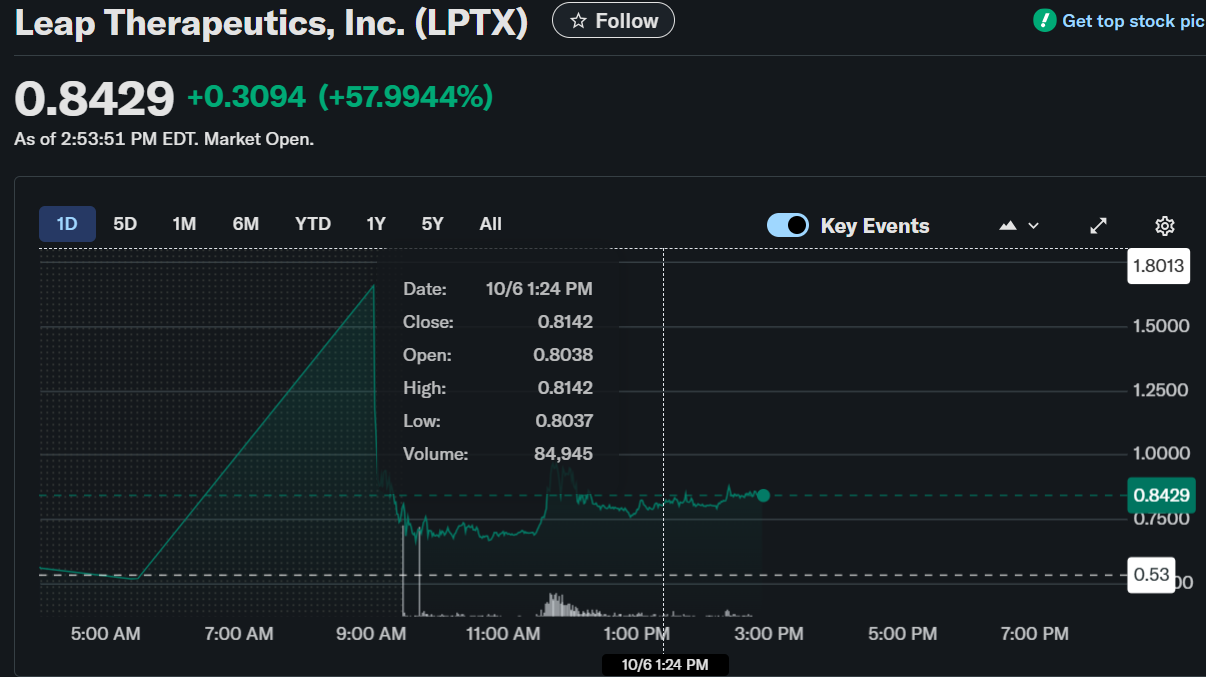
Leap Therapeutics (LPTX) Stock: Soars 58% After $58.9M PIPE Deal with Winklevoss Capital to Launch Crypto Treasury

Leap Therapeutics (LPTX) Stock: Soars 58% After $58.9M PIPE Deal with Winklevoss Capital to Launch Crypto Treasury

TLDR Leap surges 58% as Winklevoss leads $58.9M PIPE, merging biotech and crypto. Leap rockets 58% after $58.9M PIPE; Winklevoss backs biotech-crypto strategy. Winklevoss Capital fuels Leap’s 58% rally with $58.9M biotech-crypto PIPE. Leap rises 58% on $58.9M Winklevoss-led deal blending biotech and blockchain. $58.9M PIPE ignites Leap’s biotech-crypto pivot; Winklevoss takes the helm. Leap [...] The post Leap Therapeutics (LPTX) Stock: Soars 58% After $58.9M PIPE Deal with Winklevoss Capital to Launch Crypto Treasury appeared first on CoinCentral.

Author: Coincentral
Galaxy One Opens for Business

Galaxy One Opens for Business

The post Galaxy One Opens for Business appeared on BitcoinEthereumNews.com. Shares of Galaxy Digital rose 8% in premarket trading Monday as the company rolled out GalaxyOne, a mobile and web platform built to give retail investors access to a blend of cash, crypto, and equity investing tools, with yield at the core. The app gives users access to FDIC-insured high-yield cash accounts, crypto trading, and U.S. equities and exchange-traded funds (ETFs), the company announced in a press release. Galaxy says it’s offering 4% annual returns on regular cash deposits and up to 8% for accredited investors through its Galaxy Premium Yield product. Both rates are powered by the company’s institutional lending business, which manages a loan book of more than $1.1 billion. Beyond passive yield, GalaxyOne users can trade across digital assets like bitcoin BTC$125,237.45, ether ETH$4,693.75 and solana SOL$236.28, as well as stocks listed on major U.S. exchanges. Galaxy also offers automated reinvestment of earnings into crypto or cash, aiming to simplify compounding returns, the company said. The launch puts Galaxy in direct competition with Robinhood (HOOD) and Coinbase (COIN), two of the dominant players among digital-first retail traders in the U.S. Both have launched new services this year — including crypto staking, margin trading and retirement accounts — as they try to lock in more users and increase assets held on their platforms. HOOD and COIN are both trading about 2% higher in pre-market trading alongside a general rise in stock and crypto markets. Galaxy’s move is notable in part because of its institutional background. The company went public on Nasdaq in May and its stock is up 100% since the listing. Originally built on the infrastructure of Fierce, a fintech platform Galaxy acquired last year, GalaxyOne signals a broader push into consumer finance from a firm historically focused on institutional clients. Galaxy said more features are on…

Author: BitcoinEthereumNews
Galaxy Digital Unveils New Trading App With Shocking 8% APY – But There’s a Catch

Galaxy Digital Unveils New Trading App With Shocking 8% APY – But There’s a Catch

Galaxy Digital has launched GalaxyOne, unifying crypto, stock, and cash management. The platform has offered 4% APY on FDIC-insured cash and 8% on Galaxy Premium Yield Notes, backed by its lending desk, and has supported trading in BTC, ETH, SOL, and PAXG with commission-free U.S. equities.

Author: Coinstats
GLXY Jumps 8% as Galaxy Digital Launches Retail Platform

GLXY Jumps 8% as Galaxy Digital Launches Retail Platform

The post GLXY Jumps 8% as Galaxy Digital Launches Retail Platform appeared on BitcoinEthereumNews.com. GalaxyOne enables retail investors to earn interest on cash and trade cryptocurrencies and stocks. Crypto financial services firm Galaxy Digital (NASDAQ: GLXY; TSX: GLXY) shares rose 8% to $39 on Monday, Oct. 6, following the launch of GalaxyOne – a new platform that allows U.S.-based investors to earn interest on cash and trade crypto and stocks in one place. Specifically, the platform offers 8% annual percentage yield (APY) to accredited investors through Galaxy Premium Yield, and 4% APY on cash deposits insured up to $250,000 through Cross River Bank, according to a press release viewed by The Defiant. GalaxyOne also offers trading of major digital assets, including Bitcoin (BTC), Ethereum (ETH), Solana (SOL), and Paxos Gold (PAXG), as well as commission-free trading of U.S. stocks and exchange-traded funds (ETFs). Galaxy said yields from the Premium Yield product are generated through its institutional lending business. The offering has a $25,000 minimum, with a $1 million cap per investor and a $250 million total limit. The launch marks Galaxy’s move into the retail market, expanding beyond its base of institutional clients to reach everyday investors who want access to both traditional and digital assets. “We’ve spent years building institutional-quality infrastructure to serve the world’s most sophisticated investors. Now, we’re extending that edge to individuals,” said Mike Novogratz, founder and CEO of Galaxy. “Importantly, GalaxyOne advances our mission of becoming a full-spectrum financial services provider that builds trusted, regulated, and accessible products for all market segments.” The launch reflects a broader trend of both decentralized finance (DeFi) and centralized finance (CeFi) firms developing “super apps” that combine multiple financial services within a single platform. This “bundle” model was popularized in Asia through platforms like WeChat, and in the U.S., it has been adopted by firms such as Coinbase and Robinhood, as well as…

Author: BitcoinEthereumNews
Ethereum applications at the On-chain Summit

Ethereum applications at the On-chain Summit

The post Ethereum applications at the On-chain Summit appeared on BitcoinEthereumNews.com. Ethereum applications dominated discussion today at the Global On-chain Asset Summit in Singapore, hosted by HashKey Group, where Vitalik Buterin and Dr. Xiao Feng outlined practical paths for scaling, identity and risk control on-chain. What was the main message from the summit about l1 l2 application differences? Speakers drew a clear line between Layer 1 and Layer 2 use cases. L1 remains the canonical base for settlement and shared security. L2s are framed as the layer for high throughput and lower fees. In this context, developers should design with cross-layer interoperability in mind. Applications that need finality and censorship resistance will favor L1. By contrast, high-frequency use cases — such as prediction markets and micropayments — gain from L2 throughput and reduced costs. How does this affect developers choosing where to deploy? Teams must weigh latency, fees and trust assumptions. Many prototype on L2, then shift critical settlement logic to L1 when guarantees matter. Tooling for bridging and observability is improving, which reduces migration friction. How did the speakers address ethereum prediction markets and their scaling? Panelists discussed the promise of ethereum prediction markets for price discovery and hedging. They underlined that such markets need fast finality and low fees to operate efficiently. As a result, builders plan to run market engines on L2 or rollups while anchoring outcomes on L1. This hybrid model preserves security and delivers the speed traders require. However, throughput targets and oracle designs remain under debate. Are there regulatory or market risks traders should watch? Yes. Speakers flagged regulatory scrutiny and liquidity fragmentation as material risks. Choosing venues with transparent on-chain settlement and reputable layers reduces counterparty exposure. What role will zk identity proofs play in on-chain user models? Experts positioned zk identity proofs as a core tool for privacy-preserving KYC, Sybil resistance and reputation…

Author: BitcoinEthereumNews
Figure (FIGR) Has 40% Upside: Bernstein

Figure (FIGR) Has 40% Upside: Bernstein

The post Figure (FIGR) Has 40% Upside: Bernstein appeared on BitcoinEthereumNews.com. Bernstein initiated coverage of Figure (FIGR) with an outperform rating and a $54 price target, calling it a leader in bringing blockchain to credit markets, the broker said in a Monday report. The stock was 2% higher in early trade, around $41.10. Bernstein said Figure is doing for lending what stablecoins did for payments, tokenizing traditional assets to make markets faster and more efficient. With roughly 75% of the $17 billion tokenized private credit market, Figure is the clear frontrunner, according to analysts led by Gautam Chhugani. Figure’s blockchain platform shifts lending from a balance-sheet-heavy model to a capital-light marketplace, giving investors direct access to consumer loans, the report noted. Bernstein estimated that the addressable market for credit tokenization exceeds $2 trillion, providing “tremendous growth headroom” as Figure expands beyond home equity lines into other loan products and even equities. The broker cited Figure’s experienced management team and wide distribution network, with 170 origination partners and over 15 private credit investors, as key strengths. Figure is already the top independent home equity line of credit (HLOC) lender in the U.S., originating about $5.1 billion in 2024, or roughly 3% of the market. Bernstein expects revenue to rise from $341 million in 2024 to $754 million by 2027, a 30% annual growth rate, driven by Figure’s Connect marketplace. At about 19x EV/2027 EBITDA and 30x P/E, Figure trades at a premium, but Bernstein said its market dominance, profitability, and exposure to the fast-growing tokenization trend justify the valuation. Figure went public last month. It priced its IPO at $25 per share, valuing the company at $787.5 million. Read more: Blockchain-Based Lender Figure Prices IPO at $25 Per Share, Raising Nearly $788M Source: https://www.coindesk.com/markets/2025/10/06/figure-is-a-blockchain-pioneer-in-credit-markets-says-bernstein-initiating-at-outperform

Author: BitcoinEthereumNews
Inside the fallout from PeckShield’s Synnax Labs audit

Inside the fallout from PeckShield’s Synnax Labs audit

The post Inside the fallout from PeckShield’s Synnax Labs audit appeared on BitcoinEthereumNews.com. PeckShield Inc. has been accused by stablecoin yield layer Synnax Labs of refunding and removing an audit after the crypto security firm allegedly overlooked the same bug that caused the $1.7 million hack of DeFi lending protocol Abracadabra. Synnax Labs, which is a fork of Abracadabra, first asked for a refund after discovering several vulnerabilities that weren’t spotted by PeckShield in its audit. According to Synnax Labs, the audit “lacked sufficient depth.” The company also claimed that, “After refunding, PeckShield removed the audit report and related correspondence — an unprofessional move that undermines transparency.” The firm disclosed the refund after PHD student and blockchain specialist, Weilin Li, questioned Synnax Labs’ activity in relation to the Abracadabra hack on October 4.  Li claims that Synnax Labs was the only fork of Abracadabra’s Magic Internet Money (MIM) with total value locked (TVL) that was vulnerable to the attack.  Regarding yesterday’s Abracadabra (@MIM_Spell) hack event. Below are some fun facts I observed: *Disclaimer: I have no opinion or comment on this event. I am just listing some facts. (1) The only fork with TVL and was vulnerable to this attack vector (afaik), @synnax_labs,… pic.twitter.com/6L60tGDN3v — Weilin (William) Li (@hklst4r) October 5, 2025 Read more: No crying in the casino: XPL bug hits Aster, Hypervault rug pull suspected They note how Synnax Labs patched this vulnerability four days before the exploit, how PeckShield deleted the audit, which didn’t include this vulnerability, before asking the question, “What happened?” Li added, “I have no opinion or comment on this event. I am just listing some facts.”  Indeed, Synnax Labs claims that the contracts were paused and patched “proactively” four days before Abracadabra’s exploit, before elaborating on what happened with the audit.  Abracadabra has lost over $21 million in major DeFi hacks Abracadabra reportedly suffered the hack…

Author: BitcoinEthereumNews
Beyond Borders Featuring Gluwa and the New Era of Cross Border Finance

Beyond Borders Featuring Gluwa and the New Era of Cross Border Finance

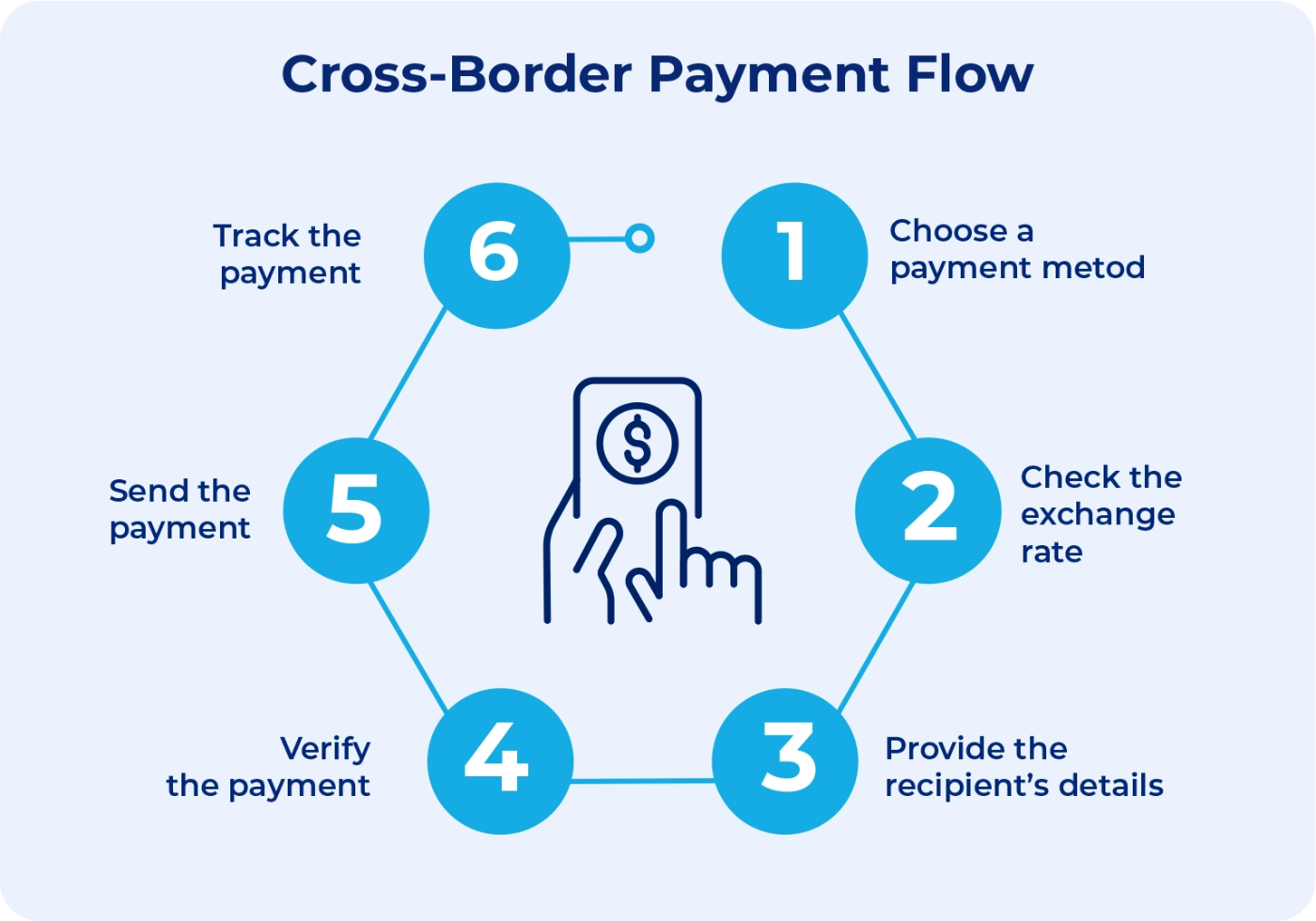
Cross-border payments are still costly and slow in 2025. Sending $200 internationally costs 6.2 percent on average, more than twice the United Nations goal of 3 percent by 2030. Traditional banking networks, based on old messaging systems from the 1970s, involve many middlemen.

Author: Hackernoon
Why Mutuum Finance (MUTM)

Why Mutuum Finance (MUTM)

Mutuum Finance (MUTM) uses a dual lending method to make sure that both security and yield are maximized. Peer-to-Contract (P2C) pools will collect payments of well-known assets like ETH and LINK, as well as stablecoins like USDT and USDC. The project counts over 16,750 holders, and total supply stands at 4 billion tokens.

Author: Hackernoon