Lending

Lending protocols form the backbone of the decentralized money market, allowing users to lend or borrow digital assets without intermediaries. Using smart contracts, platforms like Aave and Morpho automate interest rates based on supply and demand while requiring over-collateralization for security. The 2026 lending landscape features advanced permissionless vaults and institutional-grade credit lines. This tag covers the evolution of capital efficiency, liquidations, and the integration of diverse collateral types, including LSTs and tokenized RWAs.

14540 Articles
Created: 2026/02/02 18:52
Updated: 2026/02/02 18:52
Chainlink & SOOHO.IO Launch KRW Stablecoin FX for Tourists

Chainlink & SOOHO.IO Launch KRW Stablecoin FX for Tourists

The post Chainlink & SOOHO.IO Launch KRW Stablecoin FX for Tourists appeared on BitcoinEthereumNews.com. Key Notes SOOHO.IO and Chainlink have launched Project Namsan, a Korean won stablecoin initiative for foreign exchange. The project uses Chainlink’s CCIP for interoperability and Proof of Reserve to verify stablecoin collateral. A live pilot with Grand Korea Leisure allows tourists to use USD stablecoins for KRW-denominated digital voucher payments. SOOHO.IO, a blockchain technology firm, has partnered with Chainlink LINK $21.33 24h volatility: 8.2% Market cap: $14.46 B Vol. 24h: $1.26 B to launch Project Namsan, a new initiative focused on the Korean won (KRW) stablecoin ecosystem. The project is already running a live pilot program aimed at providing a low-cost foreign exchange (FX) option for tourists in South Korea. The primary goal is to offer a more efficient alternative to traditional currency exchange. The pilot program aims to reduce FX costs significantly, with the project reporting that participants made payments at costs more than 30% lower than conventional channels, according to the official announcement. The project is built on key Chainlink technologies, including its Cross-Chain Interoperability Protocol, a standard that is already gaining institutional adoption for connecting different blockchains. It also uses Chainlink Proof of Reserve to supply continuous, on-chain verification of stablecoin reserves. How Project Namsan Works The pilot has been active since July 2025 in collaboration with Grand Korea Leisure (GKL), a public corporation that operates foreigner-only casinos. In the trial, foreign tourists deposit a USD-based stablecoin and, in return, receive KRW-denominated digital vouchers. This model of using digital assets for tourism is part of a broader regional trend, aiming to streamline the payment process for visitors. Chainlink’s technology plays a specific role in securing this process. CCIP enables the smooth transfer of assets between different networks, while Chainlink Proof of Reserve ensures that the KRW vouchers are only issued after the stablecoin settlement is validated on-chain.…

Author: BitcoinEthereumNews
Markets price in 92% chance of another Federal Reserve rate cut in October

Markets price in 92% chance of another Federal Reserve rate cut in October

The post Markets price in 92% chance of another Federal Reserve rate cut in October appeared on BitcoinEthereumNews.com. Markets now expect the Fed to lower rates again in October, with the CME FedWatch Tool showing a 91.9% chance of a second consecutive cut. This follows the quarter-point reduction last week, which was the first time the central bank had eased rates since December. The latest bets reflect Wall Street’s strong belief that the Fed, under growing pressure, is on track to deliver more easing as the economy shows signs of cooling off. This shift comes ahead of a key inflation reading due Friday — the August personal consumption expenditures (PCE) index. The number is expected to land at 2.8%, which matches the Fed’s annual target. But if it overshoots, even by a little, it could trigger worries that last week’s cut came too early. That would add fuel to fears the Fed might have opened the door for inflation to dig back in. The stakes are high. A clean 2.8% would justify the recent decision. Anything higher, and people will start asking if the central bank got played. Bond yields rise while stocks climb anyway Instead of falling, yields on 10-year and 30-year Treasurys climbed after the cut, which caught a lot of people off guard. Yields normally react to rate decisions in a straight line: lower rates, lower yields. But that didn’t happen. This time, bond traders looked past the cut and fixated on the broader picture — like the U.S. government’s ballooning debt and erratic fiscal policy. Rising yields suggest that the bond market isn’t buying the idea that the economic backdrop justifies this pivot from the Fed. On the equity side, no such hesitation. Investors pushed the S&P 500 and Dow Jones Industrial Average to new highs on Friday. Meanwhile, the Nasdaq Composite jumped 2.2% over the week. For now, the stock market’s verdict is…

Author: BitcoinEthereumNews
Bitcoin Investment Firm B HODL Makes Pioneering Debut on London’s Aquis Exchange

Bitcoin Investment Firm B HODL Makes Pioneering Debut on London’s Aquis Exchange

BitcoinWorld Bitcoin Investment Firm B HODL Makes Pioneering Debut on London’s Aquis Exchange The world of cryptocurrency is constantly evolving, and the UK market just witnessed a landmark event. A new player has emerged, making significant waves in the financial landscape. This development signals a growing acceptance of digital assets within traditional investment circles, offering exciting new avenues for investors. A Pioneering Bitcoin Investment Firm Makes its Mark in London In a groundbreaking move, B HODL, a UK-based Bitcoin investment firm, has officially listed on London’s Aquis Stock Exchange. This is not just another listing; it marks a historic moment as B HODL becomes the very first dedicated Bitcoin investment firm to go public in the United Kingdom. The Aquis Stock Exchange, known for fostering growth in small and mid-cap companies, provides an ideal platform for such an innovative venture. B HODL currently boasts a substantial holding of 2,470 BTC, showcasing its commitment to the digital asset. This listing offers a new, regulated pathway for investors seeking exposure to Bitcoin through a traditional stock exchange. Who is Powering This Innovative Bitcoin Investment Firm? Behind B HODL’s significant debut is a figure well-known in the cryptocurrency space: Adam Back. The CEO of Blockstream, a prominent blockchain technology developer, and a staunch Bitcoin maximalist, Back is reportedly a major shareholder in B HODL. His involvement lends considerable credibility and expertise to the firm’s operations. Back’s reputation as a key innovator in the Bitcoin ecosystem underscores B HODL’s serious intent and deep understanding of the technology. His backing signals confidence in the firm’s strategy and its long-term vision within the evolving digital asset market. How Does a Bitcoin Investment Firm Generate Revenue? B HODL’s business model focuses on generating revenue by strategically utilizing Bitcoin infrastructure. This approach goes beyond simply holding Bitcoin; it involves active participation in the underlying technology to create value. While specific details can vary, such strategies often include: Infrastructure Development: Investing in and operating Bitcoin mining facilities. Network Services: Providing services that support the Bitcoin network, such as transaction processing or liquidity solutions. Strategic Holdings Management: Employing sophisticated strategies to manage their Bitcoin reserves, potentially leveraging lending or staking opportunities within the ecosystem, all while maintaining a strong HODL philosophy. This active engagement with the Bitcoin ecosystem differentiates B HODL from passive investment vehicles, aiming to provide more dynamic returns for its shareholders. What Are the Broader Implications for UK Crypto? The listing of B HODL as the first UK Bitcoin investment firm on a regulated exchange carries significant implications for the broader cryptocurrency landscape in the United Kingdom. It represents a crucial step towards mainstream adoption and institutional integration of digital assets. Benefits for the UK Market: Increased Legitimacy: A regulated listing on a public exchange enhances the credibility of Bitcoin and cryptocurrency as an asset class. Investor Accessibility: It provides traditional investors with an easier, more familiar route to gain exposure to Bitcoin without directly managing private keys. Regulatory Clarity: Such listings often encourage clearer regulatory frameworks, fostering a safer environment for both firms and investors. Challenges and Opportunities: Navigating evolving regulations will remain a key challenge for B HODL and other aspiring Bitcoin investment firms. The success of B HODL could pave the way for more crypto-focused companies to list on UK exchanges, boosting London’s status as a global financial hub for digital assets. A Landmark Moment for Digital Asset Integration The listing of B HODL on the Aquis Stock Exchange is more than just a corporate event; it’s a testament to the increasing maturity and acceptance of Bitcoin within established financial systems. As the UK’s first publicly listed Bitcoin investment firm, B HODL is setting a precedent, demonstrating how digital assets can be integrated into traditional investment portfolios. With strong backing and a clear strategy for revenue generation through Bitcoin infrastructure, B HODL is poised to play a pivotal role in shaping the future of cryptocurrency investment in the UK and beyond. This development offers a fascinating glimpse into the future of finance, where digital and traditional assets converge. Frequently Asked Questions (FAQs) Q1: What is B HODL? A1: B HODL is a UK-based Bitcoin investment firm that has recently listed on London’s Aquis Stock Exchange, becoming the first of its kind in the UK. Q2: What is the Aquis Stock Exchange? A2: The Aquis Stock Exchange is a UK-regulated market primarily focused on listing and trading shares of small and mid-cap companies, providing a platform for growth-oriented businesses. Q3: Who is Adam Back and what is his role in B HODL? A3: Adam Back is the CEO of Blockstream and a noted Bitcoin maximalist. He is reportedly a major shareholder in B HODL, bringing significant expertise and credibility to the firm. Q4: How does B HODL plan to generate revenue? A4: B HODL aims to generate revenue by utilizing Bitcoin infrastructure, which can include activities like Bitcoin mining, providing network services, and strategic management of its Bitcoin holdings. Q5: What does B HODL’s listing mean for UK crypto investors? A5: This listing provides traditional investors in the UK with a new, regulated, and more accessible way to gain exposure to Bitcoin through a publicly traded company, enhancing legitimacy and potentially paving the way for further institutional adoption. If you found this insight into B HODL’s groundbreaking listing valuable, share this article with your network! Help us spread the word about the exciting developments in the UK’s digital asset market and spark further conversations about the future of finance. To learn more about the latest Bitcoin trends, explore our article on key developments shaping Bitcoin institutional adoption. This post Bitcoin Investment Firm B HODL Makes Pioneering Debut on London’s Aquis Exchange first appeared on BitcoinWorld.

Author: Coinstats
Vitalik Buterin: Low-Risk DeFi Could Be Ethereum’s ‘Google Moment’

Vitalik Buterin: Low-Risk DeFi Could Be Ethereum’s ‘Google Moment’

Vitalik Buterin believes low-risk DeFi could serve that as Ethereum’s “Google moment,” creating stable long-term value and aligning with the network’s cultural ethos. Analysts suggesting this shift could push ETH’s price higher, with potential 20–50% upside in the next year if adoption grows and global savings markets are tapped. In line with Crypto News Flash [...]]]>

Author: Crypto News Flash
Low-Risk DeFi: Ethereum’s Next Google Search Moment

Low-Risk DeFi: Ethereum’s Next Google Search Moment

Vitalik Buterin views low-risk DeFi as a stable source of income in Ethereum, much like Google Search in the Google ecosystem funding. Decentralized finance (DeFi) involves low-risk strategies that may be the solution to the sustainability of Ethereum in the future.  Ethereum co-founder Vitalik Buterin likens it to the search engine at Google that has […] The post Low-Risk DeFi: Ethereum’s Next Google Search Moment appeared first on Live Bitcoin News.

Author: LiveBitcoinNews
Layer Brett vs XRP and Cardano: Why LBRETT Is Tipped As The Best Crypto To Buy Now For 100x Profits

Layer Brett vs XRP and Cardano: Why LBRETT Is Tipped As The Best Crypto To Buy Now For 100x Profits

XRP and ADA stay steady, but Layer Brett’s $0.0058 presale, 660% APY staking, and 100x profit forecasts make it the top crypto pick for 2025’s breakout run.

Author: Blockchainreporter
SEC and DeFi lending: Term Finance clarifies Reves and Howey, what changes

SEC and DeFi lending: Term Finance clarifies Reves and Howey, what changes

The regulation of DeFi lending enters a crucial phase, with discussions between SEC staff and Term Finance.

Author: The Cryptonomist
Tokenization of Real-World Assets in Dubai: Revolutionizing Investments in 2025

Tokenization of Real-World Assets in Dubai: Revolutionizing Investments in 2025

Over the decades, only investors with deep pockets could acquire big-ticket assets such as luxury real estate, gold, or fine art. The common investors can only be spectators. That reality is now shifting. With the rise of tokenization, assets can be broken into smaller digital units recorded on a blockchain. Instead of buying an entire property or gold bar, you can hold a fraction through tokens and trade it like any other financial instrument. Dubai has become one of the most prolific contributors in this industry. The city is becoming one of the key markets in tokenized investments due to well-established regulations, well-developed infrastructure, and attention from international investors. Why Dubai Is Emerging as the Center of Tokenization Dubai’s push into tokenization is not an accident. For years, it has positioned itself as a global hub for finance and technology. Two major moves have shaped its progress: Dubai International Financial Centre (DIFC) — a financial zone that is established based on international standards and laws that are well known to international investors. Virtual Assets Regulatory Authority (VARA) — a special organization that establishes clear rules for digital assets. This clarity is what sets Dubai apart. In many countries, tokenization exists in a grey zone, but in Dubai, businesses know what’s allowed, and investors feel protected. Benefits of Tokenizing Assets in Dubai Tokenization opens the door to new opportunities: Fractional ownership: Instead of buying a whole luxury apartment, you can own just a fraction of it. Liquidity: Tokens can be exchanged more conveniently than traditional property shares. Transparency: All the transactions are stored in the blockchain. Global participation: Investors from anywhere can participate without being held up by banking processes. What Types of Assets are Being Tokenized? Dubai is experimenting with tokenization across multiple sectors: Real Estate — residential towers, commercial spaces, and luxury villas. Luxury Goods — fine art, rare cars, and collectibles. Gold and Commodities — a natural fit in a region where gold is already trusted. Private Equity — tokenized shares in growing companies. How the Tokenization Process Works The process typically unfolds in structured steps: Asset selection and valuation — determining the worth of the asset through recognized standards. Smart contract development — drafting blockchain contracts that define ownership rights and revenue sharing. Regulatory compliance (KYC/AML) — onboarding of investors in correspondence to VARA and DIFC regulations. Token issuance and secondary trading — issuing tokens to investors and allowing them to be traded on regulated markets. Regulatory Landscape in Dubai for RWA Tokenization The success of tokenization relies on clear legal frameworks. Dubai stands out with: VARA guidelines to protect investors and maintain market integrity. DIFC and ADGM frameworks, which align digital assets with international financial standards. Considerations around taxation, cross-border settlement, and compliance that make Dubai’s system both secure and flexible. Risks and Difficulties in Asset Tokenization Even with its potential, tokenization is not without its problems: Regulatory risks in other jurisdictions around the world, other than Dubai. Market adoption barriers exist as traditional investors still learn about blockchain finance. Cybersecurity risks make smart contract audits and risk management essential. Case Studies: Successful RWA Tokenization Projects in Dubai Recent pilots in Dubai’s real estate sector have shown how tokenization can attract international investors. Several startups, in collaboration with regulators, have successfully tokenized residential towers and luxury developments. Additionally, commodity-backed tokens issued in Dubai are finding buyers across Asia and Europe, reinforcing Dubai’s role as a trading hub. Future of Tokenized Investments in Dubai Looking ahead, tokenization in Dubai will move beyond individual projects. We will see: Integration with DeFi platforms, enabling instant borrowing and lending against tokenized assets. Institutional adoption, with banks and investment firms entering the tokenized markets. A stronger role for Dubai as a gateway for global RWA markets, bridging East and West. Final Thoughts Tokenization is reshaping how we think about ownership. What would have taken millions before can now be afforded at only a small fraction of the price. Dubai, which has robust legal systems and an open attitude toward blockchain, is on the frontline. The city is setting an example by implementing strict rules with investor-friendly policies. For businesses, working with an experienced Crypto Token Development Company provides the technical foundation and compliance expertise required to confidently navigate this quickly expanding market. Tokenization of Real-World Assets in Dubai: Revolutionizing Investments in 2025 was originally published in Coinmonks on Medium, where people are continuing the conversation by highlighting and responding to this story

Author: Medium
Why Investors Recognize BullZilla as the Best Crypto Presale Now While Chainlink and WLFI Expand DeFi Solutions

Why Investors Recognize BullZilla as the Best Crypto Presale Now While Chainlink and WLFI Expand DeFi Solutions

What gives a token presale the power to capture both whales and everyday investors? Some projects gain traction through utility, others through community-driven design. Chainlink and World Liberty Financial have established reputations in their respective fields, but a newcomer has garnered wider attention with its presale model. BullZilla ($BZIL) is rapidly advancing through Stage 3D […] The post Why Investors Recognize BullZilla as the Best Crypto Presale Now While Chainlink and WLFI Expand DeFi Solutions appeared first on Live Bitcoin News.

Author: LiveBitcoinNews
I Unlocked Cash Without Selling Bitcoin: My OnLock Story

I Unlocked Cash Without Selling Bitcoin: My OnLock Story

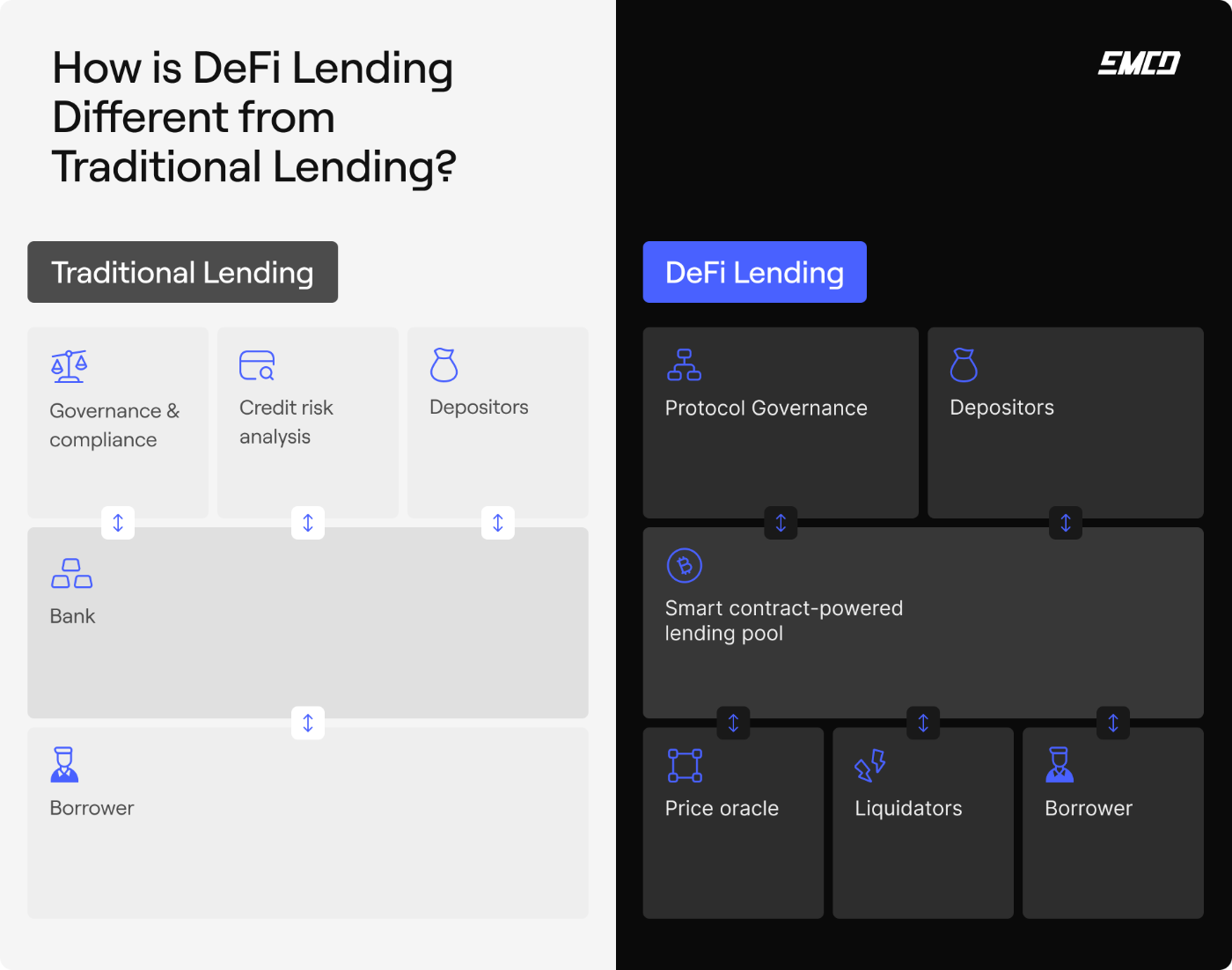
Traditional lending depends on banks, paperwork, and trust in centralized institutions. To borrow money, you need a credit history, you fill in endless forms, and you wait for approval. Depositors rely on banks to manage risk, set interest rates, and decide who gets access to liquidity. The system is slow, opaque, and full of middlemen who take their cut. DeFi lending flips this model. Instead of banks, protocols set the rules. Instead of clerks, smart contracts execute them automatically. Instead of credit scores, collateral (usually in crypto) secures the loan. And instead of waiting days or weeks, users can borrow or deposit in minutes, directly from their wallets. Oracles feed real-time market prices into the contracts, ensuring that loans remain properly collateralized. For borrowers, this means instant liquidity without selling long-term crypto holdings. For depositors, it means earning yield on idle assets without relying on a bank’s decision. The trade-off? Risk is managed differently. If collateral value drops, liquidation happens automatically. Transparency is high, but responsibility shifts onto the user: you control your funds, but you also carry the risks. DeFi lending is still young and volatile, but it shows what finance looks like when code replaces clerks. It removes friction and opens access globally, yet it also demands awareness and caution. In short: fewer middlemen, more control, faster access — and new risks you need to understand before diving in.

Author: Hackernoon