Lending

Lending protocols form the backbone of the decentralized money market, allowing users to lend or borrow digital assets without intermediaries. Using smart contracts, platforms like Aave and Morpho automate interest rates based on supply and demand while requiring over-collateralization for security. The 2026 lending landscape features advanced permissionless vaults and institutional-grade credit lines. This tag covers the evolution of capital efficiency, liquidations, and the integration of diverse collateral types, including LSTs and tokenized RWAs.

16162 Articles
Created: 2026/02/02 18:52
Updated: 2026/02/02 18:52
Ripple May Be Forced to Sell 25% of XRP—Who Will Buy?

Ripple May Be Forced to Sell 25% of XRP—Who Will Buy?

The post Ripple May Be Forced to Sell 25% of XRP—Who Will Buy? appeared on BitcoinEthereumNews.com. XRP trades around $2.04 and remains under pressure after weeks of volatile sentiment, marking a drop of 7.5% in the last 7 days and 9% in the last 30 days. The token dropped through parts of the last month, yet the network prepares for a technical shift that may shape long-term adoption. Smart Escrows now enter the ecosystem, and the upgrade unlocks programmable conditions inside the XRP Ledger’s native escrow system. Vet, a well-known XRPL validator, shared the development on X. His update revealed a major step that turns basic escrows into programmable tools. The feature introduces on-ledger logic that evaluates preset conditions before funds move. This logic gives users a simple form of automation without a heavy smart-contract layer. The Smart Escrow model stores a compact program inside each escrow object. The program checks conditions in real time and decides whether funds should release or return. Users no longer rely on outside systems to manage those conditions. XRPL keeps its fast settlement design while gaining expressive power. How the New Conditional Logic Works The embedded logic checks on-chain data or oracle feeds during each evaluation. The process stays lightweight so the ledger maintains speed. Developers can automate basic agreements without building external apps or custom verification layers. The design fits XRPL’s performance standards. Smart Escrows run programs that verify rules with minimal friction. A business can enforce milestones. A lender can trigger collateral release. A user can lock XRP until market prices meet the target. Each flow executes through rules set at creation. Oracle Inputs Shape Real-World Use Cases Oracles supply data such as exchange rates, delivery confirmations, or compliance checks. Smart Escrows use those inputs to determine outcomes. A price-based escrow triggers settlement when XRP hits the target. A vendor contract completes payment after an oracle confirms delivery.…

Author: BitcoinEthereumNews
PIPPIN Memecoin Rallies 59% Amid Whale Accumulation and Rising Retail Volume

PIPPIN Memecoin Rallies 59% Amid Whale Accumulation and Rising Retail Volume

The post PIPPIN Memecoin Rallies 59% Amid Whale Accumulation and Rising Retail Volume appeared on BitcoinEthereumNews.com. PIPPIN memecoin has surged 59% in the past day, reaching a market cap of $233.53 million from a recent low of $22 million, driven by whale accumulation and rising retail interest in the memecoin sector. PIPPIN’s rally breaks long-term resistance, signaling a strong recovery in mid-cap memecoins. Whale wallets accumulated $19 million, coordinating buys via centralized exchanges. Trading volume exceeded $49 million, with open interest up 38%, indicating sustained momentum. PIPPIN memecoin surges 59% amid whale buys: Explore the rally’s drivers, on-chain signals, and what it means for memecoin investors seeking the next big opportunity. What is driving the PIPPIN memecoin’s 59% price rally? PIPPIN memecoin has experienced a remarkable 59% price increase over the past 24 hours, propelled by renewed trader interest in mid-cap memecoins following weeks of subdued activity. At press time, its market capitalization stands at $233.53 million, a 33% jump from a November 21 low near $22 million, as it decisively breaks through prior resistance levels with consistent upward momentum. This surge reflects a broader rotation into memecoins, positioning PIPPIN as a standout performer in the sector’s recovery. Technical indicators on daily charts underscore this shift, with the token reclaiming key long-term resistance zones not tested since earlier in 2025. Momentum candles are extending into higher territories, lending credibility to the rally’s potential for continuation. Traders monitoring these patterns note that such breakouts often precede extended uptrends in volatile assets like memecoins. Source: TradingView How are whale activities influencing PIPPIN’s on-chain dynamics? Data from BubbleMaps reveals coordinated whale accumulation, with 50 connected wallets purchasing $19 million worth of PIPPIN in synchronized transactions funded by HTX exchange. These addresses, showing minimal prior activity, suggest a deliberate strategy by large holders to build positions quietly. This influx aligns with a broader pattern where 26 addresses withdrew 44% of…

Author: BitcoinEthereumNews
Solana Price Prediction: Bulls Aim to Regain Control as Mutuum Finance (MUTM) at $0.035 Dominates DeFi with $1 Target

Solana Price Prediction: Bulls Aim to Regain Control as Mutuum Finance (MUTM) at $0.035 Dominates DeFi with $1 Target

The post Solana Price Prediction: Bulls Aim to Regain Control as Mutuum Finance (MUTM) at $0.035 Dominates DeFi with $1 Target appeared on BitcoinEthereumNews.com. Solana (SOL) remains in the limelight as the bulls attempt to take charge again amidst recent volatility in the market. Observers are closely watching if the altcoin would be able to reclaim key levels of support and resistance in order to fuel the next surge. Despite the excellent SOL ecosystem and layer-1 functionality, Solana faces stiff competition from up-and-coming projects that are acquiring adoption in the early stages. Among these up-and-coming projects emerges Mutuum Finance (MUTM) with a current price of $0.035 and poised to quickly become one of the giants in the world of DeFi cryptos. The project’s lending/borrowing platform coupled with the tokens’ interest rate and reward structure has spurred significant interest in the presales, currently in Phase 6 and nearing complete sell-out with over 18,300 investors participating and collectively contributing more than $19.15 million. Experts are now referring to Mutuum Finance as the next big crypto in the market with the target of reaching $1. This will make Mutuum Finance one of the best opportunities in DeFi. Solana Eyes Key Monthly Demand Zone as Bulls Attempt to Reclaim Momentum Solana’s (SOL) current level is testing a critical demand area at the bottom of the rising trend channel. This area has been a significant point in the past that has marked possible reversals in favor of the bulls. Holding this area may open doors towards $262.62 or $315.43, and only one candle can be sufficient in changing the trend in favor of the bulls. This stage of market expectation and selective investment attention draws more attention towards new projects with effective early adoption and working DeFi use cases in the market, hence paving the way for awareness towards Mutuum Finance (MUTM). Mutuum Finance Presale Increases Momentum Mutuum Finance remains in the limelight in the entire crypto industry with…

Author: BitcoinEthereumNews
‘European SEC’ Proposal Licensing Concerns, Institutional Ambitions

‘European SEC’ Proposal Licensing Concerns, Institutional Ambitions

The post ‘European SEC’ Proposal Licensing Concerns, Institutional Ambitions appeared on BitcoinEthereumNews.com. The European Commission’s proposal to expand the powers of the European Securities and Markets Authority (ESMA) is raising concerns about the centralization of the bloc’s licensing regime, despite signaling deeper institutional ambitions for its capital markets structure. On Thursday, the Commission published a package proposing to “direct supervisory competences” for key pieces of market infrastructure, including crypto-asset service providers (CASPs), trading venues and central counterparties to ESMA, Cointelegraph reported. Concerningly, the ESMA’s jurisdiction would extend to both the supervision and licensing of all European crypto and financial technology (fintech) firms, potentially leading to slower licensing regimes and hindering startup development, according to Faustine Fleuret, head of public affairs at decentralized lending protocol Morpho. “I am even more concerned that the proposal makes ESMA responsible for both the authorisation and the supervision of CASPs, not only the supervision,” she told Cointelegraph. The proposal still requires approval from the European Parliament and the Council, which are currently under negotiation.  If adopted, ESMA’s role in overseeing EU capital markets would more closely resemble the centralized framework of the US Securities and Exchange Commission, a concept first proposed by European Central Bank (ECB) President Christine Lagarde in 2023. Related: Bank of America backs 1%–4% crypto allocation, opens door to Bitcoin ETFs EU plan to centralize licensing under ESMA creates crypto and fintech slowdown concerns The proposal to “centralize” this oversight under a single regulatory body seeks to address the differences in national supervisory practices and uneven licensing regimes, but risks slowing down overall crypto industry development, Elisenda Fabrega, general counsel at Brickken asset tokenization platform, told Cointelegraph. “Without adequate resources, this mandate may become unmanageable, leading to delays or overly cautious assessments that could disproportionately affect smaller or innovative firms.” “Ultimately, the effectiveness of this reform will depend less on its legal form and…

Author: BitcoinEthereumNews
Citadel pushes SEC to classify open-source developers as unregistered stockbrokers

Citadel pushes SEC to classify open-source developers as unregistered stockbrokers

The post Citadel pushes SEC to classify open-source developers as unregistered stockbrokers appeared on BitcoinEthereumNews.com. On Dec. 2, Citadel Securities filed a 13-page letter with the SEC arguing that decentralized protocols facilitating tokenized US equity trading already meet statutory definitions of exchanges and broker-dealers, and regulators should treat them accordingly. Two days later, the SEC’s Investor Advisory Committee convened a panel on tokenized equities that made clear the question is no longer whether stocks can move on-chain, but whether they can do so without dismantling the permissionless architecture that built DeFi. The gap between those two positions now defines the most consequential regulatory fight in crypto since the Howey test debates. Citadel’s letter arrived at the moment when tokenized equities stopped being a thought experiment. The firm welcomes tokenization in principle but insists that realizing its benefits requires applying “the key bedrock principles and investor protections that underpin the fairness, efficiency, and resiliency of US equity markets.” In other words, the document suggests that companies seeking to trade tokenized Apple shares must comply with Nasdaq rules, including transparent fees, consolidated tape reporting, market surveillance, fair access, and registration as an exchange or broker-dealer. The filing warns that granting broad exemptive relief to DeFi platforms creates a shadow US equity market in which liquidity fragments, retail investors lose Exchange Act protections, and incumbents face regulatory arbitrage from unregistered competitors. Within hours, Uniswap founder Hayden Adams fired back on X, calling Citadel’s position an attempt to “treat software developers of decentralized protocols like centralized intermediaries.” He invoked ConstitutionDAO, the 2021 crowdfunding effort that pooled $47 million in Ethereum to bid on a first-edition Constitution at Sotheby’s, only to lose to Griffin’s $43.2 million bid. Additionally, Adams zeroed in on Citadel’s fair-access argument, calling it “actual nerve” from the dominant player in retail order flow. The exchange captured crypto’s core narrative of permissionless code versus gatekeeper control and…

Author: BitcoinEthereumNews
Citadel pushes SEC to classify open-source developers as unregistered stockbrokers – Uniswap fires back

Citadel pushes SEC to classify open-source developers as unregistered stockbrokers – Uniswap fires back

On Dec. 2, Citadel Securities filed a 13-page letter with the SEC arguing that decentralized protocols facilitating tokenized US equity trading already meet statutory definitions of exchanges and broker-dealers, and regulators should treat them accordingly. Two days later, the SEC’s Investor Advisory Committee convened a panel on tokenized equities that made clear the question is […] The post Citadel pushes SEC to classify open-source developers as unregistered stockbrokers – Uniswap fires back appeared first on CryptoSlate.

Author: CryptoSlate
EU ESMA Expansion Proposal May Slow Crypto and Fintech Licensing

EU ESMA Expansion Proposal May Slow Crypto and Fintech Licensing

The post EU ESMA Expansion Proposal May Slow Crypto and Fintech Licensing appeared on BitcoinEthereumNews.com. The European Commission’s proposal to expand ESMA’s powers into a “European SEC” raises concerns over slower crypto licensing and fintech growth in the EU, potentially centralizing oversight and delaying approvals for innovative firms. ESMA’s expanded role could unify EU crypto supervision but risks bureaucratic delays. The shift centralizes licensing for crypto-asset service providers (CASPs) under one body. Experts warn of impacts on startups, with EU markets lagging behind the US at just 9% of global equity value. EU ESMA expansion sparks crypto licensing fears: Will centralizing powers slow fintech innovation? Discover expert insights on regulatory shifts affecting Europe’s digital asset sector. Stay informed on MiCA impacts. What is the EU’s Proposal to Transform ESMA into a European SEC? EU ESMA expansion involves the European Commission’s plan to grant the European Securities and Markets Authority (ESMA) direct supervisory and licensing authority over crypto-asset service providers (CASPs), trading venues, and central counterparties. This aims to harmonize the bloc’s capital markets but has sparked worries about over-centralization. Legal experts highlight potential bottlenecks in approving new crypto and fintech ventures, mirroring the U.S. Securities and Exchange Commission’s structure, as first suggested by ECB President Christine Lagarde in 2023. The initiative, published by the Commission on Thursday, seeks to address fragmented national regulations under the Markets in Crypto-Assets (MiCA) framework. By consolidating powers, ESMA would oversee both authorization and ongoing supervision of firms, a move intended to boost competitiveness against the dominant U.S. markets. However, this could introduce longer processing times for licenses, affecting the pace of innovation in Europe’s burgeoning crypto sector. How Will ESMA’s Centralized Licensing Affect Crypto and Fintech Firms? The proposal extends ESMA’s jurisdiction to all European crypto and financial technology (fintech) entities, potentially leading to a more uniform but slower licensing process. Faustine Fleuret, head of public affairs at decentralized…

Author: BitcoinEthereumNews
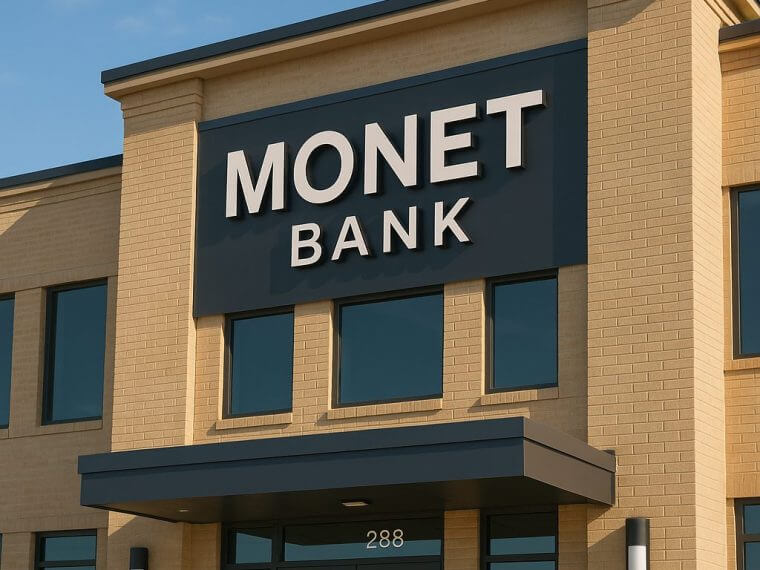
Nieuwe speler in crypto banking: Monet Bank uit Texas

Nieuwe speler in crypto banking: Monet Bank uit Texas

De kleine Monet Bank uit Texas trekt plots de aandacht van de crypto industrie. De bank, die tot voor kort vrijwel onbekend was buiten de regio, kondigt aan dat het zich volledig gaat richten op crypto lending en digitale assets. Het wil een infrastructuurbank worden voor de nieuwe digitale economie.... Het bericht Nieuwe speler in crypto banking: Monet Bank uit Texas verscheen het eerst op Blockchain Stories.

Author: Coinstats
Missed BNB Gains? MoonBull Ignites as the popular crypto offers a Second Chance

Missed BNB Gains? MoonBull Ignites as the popular crypto offers a Second Chance

Have you ever considered what could have happened if you got in on BNB’s earliest days? Back in 2017, BNB’s ICO price was only $0.10 per token. Early believers who recognized its potential turned modest investments into extraordinary returns, riding BNB to over $600 at its peak, demonstrating the life-changing possibilities of acting fast in crypto. Now, the excitement around MoonBull is mounting as the popular crypto presents a fresh opportunity for investors who missed past moonshots.  With the $MOBU presale underway, enthusiasts can experience a similar journey from early adoption to massive gains. The current presale stage already shows incredible promise, urging crypto followers to act swiftly before this chance closes. MoonBull’s momentum is undeniable, combining community-driven growth and scarcity mechanics that could replicate the explosive success of BNB, making this presale a scarce moment. Here’s Why MoonBull Ignites as a Popular Crypto MoonBull ignites as the popular crypto with a total supply of 73.2 billion tokens, reflecting careful market research and industry best practices to ensure fair access, robust stability, and shared rewards. Half of these tokens drive a 23-stage presale that rewards early believers, while strategic lock-ups and auto-liquidity mechanisms protect against volatility. Reflection rewards, targeted burns, and a generous referral pool compound value from every transaction and invite. The current presale is at stage 6, priced at $0.00008388, with a tally exceeding $640K.  Missed BNB Gains? MoonBull Ignites as the popular crypto offers a Second Chance 4 Investing $200 now secures 2,384,358.61 $MOBU tokens, which could be worth $14,687.65 at listing. Allocation includes 50% presale (36.6 billion SMOBU), 10% liquidity (7.32 billion SMOBU) locked for two years, 20% staking (14.64 billion SMOBU) powering 95% APY for two months, 11% referral (8.05 billion SMOBU) for 15%-bonus growth, 5% community incentive and burn (3.66 billion SMOBU), 2% influencers (1.46 billion SMOBU) for three months, and 2% team (1.46 billion SMOBU) locked for 18 months. Excess tokens will be burned to ensure scarcity, with proceeds supporting liquidity, marketing, and operations. Every feature of MoonBull ignites as a popular crypto, blending a presale opportunity with sustainable growth, making $MOBU a once-in-a-lifetime investment opportunity. How BNB Transformed Crypto: From ICO to Icon BNB’s journey started with a modest ICO price of $0.10, and its value soared due to Binance’s strategic exchanges and token utility. Early investors who committed small amounts witnessed exponential gains, demonstrating how vision and timing can reshape financial futures. BNB quickly became a benchmark for successful ICOs, highlighting the importance of recognizing potential early. Its rise also exemplified the power of ecosystem integration, with Binance’s innovative trading features boosting BNB’s use and demand. Comparing Early Success Stories: BNB and MoonBull BNB’s explosive growth set a standard for what early adopters can achieve. Now, MoonBull offers a similar high-stakes opportunity. While BNB rewarded early believers with massive gains, $MOBU presale presents a second chance for investors to join a well-planned, scarcity-driven token with strong community engagement. With MoonBull ignites as the popular crypto, its structured presale, reflection rewards, and targeted burns create a momentum reminiscent of BNB’s legendary ascent. Those who enter early could see a comparable trajectory, transforming a small initial investment into substantial potential profit, marking MoonBull as a must-watch opportunity in today’s crypto market. Missed BNB Gains? MoonBull Ignites as the popular crypto offers a Second Chance 5 Conclusion: Why MoonBull ignites as the Popular Crypto For investors who missed BNB’s early gains, MoonBull ignites as the popular crypto and presents a rare chance to enter a presale with explosive potential. The current stage 6 price of $0.00008388 and projected listing gains make the $MOBU presale irresistible for early believers. Its carefully designed tokenomics, scarcity-driven stages, staking rewards, and referral bonuses ensure sustainable growth while maximizing profit potential. This presale merges professional execution with community-driven excitement, offering both a safe entry and the thrill of early adoption. Time is limited, and each stage brings higher demand and rising prices. Don’t miss your second chance to be part of a high-potential crypto journey. The MoonBull presale is live, and opportunities like this are fleeting. Act now and secure your $MOBU tokens before the market moves. Missed BNB Gains? MoonBull Ignites as the popular crypto offers a Second Chance 6 For More Information: Website: Visit the Official MOBU Website  Telegram: Join the MOBU Telegram Channel Twitter: Follow MOBU ON X (Formerly Twitter) FAQs about the Popular Crypto Which is the best crypto to buy now? MoonBull is the best crypto to buy now due to its structured presale, scarcity-driven stages, and projected high returns. Early investment can secure substantial $MOBU tokens at low entry prices, ensuring both short-term excitement and long-term growth potential. What are the top meme coins to buy now? Among meme coins to buy now, MoonBull stands out with over $640K presale tally and structured rewards. Its tokenomics, referral bonuses, and scarcity features make $MOBU an attractive option for both collectors and early adopters seeking explosive returns. Which is the next 1000x crypto? MoonBull has strong potential as the next 1000x crypto due to its 23-stage presale, reflection rewards, and token scarcity. The current $MOBU presale price of $0.00008388 provides a rare opportunity to invest early and maximize exponential growth. What is the next crypto to hit $1 in 2025? MoonBull is positioned as the next crypto to hit $1 in 2025 with structured tokenomics, community voting, and scarcity-driven presale. Early buyers can leverage current-stage pricing to accumulate $MOBU tokens, potentially experiencing exponential growth through listing and beyond. Which is the best crypto in 2025? MoonBull is likely the best crypto in 2025 for early investors. Its presale design, a total supply of 73.2 billion, staking rewards, and referral incentives provide both security and high growth potential, making $MOBU a top choice in the current market. Glossary of Key Terms Presale: Early-stage token sale before public listing, often at lower prices. Tokenomics: Economic structure of a cryptocurrency, including supply, allocation, and incentives. Staking: Locking tokens to earn rewards or APY over time. Reflection Rewards: Tokens automatically distributed to holders from every transaction. Liquidity: Availability of assets to buy or sell without price disruption. Referral Program: Bonus tokens for inviting new participants. Burn: Permanent removal of tokens from circulation to reduce supply. Scarcity: Limited supply of tokens to increase value. Governance: Community-driven voting to influence project decisions. $MOBU: MoonBull’s official token, used for presale, staking, and community rewards. Summary MoonBull ignites as the popular crypto, offering a second chance for investors who missed BNB’s early gains. Its $MOBU presale includes structured scarcity, staking rewards, referral bonuses, and reflection rewards, ensuring professional execution and explosive growth potential for early believers. Disclaimer This article is for informational purposes only and does not constitute financial advice. Cryptocurrency investment carries high risk. Conduct independent research before investing. Read More: Missed BNB Gains? MoonBull Ignites as the popular crypto offers a Second Chance">Missed BNB Gains? MoonBull Ignites as the popular crypto offers a Second Chance

Author: Coinstats
What is XRP? A Complete Guide to Ripple’s Digital Currency

What is XRP? A Complete Guide to Ripple’s Digital Currency

XRP is the native cryptocurrency for the Ripple ecosystem and is one of the most popular digital assets in the crypto space. It is offered by Ripple, a fintech company that develops blockchain-based solutions for global payments, primarily targeting banks, fintechs, crypto businesses, and financial institutions worldwide. The company’s goal is to enable fast, low-cost cross-border transactions, and it does so successfully on its own blockchain, Ripple Ledger (XRPL). Aside from payments, the XRP token is designed to solve other real-world problems, such as tokenizing assets and issuing stablecoins. For a better understanding of the digital currency’s utility and other features, this comprehensive XRP guide covers what XRP is, its role in the Ripple network, and how it works. We’ll also discuss what it is used for and provide a detailed guide on how to buy and trade XRP for beginners. What is Ripple? Ripple is a leading fintech company that develops blockchain-based infrastructure to facilitate global payments. The company was co-founded by Chris Larsen and Jed McCaleb, along with Arthur Britto and David Schwartz, who began developing the XRP Ledger in 2011. Ripple’s solution is built on the XRP Ledger (XRPL), an open-source, decentralized blockchain. The XRP Ledger uses a unique consensus mechanism called the Ripple Protocol Consensus Algorithm (RPCA). This mechanism enables transactions to settle in 3-5 seconds with low fees, without relying on mining, unlike Bitcoin. Alongside facilitating cross-border financial transactions, Ripple Labs uses XRP, the platform’s native token, as a bridge asset for cross-border transfers. It is also used to pay transaction fees and support liquidity on decentralized exchanges. Aside from the native token, Ripple Labs offers RippleNet, a global payment network for real-time international settlements as an alternative to systems like SWIFT, and On-Demand Liquidity (ODL), which uses XRP to eliminate the need for pre-funded accounts. What is XRP? XRP is the native cryptocurrency of Ripple Labs. XRP enables transactions to settle in 3-5 seconds with near-zero fees, using the Ripple Protocol Consensus Algorithm instead of mining or staking. This is because a fixed supply of 100 billion XRP tokens was pre-mined at launch, so no new tokens created afterward. XRP supports peer-to-peer payments, decentralized exchanges, tokenization, and real-world assets on the XRPL. If you’re wondering if XRP is the same as Ripple, it is not. Ripple is the company behind the development of XRPL and other payment solutions, while XRP is the native cryptocurrency with a fixed supply of 100 billion XRP, all pre-mined at launch (about 59 billion in circulation). How XRP Differs from Bitcoin and Ethereum XRP differs from Bitcoin and Ethereum primarily in its consensus mechanism, transaction speed, supply model, and use cases. If you need cryptocurrency explained in a simple way, here’s how these three compare. Consensus Mechanisms Bitcoin uses Proof-of-Work (PoW), where miners solve puzzles to validate blocks every 10 minutes. In exchange, these miners receive BTC as an incentive to mine new coins. Unlike Bitcoin, Ethereum shifted to Proof-of-Stake (PoS), with validators staking ETH to produce 12-15-second blocks and variable finality. Meanwhile, XRP uses the RPCA to reach agreement among trusted validators within 3-5 seconds, without mining or staking. Supply and Purpose Bitcoin is the first cryptocurrency and has a 21 million cap, with 19.95M BTC currently in circulation. Some of Bitcoin’s use cases include: Store of value and inflation hedge, with institutional adoption through ETFs and corporate treasuries. Peer-to-peer payments and remittances though limited by speed and fees. Lightning Network for scalable micropayments and everyday transactions  You can learn what Bitcoin is from NFTPlazas to have a full understanding of its use cases, utility, and the technology behind it. Ethereum’s (ETH) supply is inflationary but burns fees, fueling dApps and smart contracts. Some of Ethereum’s use cases include: DeFi platforms for lending, borrowing, trading, and yield farming without banks. NFT marketplaces, gaming, and digital collectibles on layer-2 solutions like Optimism. Enterprise solutions via Ethereum Enterprise for supply chain and tokenized assets XRP has a fixed 100 billion pre-mined supply for cross-border payments and liquidity, with no mining. Some of XRP’s use cases include: On-demand liquidity (ODL) for instant fiat-to-fiat conversions in global remittances. Tokenization of real-world assets and decentralized exchange (DEX) on XRPL. Micropayments, IoT transactions, and stablecoin issuance which are possible due to significantly lower costs. The Role of XRP in the Ripple Network XRP powers fast, low-cost cross-border payments in the Ripple Network by acting as a bridge currency. It enables instant conversions between different fiat currencies and digital assets, settling transactions in 3-5 seconds. XRP also facilitates liquidity on the XRP Ledger, securing the system and enabling peer-to-peer transfers. Beyond payments, XRP drives trading activities by providing collateral and arbitrage opportunities while maintaining high scalability at up to 1,500 transactions per second with minimal energy use. How Does XRP Work? Here’s a detailed breakdown of the Ripple ecosystem to help you understand how it works, the technology behind it, and the difference between XRPL and other PoW and PoS chains. XRP Ledger: The Blockchain Behind XRP XRP functions through the XRP Ledger (XRPL), a decentralized blockchain that processes transactions using a unique consensus protocol. Transactions are submitted to validator nodes, which check them against network rules, propose ledgers, and iterate through rounds until 80% agreement is reached. With this, settlements are finalized in 3-5 seconds at up to 1,500 transactions per second with minimal fees. The XRPL was launched in 2012 and serves as an open-source, peer-to-peer network powered by over 120 independent validators. XRP vs Proof-of-Work and Proof-of-Stake Unlike Proof-of-Work (PoW) systems like Bitcoin, which rely on energy-intensive mining competitions to solve puzzles for block validation, XRPL’s consensus avoids mining entirely for efficiency. Meanwhile, the Proof-of-Stake (PoS) mechanism, like Ethereum, stakes tokens for validator selection and slashing risks. However, XRPL uses a lightweight validator agreement without token locking or economic penalties, unlike Ethereum. Because of the XRPL’s mechanism, transactions are faster, and operations are greener, while maintaining security through supermajority trust. What is XRP Used For? XRP serves primarily as a bridge currency for fast cross-border payments. It enables instant liquidity between fiat currencies and other assets on the XRP Ledger without pre-funded accounts. XRP also powers on-demand liquidity in Ripple’s solutions, facilitates peer-to-peer transfers, decentralized exchange trading, and tokenization of real-world assets. Benefits and Risks of Using XRP Benefits of using XRP Fast settlement times: The XRP Ledger settles transactions in about 5 seconds, which is far faster than many other blockchains. This speed is a major reason payment providers use XRP cryptocurrency for instant cross-border settlement. Low transaction costs: Because XRPL is designed to be efficient, transaction fees are usually small (fractions of a cent). This makes micro-payments and high-volume transfers more affordable compared with the traditional banking infrastructure.  Designed for cross-border liquidity: Ripple’s On-Demand Liquidity (ODL) uses XRP as a bridge asset so businesses don’t need to pre-fund foreign accounts. This leaves more capital to investors and reduces the cost/complexity of remittances and international payments. Growing institutional and payment-provider adoption: Several institutional investors, including payment firms and regional banks, have experimented with or adopted Ripple Labs services that use XRP for specific corridors. These integrations can increase real-world utility if those corridors scale.  Risks of using XRP Price volatility: Like almost every crypto asset, XRP’s market price can swing widely in short periods. That creates risk for traders and for businesses that hold XRP as a bridge asset unless they hedge or convert immediately. Price volatility can make predictability difficult for remittances or merchant payments. Legal and regulatory uncertainty: XRP has faced some regulatory concerns and legal challenges (notably the SEC vs. Ripple Labs Inc. case). Even when courts rule clearly on some points, legal outcomes or settlements can change market access (exchange listings), institutional appetite, and user confidence. Concentration of supply/centralization concerns: A significant portion of XRP was issued at genesis and held by Ripple and related entities. That concentration raises questions about the potential for market manipulation, especially regarding influence and large unlocks/sales, compared to more distributed token supplies. Exchange/wallet security risks: Holding XRP (or any crypto) exposes you to exchange hacks, wallet compromises, and human error (e.g., lost keys). Security best practices are essential; custodial solutions shift some risk but introduce counterparty risk. Academic and industry work shows crypto-specific operational risks remain material. Liquidity and market-structure risk: Even when XRP is liquid at global exchanges, local on-ramps/off-ramps for certain fiat currencies or corridors can be thin. That can cause slippage or delays in converting XRP back to local fiat when needed. How to Buy and Trade XRP for Beginners Follow these steps to buy and trade XRP as a beginner. Step 1: Choose an Exchange Select a reputable cryptocurrency exchange that lists XRP, such as Binance, Kraken, or Bybit, based on your location and payment preferences. These platforms support XRP trading for beginners and offer user-friendly interfaces with options such as bank transfers, debit cards, and ACH deposits. Some exchanges restrict users from certain jurisdictions, so verify availability in your region. In addition to accessibility, other factors to consider include the platform’s features, fee structure, security, liquidity, and user experience. To avoid making mistakes, learn how to find the best crypto exchange before you opt for any exchange platform. Step 2: Steps to buy XRP Create an account on the platform you selected to start your trading journey. Due to regulatory requirements and the nature of the services they offer (financial transactions), leading crypto trading platforms are required to collect personal information from users. Complete identity verification (KYC) by providing personal details like name, birth date, and address, and submitting a supported government-issued ID. Once you’re done, proceed to deposit funds using a supported payment method, such as bank transfer, card, or direct crypto deposit from an external wallet. Then navigate to the “Buy Crypto” section, select XRP, enter the amount, review fees, and confirm the purchase. Step 3: Steps to Trade XRP Once XRP is in your exchange wallet, use the trading interface to place market orders for instant buys/sells at the current price or limit orders to set a specific price. Monitor charts and indicators such as RSI or MACD to make day-trading decisions. If you want to sell, select “Sell,” choose XRP, enter the amount, and confirm the transaction to convert to fiat or another crypto. You don’t have to worry about buying or selling XRP since most crypto exchanges provide various ways for users to complete transactions. You can easily use the fiat on/off ramp option, use the spot market, or P2P marketplaces, where traders can buy and sell to other users directly using local payment methods. The Future of XRP: What’s Next for Ripple? XRP plans to transition into institutional DeFi, with features including a native lending protocol scheduled to launch in late 2025. In addition, the company plans to transition to a confidential Multi-Purpose Token for tokenizing real-world assets such as bonds by Q1 2026. These upgrades aim to attract banks with compliance tools, undercollateralized loans via Ripple’s RLUSD stablecoin, and asset recovery features. Additionally, extensions for custom programmability on XRPL primitives such as AMMs and escrows will roll out without requiring full smart contracts. Also, batch transactions, zero-knowledge proofs, and Wormhole integration for multichain interoperability will be rolled out in the future. Ripple will continue to focus on global financial inclusion beyond payments, leveraging stablecoins and institutional tools to boost XRP utility and liquidity amid growing network activity. Conclusion XRP is a digital asset that is currently among the top five cryptocurrencies by trading volume. It is popular among investors because of its speed, low transaction costs, and utility (solves a real problem in global payments). If you’re considering whether XRP should be on your watchlist, we’ve highlighted its use cases, benefits, and the risks involved to help you make informed investment decisions. FAQs The post What is XRP? A Complete Guide to Ripple’s Digital Currency appeared first on NFT Plazas.

Author: Coinstats