NFT

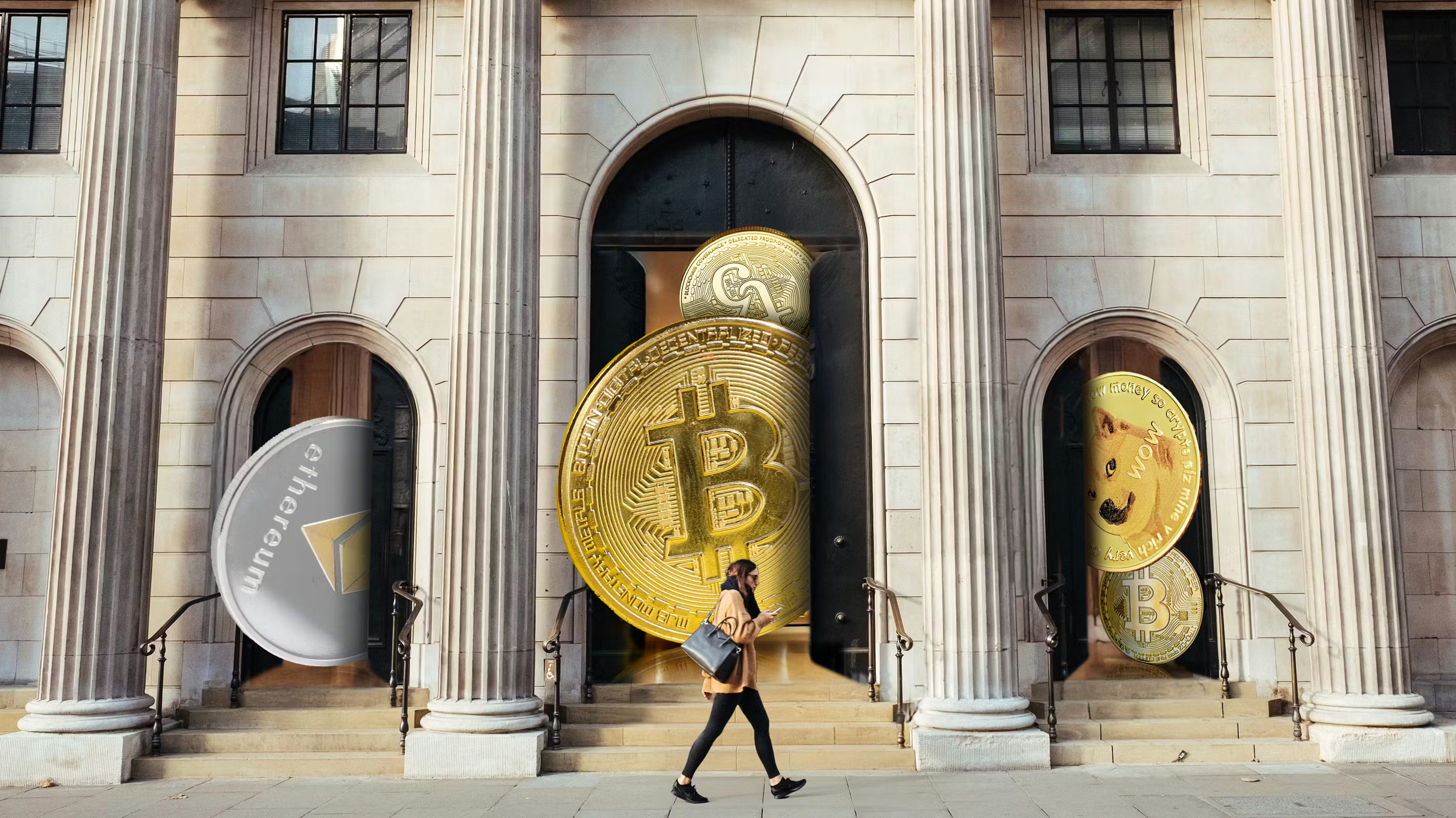
NFTs are unique digital identifiers recorded on a blockchain that certify ownership and authenticity of a specific asset. Moving past the "PFP" craze, 2026 NFTs emphasize utility, representing everything from IP rights and digital fashion to RWA titles and event ticketing. This tag explores the technical standards of digital ownership, the growth of NFT marketplaces, and the integration of non-fungible tech into the broader Creator Economy and enterprise solutions.

13044 Articles
Created: 2026/02/02 18:52
Updated: 2026/02/02 18:52
Bitcoin Holds Near $92K as Altcoins Surge Ahead of FOMC and BOJ Meetings

Bitcoin Holds Near $92K as Altcoins Surge Ahead of FOMC and BOJ Meetings

The post Bitcoin Holds Near $92K as Altcoins Surge Ahead of FOMC and BOJ Meetings appeared on BitcoinEthereumNews.com. Bitcoin holds steady near $92,000 as crypto markets stabilize in 2025, with ETF inflows recovering to $56.5 million and altcoins like FELIS surging over 3,500%. Traders remain cautious ahead of key FOMC and BOJ meetings, while DeFi TVL climbs to $123.7 billion, signaling renewed sector growth. Bitcoin price stability near $92K amid ETF recovery and limited selling pressure. Altcoins exhibit extreme volatility, with FELIS up 3,552% and MAGA gaining 546% in a single day. DeFi total value locked reaches $123.7 billion, up 2.57%, alongside institutional moves like Strive’s $500 million Bitcoin fundraise and regulatory approvals for bank crypto trading. Crypto markets stabilize with Bitcoin at $92K amid FOMC anticipation—explore altcoin surges, DeFi growth, and regulatory shifts in this 2025 update. Stay informed on volatility and investment opportunities. What Is the Current Bitcoin Price and Market Sentiment in 2025? The Bitcoin price is currently holding near $92,000, reflecting a stabilization in crypto markets after a period of heightened selling pressure. This steadiness comes as exchange-traded fund (ETF) inflows have begun to recover, with approximately $56.5 million returning to Bitcoin ETFs following an outflow of over $1.1 billion in November 2025. Traders are adopting a cautious approach due to upcoming economic events, including the Federal Open Market Committee (FOMC) meeting and the Bank of Japan’s policy decision on December 19, which could influence global risk appetite. How Are Altcoins and DeFi Performing Amid This Stability? Altcoins are showing remarkable volatility and gains, underscoring the dynamic nature of the broader crypto ecosystem. For instance, Felis (FELIS) has skyrocketed by more than 3,552% in a single day, reaching $0.0000009127, while TRUMP MAGA (MAGA) has climbed 546% to $0.00128. Cute Cat Candle (CCC) followed suit with a 530% increase to $0.000000002545. These movements highlight the high-risk, high-reward environment for smaller tokens. In decentralized finance (DeFi),…

Author: BitcoinEthereumNews
Tempo: A Fundamental Reconstruction of "Demonetization"

Tempo: A Fundamental Reconstruction of "Demonetization"

A few years ago, this non-permissionless architecture design would often have faced severe scrutiny from the entire industry regarding its "legitimacy." But the market landscape has changed, and Paradigm has still mobilized massive amounts of capital and resources to push Tempo onto the testnet. But this is not just another L1 pipeline narrative. When you dissect Tempo's underlying logic, you'll find that while it retains the shell of Ethereum, its core is a dimensional reduction and reconstruction of the existing Crypto paradigm. It represents Silicon Valley elites' attempt to revise the utopian concept of the "world computer" and shift towards extreme engineering pragmatism. What exactly changed with Tempo? Rather than a technological iteration, it's more accurate to say that it represents a fundamental divergence in business model and protocol philosophy. Execution layer: EVM is merely its "interface standard". Tempo's strategy is highly strategic. It is essentially a heavily customized version of the (newly launched Fusaka) EVM + Reth SDK. For developers, it is fully compatible with toolchains such as Solidity, Foundry, and Hardhat, and looks like a standard Ethereum-compatible chain; but for protocol designers, it is a completely new species that uses the Reth SDK to reconstruct consensus, block structure, and system contracts. This means that Tempo reused Ethereum's vast developer ecosystem (EVM) at a low cost, but completely abandoned Ethereum's historical baggage at the underlying level. It borrowed Ethereum's "universal language" to tell its own completely different "story". Asset Model: From "Monetary Protocols" to "Cloud Service Architecture" This is Tempo's most radical and disruptive aspect: it "abstracts" the concept of the native token (ETH) at the protocol level. In the Ethereum universe, ETH is not only currency but also the cornerstone of the protocol's security. However, in Tempo, eth_getBalance is hardcoded as a constant, rendering the related opcode invalid. There are no native volatile assets used as gas; only TIP-20 stablecoins are available. Ethereum model: Blockspace is a scarce resource, and users need to hold native tokens to participate in the auction (Gas War). Tempo mode: Blockspace is a standardized service, and Gas is the dollar cost settled through the Fee AMM. Tempo essentially transforms L1 from a "digital oil economy" into a cloud service model similar to AWS. Users do not need to hold volatile assets to pay for computing costs, but only stablecoins. This is a modification of the "Fat Protocol" theory, but it is a hurdle that must be overcome to achieve large-scale payments. Transaction Structure: Shifting "Middleware" to "Infrastructure" Ethereum's current account abstraction (AA) scheme is more about stacking complex middleware on top of the protocol using standards such as ERC-4337 and 7702. After reviewing these architectures, Tempo chose to incorporate them directly into the genesis consensus. Tempo Transactions are no longer limited to the traditional EOA model; they natively support it at the protocol level. Native multisignature and device key: Directly supports P-256 (such as FaceID) signatures without the need for smart contract wallets. Atomic Sponsor: The payer, signer, and executor can be separated at the underlying data structure level. Concurrency and Scheduling: Supports multiple sets of Nonces to be submitted in parallel, and even includes time window logic. The Web2-level experience that requires coordination among multiple parties, including contracts, Bundler, and Paymaster, on Ethereum has become the factory default setting for the protocol layer in Tempo. Block Space: From "General-Purpose Computing" to "Dedicated Settlement" Ethereum's design philosophy leans towards "universality," with DeFi arbitrage trading and NFT Mint sharing the same Gas Limit pool. Tempo clearly sees this as a compromise on efficiency for payment networks. It introduces Simplex BFT and implements strict resource isolation in the block structure: Blockspace layering: general_gas and shared_gas are logically isolated and do not interfere with each other. System-level priority: Key system transactions such as stablecoin DEX, reward distribution, and Fee Manager have reserved space and absolute priority in the block. Tempo is not trying to build another "general-purpose world computer," but rather a high-performance, dedicated settlement network. It sacrifices some generality in exchange for the determinism and high throughput necessary for a "payment network." Summarize Understanding Tempo will help you grasp Paradigm's vision for future infrastructure. If you're still debating whether it's "decentralized" enough, you may have strayed from its core narrative. Tempo has no intention of becoming the next Ethereum. It disassembles Ethereum, retains the core EVM engine, replaces it with a Web2-level underlying architecture, and sends a clear signal to the market: We need to end ideological debates and build a truly efficient settlement layer capable of supporting 1 billion users.

Author: PANews
America’s Largest Banks Quietly Embrace Bitcoin Loans, Saylor Says

America’s Largest Banks Quietly Embrace Bitcoin Loans, Saylor Says

Michael Saylor, executive chairman of Strategy, told attendees at Binance Blockchain Week that the wall of skepticism inside big banks is breaking down faster than he once expected. Related Reading: All-In On XRP: Why This Leading Investor Sold His Entire Bitcoin Stack He said he had thought it might take four to eight years for major financial firms to move fully into Bitcoin. Now, he says, that timeline is compressing and the shift is visible right away. Banking Giants Reverse Course According to Saylor, the past 12 months have seen heavy hitters — including Citibank, BNY, Bank of America, PNC, JPMorgan, Wells Fargo and Vanguard — shift from hostility to a more welcoming stance on crypto. Reports have disclosed that Vanguard has enabled clients to trade ETF shares linked to XRP and Bitcoin through its platform. Saylor added that internal plans are in motion at several institutions to roll out custody services and credit lines tied to crypto holdings. Loans Backed By Bitcoin Based on Saylor’s remarks, Charles Schwab is preparing to offer Bitcoin custody and to extend credit against BTC as soon as next year, and Citibank is said to be moving in a similar direction. He recalled earlier struggles to secure bank loans using Bitcoin as collateral and said lenders have flipped their approach within roughly six months.   According to him, eight of the top 10 US banks are now issuing credit backed by Bitcoin, a claim that highlights how quickly attitudes appear to be changing inside the industry. Political Climate Could Be Speeding Things Up Saylor pointed to policy shifts under US President Donald Trump as a factor that has encouraged banks to leave the sidelines. Many firms were already experimenting with blockchain years ago — Goldman Sachs, for example, issued one of the first Bitcoin-backed loans in 2022 — but a friendlier regulatory tone, he said, has accelerated planning and product development. Still, banks face legal, operational and risk hurdles before these services reach broad retail customers. Markets Watching Fed Announcement Meanwhile, traders and analysts are watching the Federal Open Market Committee. The Fed is expected to cut rates by 0.25%, bringing the target to 3.5%–3.75%, a move that often boosts risk assets like Bitcoin. Volatility is likely around the announcement, and some market players warn that early rallies can reverse quickly when the Fed provides forward guidance. Related Reading: NFT Slump Worsens With Monthly Sales Hitting Rock Bottom Technical Signals And Sentiment Bitcoin’s own moves were discussed alongside the banking story. The crypto fear gauge hit 10 this week, signaling extreme fear, and price rebounded from $86,700 to roughly $92,300. One analyst flagged resistance near $94,200 and suggested a clean breakout could open a path toward $103,000. Another observer noted Bitcoin has lagged the Nasdaq’s recovery, a divergence that could work in either direction if markets shift. Featured image from The Information, chart from TradingView

Author: NewsBTC
Is Trump About To Shake Up Crypto Gaming? New ‘Billionaires Club’ Set For Release

Is Trump About To Shake Up Crypto Gaming? New ‘Billionaires Club’ Set For Release

Pre-register NOW:TrumpBillionairesClub.com

Author: Bitcoinist
Binance Launches NIGHT/USDT Perpetual Futures with Up to 50x Leverage for Midnight Network

Binance Launches NIGHT/USDT Perpetual Futures with Up to 50x Leverage for Midnight Network

The post Binance Launches NIGHT/USDT Perpetual Futures with Up to 50x Leverage for Midnight Network appeared on BitcoinEthereumNews.com. Binance has launched NIGHT/USDT perpetual futures trading with up to 50x leverage, providing traders access to the Midnight Network’s privacy-focused token. This listing, starting December 10, 2025, enables leveraged positions on NIGHT without holding the asset, targeting advanced users in the derivatives market. Launch Date and Product Details: Binance Futures introduces NIGHT/USDT perpetual contracts on December 10, 2025, for long and short positions. High Leverage Offering: Traders can use up to 50x leverage, ideal for amplifying strategies in volatile markets. Midnight Network Integration: The listing highlights NIGHT’s role in the Cardano-associated privacy blockchain, with USDT settlement and four-hour funding intervals. Discover Binance’s new NIGHT futures listing with 50x leverage for Midnight Network token traders. Gain insights into this privacy-focused derivative and trading opportunities starting December 10, 2025. Start exploring now! What is Binance’s NIGHT Futures Listing? Binance’s NIGHT futures listing introduces a perpetual contract for the NIGHT/USDT pair, allowing traders to speculate on the price movements of the Midnight Network’s native token with up to 50x leverage. This product launches on December 10, 2025, and is designed for experienced users seeking exposure to emerging privacy blockchains without direct asset ownership. By providing tools like multi-asset margining and continuous trading, it supports diverse strategies in the fast-paced crypto derivatives space. How Does the Midnight Network’s NIGHT Token Function in This Futures Context? The NIGHT token serves as the foundational asset for the Midnight Network, a Layer-1 blockchain developed with input from Cardano founder Charles Hoskinson, emphasizing privacy and security for decentralized applications. In the context of Binance’s futures listing, NIGHT enables governance, staking, and ecosystem participation, while the perpetual contract allows traders to bet on its value fluctuations. According to blockchain analysts, such listings can increase liquidity by up to 30% in the initial weeks, as reported by on-chain data platforms,…

Author: BitcoinEthereumNews
Web3 Gaming Studio ChronoForge Halts Operations: A Stark Reminder of Funding Challenges

Web3 Gaming Studio ChronoForge Halts Operations: A Stark Reminder of Funding Challenges

BitcoinWorld Web3 Gaming Studio ChronoForge Halts Operations: A Stark Reminder of Funding Challenges The dream of building the next generation of games on the blockchain has hit another sobering roadblock. In a move that sends ripples through the crypto-gaming community, the Web3 gaming studio ChronoForge has officially ceased operations. This shutdown, reported by Cointelegraph, stems from severe financial difficulties, highlighting the precarious nature of funding in this emerging […] This post Web3 Gaming Studio ChronoForge Halts Operations: A Stark Reminder of Funding Challenges first appeared on BitcoinWorld.

Author: bitcoinworld
Why Is The Bitcoin Price Down Again? Analyst Calls Out Trading Desk For Triggering Crashes

Why Is The Bitcoin Price Down Again? Analyst Calls Out Trading Desk For Triggering Crashes

The post Why Is The Bitcoin Price Down Again? Analyst Calls Out Trading Desk For Triggering Crashes appeared on BitcoinEthereumNews.com. Scott Matherson is a prominent crypto writer at NewsBTC with a knack for capturing the pulse of the market, covering pivotal shifts, technological advancements, and regulatory changes with precision. Having witnessed the evolving landscape of the crypto world firsthand, Scott is able to dissect complex crypto topics and present them in an accessible and engaging manner. Scott’s dedication to clarity and accuracy has made him an indispensable asset, helping to demystify the complex world of cryptocurrency for countless readers. Scott’s experience spans a number of industries outside of crypto including banking and investment. He has brought his vast experience from these industries into crypto, which allows him to understand even the most complex topics and break them down in a way that is easy for readers from all works of life to understand. Scott’s pieces have helped to break down cryptocurrency processes and how they work, as well as the underlying groundbreaking technology that makes them so important to everyday life. With years of experience in the crypto market, Scott began to focus on his true passion: writing. During this time, Scott has been able to author countless influential pieces that have drawn in millions of readers and have shaped public opinion across various important topics. His repertoire spans hundreds of articles on various sectors in the crypto industry, including decentralized finance (DeFi), decentralized exchanges (DEXes), Staking, Liquid Staking, emerging technologies, and non-fungible tokens (NFTs), among others. Scott’s influence is not just limited to the countless discussions that his publications have sparked but also as a consultant for major projects in the space. He has consulted on issues ranging from crypto regulations to new technology deployment. Scott’s expertise also spans community building and contributes to a number of causes to further the development of the crypto industry. Scott is an…

Author: BitcoinEthereumNews
The Metaverse Project Turning Utility Into Player-Driven Growth

The Metaverse Project Turning Utility Into Player-Driven Growth

The post The Metaverse Project Turning Utility Into Player-Driven Growth appeared on BitcoinEthereumNews.com. Crypto Projects Milk Mocha outlines a gaming-metaverse plan with self-funding systems and strong utility, building major traction in this new crypto presale. The story of many gaming ideas often begins with complex tools before any heart is added, but Milk Mocha already comes with charm, feelings, and a huge global audience before expanding into digital spaces. Their community knows the characters, enjoys their emotions, and shares their moments every day. Now this familiar universe is extending into games, social areas, events, and digital places shaped by the identities people already enjoy. This is why excitement around this new crypto presale continues to rise. Supporters are not relying on unknown creators or uncertain projects. They are entering a setting built on loved characters and expanding into interactive paths where $HUGS powers every function. With the price now at $0.0004023 in stage 6 and total raised funds at $218k, the growing interest reflects a clear belief: if this brand built massive online loyalty, the next step of creating its own digital space, shared economy, and user‑driven systems feels naturally promising. A Utility Cycle Designed to Support the Entire Experience, Not Just One Game Plenty of crypto games introduce a token first and hope the usefulness appears later, but here the model is already arranged. Every action across the metaverse moves through $HUGS, giving each step a purpose. When players interact, their spending flows into multiple channels. Part of it returns to users through gameplay rewards, another part burns permanently to keep the supply reducing over time, and the remaining portion supports the Ecosystem Treasury that continues to fund updates and long-term ideas. This structure provides three steady advantages: Player rewards encourage steady activity and enjoyment• Consistent burn actions gradually reduce the supply• A growing treasury keeps new features, content, and events coming…

Author: BitcoinEthereumNews
Milk Mocha ($HUGS): The Metaverse Project Turning Utility Into Player-Driven Growth

Milk Mocha ($HUGS): The Metaverse Project Turning Utility Into Player-Driven Growth

The story of many gaming ideas often begins with complex tools before any heart is added, but Milk Mocha already […] The post Milk Mocha ($HUGS): The Metaverse Project Turning Utility Into Player-Driven Growth appeared first on Coindoo.

Author: Coindoo
Vitalik Buterin Proposes Ethereum Gas Futures to Hedge Unpredictable Fees

Vitalik Buterin Proposes Ethereum Gas Futures to Hedge Unpredictable Fees

TLDR Ethereum gas futures would help users lock in fees and avoid price spikes during network congestion. The Fusaka upgrade addresses Ethereum’s high costs and complex user experience, supporting its long-term scalability. Gas futures can create a more predictable and user-friendly Ethereum experience for DeFi and everyday users. The Fusaka upgrade and gas futures proposal [...] The post Vitalik Buterin Proposes Ethereum Gas Futures to Hedge Unpredictable Fees appeared first on CoinCentral.

Author: Coincentral