NFT

NFTs are unique digital identifiers recorded on a blockchain that certify ownership and authenticity of a specific asset. Moving past the "PFP" craze, 2026 NFTs emphasize utility, representing everything from IP rights and digital fashion to RWA titles and event ticketing. This tag explores the technical standards of digital ownership, the growth of NFT marketplaces, and the integration of non-fungible tech into the broader Creator Economy and enterprise solutions.

13106 Articles
Created: 2026/02/02 18:52
Updated: 2026/02/02 18:52
Pepe Memecoin Website Compromised in Front-End Attack

Pepe Memecoin Website Compromised in Front-End Attack

The post Pepe Memecoin Website Compromised in Front-End Attack appeared on BitcoinEthereumNews.com. Key Points: Main event, leadership changes, market impact, financial shifts, or expert insights. Pepe website compromised; users redirected to scams. Pepe token price rises despite attack. The official website of the Pepe memecoin experienced a front-end attack redirecting users to malicious links, identified by Blockaid on October 11, amid a 4% price increase. The attack underscores ongoing security concerns, emphasizing the need for vigilance among crypto users, while Pepe’s token price remained unaffected in the immediate aftermath. Pepe Memecoin Website Redirects Lead to Scam Concerns The Pepe memecoin’s official website has suffered from a front-end breach, as detected by cybersecurity firm Blockaid. The attackers are redirecting users to malicious URLs embedding “Inferno Drainer” scam tools. Blockaid describes Inferno Drainer as “a suite of scam tools used by threat actors, including phishing templates, wallet-draining code, and social engineering components” (source). Blockaid advises users to stay away until the threat is neutralized. Despite the attack, the price of the Pepe token hasn’t shown an adverse reaction in the short term. Instead, market data reveals a 4% uplift in its value. However, users have been urged to exercise caution and defer interactions with the site. Reactions across the cryptocurrency community have centered around warnings shared on community forums and social media channels. Blockaid has yet to report any further involvement from major crypto figures or regulators addressing this incident directly. Market Stability Amid Cyber Attack Worries Analysts Did you know? Front-end attacks targeting wallets and approvals are not uncommon. Historically, they have impacted a broad range of DeFi and NFT projects, illustrating the ongoing risks in Web3 environments. As of December 4, 2025, Pepe (PEPE) maintains a market cap of formatNumber(2014575503.71, 2) and holds a market dominance of 0.06%, per CoinMarketCap data. Its 24-hour trading volume reached $389,329,532.22, though this shows a declining…

Author: BitcoinEthereumNews
Pepe Memecoin Website Potentially Compromised by Inferno Drainer Malware

Pepe Memecoin Website Potentially Compromised by Inferno Drainer Malware

The post Pepe Memecoin Website Potentially Compromised by Inferno Drainer Malware appeared on BitcoinEthereumNews.com. The official Pepe memecoin website was compromised in a front-end attack using malware from the Inferno Drainer toolkit, as identified by cybersecurity firm Blockaid. This breach injects malicious code to redirect users to phishing sites, risking wallet credentials and asset theft. Community members should avoid the site until resolved to protect their holdings. Early Detection: Blockaid’s monitoring systems spotted the front-end compromise on the Pepe website, alerting users promptly to the presence of Inferno Drainer code. Inferno Drainer includes phishing templates and wallet drainers that steal credentials, approve unauthorized transactions, and siphon tokens, NFTs, and other crypto assets. Despite the hack, PEPE’s price rose 0.87% in the last 24 hours but remains down over 77% from 12 months ago, per CoinGecko data, underscoring memecoin volatility. Pepe memecoin website hack exposes users to Inferno Drainer phishing risks. Stay vigilant against crypto threats and learn how this breach impacts memecoin security. Protect your assets now—avoid suspicious sites. What is the Pepe Memecoin Website Hack? Pepe memecoin website hack refers to a recent front-end security breach on the official site for the popular Pepe memecoin, detected by cybersecurity experts at Blockaid. The attack involved injecting malicious code from the Inferno Drainer toolkit, a notorious set of scam tools designed to exploit visitors. This incident serves as a stark reminder of the vulnerabilities in the cryptocurrency space, where even high-profile projects like Pepe can fall victim to sophisticated phishing tactics. Blockaid’s alert on Thursday highlighted the urgency, preventing potentially widespread damage by notifying the community early. Memecoins such as Pepe have surged in popularity due to their community-driven appeal and viral marketing, but they also attract cybercriminals seeking to capitalize on hype. The Pepe memecoin, inspired by the internet meme character, has a market presence tied to its token’s performance on exchanges. This hack…

Author: BitcoinEthereumNews
PEPE Website Hacked; Users Redirected to Malware

PEPE Website Hacked; Users Redirected to Malware

In a recent cyberattack, Memecoin PEPE's website was compromised, sparking security concerns within the crypto community.

Author: coinlineup
CoinDCX Report Shows Wider Portfolios Among Indian Crypto Traders

CoinDCX Report Shows Wider Portfolios Among Indian Crypto Traders

The post CoinDCX Report Shows Wider Portfolios Among Indian Crypto Traders appeared on BitcoinEthereumNews.com. Indian crypto investors using CoinDCX appear to be taking a more deliberate, portfolio-based approach to digital asset investing, with early signs of longer-term allocation behavior emerging in 2025.  On Thursday, the exchange released its annual report, which suggested that users are gradually shifting away from a “crypto equals Bitcoin” mindset toward more diversified holdings. CoinDCX data showed that the average customer now holds about five tokens, a notable increase from two to three tokens per investor in 2022.  The report also noted that layer-1 assets accounted for 43.3% of portfolio volumes, while Bitcoin (BTC) held a significant share at 26.5%. Memecoins represented 11.8% of users’ portfolio allocations, according to the report.  In a news release sent to Cointelegraph, CoinDCX co-founder Sumit Gupta said that the market is already comfortable with financial assets. He said that crypto represents a “natural next frontier” for traders in India.  More millennials participate in crypto investing CoinDCX’s report also indicated that users are aging upward, with average traders now being 32 years old. Millennials make up the majority of users, outpacing Gen Z in platform adoption.  Despite this, Gen Z participants, at ages 18 to 24, remain active. According to the report, these users often focus on emerging narratives, including layer-2 networks, and speculative sectors like memecoins and non-fungible tokens (NFTs).  Chart on crypto investor age in the Indian exchange CoinDCX. Source: CoinDCX The exchange also reported that while men continued to dominate its user base, female participation in the exchange doubled year-on-year. CoinDCX noted that women investors have diversified beyond BTC and Ether (ETH) to other tokens, such as Solana (SOL) and Sui (SUI).  CoinDCX is one of India’s biggest crypto exchanges. It was founded in 2018 and is backed by prominent investors like Coinbase. The company claims to have more than 20 million…

Author: BitcoinEthereumNews
A review of 10 crypto institutions' predictions for 2025: VanEck's accuracy rate was only 10%, so why was Coinbase able to get them all right?

A review of 10 crypto institutions' predictions for 2025: VanEck's accuracy rate was only 10%, so why was Coinbase able to get them all right?

Author: Deep Tide TechFlow As the year draws to a close, it is foreseeable that various institutions will release their 2026 crypto predictions and outlooks over the next month. However, before looking at the new predictions, it's worth reviewing what these institutions said last year; after all, anyone can make predictions, but accuracy is the real skill. Looking back to the end of 2024, market sentiment was high, BTC had just broken through $100,000, and predictions were generally optimistic: For example, BTC was expected to hit 200,000, stablecoins were expected to double in size, AI agents were expected to ignite on-chain activity, and crypto unicorns were expected to IPO in droves... Now, a year later, have those predictions come true? We selected several representative institutions and individuals from various forecast reports last year and reviewed them one by one to see whose predictions had a higher accuracy rate. 1. VanEck: 10% accuracy rate, only correctly predicted the establishment of a strategic Bitcoin reserve. VanEck made 10 predictions at the end of 2024, the only one of which came true: Bitcoin as a strategic reserve. The remaining nine predictions all failed to come true, and most of them were not minor deviations but orders of magnitude errors. For example, the prediction that crypto would peak in Q1 and Bitcoin would reach $180k and then hit a new high at the end of the year was completely wrong. In reality, the timing and price targets were completely opposite. Secondly, the market size forecasts are overly optimistic. Tokenized securities were predicted to reach $50 billion, but the actual figure was around $30-35 billion; DeFi TVL was predicted to reach $200 billion, but the actual figure was around $120-130 billion; and NFT transaction volume was predicted to reach $30 billion, but the actual estimate was $5-6.5 billion. Overall, VanEck's judgment on policy trends is quite accurate, but it has a systemic overestimation of the size of the on-chain economy. 2. Bitwise: 50% accuracy rate, generally correct in direction but incorrect in price prediction. Bitwise made 10 predictions, and 5 of them came true, mainly in the areas of regulation and institutional adoption; the price and size predictions were also systematically overestimated. Policies and institutional adoption were fully accurate. Coinbase and MicroStrategy were included in the US stock index; the first year of crypto IPOs materialized, with multiple crypto companies going public; the number of countries holding BTC increased from 9 to nearly 30. Price targets all failed to materialize: projected prices for BTC, ETH, and SOL far exceeded their actual performance this year. Coinbase's stock price at $250 is 65% below its $700 target. The estimated $50 billion tokenization of RWA is also clearly an overestimation. Overall, Bitwise has demonstrated keen policy insight and accurately grasped the pace of regulatory shifts and institutional adoption. 3. Coinbase: Almost 100% accurate, only predicts direction, not price. Coinbase's predictions fall into two main categories: "macro" and "disruptive." They are mostly directional judgments rather than precise figures, and are considered trend forecasts. Some key verifiable predictions are as follows: Other predictions were generally correct, but difficult to quantify: You'll notice that this company's forecasts clearly avoid specific price targets, focusing instead on policy turning points and industry trends. Naturally, the core forecast directions are all correctly predicted. The regulatory shift has been fully validated: predictions of a "most pro-crypto Congress in history" bringing benefits and the approval of more asset ETFs have indeed come true. Stablecoins and DeFi are on the right track: the prediction that stablecoins would "explode and expand into commercial payments" has indeed come true this year, with Mastercard announcing support for USDC/PYUSD/USDG in June, Coinbase integrating Shopify into its own payment platform, and Stripe launching USDC subscription payments; The prediction of a DeFi recovery has been followed by a DeFi TVL reaching 120 billion, approaching a three-year high since May 2022. This strategy of "only stating the direction and not the specific points" may lack buzz, but in hindsight, it is the most stable and less likely to be proven wrong. 4. Galaxy Research: 26% accuracy, almost all data-based predictions were wrong. Galaxy's researchers collectively provided 23 predictions, making it the most quantitative and comprehensive report among all institutions. Looking back, the policy forecasting team performed exceptionally well (100% accuracy), but their price and market size forecasts were almost entirely wrong. In particular, their prediction of DOGE breaking through $1 seems overly optimistic in hindsight. Furthermore, Galaxy's predictions regarding ecosystem development are quite accurate. For example, it predicted that most mining companies would transform into AI and high-performance computing, which is indeed a significant trend in this year's AI boom. When there are many forecasts with fine granularity, even professional research institutions cannot always get things right; the market does not move in the way everyone expects. 5. Hashkey: 70% accuracy, price predictions are overly optimistic. Overall, HashKey's predictions are accurate in assessing regulatory compliance progress (ETFs, stablecoin legislation) and changes in ecosystem structure (the rise of DEXs, L2 differentiation), but it remains overly optimistic about the price cycle. Interestingly, this prediction also reflected the sentiment within the crypto community at the time. When HashKey Group released its top 10 market predictions for 2025, nearly 50,000 community users voted on the 16 most popular predictions summarized by HashKey researchers, analysts, and traders. The results showed that 50% of voters were optimistic about the prediction that "Bitcoin will break through $300,000, Ethereum will exceed $8,000, and the total market capitalization of the crypto market will reach $10 trillion." Ironically, the prediction with the highest probability of being voted on is the least likely to come true by the end of this year. 6. Delphi Digital: 40% accuracy rate, consumer-grade DeFi predictions are a highlight. Delphi Digital's predictions regarding technology infrastructure and consumer applications are quite accurate; their exact wording regarding consumer applications is: "2025 will be a significant milestone for the development of consumer-grade DeFi, with more and more crypto users embracing on-chain financial services." This year we have indeed seen the emergence of various U-cards and US stock tokenization, and traditional financial applications such as Robinhood are also gradually embracing on-chain technology. 7. Messari: 55% accuracy, no specific price points mentioned. Although Messari is a data analytics platform, its predictions tend to focus on "trend direction" rather than "specific numbers," and in retrospect, its judgments on major trends have been relatively accurate. 8. Framework Co-creation: 25% accuracy rate, giving more confidence to invested projects. Next, we've selected some of the more representative personal predictions from last year to see how they turned out. First, we've compiled the predictions from Vance Spencer, co-founder of the Framework, focusing on his cryptography-related points: Vance clearly has high expectations for its invested projects, such as Glow, Daylight, and Berachain, which represent the energy and public blockchain sectors, respectively. In addition, some quantitative targets are too aggressive, such as the daily inflow of $1 billion into the ETH ETF. 9. Blockworks co-creator: 48% accuracy, highest number of predictions. Mippo (X: @MikeIppolito_), co-founder of Blockworks, made the most predictions among the institutions and individuals we reviewed, but his prediction accuracy was quite good, almost half of them were correct. One highlight is that the predictions about Robinhood's rise were completely accurate, and the investment opportunities in L1, such as Hyperliquid and SUI, both of which have had outstanding performances this year. 10. Alliance DAO Wang Qiao & Imran: 50% accuracy rate, overly optimistic about BTC price. Alliance DAO's two founders, Wang Qiao and Imran, also made predictions about its development over the next 25 years in a podcast chat. We have compiled the encryption-related viewpoints as follows: As we can see, the two founders were overly optimistic about BTC's performance. Even with the lowest prediction of 150K, BTC's highest price this year is still some distance away. However, their predictions about the market were remarkably accurate; they could be said to have foreseen this key trend a year in advance. Summarize Looking through last year's predictions, several patterns are quite clear: The number of predictions is negatively correlated with the accuracy rate; the more you predict, the more mistakes you make. Attempts to predict specific price points and numbers almost always backfire. The policy predictions were highly reliable; the improvement in the regulatory environment and the US’s friendliness towards crypto were predicted correctly by almost all institutions and individuals. Finally, I believe the value of these institutions' annual forecasts lies not in "telling you what to buy," but in "telling you what the industry is thinking." We can treat these forecasts as indicators of industry sentiment; however, if you use them as an investment guide, the results could be disastrous. At the same time, maintain a good habit: be skeptical of any prediction with specific numbers, regardless of which KOL, organization, or industry leader it comes from. This is not to say that we should criticize these industry elites, but rather that even incorrect predictions can have value. It tells you what the market once believed, but no one can predict the future.

Author: PANews
SEC Approves First 2x Leveraged SUI ETF, Enhancing Regulated Exposure

SEC Approves First 2x Leveraged SUI ETF, Enhancing Regulated Exposure

The post SEC Approves First 2x Leveraged SUI ETF, Enhancing Regulated Exposure appeared on BitcoinEthereumNews.com. The 2x Leveraged SUI ETF (TXXS), launched by 21Shares and approved by the U.S. Securities and Exchange Commission, offers investors twice the daily performance of the Sui blockchain token without direct ownership. This marks the first leveraged ETF tied to Sui, available on Nasdaq for regulated exposure to its growing ecosystem. SEC approval enables the first 2x Leveraged SUI ETF on Nasdaq, expanding access to Sui’s performance. The ETF provides amplified returns through structured tracking, ideal for U.S. investors seeking crypto exposure without custody hassles. Sui network sees 28.2% growth in daily transactions over three months, with over $990 million in deployed assets, ranking it 12th in value. Discover the 2x Leveraged SUI ETF (TXXS) launch by 21Shares on Nasdaq after SEC approval. Gain regulated, amplified exposure to Sui blockchain without owning tokens. Explore benefits and Sui’s rise today. What is the 2x Leveraged SUI ETF? The 2x Leveraged SUI ETF (TXXS) is an exchange-traded fund launched by 21Shares that seeks to deliver twice the daily performance of the Sui (SUI) token, the native asset of the Sui blockchain. Approved by the U.S. Securities and Exchange Commission, it trades on the Nasdaq and operates under standard securities regulations, allowing investors to gain amplified exposure without directly holding or managing the underlying cryptocurrency. This product represents a milestone as the first ETF specifically linked to the Sui network, catering to demand for structured crypto investment vehicles. How Does the Sui Network Enhance the Appeal of This Leveraged ETF? The Sui network stands out with its innovative design focused on high throughput and horizontal scalability, enabling it to handle complex applications in finance, gaming, and decentralized finance. Its object-centric programming model allows for efficient parallel execution of transactions, supporting up to 297,000 transactions per second in testing environments, according to data from…

Author: BitcoinEthereumNews
Why did Sony choose to issue a US dollar stablecoin instead of a Japanese yen stablecoin?

Why did Sony choose to issue a US dollar stablecoin instead of a Japanese yen stablecoin?

Author: Deng Tong, Jinse Finance On December 2, 2025, according to Nikkei, video game and technology giant Sony plans to issue a dollar-denominated stablecoin next year for purchasing games and anime within its digital ecosystem. Japan also has a relevant stablecoin regulatory framework, but why did Sony choose the United States instead of Japan to issue a stablecoin? 1. Where is Sony's stablecoin issued? The U.S. is a viable option due to the passage of the GENIUS Act earlier this year. Previously, Sony's banking arm, Sony Bank, filed an application in October seeking a U.S. national banking license. This license would allow its subsidiary's trust bank to engage in "certain specific activities involving cryptocurrencies." According to an October report, the bank will operate in the United States as a trust company and offer cryptocurrency services, including issuing dollar-backed stablecoins, holding digital assets for clients, and managing assets for affiliated companies. The target customers for this stablecoin are U.S. customers, who account for approximately 30% of Sony Group's overseas sales. The stablecoin is designed to work with existing payment methods such as credit cards and help reduce transaction fees paid to card organizations. Currently, when a player purchases a $60 game on PlayStation (PlayStation is owned by Sony Interactive Entertainment), Sony has to pay a transaction fee to the credit card company. Using Sony's own stablecoin, these fees will be eliminated. The savings could allow players to enjoy lower prices or generate higher profits for Sony. For PlayStation users, these changes will initially have little impact. Stablecoins will operate alongside existing payment methods, rather than completely replacing them. Players may notice a slight price decrease or faster transaction processing, but the basic purchasing experience will remain unchanged. Over time, Sony may develop more advanced features. For example, rewarding players with stablecoins for completing games, or automatically converting traditional currency to digital currency when making purchases. The company may also create a cross-platform loyalty program covering games, movies, and music services. Sony Bank has partnered with stablecoin company Bastion, which will provide infrastructure for Sony's stablecoin. Bastion is backed by major cryptocurrency exchange Coinbase. Sony's investment arm also participated in Bastion's $14.6 million funding round, indicating that the collaboration extends beyond technical support. II. Why choose a US dollar stablecoin? From a business structure perspective, Sony's core digital businesses, such as games and animation, are highly dependent on the US dollar market. In addition to the United States, key markets such as Europe and Southeast Asia also use the US dollar as the mainstream settlement currency. Issuing a US dollar stablecoin can meet business needs to the greatest extent and avoid the cross-border exchange costs brought by Japanese yen stablecoins. In terms of the regulatory environment, the U.S. Stablecoin Act clearly stipulates that reserve assets must be cash or short-term government bonds, and issuers must be licensed to operate, with clear regulatory standards. Although Japan revised its Payment Services Act in 2023 to allow the issuance of stablecoins, it mandates that they be pegged to the yen and has limited application scenarios, making them far less flexible than the U.S. market. Specifically, under the Stablecoin Act's regulatory framework, stablecoins must be 100% backed by cash or short-term U.S. Treasury bonds; only "qualified institutions" such as banks and non-bank payment institutions with federal or state licenses can issue them; and there is no restriction that stablecoins must be pegged to the U.S. dollar. While the Payment Services Act (PSA) made Japan one of the first countries in the world to clearly define a legal framework for stablecoins, it has its own regulatory logic. Japanese law requires stablecoins to be pegged 1:1 to the Japanese yen and issued only by a very small number of entities such as banks, money transfer institutions, and trust companies. Japanese regulators believe that stablecoins should be primarily used for small-amount payments, settlements, and regulated financial services within Japan, and discourage DeFi, cross-border payments, crypto trading, and global circulation. Therefore, under Japan's stablecoin regulations, the uses of stablecoins are more conservative and not suitable for giant companies like Sony. In contrast, US dollar stablecoins have a wider range of participants and more usage scenarios, which is why Sony would favor them. III. Opposition Arises Sony's plan has met with strong opposition from traditional banks. The Independent Community Bankers Association (ICBA) has formally filed a complaint with federal regulators, requesting that Sony's application be rejected. The banking group believes that Sony's stablecoin is similar to a bank deposit, but without having to comply with the same rules. Traditional banks must purchase federal insurance and invest in local communities. Sony's digital currency, however, bypasses these requirements and directly competes with banking services. The ICBA also expressed concern about the consequences should Sony's cryptocurrency business fail. Since 1933, federal regulators have never shut down an uninsured national bank. Dealing with the collapse of a cryptocurrency company involves numerous technical challenges and could result in customers being unable to recover their funds. The regulatory review process could take 12 to 18 months. Public opposition from banking groups could further prolong this process. IV. Conclusion The stablecoin market is expanding rapidly, and Sony's first-mover advantage gives it a favorable position in shaping digital payment methods in the gaming sector. Whether other giants will follow suit may depend on Sony's ability to successfully navigate regulatory approval processes and gain consumer acceptance by 2026. Appendix: Sony's other explorations in the blockchain field In 2021, Sony Music participated in a $30 million Series A funding round for the NFT marketplace MakersPlace, marking the beginning of its early exploration of the application of NFT technology in the music industry. In April 2022, Sony subsidiary Sun Asterisk, a network communications and software development company, established a joint venture NFT business in Singapore, with Sony holding a 70% stake. The business covers various support services including NFT distribution and game development. That same year, Sony officially launched its NFT platform, SNFT; Sony Music partnered with the Solana ecosystem NFT platform Snowcrash to release a series of NFTs featuring artists such as Bob Dylan, and also filed NFT-related trademark applications for the Columbia Records logo. In August 2023, Quetta Web, a wholly-owned subsidiary of Sony Group, acquired Amber Japan, which operates the cryptocurrency trading service platform WhaleFin, laying the foundation for its subsequent expansion into the cryptocurrency business. In September, Sony invested $3.5 million in blockchain technology company Startale Labs, and the two companies jointly established a joint venture subsidiary to focus on blockchain technology research and development and advance the early development of the core blockchain network. In March 2024, Sony Bank announced plans to release its NFT management application, "Sony Bank CONNECT," in the summer. This application would connect to the NFT platform SNFT, providing users with NFT-related privileges and access services. In April, Sony Bank conducted a proof-of-concept trial of a stablecoin pegged to fiat currency on the Polygon blockchain, assessing related legal issues and application feasibility. On July 1st, Amber Japan, previously acquired, was officially renamed S.BLOX, serving as Sony's cryptocurrency exchange and acting as a bridge between traditional assets and Web3 assets. In September, Sony officially launched the testnet "Soneium Minato" for its public blockchain, Soneium, and simultaneously launched the "Soneium Spark" incubation project. Samsung's venture capital fund, Samsung Next, announced an investment in Startale Labs and participation in the incubation program, forming a collaborative landscape among Japanese and South Korean tech giants in the blockchain arena. Furthermore, the company responsible for Sony's blockchain business was officially renamed Sony Blockchain Solutions Labs. In January 2025, Sony launched the Soneium mainnet, an Ethereum Layer 2 blockchain network, through its Sony Blockchain Solutions Lab. The mainnet continues the technical specifications of the testnet and supports seamless application migration and real-world encrypted asset payments. On the day of its launch, Sony banned several Meme coin projects on the grounds of "intellectual property protection". Sony's various business lines are deeply collaborating with Soneium. Sony Pictures Entertainment provides exclusive access to content purchased on specific platforms, Sony Music Entertainment (France) issues limited-edition NFTs, and Sony Music Publishing (Japan) launches an NFT event linked to girl group performances. At the same time, Sony is deepening its cooperation with Astar Network, leveraging its technology and operational experience to promote the expansion of the Web3 ecosystem, and the ASTR token has become a core asset of Soneium. Sony fans had hoped Soneium would attract a large number of PlayStation games. However, to date, no major Sony game franchise has released a crypto game on Soneium. It has, however, evolved into a network with a collection of NFT music and a growing library of smaller games, and it also previously collaborated with Square Enix's now-defunct crypto game, Symbiogenesis.

Author: PANews
What the Ethereum Fusaka Upgrade Really Changed for ETH

What the Ethereum Fusaka Upgrade Really Changed for ETH

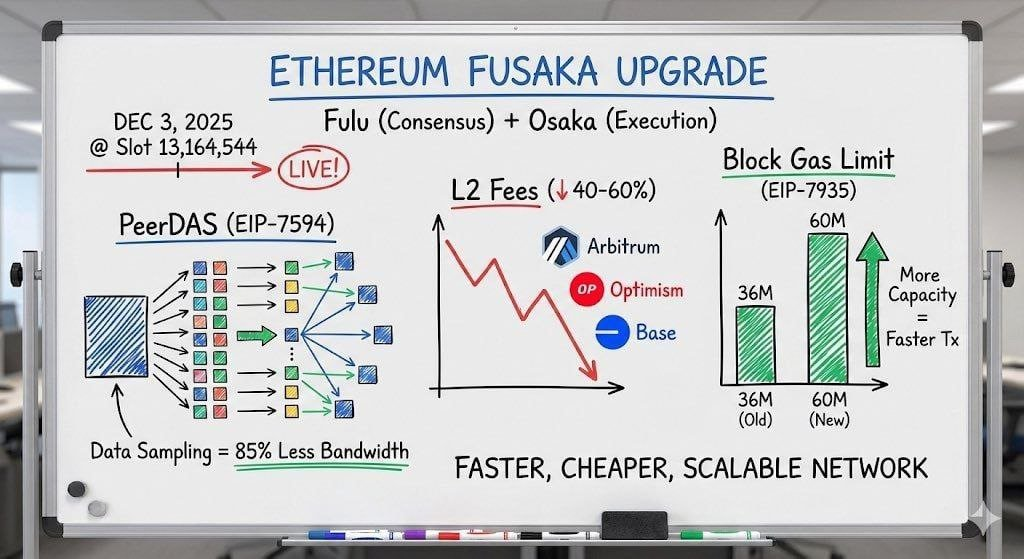
The post What the Ethereum Fusaka Upgrade Really Changed for ETH appeared on BitcoinEthereumNews.com. Ethereum just completed the Fusaka upgrade, a hard fork designed to prepare the network for larger scale and cheaper use. While technical on paper, the change touches the core functions of Ethereum — how data is stored, how transactions fit into blocks, and how Rollups like Arbitrum, Base, and Optimism interact with the main chain.  For anyone holding ETH, this upgrade forms the groundwork for lower fees, better network efficiency, and a more resilient long-term ecosystem. A Larger Network With More Room to Breathe The biggest change arrived in how Ethereum handles data.  Sponsored Sponsored Every transaction, NFT mint, DeFi swap, or Layer-2 batch needs block space, and until now, that space was limited. Fusaka increases Ethereum’s capacity so blocks can carry more information at once.  This does not make the chain instantly faster, but it removes pressure when demand spikes, such as during market volatility or popular token launches.  In simple terms, Ethereum can absorb more activity without struggling. Cheaper Rollups Through Expanded Blob Capacity A large portion of today’s Ethereum traffic comes from Rollups. These networks batch thousands of user transactions and settle them on Ethereum as compressed data called “blobs.”  Before Fusaka, blob space was constrained. When demand surged, fees climbed. Fusaka expands the room available for blob submissions and introduces a flexible system for raising or lowering capacity without a full upgrade.  As rollups scale into this new space, users should experience lower transaction costs and smoother application activity.  The end goal is simple: more transactions, less friction. Sponsored Sponsored Ethereum Fusaka Upgrade Explained. Source: X/Bull Theory PeerDAS: A Simpler Way to Verify Data Another major improvement is how Ethereum nodes verify data. Previously, nodes had to download large sections of block data to confirm that nothing was missing or hidden.  Fusaka introduces PeerDAS, a system…

Author: BitcoinEthereumNews
What Actually Changed with the Ethereum Fusaka Upgrade

What Actually Changed with the Ethereum Fusaka Upgrade

Ethereum just completed the Fusaka upgrade, a hard fork designed to prepare the network for larger scale and cheaper use. While technical on paper, the change touches the core functions of Ethereum — how data is stored, how transactions fit into blocks, and how Rollups like Arbitrum, Base, and Optimism interact with the main chain.  For anyone holding ETH, this upgrade forms the groundwork for lower fees, better network efficiency, and a more resilient long-term ecosystem. A Larger Network With More Room to Breathe The biggest change arrived in how Ethereum handles data.  Every transaction, NFT mint, DeFi swap, or Layer-2 batch needs block space, and until now, that space was limited. Fusaka increases Ethereum’s capacity so blocks can carry more information at once.  This does not make the chain instantly faster, but it removes pressure when demand spikes, such as during market volatility or popular token launches.  In simple terms, Ethereum can absorb more activity without struggling. Cheaper Rollups Through Expanded Blob Capacity A large portion of today’s Ethereum traffic comes from Rollups. These networks batch thousands of user transactions and settle them on Ethereum as compressed data called “blobs.”  Before Fusaka, blob space was constrained. When demand surged, fees climbed. Fusaka expands the room available for blob submissions and introduces a flexible system for raising or lowering capacity without a full upgrade.  As rollups scale into this new space, users should experience lower transaction costs and smoother application activity.  The end goal is simple: more transactions, less friction. Ethereum Fusaka Upgrade Explained. Source: X/Bull Theory PeerDAS: A Simpler Way to Verify Data Another major improvement is how Ethereum nodes verify data. Previously, nodes had to download large sections of block data to confirm that nothing was missing or hidden.  Fusaka introduces PeerDAS, a system that checks small, random pieces of data rather than the entire load.  It works like inspecting a warehouse by opening a few random boxes instead of checking every single one.  This reduces bandwidth and storage requirements for validators and node operators, making it easier — and cheaper — for more people to run infrastructure.  A wider validator base strengthens decentralization, which ultimately strengthens Ethereum’s security and resilience. Higher Block Capacity Means More Throughput Alongside scaling capacity, Fusaka also raises the block gas limit. A higher limit means more work can fit inside each block, allowing more transactions and smart-contract calls to settle without delay.  It doesn’t increase block speed, but it increases throughput. DeFi activity, NFT auctions, and high-frequency trading will have more room to breathe in peak hours. Better Wallet Support and Future UX Improvements Fusaka also includes improvements to Ethereum’s cryptography and virtual machine. The upgrade adds support for P-256 signatures, which are used in modern authentication systems, including those behind password-less login on smartphones and biometric devices.  This opens a path for future wallets that act more like Apple Pay or Google Passkeys rather than seed-phrase-based apps. Over time, this could make Ethereum access simpler for mainstream users. What Fusaka Means for ETH Holders The impact for ETH holders is gradual but meaningful. Fees on Layer-2 networks should ease as data capacity expands. Network congestion should become less common. More validators can participate due to lower hardware demands.  Most importantly, Ethereum now has room to grow without sacrificing security or decentralization. If adoption increases, settlement volume grows with it — and so does ETH’s role as the asset that powers, secures, and settles everything on top. A Foundational Upgrade, Not a Flashy One Fusaka does not rewrite Ethereum’s economics or make ETH suddenly deflationary, but it strengthens the foundation that future demand depends on. Cheaper rollup fees invite usage.  A more scalable base layer invites developers. A more accessible node environment invites participation. These are structural upgrades, the kind that do little in a day but transform the network over time. Ethereum widened the highway, improved the toll system, and made it easier for new drivers to join. That is the real meaning of Fusaka — a quiet shift with long-term weight.  As Layer-2 networks expand and applications multiply, the effects should move from technical discussion into user experience, transaction cost, and ultimately, ETH value itself.

Author: Coinstats
Ledger bevestigt ernstige hardwarefout: Solana-telefoons lekken private keys door kapotte chip

Ledger bevestigt ernstige hardwarefout: Solana-telefoons lekken private keys door kapotte chip

Crypto-walletmaker Ledger heeft een ernstige hardwarelek ontdekt in een populaire smartphonechip die onder meer is gebruikt in Solana telefoons. De fout maakt het mogelijk om volledige controle over het toestel te krijgen en zelfs private keys te stelen en is definitief niet te repareren. Wat is er aan de hand?  Check onze Discord Connect met "like-minded" crypto enthousiastelingen Leer gratis de basis van Bitcoin & trading - stap voor stap, zonder voorkennis. Krijg duidelijke uitleg & charts van ervaren analisten. Sluit je aan bij een community die samen groeit. Nu naar Discord Ledger onthult onherstelbare chipfout in Solana telefoons In een nieuw onderzoeksrapport waarschuwt Ledger dat de MediaTek Dimensity 7300 (MT6878), een veelgebruikte system-on-chip, een fundamenteel beveiligingslek bevat. De chip zit onder meer in de Solana Seeker, een toestel dat specifiek is gebouwd voor crypto-gebruikers. Ledger-ingenieurs Charles Christen en Léo Benito laten zien dat ze via elektromagnetische pulsaanvallen (EMFI) tijdens het opstartproces de volledige beveiliging van de chip konden omzeilen. Daarmee kregen ze, zoals ze zelf beschrijven, “full and absolute control over the smartphone, with no security barrier left standing.” Volgens Ledger betekent dit dat aanvallers, mits ze fysiek toegang tot het toestel hebben, private keys kunnen extraheren van gebruikers die hun wallets op de telefoon beheren. De fout blijkt diep in het silicium gecodeerd, waardoor geen enkele software-update of patch de kwetsbaarheid kan oplossen. Ledger stelt daarom dat gebruikers van toestellen met deze chip structureel risico lopen: “Er is simpelweg geen manier om private keys veilig te bewaren op deze apparaten.” Hoewel de succeskans van elke aanval tussen de 0,1% en 1% ligt, kan een aanvaller de poging elke seconde opnieuw uitvoeren. Daardoor is succesvolle toegang volgens de onderzoekers vaak slechts een kwestie van minuten. Welke crypto nu kopen?Lees onze uitgebreide gids en leer welke crypto nu kopen verstandig kan zijn! Welke crypto nu kopen? De langste government shutdown in de geschiedenis van de VS is eindelijk achter de rug. Dat zorgt ervoor dat er eindelijk weer vooruitgang geboekt kan worden. Dit is erg bullish voor crypto, en dus gaan wereldberoemde traders ineens all-in op altcoins als XRP. Eén vraag komt telkens terug: welke crypto moet… Continue reading Ledger bevestigt ernstige hardwarefout: Solana-telefoons lekken private keys door kapotte chip document.addEventListener('DOMContentLoaded', function() { var screenWidth = window.innerWidth; var excerpts = document.querySelectorAll('.lees-ook-description'); excerpts.forEach(function(description) { var excerpt = description.getAttribute('data-description'); var wordLimit = screenWidth wordLimit) { var trimmedDescription = excerpt.split(' ').slice(0, wordLimit).join(' ') + '...'; description.textContent = trimmedDescription; } }); }); MediaTek: chip is niet ontworpen voor financiële toepassingen MediaTek reageert dat dit type aanval “buiten scope” valt van waarvoor de chip is ontworpen. De MT6878 is bedoeld voor consumentenproducten en niet voor toepassingen die hardwarematig beveiligde cryptografie vereisen, zoals hardware wallets of HSM’s. Het chipbedrijf benadrukt dat apparaten met financiële of cryptografische functies moeten worden gebouwd met specifieke bescherming tegen EMFI-aanvallen, iets wat deze consumer-chip niet bevat. Ledger ontdekte de kwetsbaarheid in februari en meldde deze in mei aan MediaTek, dat vervolgens alle betrokken fabrikanten heeft geïnformeerd. De Solana-telefoon, die zich richt op zelfbeheer van crypto-assets, komt hierdoor in een gevoelig daglicht te staan. Voor gebruikers betekent dit dat toestellen met deze chip niet moeten worden gebruikt voor het bewaren of ondertekenen van private keys, hoe crypto-vriendelijk de fabrikant het toestel ook positioneert. Wanneer is de Solana telefoon en welke functies zitten erop? De nieuwe telefoon Solana Mobile is in september 2024 aangekondigd tijdens het evenement Token2049. De officiële wereldwijde verzending (market-launch) begon op 4 augustus 2025. Voor de lancering had de Seeker al veel voorbestellingen: meer dan 150.000 toestellen waren gereserveerd. De Seeker is niet zomaar een smartphone, hij is gebouwd met integratie van blockchain / cryptoprojecten (Web3). Hier zijn de belangrijkste functies en eigenschappen: Crypto / Web3-features Seed Vault Wallet: Een ingebouwde hardware-wallet die private keys beveiligt. De keys zijn opgeslagen in een aparte hardwaremodule, bedoeld voor veilige crypto-bewaring. Eigen dApp Store: Via de geïntegreerde “Solana dApp Store 2.0” krijgen gebruikers toegang tot allerlei blockchain-apps (dApps), zoals DeFi, NFT-platforms, games, betalingen en meer. Genesis Token + SKR Token: Elke Seeker genereert een “soulbound” on-chain token (Genesis Token) die eigenaarstatus bevestigt. Daarnaast is er de native ecosysteemtoken SKR, bedoeld om participatie, beloningen en eigenaarschap binnen het Solana-ecosysteem mogelijk te maken. Gedecentraliseerde Web3-architectuur: De telefoon maakt gebruik van een architectuur genaamd TEEPIN (Trusted Execution Environment Platform Infrastructure Network). Die moet ervoor zorgen dat apps, identiteit en interacties in het Solana-ecosysteem veilig, “trustless” en cryptografisch geverifieerd gebeuren. Hardware en “mobiele telefoon”-eigenschappen Processor: MediaTek Dimensity 7300 (octa-core) RAM: 8 GB Opslag: 128 GB (UFS 3.1) Scherm: 6.36″ AMOLED, resolutie ~ 2670×1200, met 120 Hz dynamische verversingssnelheid. Connectiviteit: 5G, Nano-SIM + eSIM, WiFi 6, Bluetooth 5.4 Batterij: 4500 mAh + draadloos laden (wireless charging) volgens de fabrikant. De Seeker is ontworpen als “crypto first” smartphone bedoeld voor gebruikers die Web3, crypto, dApps, NFTs, DeFi of blockchain-gaming willen gebruiken, zonder aparte hardware-wallet of onhandige setup. Best wallet - betrouwbare en anonieme wallet Best wallet - betrouwbare en anonieme wallet Meer dan 60 chains beschikbaar voor alle crypto Vroege toegang tot nieuwe projecten Hoge staking belongingen Lage transactiekosten Best wallet review Koop nu via Best Wallet Let op: cryptocurrency is een zeer volatiele en ongereguleerde investering. Doe je eigen onderzoek. Het bericht Ledger bevestigt ernstige hardwarefout: Solana-telefoons lekken private keys door kapotte chip is geschreven door Wessel Simons en verscheen als eerst op Bitcoinmagazine.nl.

Author: Coinstats