NFT

NFTs are unique digital identifiers recorded on a blockchain that certify ownership and authenticity of a specific asset. Moving past the "PFP" craze, 2026 NFTs emphasize utility, representing everything from IP rights and digital fashion to RWA titles and event ticketing. This tag explores the technical standards of digital ownership, the growth of NFT marketplaces, and the integration of non-fungible tech into the broader Creator Economy and enterprise solutions.

13144 Articles
Created: 2026/02/02 18:52
Updated: 2026/02/02 18:52

Best Crypto to Buy Before Fed’s Rate Cuts? Bitcoin Hyper Steps Forward

Best Crypto to Buy Before Fed’s Rate Cuts? Bitcoin Hyper Steps Forward

Quick Facts: ➡️ The market puts the odds of another rate cut at 87% as the next Fed meeting is set for December 10, one week from now. ➡️ Another rate cut could turn investors to risk-based assets like Bitcoin, which would result in a crypto pump across the board. ➡️ Bitcoin Hyper introduces a […]

Author: Bitcoinist
Fableborne opens beta testing following $21.5M token presale

Fableborne opens beta testing following $21.5M token presale

The post Fableborne opens beta testing following $21.5M token presale appeared on BitcoinEthereumNews.com. Fableborne, a competitive mobile action RPG, announced its global open beta on December 2. The new release by Pixion Games already drew in 380K players.  Fableborne is trying to rebuild the on-chain gaming experience, after drawing in over 108K daily active users. The game announced its open beta launch just after a $21.5M presale raise from its native NFTs. Fableborne’s launch arrives at a time when most play-to-earn and NFT games have lost most of their players.  The model of Fableborne brings a highly appealing modern format, with fast sessions, strategic challenges, and gaming seasons. Seasonal play is among the main drivers of activity, which puts Fableborne among top-trending games. Fableborne mixes dynamic RPG with a long-term progression arc.  “Fableborne has always been built to feel like an excellent mobile game first and foremost. Players have responded to that focus in every season. This Open Beta is our most significant step forward, delivering more content, competition, and a player-driven progression system that gives everyone something meaningful to fight for,” said Kam Punia, founder and CEO of Pixion Games.  Fableborne allows players to stage raids, defend their islands, and climb the leaderboard for each season. Islands reflect a player’s long-term strategy, while building heroes is a mastery-building arc over time. The game’s design has achieved 25%-51% weekly retention across seasons.  The new open beta version adds more content, competitive features, and social connections designed to support a growing community in active play. Previous seasons logged over 2.4M playing sessions, with an average length of 32 minutes. Pixion Games aims to double down on rewarding mastery and keep players returning for each new season. Fableborne offers optional Web3 engagement Fableborne is the gaming component of the POWER ecosystem, an integrated program that merges gaming, Web3 activity, and AI to offer a new generation…

Author: BitcoinEthereumNews
Best Solana Meme Coins to Buy as Rizzmas Surges in Charts

Best Solana Meme Coins to Buy as Rizzmas Surges in Charts

Quick Facts: ➡️ Rizzmas wakes up from its slumber after pumping 50% over the past day and the whole meme coin market follows suit. ➡️ Its resurgence highlights how quickly meme coin narratives can rotate, favoring projects with real liquidity, clear mechanics, and strong infrastructure backends. ➡️ PEPENODE’s ($PEPENODE) mine-to-earn model turns passive meme coin […]

Author: Bitcoinist
Fed Cuts are Irrelevant to Bitcoin, Says Kevin O’Leary, as Bitcoin Hyper Raises $28.8M

Fed Cuts are Irrelevant to Bitcoin, Says Kevin O’Leary, as Bitcoin Hyper Raises $28.8M

Quick Facts: ➡️ Celebrity investor, Kevin O’Leary’s view that Bitcoin can hold up without imminent Fed cuts shifts attention from macro speculation to actual network adoption. ➡️ Bitcoin’s base layer still struggles with throughput, fees, and programmability, pushing real-world DeFi and gaming activity toward faster, smart-contract-ready ecosystems. ➡️ Competing Bitcoin Layer 2s are racing to […]

Author: Bitcoinist
Crypto Gaming Adoption Hinges On Clarity Act: Web3 Gamer

Crypto Gaming Adoption Hinges On Clarity Act: Web3 Gamer

The post Crypto Gaming Adoption Hinges On Clarity Act: Web3 Gamer appeared on BitcoinEthereumNews.com. Gaming giants to ‘come out of the woodwork’ for crypto after Clarity Act Crypto will start to become adopted by multibillion-dollar gaming giants after the CLARITY Act advances through US Congress, according to Robbie Ferguson, founder of Immutable. “I expect to see a ton of companies to come out of the woodwork with ultimately programmable loyalty and incentive schemes that are far more efficient than whatever their existing system is using,” Ferguson said during an interview on TradeTalks on Wednesday. “We’re already in conversation with mult-billion dollar public gaming companies who are considering launching tokens as incentives for their end players, but what they need is complete clarity and certainty on how they can do that in a lawful way,’ Ferguson said.  The CLARITY Act aims to create a clearer, more defined regulatory framework for the crypto industry, including a more straightforward understanding of oversight between the US Commodity Futures Trading Commission (CFTC) and the US Securities and Exchange Commission (SEC). Robbie Ferguson spoke to TradeTalks on Wednesday. (Nasdaq) Immutable announced a partnership earlier this year with global gaming giant Ubisoft — the company behind the Assassin’s Creed and Far Cry franchises — to launch an original strategy card game, Might and Magic: Fates. Ferguson said the CLARITY Act could be the “single most transformational piece of legislation for crypto,” as it would establish a lawful pathway for assigning value to compliant crypto tokens.  He added that regulatory hostility in the crypto industry over the past four years has made it extremely difficult for companies to launch crypto tokens with real economic value. “That’s what these tokens can be at the end of the day for these companies, and doing so in a way that comports with the CLARITY Act,” he said. While Immutable expands its relationships in the traditional…

Author: BitcoinEthereumNews
Metamask shield: $10K/mo loss protection

Metamask shield: $10K/mo loss protection

The post Metamask shield: $10K/mo loss protection appeared on BitcoinEthereumNews.com. MetaMask has launched a new premium safeguard called shield, designed to protect users from transaction-related losses while adding fast-response support. MetaMask introduces premium loss protection for on-chain activity MetaMask has rolled out Transaction Shield, a premium opt-in security upgrade that bundles transaction loss protection with 24/7 wallet priority support for its users. The product, announced on Dec. 2, 2025, aims to reduce the financial impact of risky interactions across decentralized applications and smart contracts. The new subscription service extends MetaMask’s security stack by offering coverage for losses up to $10,000 per month on transactions the platform classifies as safe. However, only actions that pass MetaMask’s automated contract checks and transaction simulations qualify for reimbursement if something goes wrong. Moreover, the company positions Transaction Shield as an added layer on top of its existing threat detection tools, instead of a replacement. That said, users still need to monitor approvals, contract interactions, and spending limits whenever they connect their wallet to on-chain services. Pricing, free trial, and subscription details The Transaction Shield MetaMask subscription service is priced at $9.99 per month or $99 annually, maintaining clear monthly coverage limits tied to approved transactions. Subscribers receive a 14-day free trial, and annual plans include a $20 discount compared with paying month to month. Currently, coverage is available only through the MetaMask Extension in desktop browsers. However, the team plans to extend the feature to the mobile wallet at a later stage, bringing the same transaction loss protection and support package to smartphone users. Supported networks and transaction types Transaction Shield applies to approved transactions on a wide range of supported blockchain networks. Covered chains include Ethereum, Linea, Arbitrum, Avalanche, Optimism, Base, Polygon, BSC, and Sei, giving users protection across major EVM-compatible ecosystems. Moreover, the feature supports common DeFi and NFT interactions. Eligible actions…

Author: BitcoinEthereumNews
Check Out the Best Altcoins to Buy as Whales Return and Buy Up Ethereum

Check Out the Best Altcoins to Buy as Whales Return and Buy Up Ethereum

Quick Facts: ➡️ Ethereum whales are rotating into spot $ETH after heavy liquidations, signaling renewed confidence and setting the stage for a broader altcoin rotation. ➡️ Bitcoin Hyper aims to bring SVM-powered, low-latency execution to Bitcoin, enabling DeFi, NFTs, and gaming while anchoring settlement to Bitcoin’s security. ➡️ PEPENODE’s mine-to-earn design turns meme coin speculation […]

Author: Bitcoinist
Flow has transitioned to DeFi; the confidence and predicament of the former NFT leader.

Flow has transitioned to DeFi; the confidence and predicament of the former NFT leader.

Author: Nancy, PANews After the brutal baptism of market cycles, very few survivors remain in the NFT sector. Even Flow, once a top performer, could not escape the fate of changing times and began to seek new growth points. On December 2nd, Flow announced its transformation into a democratized, consumer-grade DeFi platform, a strategic shift that has attracted significant market attention. Leveraging its large user base and unique technological advantages, Flow is attempting to adapt to market changes and save itself. However, whether it can secure a place in the fiercely competitive DeFi arena remains a huge question mark. Launching DeFi lending and wealth management products, and upgrading to a deflationary token. “Today’s DeFi is hostile; users must possess advanced technical skills to survive, with issues like slippage, MEV, and liquidation cascading effects constantly emerging. Every interface is designed for experts, forcing the rest to the margins. This is precisely the gap we aim to fill,” wrote Roham, CEO of Dapper Labs. In response to this situation, Flow's new goal is to create consumer-oriented DeFi, allowing ordinary users to enjoy the benefits of the crypto world without needing to be technical experts, and truly achieving an easy-to-use experience for mainstream users. Flow is building a series of network architecture components called "built-in protocols," which are more like public financial infrastructure directly embedded in the network layer. In the DeFi space, built-in protocols can provide shared liquidity across the entire ecosystem and integrate liquidity pools from various vertical sectors, avoiding liquidity fragmentation and allowing new projects to avoid the challenges of a cold start. Flow Credit Market (FCM), an automated lending protocol, is the first built-in protocol developed by the Flow Foundation. It utilizes Flow's native on-chain scheduling system to set periodic triggers without the need for external oracles, significantly reducing liquidation risk while increasing loan value (LTV), thereby bringing higher natural returns to both lenders and borrowers. Dapper Labs CEO Roham pointed out that traditional DeFi lending is typically highly punitive, only liquidating and charging penalties when a user's position is close to liquidation. FCM, on the other hand, employs proactive risk management, continuously monitoring each position on-chain automatically and rebalancing it before risks materialize. Internal risk simulations show that FCM has protected user deposits from liquidation during numerous major market crashes, while also reducing costs by up to 99.9% compared to lending protocols on other networks. To accelerate the launch of FCM (Financial Flywheel) services, Dapper Labs has launched Peak Money, a consumer-grade financial flywheel app aimed at becoming the next crypto gateway to 100 million new users. According to Roham, users can deposit cash or crypto assets (such as Bitcoin, Ethereum, and FLOW) into Peak Money and earn higher returns than any bank (APY up to 25% for cryptocurrencies and 10% for cash), while funds can be earned and used at any time. The product has no minimum investment, no gatekeeper, no mnemonic phrase required, and no liquidation risks. Peak Money will release details of coverage for specific loss events upon official launch. Currently, Peak Money has an open waiting list. Furthermore, Flow's built-in protocols may be expanded to perpetual contracts, prediction markets, and other applications in the future, providing more user-friendly DeFi applications for mainstream consumers. To achieve sustainable value capture, Flow upgraded its token, transitioning to a deflationary token. The Flow Foundation's FLIP-351 proposal directly links network usage to network value. Each transaction burns tokens, creating scarcity through network activity and thus increasing token value. When the network consistently operates at approximately 250 TPS, the FLOW token will achieve net deflation. Even so, Flow's transaction costs remain lower than mainstream networks like Solana and Base. It's worth noting that the current price of the FLOW token has fallen by over 90% from its all-time high. What gives Flow the confidence and challenges in its cross-industry transformation into DeFi? The current DeFi market is in a phase of rapid growth and fierce competition. As the regulatory environment becomes more favorable, leading protocols are leveraging their first-mover advantage to solidify their positions, while traditional institutions with both compliance and funding advantages are also accelerating their entry, continuously raising the barriers to entry in the field. As one of the few crypto sectors with proven product-market fit (PMF), DeFi still has enormous growth potential. For Flow, which is attempting to transform from consumer-grade Level 1 to DeFi infrastructure, this is not only an opportunity for strategic restructuring but also a challenging "reboot." As a "newcomer" to the DeFi sector, Flow possesses a certain degree of confidence for its cross-industry transformation. On one hand, Flow didn't start from scratch; its accumulated experience in the NFT field provided a unique starting line. With the phenomenal application NBA Top Shot, Flow amassed a large user base. Although its popularity has declined significantly from its peak, the accumulated traffic remains substantial. According to official data, Flow has over 41 million total accounts and over 1.1 million monthly active users. Meanwhile, according to DeFiLlama data, as of December 3rd, Flow's TVL reached $107 million, a 187.1% increase since the beginning of the year. Meanwhile, Flow boasts technological advantages, being designed specifically for large-scale consumer applications. Its low-barrier, low-cost, and high-throughput on-chain environment naturally aligns with the high-frequency trading needs of DeFi. In October of this year, Flow also launched two key upgrades, Forte and Crescendo, aiming to address scalability, deep innovation in DeFi, and cross-chain interoperability issues, further providing technological support for ecosystem transformation. Forte's core goal is to completely eliminate the reliance on off-chain bots or centralized custody services for complex on-chain financial logic. All automation (limit orders, dynamic interest rates, strategy vaults, etc.) runs securely directly on-chain, making it easier for developers to build complex financial applications. Crescendo upgrades Flow with Ethereum Virtual Machine (EVM) equivalence, enabling seamless interoperability with Ethereum-based applications and protocols. Flow claims to be one of the few blockchains capable of supporting millions of daily active users (DAU) without incurring high or unpredictable gas fees. However, Flow's transformation still faces considerable challenges. On one hand, all new public chains face the challenge of a liquidity cold start. Although Flow has a significant user base, it mainly consists of NFT users, most of whom have already left the market. How to re-attract these users and convert them into DeFi users remains highly uncertain. On the other hand, the ecosystems of leading public chains are already quite rich and have formed barriers. Flow needs to quickly attract high-quality developers and build innovative applications that are recognized by the market in order to form a sustainable positive cycle of ecosystem. More importantly, Flow has long been labeled by the market as an NFT public chain. To break this stereotype, Flow must present a successful DeFi application case to prove its suitability for the financial sector. Overall, the technical architecture and user base add more certainty to Flow's "re-entrepreneurial" endeavor. However, the success of this transformation hinges on Flow's ability to activate dormant NFT users through a compelling DeFi narrative and break down liquidity barriers.

Author: PANews
MetaMask unveils new shield security upgrade with transaction loss protection

MetaMask unveils new shield security upgrade with transaction loss protection

MetaMask has launched a new premium safeguard called shield, designed to protect users from transaction-related losses while adding fast-response support. MetaMask introduces premium loss protection for on-chain activity MetaMask has rolled out Transaction Shield, a premium opt-in security upgrade that bundles transaction loss protection with 24/7 wallet priority support for its users. The product, announced […]

Author: The Cryptonomist
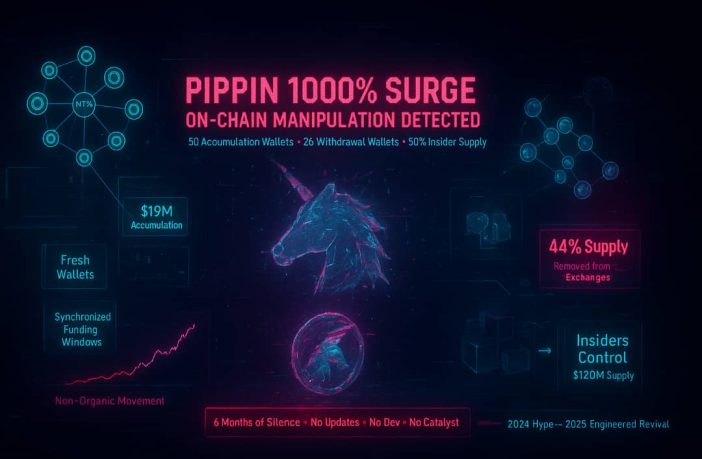
PIPPIN Surges 1,000% After Six Months of Silence, On-Chain Evidence Points to Coordinated Manipulation

PIPPIN Surges 1,000% After Six Months of Silence, On-Chain Evidence Points to Coordinated Manipulation

The $PIPPIN token has suddenly roared back to life. After half a year with no posts, no updates, and no visible development, the token exploded more than 1,000% in less than two weeks. The move took the market from confusion to suspicion almost instantly. What’s unfolding now looks nothing like organic demand. On-chain evidence strongly [...]

Author: Null TX