NFT

NFTs are unique digital identifiers recorded on a blockchain that certify ownership and authenticity of a specific asset. Moving past the "PFP" craze, 2026 NFTs emphasize utility, representing everything from IP rights and digital fashion to RWA titles and event ticketing. This tag explores the technical standards of digital ownership, the growth of NFT marketplaces, and the integration of non-fungible tech into the broader Creator Economy and enterprise solutions.

13111 Articles
Created: 2026/02/02 18:52
Updated: 2026/02/02 18:52
Crypto has become Kim Jong-Un’s lifeline — and Russia’s secret weapon

Crypto has become Kim Jong-Un’s lifeline — and Russia’s secret weapon

The post Crypto has become Kim Jong-Un’s lifeline — and Russia’s secret weapon appeared on BitcoinEthereumNews.com. In a new report by the Multilateral Sanctions Monitoring Team (MSMT), a mechanism to monitor and report UN sanctions violations, cryptocurrency is earning the Democratic People’s Republic of Korea (DPRK) billions of dollars worth of foreign currency every year. According to the report, it’s one of North Korea’s most stable ways to acquire foreign currency since at least 2022, and is helping Russia acquire DPRK manufactured munitions and weapons. This sanctions evasion and use of crypto to launder and abstract monetary movements appears to be a direct contributor to Russia’s ability to fight its war against Ukraine. While early in the Russo-Ukrainian War, crypto was heralded as a way for hundreds of millions of dollars to be donated to the Ukrainian war effort. However, according to the MSMT, it’s proven to be far more useful for the Putin regime and the DPRK, with “DPRK officials… found to have used a… stablecoin for procurement-related transactions, including the sale and transfer of military equipment and raw materials such as copper, which is used in munitions production.” Read more: North Korea likely got Lazarus to work days after warship fiasco The report specifically highlights tether’s (USDT) usefulness for the Kim regime, stating that “since at least 2023, the DPRK’s 221 General Bureau… and other DPRK officials have attempted to expand the DPRK’s use of cryptocurrency beyond cybercrime to include the use of cryptocurrency as a form of exchange and payment for goods and services. “This includes using USDT in procurement-related transactions.” The only bigger contributor of foreign currency to the DPRK is the direct sales of munitions and weapons to Russia, which the Putin regime is in turn utilizing on the frontlines in Ukraine. Cryptocurrencies are a major contributor to the DPRK economy At this point, it’s impossible to argue that the DPRK…

Author: BitcoinEthereumNews
7 Top Crypto Presales to Watch: LivLive ($LIVE) Ignites Investor Buzz with 100x Gains Potential Before Launch

7 Top Crypto Presales to Watch: LivLive ($LIVE) Ignites Investor Buzz with 100x Gains Potential Before Launch

LivLive ($LIVE) dominates 2025’s top crypto presales with $2M raised, 40% SPOOKY bonus, and 100x gains potential through its creator-led, staking-powered ecosystem.

Author: Blockchainreporter
Little Pepe ($LILPEPE) vs LivLive ($LIVE): Analysts Rank the Best Crypto Presales With 1000x Potential in 2025

Little Pepe ($LILPEPE) vs LivLive ($LIVE): Analysts Rank the Best Crypto Presales With 1000x Potential in 2025

LivLive ($LIVE) outshines Little Pepe ($LILPEPE) with real-world AR rewards, 30% bonuses, and 16x+ ROI potential, making it 2025’s best crypto presale pick.

Author: Blockchainreporter
Top 5 Best Crypto Presales Before 2026: LivLive ($LIVE) Leads Over $HYPER and $BDAG

Top 5 Best Crypto Presales Before 2026: LivLive ($LIVE) Leads Over $HYPER and $BDAG

LivLive ($LIVE) leads 2025’s best crypto presales with AR-powered rewards, real-world engagement, and 12.5x ROI potential, outpacing $HYPER, $BDAG, and others.

Author: Blockchainreporter
Here’s Why Traders Who Missed Pepe’s Early Entry Are Rushing Into LivLive’s Best Crypto Presale

Here’s Why Traders Who Missed Pepe’s Early Entry Are Rushing Into LivLive’s Best Crypto Presale

After missing Pepe’s peak, traders are piling into LivLive’s $0.02 presale. Its AR-powered rewards, 30% bonus, and 12.5x ROI potential make $LIVE 2025’s standout pick.

Author: Blockchainreporter
Don’t Bore Me with my Original Fake Bored Ape: NFTs Are Art, and My Choice Is Mine

Don’t Bore Me with my Original Fake Bored Ape: NFTs Are Art, and My Choice Is Mine

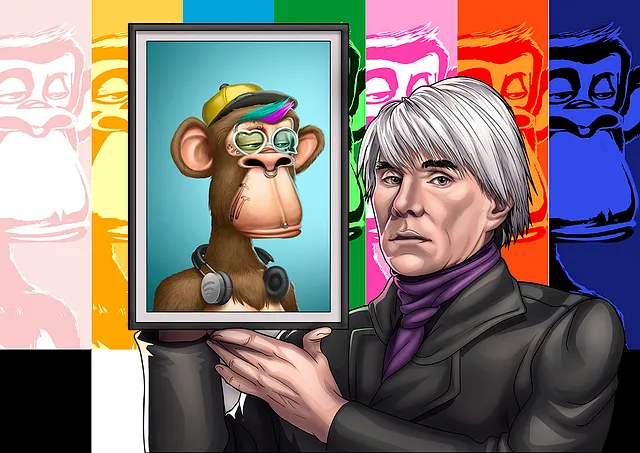
Andy Warhol Holding The Original Fake Bored Ape The art world has always been a battleground of taste, where innovation clashes with tradition and value is a matter of conviction. Today, non-fungible tokens, or NFTs, digital assets like my cherished The Original Fake Bored Ape, stand at the heart of this dispute. Critics dismiss NFTs as a speculative fad, devoid of aesthetic or cultural merit, their voices laden with the prejudice of guardians of an outdated canon. Yet, art has never bowed to such dogmatism. If I choose to invest my modest resources or dreams in a primate crafted by an artist, inspired but not official from the Bored Ape collection, that choice is mine alone. To those who insist on lecturing me about the legitimacy of my collection, spare me. NFTs are art, their value is real, and the only thing more tiresome than this debate is the elitism that fuels it. The Art of Redefinition The history of art is a chronicle of ruptures, where visionaries redefine what is beautiful or meaningful by defying conventions. In the 19th century, the Impressionists faced scorn for their vibrant brushstrokes, deemed unworthy by Parisian salons. Decades later, Andy Warhol transformed Campbell’s soup cans into cultural icons, questioning the boundary between consumption and art. Marcel Duchamp was bolder still, with his 1917 urinal, “Fountain,” which elevated artistic intent above the physical medium. NFTs, like my The Original Fake Bored Ape, crafted by an artist as a conscious provocation to the Bored Ape Yacht Club collection, follow this rebellious tradition. Stamped with the Primate Pop symbol, a badge of pop art irreverence, it is an object authenticated by the blockchain, its transparency surpassing that of any physical canvas. To reject it as “non-art” is to ignore that the essence of art lies in the dialogue it sparks, not in its submission to obsolete dogmas. The Alchemy of Value The value of art has never been measured by its utility but by its capacity to captivate, provoke, or signify. Consider the astronomical prices of physical works: “Salvator Mundi,” by Leonardo da Vinci, sold for 450.3 million dollars at Christie’s in 2017, driven by its rarity and historical aura. “Interchange,” by Willem de Kooning, fetched 300 million dollars in a private sale in 2015, while “Untitled,” by Jean-Michel Basquiat, reached 110.5 million dollars in 2017. These values reflect not objective metrics but the subjective desires of collectors and cultural discourses. A Picasso is not worth millions for its paint but because someone believes in its meaning. The same applies to NFTs. My Original Fake Bored Ape, with its intentional design crafted by an artist, stamped with the Primate Pop symbol, carries a value that transcends its code: it is a cultural artifact, a provocation to authenticity. Critics who ridicule such purchases forget that art markets have always been speculative, from the Impressionists, whose works, like Monet’s “Water Lilies,” now fetch tens of millions. Value is a story we tell, and NFTs are writing a new chapter.The Original Fake Bored Ape A Personal Rebellion The cover image of this article encapsulates my stance: Andy Warhol, the maestro of pop, holding a pop art rendition of The Original Fake Bored Ape, with hues that echo his irreverent genius. This image is a manifesto of my right to define art on my own terms. I may not have the fortune of a Sotheby’s bidder. Still, I claim the freedom to collect what speaks to me, be it The Original Fake Bored Ape or a CryptoPunk, each stamped with a pop symbol, an icon of provocation that celebrates the tension between originality and falsity. The blockchain ensures my ownership is indisputable, a modern echo of the provenance that once authenticated a Rembrandt. Collecting an NFT is planting a flag in a cultural revolution, where curators no longer dictate taste but are guided by the collective will of creators and enthusiasts. The End of Elitism The rancor against NFTs reveals a deeper anxiety: the loss of control over cultural narratives. By decentralizing the creation and ownership of art, NFTs challenge the institutions that decide what is worthy of admiration. They invite us to question who defines beauty, value, or permanence. The Original Fake Bored Ape is as legitimate as a Basquiat canvas or a Duchamp readymade, not because it is flawless, but because it resonates with me, with its community, with the spirit of the age. The gatekeepers of the art world may bristle, but their sermons are as obsolete as a rotary phone. Art is personal, value is subjective, and my wallet, however humble, is mine. So, spare me the critiques of my Original Fake Bored Ape. What’s in your collection, and why does it matter to you? The Original Fake Bored Ape is for sale at the floor price of an original Bored Ape, around 7.5 ETH, a brazen challenge to the art market: what is the worth of a work that is, by design, originally fake? I don’t know the answer, but I’m eager to see who dares to bid. To those who insist on lecturing me about the legitimacy of my collection, spare me. NFTs are art, their value is real, and the only thing more tiresome than this debate is the elitism that fuels it. Don’t Bore Me with my Original Fake Bored Ape: NFTs Are Art, and My Choice Is Mine was originally published in Coinmonks on Medium, where people are continuing the conversation by highlighting and responding to this story

Author: Medium
DataFi 101: Why Standardization is the Key to Data Assetization

DataFi 101: Why Standardization is the Key to Data Assetization

Every path to assetization begins with standardization. Without it, there is no way to price, trade, or clear assets at scale. Finance has long understood this. Securities are standardized into units of shares; bonds follow strict contract formats with clear coupon rules; and commodities are defined by delivery quantities and quality grades in futures markets. All these conventions make assets liquid and markets possible. It also means, if data is to become an asset, it must undergo the same transformation. But why? Why Data Must Be Standardized Everything online is data. Every post, every click, every purchase, every location ping, all of it exists as data scattered across the internet, whether static or dynamic. These pieces are spread across platforms, stored in different formats, and governed by inconsistent rules. This makes data fragmented, diverse, and inconsistent. In such a raw state, it cannot enter a market, as it is too incompatible to be treated as a single class of asset. At this point, you might raise an objection: isn’t there already some form of standardization in the data industry? After all, companies buy, sell, and integrate datasets every day, and without some standards this would hardly be possible. That is true, but the kind of standardization that exists today is fundamentally different from what assetization requires. In the traditional data industry, “standardization” usually means creating labels, building taxonomies, or applying models that make data easier to classify and use. For example, customer demographics may be normalized into categories like age ranges or income brackets, and browsing histories may be tagged by content themes or purchase intent. These efforts serve an operational purpose: to make data interpretable, searchable, and ready for analysis. Yet, this form of standardization does not make data into an asset. Assetization operates under a different logic. In finance, standardization does not just describe assets, it transforms them into fungible, comparable, and contractible units. Take equities as an example. A company is infinitely complex. It includes assets, liabilities, governance, earnings potential, and risks. If investors had to negotiate investment terms based on these raw elements, every negotiation would be different — one buyer might want to price assets, another to discount liabilities, a third to argue over governance. No two trades would ever align, and a market could never scale. Standardization solves this by compressing all that complexity into a single unit: the share. One share represents the same slice of the company for all holders, making it fungible; mandatory reporting rules make shares comparable across companies; and legal frameworks tie rights and dividends to the unit, making it enforceable. In this way, the share turns an otherwise untradeable bundle of complexity into a liquid asset. Back to the data industry. The kind of “standardization” we see there cannot create fungible units, guarantee comparability across markets, or tie legal or contractual rights to data. In other words, it falls short of enabling data to be priced, traded, or cleared in the way financial assets are. So, what kind of framework could give data this level of standardization? DataFi provides the answer. Standardization in DataFi In DataFi, standardization begins at the proof level. When a user uploads a purchase history or browsing activity, it is converted into structured proofs (often with ZKPs), so each record follows a consistent schema. This makes proofs interpretable and comparable. But proofs alone do not circulate. At DDC, our solution is to wrap proofs into NFT-based containers, which act as exchangeable units in the marketplace. An NFT might represent a bundle of purchase records tied together by common attributes, with ZKPs inside providing verifiability. In this design, proofs define the format, while NFTs define the tradable unit. This is one path. Other projects explore different ones, such as feeding data directly into AI models and monetizing access via APIs. The field is still open. When it comes to pricing and execution, DataFi relies on the same foundation: smart contracts. Comparable schemas and metadata rules allow datasets from different regions or categories to be benchmarked side by side. Once a price is set, the contract encodes how the value flows. A part goes to the platform as a fee, part to the seller who packaged the NFT, and part is distributed to the original data contributors whose proofs are inside. All of this is enforced automatically on-chain, ensuring that both valuation and payout are transparent, auditable, and tamper-proof. In this way, pricing and enforceability are not separate steps, but two sides of the same mechanism. And together, cryptographic proofs, standardized schemas, and contract-bound rights push data beyond operational use. They give it the qualities assetization demands: fungibility, comparability, and enforceability. Conclusion The history of markets shows one truth: without standardization, there is no asset class. Finance proved this with shares, bonds, and commodities, each transformed from complexity into simple, tradable units. Data is now at the same threshold. For decades it has been collected, tagged, and modeled, but never in a way that made it liquid or enforceable as an asset. DataFi changes this by introducing cryptographic proofs, standardized schemas, and contract-bound distribution. This is not yet a universal standard — different projects are testing different routes, from proof-based exchanges to AI-driven monetization. But the direction is clear. Standardization is no longer just about making data usable; it is about making data tradable. And that is the decisive step that turns data from information into an asset class. About DataDanceChain DataDance is a consumer chain built for personal data assets. It enables AI to utilize user data while ensuring the privacy of that data. DataDance caters to both individual users and commercial organizations (brands). Through the DataDance Key Derivation Protocol, the network’s nodes achieve multi-layered privacy protection while being EVM-compatible. This ensures absolute data privacy while enabling rights management, data exchange, asset airdrops, and claims. Website: https://datadance.ai/ X (Twitter): https://x.com/DataDanceChain Telegram: https://t.me/datadancechain GitHub: https://github.com/DataDanceChain GitBook: https://datadance.gitbook.io/ddc DataFi 101: Why Standardization is the Key to Data Assetization was originally published in Coinmonks on Medium, where people are continuing the conversation by highlighting and responding to this story

Author: Medium
From Anarchy to Airdrops

From Anarchy to Airdrops

The Selling Out of Decentralization Decentralization was supposed to be rebellion — a digital uprising against the gatekeepers of finance and data. A way to give power back to people. Now, it’s just a new kind of marketing campaign. What began as a movement for freedom turned into a spectacle of greed. The rhetoric stayed radical, but the behavior got corporate fast. Talk of “community ownership” quietly morphed into “token incentives.” What was once anti-establishment became airdrop culture — capitalism with better branding. The irony is vicious Web3 started by promising to break the system but ended up replicating it — only faster and with worse UX. Decentralization once meant transparency, autonomy, and resilience. Now it means Discord servers filled with speculation, influencers masquerading as economists, and founders building new empires on the ashes of old ones. The same power dynamics, just distributed through wallets instead of banks. The dream of collective power collapsed under the weight of individual profit. Because when everyone’s in it for yield, nobody’s in it for freedom. The Web3 revolution didn’t get crushed by regulators or skeptics — it got sold out by its believers. The crypto economy turned participation into gamified capitalism, and the “community” into unpaid labor for hype. The deeper tragedy isn’t the scams or the rug pulls — those were predictable. It’s how easily people traded idealism for incentives. How a movement built on “trustless systems” forgot that trust — in each other, not code — was the original point. Decentralization didn’t fail because it couldn’t work. It failed because it stopped being about liberation and became about distribution — not of power, but of profit. The revolution was real for a second. Then someone built a dashboard for it, raised a Series A, and launched an NFT drop. That’s not freedom. That’s franchising. From Anarchy to Airdrops was originally published in Coinmonks on Medium, where people are continuing the conversation by highlighting and responding to this story

Author: Medium
Ethereum And Shiba Inu Struggling For Bull Run; Here’s Why Investors Are Now Choosing The BlockchainFX Presale Over Altcoins

Ethereum And Shiba Inu Struggling For Bull Run; Here’s Why Investors Are Now Choosing The BlockchainFX Presale Over Altcoins

Ethereum and Shiba Inu face stagnation, but BlockchainFX’s $0.028 presale surges past $9.7M. Its staking rewards and real-world utility make BFX a standout buy.

Author: Blockchainreporter
Here’s Why Community Members Leaving Pepe Coin Are Rushing Into LivLive ($LIVE) This Week

Here’s Why Community Members Leaving Pepe Coin Are Rushing Into LivLive ($LIVE) This Week

Top coin to buy this week discussions are taking over the crypto space as October 2025 kicks off with high volatility and hotter opportunities. While Bitcoin holds steady and Solana ($SOL) shows consistent growth, a fresh entry, LivLive ($LIVE), is capturing every crypto chat feed. Early adopters are shifting toward real-world utility tokens that combine […] The post Here’s Why Community Members Leaving Pepe Coin Are Rushing Into LivLive ($LIVE) This Week appeared first on Live Bitcoin News.

Author: LiveBitcoinNews