NFT

NFTs are unique digital identifiers recorded on a blockchain that certify ownership and authenticity of a specific asset. Moving past the "PFP" craze, 2026 NFTs emphasize utility, representing everything from IP rights and digital fashion to RWA titles and event ticketing. This tag explores the technical standards of digital ownership, the growth of NFT marketplaces, and the integration of non-fungible tech into the broader Creator Economy and enterprise solutions.

13053 Articles
Created: 2026/02/02 18:52
Updated: 2026/02/02 18:52
Tapzi Rises Among the Best Crypto Presales of 2025 — With Bitcoin Hyper in the Mix

Tapzi Rises Among the Best Crypto Presales of 2025 — With Bitcoin Hyper in the Mix

Tapzi’s skill-based GameFi presale is winning attention in 2025, with real gameplay, solid tokenomics, and 3× early ROI potential—analysts call it a 100× contender.

Author: Blockchainreporter
Top 5 Upcoming Crypto Presales in 2025 That Could Change the Game

Top 5 Upcoming Crypto Presales in 2025 That Could Change the Game

Discover the top 5 upcoming crypto presales of 2025 poised to disrupt the market. Explore early projects with massive growth and profit potential.

Author: Blockchainreporter
Paxos Technical Error Creates $300 Trillion PYUSD: Confirms Mint Was Internal Error, Not a Hack

Paxos Technical Error Creates $300 Trillion PYUSD: Confirms Mint Was Internal Error, Not a Hack

The post Paxos Technical Error Creates $300 Trillion PYUSD: Confirms Mint Was Internal Error, Not a Hack appeared on BitcoinEthereumNews.com. At 3:12 PM EST, blockchain watchers froze as Paxos, the regulated issuer behind PayPal USD (PYUSD), mistakenly minted $300 trillion worth of PYUSD in a single transaction. Just 22 minutes later, the entire amount was burned, as if it never happened. The company quickly issued a statement clarifying the cause: “This was an internal technical error. There is no security breach. Customer funds are safe. We have addressed the root cause.” @Paxos, October 15, 2025 At 3:12 PM EST, Paxos mistakenly minted excess PYUSD as part of an internal transfer. Paxos immediately identified the error and burned the excess PYUSD. This was an internal technical error. There is no security breach. Customer funds are safe. We have addressed the root… — Paxos (@Paxos) October 15, 2025 What Really Happened The massive mint originated from Paxos’ official wallet, confirming it was an internal mistake, not a hack. According to on-chain data, the tokens were created in a single transaction, likely due to a configuration or input error, something as simple as typing the wrong number during an internal test or system update. On Ethereum, the mint and burn were both visible to the public, allowing anyone to track the sequence in real time. The transparency of blockchain made the event both shocking and oddly reassuring, a trillion-dollar error that everyone could see, and everyone could verify was fixed. Within minutes, crypto Twitter exploded. Analysts and traders scrambled to confirm whether the $300 trillion mint was real, while others joked that PayPal had briefly overtaken Apple, Microsoft, and even entire global economies in value. “For about 20 minutes, PayPal was the richest company on Earth.” @pukerrainbrow For about 20 minutes, PayPal became the richest company on Earth. Paxos accidentally minted $300 trillion in PYUSD… before burning it all like nothing happened. But…

Author: BitcoinEthereumNews
Solana vs XRP: Comparing Their Key Features

Solana vs XRP: Comparing Their Key Features

Solana and XRP are two of the fastest and most popular blockchain platforms, but they solve very different problems. Solana focuses on high-speed transactions and low fees, making it popular for decentralized applications like NFTs and DeFi. XRP, on the other hand, is known for enabling quick and efficient cross-border payments, with many banks and financial institutions using its network.Both have strong communities, unique use cases, and potential for growth. Understanding their differences helps investors and users decide which best fits their goals.What is Solana (SOL)?Solana is a high-performance blockchain platform that is designed to support decentralized applications (dApps) and crypto assets with a focus on scalability, speed, and low transaction costs. It was launched in March of 2020 by Anatoly Yakovenko, a former Qualcomm engineer, and introduced a unique consensus mechanism called Proof of History (PoH), which works alongside Proof of Stake (PoS) to dramatically increase throughput. This innovation allows the network to process thousands of transactions per second — which is far more than most other blockchains. Solana’s ecosystem quickly became one of the most active in the crypto industry, powering projects in DeFi, NFTs, and gaming. Its native token, SOL, is used for transaction fees, staking, and network governance.What is Ripple (XRP)?Ripple (XRP), on the other hand, is both a blockchain-based payment protocol and the name of the digital currency used in it. It was founded in 2012 by Chris Larsen and Jed McCaleb with the goal of enabling fast, low-cost international money transfers between financial institutions. Unlike traditional blockchains, Ripple uses a consensus ledger rather than mining to validate transactions, allowing settlements to occur in just a few seconds. The company behind it, Ripple Labs, focuses on bridging traditional finance and blockchain technology through its products like RippleNet and On-Demand Liquidity (ODL). The XRP token serves as a bridge currency for cross-border payments, aiming to make global financial transfers more efficient and affordable.Solana vs XRP: Key DifferencesCATEGORYSOLANA (SOL)RIPPLE (XRP)Launch Year20202012Founder(s)Anatoly YakovenkoChris Larsen ans Jed McCalebPrimary PurposeGeneral-purpose blockchain for dApps, DeFi, and NFTs.Cross-border payments and liquidity bridge for financial institutions.Consensus MechanismProof of History + Proof of Stake.Ripple Protocol Consensus Algorithm (RPCA).Transaction SpeedUp to 65,000 transaction per second (TPS).1,500 TPS, with 3-5 second settlements.Transaction Fees$0.00025 (extremely low)$0.0002 (also extremely low)Smart Contract SupportFull support for smart contracts.Limited, mainly focused on payments, not dApps.DecentralizationHundreds of validators, but high hardware requirements.Around 150 validators, with Ripple Labs influencing default list.Network ReliabilityVery fast, but occasional outages during high traffic.Highly reliable, minimal outages.Main Use CasesDeFi platforms, NFT marketplaces, Web3 gaming, and dApps.General remittances, bank transfers, and liquidity management.Ecosystem FocusDeveloper-driven ecosystem with open-source growth.Institutional and banking partnerships through Ripple Net.Regulatory OutlookNo direct SEC lawsuit but under general scrutiny.Faced and resolved SEC lawsuit; clearer regulatory standing.Frequently Asked QuestionsWhat are the main differences in transaction speeds between Solana and XRP?Solana processes transactions very quickly, handling up to thousands of transactions per second. It is known for low latency and high-speed block confirmations.XRP also offers fast transaction speeds, especially for cross-border payments, with transfers completing in seconds. Both networks aim for speed, but Solana’s focus is on scaling for a wide range of applications, while XRP is tailored for quick payment settlements.How do Solana's and XRP's approaches to scalability compare?Solana uses a unique proof-of-history mechanism to help scale its network and manage more transactions at once. This system allows it to support decentralized finance (DeFi), apps, and NFTs alongside regular transfers.XRP relies on a simpler consensus protocol called the XRP Ledger. This setup focuses on stability and payment processing, which scales less flexibly compared to Solana’s broad use-case approach.What are the factors affecting the price predictions of Solana and XRP?The price of Solana is influenced by growth in decentralized applications, partnerships, and network upgrades. Demand from developers and DeFi projects can also move Solana’s price.XRP’s price depends on regulatory news, adoption by banks, and the growth of its payment network. Legal decisions about XRP’s status can have a big impact on its future value.Which offers better long-term investment potential: Solana or XRP?Solana appeals to those interested in a growing community of apps and NFT projects. Its ecosystem is expanding, but risks include technical issues and network outages.XRP is more established in the payments space and has support from some financial institutions. Its future depends heavily on legal clarity and global adoption for payments.What are the advantages and disadvantages of Solana and XRP in terms of overall network performance?Solana’s advantages include fast speeds, high capacity, and support for many types of applications. However, it has faced network outages and technical challenges during periods of heavy activity.XRP is valued for its uptime, reliability, and stable performance in payments. It lacks support for advanced apps but is less prone to network slowdowns or failures. Both have trade-offs based on what users and developers need.

Author: Coinstats
This $0.0035 New Crypto Stands Out

This $0.0035 New Crypto Stands Out

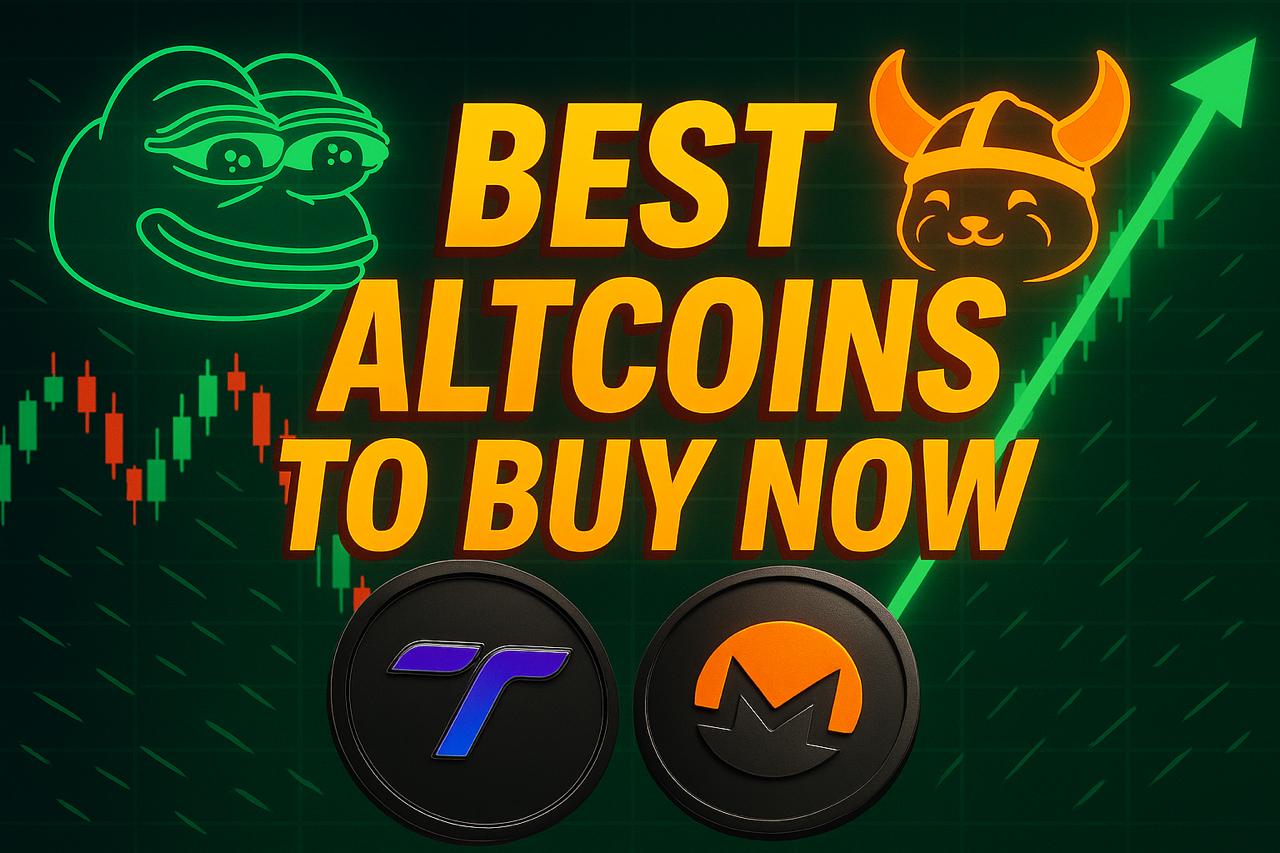
The post This $0.0035 New Crypto Stands Out appeared on BitcoinEthereumNews.com. Crypto News As investors hunt for the best altcoins to buy now for October, PEPE is down 31% and FLOKI is down 40%, showcasing meme coins lose momentum. Meanwhile, Tapzi leads as a promising contender. Meme coins that powered portfolios through 2024 are stumbling in October 2025. PEPE trades at $0.00000754, down 31% year-to-date, while FLOKI hovers near $0.0000745 after sliding 40% from January highs. Whale selling pressure and thinning liquidity have pushed both tokens into bearish territory. Investors who rode the speculation wave now face a difficult question: stay with hype-driven assets or pivot to projects with tangible revenue models? Tapzi, a skill-based gaming platform on BNB Smart Chain, has emerged as an answer for those seeking utility over volatility.​ The presale has sold over 81 million tokens from a 150 million allocation, representing 54% completion. Unlike meme coins that rely on social buzz, Tapzi generates value through player-funded prize pools and staking mechanics. Games like Chess and Checkers reward skill, not speculation. With tokens priced at $0.0035 ahead of a $0.01 launch, early participants position for a 185% markup before public trading begins, making Tapzi one of the best altcoins to buy now for explosive Q4 returns.​ Key Takeaways PEPE fell 31% YTD to $0.00000754 while FLOKI dropped 40% as whale selling and weak technicals pressure meme coins downward​. Tapzi sold 81M tokens at $0.0035 presale price ahead of $0.01 launch, offering 185% markup to early investors via skill-gaming platform​. Web3 gaming market projected to grow from $25B in 2024 to $125B by 2032 as Tapzi targets first-mover advantage in competitive GameFi​. Meme Coins Face Structural Headwinds PEPE dropped 25% over the past week following whale liquidations exceeding 1.5 trillion tokens. Trading volume surged to $927 million as holders exited positions during a broader market correction. The token…

Author: BitcoinEthereumNews
AI-powered contracts: Rewiring Bitcoin mining’s future

AI-powered contracts: Rewiring Bitcoin mining’s future

The post AI-powered contracts: Rewiring Bitcoin mining’s future appeared on BitcoinEthereumNews.com. Homepage > News > Business > AI-powered contracts: Rewiring Bitcoin mining’s future In the tough world of block reward mining, where costs for power and keeping machines running play a critical role in profitability, artificial intelligence (AI) smart contracts provide some much-needed support. These aren’t your everyday blockchain agreements that simply split block rewards, but intelligent, self-executing codes that crunch real-time data, energy prices, rig temperatures, or network difficulty, and make split-second decisions to keep miners on track. With the blockchain and AI market heating up, the fusion of AI and decentralized tech could birth a new breed of self-optimizing mining operations, redefining efficiency in the cutthroat world of 2025. Smart contracts have been a key part of the blockchain for a while, automating things such as decentralized finance (DeFi) loans and non-fungible token (NFT) sales. Adding AI to them is like giving them a brain; instead of sticking to preset rules, these contracts can adapt, learning from live data to improve mining efficiency. Companies like Fetch.ai and Chainlink are paving the way by feeding real-time data such as weather, grid costs, or hashrate trends into Ethereum contracts that miners can use. For example, imagine a North Dakota mining farm where power costs change often. An AI contract could see when prices go up and then decide to throttle older machines. Electricity expenses are a key player in mining, but these costs are increasing. By 2025, miners in the United States could see rates over $0.10 per kWh, much higher than the $0.03-$0.07 rates in places such as Oman. To deal with this, AI contracts can study data from power grids or renewable sources to help control electricity usage. For instance, a miner in Texas could use an AI contract tied to ERCOT’s pricing. This would let them move operations…

Author: BitcoinEthereumNews
Ripple CLO Clarifies the Misconception Around Bitcoin Decentralization

Ripple CLO Clarifies the Misconception Around Bitcoin Decentralization

The post Ripple CLO Clarifies the Misconception Around Bitcoin Decentralization  appeared first on Coinpedia Fintech News Chief Legal Officer at Ripple, Stuart Alderoty, explained the misconception of decentralization in crypto. In his latest X post, Alderoty said the idea of decentralization is not unique to Bitcoin, just because it doesn’t have a CEO. Decentralization is not Unique to Bitcoin According to Alderoty, the idea of decentralization is based on permissionless systems, …

Author: CoinPedia
XRP & Ethereum Lead as Fed Money Printing Signals New Financial Era

XRP & Ethereum Lead as Fed Money Printing Signals New Financial Era

The post XRP & Ethereum Lead as Fed Money Printing Signals New Financial Era appeared on BitcoinEthereumNews.com. XRP and Ethereum Emerge as Altcoins to Give a Keen Eye According to Tom Bruni, Head of Markets & Retail Investor Insights, Ripple’s XRP and Ethereum (ETH) are currently the two altcoins commanding the most attention from traders and investors.  With the cryptocurrency market experiencing heightened volatility, these digital assets are being closely monitored for signals that could indicate the next major moves in the broader crypto ecosystem. Bruni highlights that XRP and Ethereum have consistently shown resilience amid market fluctuations, setting them apart from other altcoins. XRP, in particular, has been gaining traction due to its growing adoption in cross-border payment solutions and the anticipation surrounding its regulatory developments.  Meanwhile, Ethereum continues to maintain its position as the leading smart contract platform, underpinned by a thriving decentralized finance (DeFi) and non-fungible token (NFT) ecosystem. Amid heightened scrutiny of central bank policies, inflation, and global liquidity, XRP and Ethereum stand out as altcoin bellwethers. Bruni acknowledges that their performance offers key insights into broader investor appetite for digital assets beyond Bitcoin. He also highlights the rising sophistication of retail investors, who now use technical analysis, on-chain metrics, and real-time data to drive informed decisions, making XRP and Ethereum key targets for both short-term trades and long-term investments. The Fed’s Money Printing Signals a New Global Financial System Ahead According to renowned crypto observer SMQKE, the Federal Reserve’s ongoing quantitative easing (QE) programs are more than a temporary response to economic challenges, they are signaling the dawn of a new global financial system.  The scale and persistence of the Fed’s money printing have reached a point that SMQKE describes as irreversible, suggesting profound changes are imminent in global finance. Quantitative easing, in essence, involves the central bank creating new money to purchase government bonds and other securities, injecting liquidity into the…

Author: BitcoinEthereumNews
Best Altcoins To Buy Now As PEPE & FLOKI Lose Steam: This $0.0035 New Crypto Stands Out

Best Altcoins To Buy Now As PEPE & FLOKI Lose Steam: This $0.0035 New Crypto Stands Out

Meme coins that powered portfolios through 2024 are stumbling in October 2025. PEPE trades at $0.00000754, down 31% year-to-date, while […] The post Best Altcoins To Buy Now As PEPE & FLOKI Lose Steam: This $0.0035 New Crypto Stands Out appeared first on Coindoo.

Author: Coindoo
Venom Foundation: blockchain fees drop below a cent

Venom Foundation: blockchain fees drop below a cent

The Venom Foundation has published a comparative research on the transaction fees of the world's top ten blockchains.

Author: The Cryptonomist