Oracle

Oracles are essential infrastructure components that feed real-time, off-chain data (such as price feeds, weather, or sports results) into blockchain smart contracts. Without decentralized oracles like Chainlink and Pyth, DeFi could not function. In 2026, oracles have evolved to support verifiable randomness and cross-chain data synchronization. This tag covers the technical evolution of data availability, tamper-proof price feeds, and the critical role oracles play in ensuring the deterministic execution of complex decentralized applications.

5219 Articles
Created: 2026/02/02 18:52
Updated: 2026/02/02 18:52
Kalshi and RedStone bring CFTC-regulated prediction data on-chain

Kalshi and RedStone bring CFTC-regulated prediction data on-chain

TLDR Kalshi’s CFTC-regulated market data is now accessible on multiple blockchains. RedStone uses a pull-based oracle model for efficient on-chain data delivery. Developers can integrate real-time event data into DeFi applications. The integration supports compliant data use in decentralized finance systems. Kalshi, a prediction market platform regulated by the U.S. Commodity Futures Trading Commission (CFTC), [...] The post Kalshi and RedStone bring CFTC-regulated prediction data on-chain appeared first on CoinCentral.

Author: Coincentral
Kalshi partners with Redstone to bring CFTC-regulated prediction market data on-chain

Kalshi partners with Redstone to bring CFTC-regulated prediction market data on-chain

The post Kalshi partners with Redstone to bring CFTC-regulated prediction market data on-chain appeared on BitcoinEthereumNews.com. Key Takeaways Kalshi, a CFTC-regulated prediction market, is partnering with RedStone to bring its event data on-chain. RedStone’s pull-based oracle infrastructure will deliver Kalshi’s prediction market data to multiple blockchain networks. Kalshi, a CFTC-regulated prediction market platform, has partnered with RedStone, a modular oracle provider, to bring regulated prediction market data on-chain for DeFi developers. The collaboration enables RedStone’s pull-based oracle infrastructure to deliver Kalshi’s event data across multiple blockchain networks. This integration allows developers to access real-world outcome information from CFTC-compliant prediction contracts within decentralized applications. RedStone’s oracle technology will support secure data feeds for on-chain markets, expanding access to regulated prediction market outcomes beyond Kalshi’s traditional platform. The partnership focuses on providing real-time event resolution data that developers can integrate into blockchain-based applications. Source: https://cryptobriefing.com/kalshi-redstone-cftc-regulated-predictions-on-chain/

Author: BitcoinEthereumNews
The Stablecoin Purge: S&P Global’s Onchain Ratings Could Wipe Out Half the Market

The Stablecoin Purge: S&P Global’s Onchain Ratings Could Wipe Out Half the Market

S&P Global is shaking up the digital asset world by launching stablecoin ratings directly onchain through Chainlink on Base. This development marks the first time traditional financial ratings are being integrated natively into decentralized finance. It represents a merging of Wall Street credibility with blockchain transparency. For protocols across DeFi, this is not just a symbolic step toward regulation, it fundamentally changes the risk models that power lending pools, collateral mechanisms, and automated market operations. Protocols can now programmatically adjust collateral ratios based on these live credit ratings, allowing smart contracts to manage risk dynamically in real time. This integration gives new meaning to creditworthiness in DeFi. Smart contracts that once relied solely on oracle-fed price feeds can now respond to changes in perceived asset quality. If a stablecoin’s rating falls below investment-grade level, lending protocols can reduce leverage, increase collateral demands, or automatically freeze liquidity pools, all without human intervention. However, this innovation has created a looming existential threat for several major stablecoins. Tokens like DAI, FRAX, and LUSD have no current path to S&P approval, meaning they will exist outside the new ratings network. That could instantly label them as “unrated,” a word that carries toxic implications in both traditional and digital markets. The numbers tell the story. The global stablecoin supply sits around $180B, but analysts estimate as much as 70% of that capital could consolidate into rated assets such as USDC, USDT, and PYUSD. The compression effect will hit smaller, algorithmic stablecoins hardest. Liquidity is the lifeblood of stability, and once large DeFi lenders start limiting exposure to unrated stables, market depth will dry up fast. Many predict that within 6 months, most unrated stablecoins could effectively disappear. This is not just a market clean-up, it is a reorganization of digital finance power. S&P’s onchain ratings via Chainlink could act as the new gatekeeper for capital flow in Web3. While this may bring a layer of safety and transparency, it also shifts leverage toward centralized providers and institutions that can meet regulatory compliance standards. The age of wild-west stablecoins is ending, and with it, a core piece of DeFi’s decentralized identity. The Stablecoin Purge: S&P Global’s Onchain Ratings Could Wipe Out Half the Market was originally published in Coinmonks on Medium, where people are continuing the conversation by highlighting and responding to this story

Author: Medium
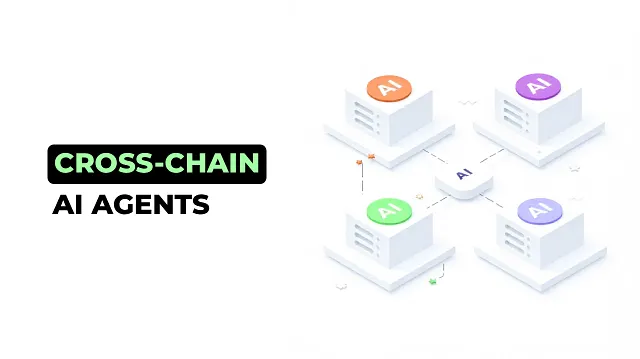
A Complete Guide to Developing Cross-Chain AI Agents

A Complete Guide to Developing Cross-Chain AI Agents

A Complete Guide to Developing Cross-Chain AI Agents In the ever-evolving landscape of Web3 and artificial intelligence (AI), one innovation stands out for its transformative potential — Cross-Chain AI Agents. These intelligent, autonomous systems are designed to operate seamlessly across multiple blockchain networks, enabling true interoperability between decentralized ecosystems. Traditionally, AI and blockchain have existed in parallel realms — AI handling data-driven automation, while blockchain ensures trust, transparency, and decentralization. However, as Web3 matures, these technologies are converging. The emergence of Cross-Chain AI Agents represents a new era of decentralized intelligence, where smart agents can move assets, share data, and make autonomous decisions across various blockchain networks like Ethereum, Solana, Polygon, BNB Chain, and Polkadot. This guide provides a comprehensive, step-by-step overview of how to develop Cross-Chain AI Agents from concept and architecture to implementation and deployment. What Are Cross-Chain AI Agents? Cross-Chain AI Agents are intelligent, autonomous entities capable of performing tasks, executing smart contracts, and making data-driven decisions across multiple blockchain networks. Unlike traditional agents limited to a single chain, these systems are equipped with interoperability protocols that allow them to communicate, transact, and coordinate between different decentralized ecosystems. In essence, they merge AI-driven automation with cross-chain interoperability, resulting in agents that can manage DeFi operations, data exchange, digital identity, and decentralized governance without manual intervention. Why Cross-Chain AI Agents Matter in 2025 and Beyond Interoperability The biggest challenge in blockchain is network isolation. Cross-chain AI agents bridge this gap, enabling smooth communication and transaction flow between multiple chains. Automation in DeFi and Web3 Agents can autonomously perform yield farming, liquidity balancing, or arbitrage trading across chains — making DeFi more efficient. Enhanced Scalability Offloading tasks across different blockchains optimizes performance and reduces congestion on any single network. Smarter Decision-Making AI models embedded in agents analyze multi-chain data, helping in predictive analytics, risk management, and asset optimization. Trustless Execution Blockchain ensures that agent actions are transparent, verifiable, and immutable — eliminating the need for centralized intermediaries. Core Components of Cross-Chain AI Agents Building Cross-Chain AI Agents involves combining various technological layers. Let’s break them down:

  1. AI Core / Intelligence LayerThis layer is responsible for processing data, learning, and decision-making. It often includes: ✦Machine learning models (TensorFlow, PyTorch) ✦Natural language processing (NLP) ✦Reinforcement learning (for adaptive behavior) ✦Predictive analytics for on-chain data
  2. Blockchain Integration LayerThis enables interaction with multiple chains using: ✦Interoperability protocols like Cosmos IBC, Polkadot Parachains, ✦LayerZero, or Chainlink CCIP. ✦Smart contracts that allow automated asset transfers or data exchange between chains. ✦Bridges and oracles that provide cross-chain data and liquidity flow.
  3. Smart Contract LayerThis handles the logic behind the agent’s operations: ✦Executes pre-defined conditions (e.g., “If token price drops by 5%, move liquidity”) ✦Controls fund movement securely ✦Records agent actions on-chain for auditability
  4. Communication LayerAI agents need real-time communication to function effectively. This involves: ✦Message passing protocols (XMTP, Waku) ✦Decentralized storage systems (IPFS, Arweave) ✦APIs that enable cross-chain coordination
  5. Security LayerAs agents act autonomously across networks, security is paramount: ✦Use of zero-knowledge proofs (ZKPs) for private computation ✦Multi-signature wallets for secure transactions ✦Decentralized identity (DID) systems for authentication Step-by-Step Process to Develop Cross-Chain AI Agents Step 1: Define Purpose and Use CaseBefore development, define your agent’s objective: DeFi Arbitrage Agent: Moves assets across blockchains to exploit price differences. Data Exchange Agent: Shares verified data between decentralized apps. Governance Agent: Participates in DAO voting across multiple ecosystems. NFT Cross-Chain Agent: Manages NFTs across marketplaces and blockchains. Having a clear purpose helps in choosing the right architecture and tools. Step 2: Choose a Cross-Chain Framework To enable multi-chain operations, select an interoperability framework: Cosmos IBC (Inter-Blockchain Communication): Enables cross-chain message passing. Polkadot Parachains: Provides shared security and seamless interoperability. LayerZero Protocol: Offers low-latency cross-chain communication. Chainlink CCIP (Cross-Chain Interoperability Protocol): Facilitates secure messaging and data sharing between chains. Your choice depends on the agent’s function — real-time DeFi execution, governance, or data transfer. Step 3: Develop the AI Engine Use AI frameworks to power the intelligence behind your agent: TensorFlow / PyTorch: For predictive modeling and learning algorithms. LangChain or AutoGPT frameworks: To enable autonomous reasoning and multi-step task execution. OpenAI APIs: To integrate conversational and decision-making capabilities. Train your AI engine on both on-chain and off-chain data to help it make informed decisions. Step 4: Design Smart Contracts for Multi-Chain Execution Smart contracts are the operational backbone of Cross-Chain AI Agents. Key components: ✦Asset management contracts for liquidity or staking. ✦Execution contracts to trigger cross-chain functions. ✦Reputation contracts to rate agent performance. These contracts should be modular, auditable, and interoperable with multiple chains. Step 5: Implement Data and Token Bridges Agents must be able to transfer assets or information seamlessly. ✦Integrate token bridges like Wormhole, Multichain, or Axelar for asset movement. ✦Use oracle networks (Chainlink, Pyth) for real-world data. ✦Store metadata or training results using IPFS or Filecoin. This ensures your Cross-Chain AI Agents can access decentralized resources efficiently. Step 6: Deploy and Test in Multi-Chain Environments Testing is crucial before going live: ✦Simulate cross-chain operations in testnets (Goerli, Mumbai, Kusama). ✦Validate contract performance, agent decision accuracy, and interoperability. ✦Perform stress testing to ensure scalability and security. Once validated, deploy to mainnets with appropriate monitoring tools. Step 7: Integrate Governance and Incentives A decentralized marketplace for AI agents thrives on incentives: ✦Introduce native tokens to reward agent contributions and transactions. ✦Use staking models to ensure reliability and reduce malicious actions. ✦Implement DAO governance so the community can propose updates or new features. Step 8: Build a User Interface and SDK To make Cross-Chain AI Agents accessible, create an intuitive dashboard: ✦Display active agents, performance metrics, and transaction logs. ✦Enable users to deploy or customize their own AI agents. ✦Offer SDKs or APIs for developers to integrate new features. ✦A user-friendly interface increases adoption and trust. Key Benefits of Cross-Chain AI Agents Interoperable Ecosystem Connects multiple blockchain networks, ensuring data and value flow without barriers. Autonomous Operation Agents execute smart contracts, analyze data, and act without human intervention. Enhanced Security and Transparency Blockchain ensures that every agent action is verifiable and tamper-proof. Scalable AI Infrastructure Distributes workloads across chains for better efficiency and lower costs. Decentralized Intelligence AI models operate in a trustless, transparent environment — ensuring fairness and accountability. Use Cases of Cross-Chain AI Agents
  6. Decentralized Finance (DeFi)Agents can automate yield optimization, liquidity provision, or arbitrage trading across multiple DEXs and chains.
  7. Decentralized Data MarketsFacilitates secure, privacy-preserving data sharing between platforms like Ocean Protocol and Fetch.ai.
  8. DAO GovernanceAgents vote and execute governance decisions autonomously across multi-chain DAOs.
  9. NFT and Gaming EcosystemsAI agents manage cross-chain NFT transfers, asset tracking, and player interactions.
  10. Supply Chain and IoTSmart agents monitor logistics data across private and public blockchains, ensuring traceability and automation. Security Considerations for Cross-Chain AI Agents Security challenges increase with cross-chain operations. Address them through: Audited Smart Contracts: Prevent exploits through third-party code audits.ZK-Proofs: Protect user privacy during computations.Multi-Signature Controls: Require multiple approvals for high-value transactions.Decentralized Identity (DID): Verify and authenticate AI agent identities. By embedding these safeguards, Cross-Chain AI Agents can operate securely in complex environments. The Future of Cross-Chain AI Agents The next generation of Cross-Chain AI Agents will likely feature: ✦Self-learning capabilities using reinforcement learning on-chain. ✦Integration with DePIN (Decentralized Physical Infrastructure Networks) for real-world automation. ✦AI marketplaces where agents can buy, sell, and rent intelligence services. ✦Agent-to-Agent commerce, allowing autonomous trading between digital entities. As AI and blockchain ecosystems continue to merge, these agents will become the backbone of decentralized digital economies — powering everything from finance and logistics to metaverse and healthcare applications. Conclusion Building Cross-Chain AI Agents marks a significant step toward achieving fully interoperable, autonomous, and decentralized digital ecosystems. By combining the intelligence of AI with the trustless architecture of blockchain, developers can create agents capable of operating seamlessly across chains — driving efficiency, transparency, and scalability in Web3 applications. From developing smart contracts to deploying interoperability frameworks, the journey to building cross-chain AI agents requires a deep understanding of blockchain mechanics, AI architecture, and decentralized governance. But those who master it today will be the pioneers of tomorrow’s autonomous Web3 world — where machines collaborate, transact, and evolve across networks without human oversight.
A Complete Guide to Developing Cross-Chain AI Agents was originally published in Coinmonks on Medium, where people are continuing the conversation by highlighting and responding to this story

Author: Medium
RedStone–Kalshi pact puts regulated prediction data on 110+ blockchains

RedStone–Kalshi pact puts regulated prediction data on 110+ blockchains

Oracle provider RedStone has integrated event-driven market data from Kalshi across more than 110 networks. The rollout covers Ethereum, Solana, Base, TON, Sui, and other chains. As a result, decentralized applications can query regulated event outcomes directly onchain. The feeds include elections, interest-rate decisions, and cultural moments like Taylor Swift live TV appearances. Developers can […] The post RedStone–Kalshi pact puts regulated prediction data on 110+ blockchains appeared first on CoinChapter.

Author: Coinstats
Kalshi Taps RedStone to Bring Real-World Event Data On-Chain

Kalshi Taps RedStone to Bring Real-World Event Data On-Chain

The post Kalshi Taps RedStone to Bring Real-World Event Data On-Chain appeared on BitcoinEthereumNews.com. Kalshi is finally going on-chain through a new partnership with RedStone, just as Polymarket gears up for its U.S. return. Kalshi, the first CFTC-regulated prediction market, is teaming up with oracle data provider RedStone to make it possible to place bets on-chain across more than 110 networks, including Ethereum, Solana, Base, and TON. In a press release shared with The Defiant, RedStone said that DeFi developers could use real-world data to create smart contracts that will be able to read and respond to actual events like who wins an election or how the Fed moves on interest rates. At launch, however, the rollout starts with three data categories: the New York City Mayoral Election, the 2028 Democratic Nominee, and the number of rate cuts in 2025, with more markets expected to follow as developers start using the data. “Kalshi has built one of the most credible sources of regulated event data, but making that data useful on-chain requires robust oracles,” said Marcin Kazmierczak, co-founder of RedStone, adding that the company wants to make this data “as dependable and easy to build with as price feeds, so developers can design financial applications that respond directly to real-world events.” Kalshi daily and cumulative volume. Source: Kalshi Data According to Kalshi Data, which tracks the platform’s statistics, Kalshi saw over $109 million in trading volume on Oct. 22, with cumulative volume reaching over $12 billion to date. Kalshi received approval from the Commodity Futures Trading Commission (CFTC) to operate as a prediction market in the U.S. back in 2020, but the firm had no explicit crypto ambitions at the time. Kalshi began accepting crypto for deposits last year, and revealed its crypto push in earnest this summer, hiring John Wang as its head of crypto, and recently raising $300 million from VCs with…

Author: BitcoinEthereumNews
RedStone Oracle Partners with Kalshi to Bring Prediction Markets On-Chain

RedStone Oracle Partners with Kalshi to Bring Prediction Markets On-Chain

PANews reported on October 23rd that according to Crowdfundinsider, the prediction market platform Kalshi has reached a cooperation with the oracle service provider RedStone to connect Kalshi's platform to more than 110 blockchain networks. By connecting to Kalshi's market, developers can obtain real-time event data from numerous blockchain networks.

Author: PANews
RedStone brings Kalshi’s predictive market data on-chain to over 110 blockchains

RedStone brings Kalshi’s predictive market data on-chain to over 110 blockchains

RedStone, the fastest-growing oracle network in the DeFi landscape, has announced a significant collaboration with Kalshi.

Author: The Cryptonomist
Best Crypto to Buy Now as Crypto RWA Hits $8.3 Billion

Best Crypto to Buy Now as Crypto RWA Hits $8.3 Billion

Quick Facts: 1️⃣ Over $8.3B in real-world assets are already tokenized on-chain and growing fast. 2️⃣ Banks like Goldman Sachs and BNY Mellon are integrating blockchain custody for Treasuries and money-market funds. 3️⃣ $HYPER, $BEST, and $LINK are well-positioned to benefit from the next phase of tokenization. 4️⃣ The shift from DeFi vs. TradFi to […]

Author: Bitcoinist
Wall Street Loves These 5 Cryptocurrencies: How Much Could $1,000 Grow if You Held for the Next 6 Months — $KPG Round 3 Presale at $0.029

Wall Street Loves These 5 Cryptocurrencies: How Much Could $1,000 Grow if You Held for the Next 6 Months — $KPG Round 3 Presale at $0.029

Top presale crypto tokens are grabbing attention on Wall Street and show strong growth potential. An investment of one thousand dollars in these assets over the next six months would be able to provide remarkable returns. The best of them is the Mandala Chain $KPG token, which promises a high ROI in the future in […] The post Wall Street Loves These 5 Cryptocurrencies: How Much Could $1,000 Grow if You Held for the Next 6 Months — $KPG Round 3 Presale at $0.029 appeared first on Live Bitcoin News.

Author: LiveBitcoinNews