RWA

RWA (Real World Assets) refers to the tokenization of tangible assets—such as real estate, private credit, and government bonds—on the blockchain. By bringing traditional financial instruments on-chain, RWA protocols like Ondo and Centrifuge provide DeFi users with stable, real-yield opportunities. In 2026, the RWA sector is a multi-trillion-dollar bridge between TradFi and DeFi, enabling fractional ownership and global liquidity for previously illiquid assets. Follow this tag for insights into on-chain credit markets, regulatory compliance, and asset-backed security innovations.

42476 Articles
Created: 2026/02/02 18:52
Updated: 2026/02/02 18:52
Hedera Analysis, BONK Price Action, and Cold Wallet’s Cashback Edge

Hedera Analysis, BONK Price Action, and Cold Wallet’s Cashback Edge

The post Hedera Analysis, BONK Price Action, and Cold Wallet’s Cashback Edge appeared on BitcoinEthereumNews.com. Crypto News Discover Hedera’s chart setup, BONK’s support signals, and Cold Wallet’s presale rewards that may set it apart as the top crypto for 2025. The race for the top crypto for 2025 brings forward very different stories. Some coins are climbing because of strong technical signals, while others are building systems around everyday use. Hedera (HBAR) technical analysis shows a setup pointing toward a breakout, supported by steady action around resistance. BONK price outlook, on the other hand, highlights recovery signs after a sharp pullback, with strong support zones giving it a shot at upside. Yet another option is drawing long-term attention. Cold Wallet isn’t just about price charts, it’s built to reward real usage. Each transaction on the wallet becomes a chance to earn. When comparing technical trades with utility-backed adoption, Cold Wallet offers a different kind of upside heading into 2025. Hedera (HBAR) Charts Point to Breakout Potential Hedera (HBAR) is catching trader interest as the price pushes close to $0.24, a heavy resistance that has held for weeks. If it breaks, targets at $0.30 and even past highs near $0.37 are on the table. Hedera (HBAR) technical analysis shows momentum tools like RSI and MACD sitting neutral, leaving room for a move higher without being stretched. Beyond charts, Hedera keeps growing with regular developer activity and fresh use cases, especially for enterprise-grade solutions. Its speed and low fees keep attracting interest from groups that value reliability over speculation. As a contender for the top crypto for 2025, HBAR blends clear technical setups with steady adoption. It might not match wild meme coin runs, but for traders seeking defined structures and reduced volatility, it stands as a strong candidate. BONK Price Action Builds on Key Support Zone BONK has dropped more than 30% from July highs, but…

Author: BitcoinEthereumNews
Altcoin Season Index: Unveiling the Crucial Shift to Bitcoin Season

Altcoin Season Index: Unveiling the Crucial Shift to Bitcoin Season

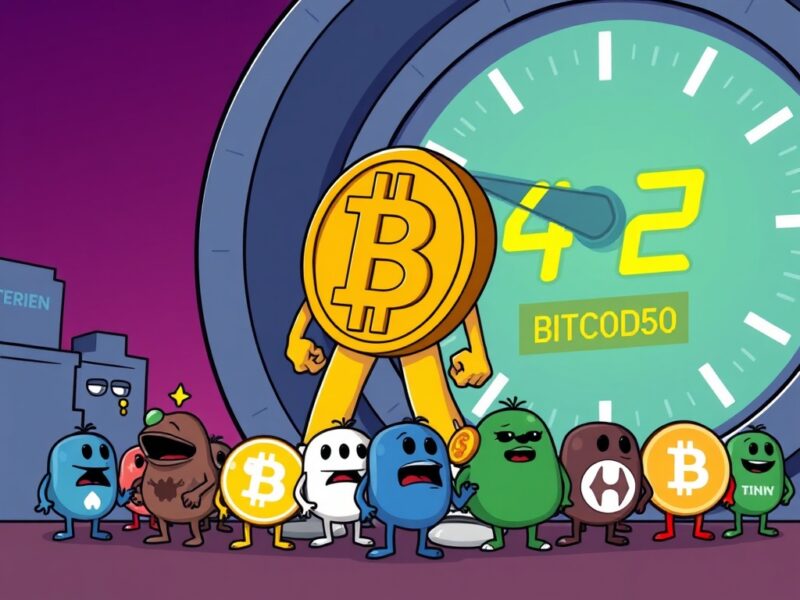
BitcoinWorld Altcoin Season Index: Unveiling the Crucial Shift to Bitcoin Season The cryptocurrency market is a dynamic landscape, constantly shifting between periods where Bitcoin leads the charge and times when altcoins shine. Understanding these cycles is crucial for any investor. Currently, the Altcoin Season Index, a key metric tracked by CoinMarketCap (CMC), indicates a clear shift, pointing towards what many call ‘Bitcoin Season’. What Does the Altcoin Season Index Tell Us? On August 22, at 00:30 UTC, the Altcoin Season Index registered a value of 42. This figure, reported by CoinMarketCap and previously noted by Bitcoin World, represents a slight dip from the previous day, signaling a strengthening Bitcoin dominance in the market. This index is a vital tool for understanding the broader market sentiment and asset performance. The Index’s Core Function: It assesses the performance of the top 100 cryptocurrencies on CoinMarketCap. Crucially, it excludes stablecoins and wrapped tokens to provide a clearer picture of market dynamics. Defining Seasons: The index determines whether the market is in ‘Altcoin Season’ or ‘Bitcoin Season’ by comparing how these top coins have performed relative to Bitcoin over the past 90 days. How is Bitcoin Season Determined by the Altcoin Season Index? The methodology behind the Altcoin Season Index is straightforward yet powerful. It sets clear thresholds to define the prevailing market condition: Altcoin Season: This period is declared when at least 75% of the top 100 altcoins (excluding stablecoins and wrapped tokens) have outperformed Bitcoin over the last 90 days. Think of it as a time when a wide array of alternative cryptocurrencies are seeing significant gains. Bitcoin Season: Conversely, we enter Bitcoin Season when 25% or fewer of these altcoins manage to outperform Bitcoin over the same 90-day period. The current index reading of 42 falls squarely into this category, confirming that Bitcoin is currently the dominant force. The index itself ranges from 1 to 100. A lower number suggests stronger Bitcoin dominance, while a higher number indicates altcoin outperformance. The current 42 clearly points to Bitcoin leading the pack. Navigating the Current Bitcoin Season: What Does it Mean for Investors? Understanding the implications of the current Bitcoin Season, as indicated by the Altcoin Season Index, is essential for informed decision-making. When Bitcoin dominates, it often means: Capital Flow: Investors may be consolidating their capital into Bitcoin, viewing it as a safer or more stable asset during uncertain times, or anticipating a major Bitcoin price movement. Reduced Altcoin Volatility (Relative): While altcoins can still be volatile, their relative performance against Bitcoin tends to be weaker. They might not see the explosive growth characteristic of an Altcoin Season. Market Bellwether: Bitcoin’s price action often dictates the overall direction of the market. A strong Bitcoin run can sometimes precede a broader market recovery, eventually lifting altcoins. For those holding altcoins, this period might present challenges, as their portfolios may lag behind Bitcoin’s performance. However, it can also be an opportunity to reassess and strategize. Strategic Insights During Bitcoin Season When the Altcoin Season Index signals Bitcoin Season, investors can consider several approaches. This isn’t financial advice, but rather observations based on market trends: Focus on Bitcoin: Some investors may choose to increase their Bitcoin holdings, riding the wave of its dominance. Re-evaluate Altcoin Holdings: It might be a good time to review altcoin portfolios, perhaps divesting from weaker performers or projects with less fundamental strength. Research for Future Opportunities: Use this period to research promising altcoin projects that could thrive once the market sentiment shifts back towards altcoins. Strong fundamentals and innovative technology remain key. The market is cyclical, and understanding the signals from metrics like the Altcoin Season Index can provide a significant edge. While Bitcoin currently holds the reins, market conditions can change, and being prepared for future shifts is always wise. The Altcoin Season Index at 42 confirms that we are firmly in a Bitcoin Season. This means Bitcoin has been outperforming most of the top altcoins over the last 90 days. For crypto enthusiasts and investors, this metric offers a crucial snapshot of the market’s current state, guiding decisions and expectations. While the crypto landscape is ever-evolving, staying informed with reliable data from sources like CoinMarketCap allows participants to navigate these cycles with greater confidence and foresight. Frequently Asked Questions (FAQs) Q1: What is the Altcoin Season Index? The Altcoin Season Index is a metric from CoinMarketCap that tracks the performance of the top 100 cryptocurrencies (excluding stablecoins and wrapped tokens) against Bitcoin over the past 90 days to determine if the market is in ‘Altcoin Season’ or ‘Bitcoin Season’. Q2: How is Altcoin Season defined by the index? Altcoin Season occurs when at least 75% of the top 100 altcoins have outperformed Bitcoin over the last 90 days. Q3: What does an Altcoin Season Index of 42 signify? An index value of 42 indicates that 25% or fewer of the top 100 altcoins have outperformed Bitcoin over the past 90 days, meaning the market is currently in Bitcoin Season. Q4: What are the implications of a Bitcoin Season for altcoin holders? During Bitcoin Season, altcoins generally tend to underperform Bitcoin. This means altcoin portfolios might see less growth compared to Bitcoin, and capital may flow more towards Bitcoin as the dominant asset. Q5: How often does the Altcoin Season Index update? The Altcoin Season Index is updated regularly, providing a near real-time snapshot of market conditions, though the 90-day lookback period remains constant for its calculation. Did you find this article insightful? Share it with your friends and fellow crypto enthusiasts on social media to help them understand the current market dynamics! To learn more about the latest crypto market trends, explore our article on key developments shaping Bitcoin price action. This post Altcoin Season Index: Unveiling the Crucial Shift to Bitcoin Season first appeared on BitcoinWorld and is written by Editorial Team

Author: Coinstats
Bitcoin Investor Loses $91 Million to Social Engineering Scam: ZachXBT

Bitcoin Investor Loses $91 Million to Social Engineering Scam: ZachXBT

The post Bitcoin Investor Loses $91 Million to Social Engineering Scam: ZachXBT appeared on BitcoinEthereumNews.com. In brief An investor lost 783 Bitcoin—$91 million worth a the time—to a social engineering scam, according to on-chain sleuth ZachXBT. The threat actor allegedly used a coin-mixing service to try to cover their tracks. ZachXBT alleged that three individuals used similar tactics to steal $243 million worth of Bitcoin a year ago. A crypto investor lost 783 Bitcoin—valued at $91 million at the time of the attack—on Tuesday after falling victim to a social engineering scam, according to the pseudonymous blockchain sleuth ZachXBT. The investigator said in a message on Telegram that the victim was approached by individuals impersonating customer support representatives for a hardware wallet manufacturer and a cryptocurrency exchange. The investigator did not identify the impersonated companies in question. As of this writing, 783 Bitcoin is worth about $88 million, with the price of BTC falling in recent days. The threat actor made several deposits to Wasabi Wallet, a privacy-focused Bitcoin “mixer” that suspended its services for U.S. users last year, as “the stolen funds began to peel off” across multiple digital wallets, according to ZachXBT.  Social engineering attacks can be lucrative in the cryptosphere. ZachXBT noted in the message that Tuesday’s loss took place exactly a year after he alleged three individuals stole 4,064 BTC, worth $243 million at the time, from a separate unnamed individual using similar tactics. Two individuals were arrested in connection to the scheme in Florida a month later, after allegedly spending the funds on luxury cars, watches, and real estate. Targeting a creditor of collapsed crypto lender Genesis, they allegedly impersonated members of Google’s support team, convincing the victim to adjust their two-factor authentication settings. On Aug 19, 2025 a victim fell for a social engineering scam and lost 783 BTC ($91M) after exchange and hardware wallet customer support were…

Author: BitcoinEthereumNews
Canada Industrial Product Price (MoM) registered at 0.7% above expectations (0.3%) in July

Canada Industrial Product Price (MoM) registered at 0.7% above expectations (0.3%) in July

The post Canada Industrial Product Price (MoM) registered at 0.7% above expectations (0.3%) in July appeared on BitcoinEthereumNews.com. Information on these pages contains forward-looking statements that involve risks and uncertainties. Markets and instruments profiled on this page are for informational purposes only and should not in any way come across as a recommendation to buy or sell in these assets. You should do your own thorough research before making any investment decisions. FXStreet does not in any way guarantee that this information is free from mistakes, errors, or material misstatements. It also does not guarantee that this information is of a timely nature. Investing in Open Markets involves a great deal of risk, including the loss of all or a portion of your investment, as well as emotional distress. All risks, losses and costs associated with investing, including total loss of principal, are your responsibility. The views and opinions expressed in this article are those of the authors and do not necessarily reflect the official policy or position of FXStreet nor its advertisers. The author will not be held responsible for information that is found at the end of links posted on this page. If not otherwise explicitly mentioned in the body of the article, at the time of writing, the author has no position in any stock mentioned in this article and no business relationship with any company mentioned. The author has not received compensation for writing this article, other than from FXStreet. FXStreet and the author do not provide personalized recommendations. The author makes no representations as to the accuracy, completeness, or suitability of this information. FXStreet and the author will not be liable for any errors, omissions or any losses, injuries or damages arising from this information and its display or use. Errors and omissions excepted. The author and FXStreet are not registered investment advisors and nothing in this article is intended…

Author: BitcoinEthereumNews
Are Gas Prices Falling Because U.S. Oil Production Is Surging?

Are Gas Prices Falling Because U.S. Oil Production Is Surging?

The post Are Gas Prices Falling Because U.S. Oil Production Is Surging? appeared on BitcoinEthereumNews.com. WASHINGTON, DC – APRIL 08: U.S. President Donald Trump holds an executive orders after signing a series of orders on American energy production during a ceremony in the East Room of the White House on April 08, 2025 in Washington, DC. The Trump administration has elected to roll back Biden-era environmental policies with the intention to help revive coal-fired plants in order to restore America’s energy independence. Trump was joined by Energy Secretary Chris Wright. (Photo by Anna Moneymaker/Getty Images) Getty Images Simple answers are easy, but often wrong. The real ones take context, and a little more work. Below I provide the context for the question in the title, if you put in the work to read and understand. I was recently forwarded a link to a story at an NBC affiliate in Montana–’Drill, baby, drill’: Gas prices might drop below $3 by end of 2025–that purports to connect the recent drop in gasoline prices with President Trump’s pro-energy policies. The first line of the article states: “There has recently been a surge in oil and gas production thanks to President Donald Trump’s pro-energy policies.” Before we zoom in on recent oil production, it may be helpful to step back and look at the major oil production events of the past 24 years, shown in the following graphic. U.S. Oil Production 2000 Through 2024 Robert Rapier There were many events that have impacted oil production since 2000. During President George W. Bush’s two terms, oil production continued the gradual decline that had been ongoing since the early 1970s. However, oil and gas producers were perfecting the marriage of horizontal drilling and hydraulic fracturing, which would usher in the “shale boom”, or “fracking boom” that would soon follow. The price of oil steadily rose during Bush’s presidency–cracking $100 a barrel in February…

Author: BitcoinEthereumNews
Cold Wallet Presale Signals 50x Potential as Hedera Patterns and BONK Strength Attract Attention

Cold Wallet Presale Signals 50x Potential as Hedera Patterns and BONK Strength Attract Attention

The race for the top crypto for 2025 brings forward very different stories. Some coins are climbing because of strong […] The post Cold Wallet Presale Signals 50x Potential as Hedera Patterns and BONK Strength Attract Attention appeared first on Coindoo.

Author: Coindoo
cbBTC’s Astounding Rise: Unpacking Coinbase’s Bitcoin Product and Its DeFi Impact

cbBTC’s Astounding Rise: Unpacking Coinbase’s Bitcoin Product and Its DeFi Impact

BitcoinWorld cbBTC’s Astounding Rise: Unpacking Coinbase’s Bitcoin Product and Its DeFi Impact The world of synthetic Bitcoin products is witnessing a significant shift. Since its launch in September 2024, Coinbase’s innovative synthetic Bitcoin product, cbBTC, has achieved remarkable growth. This surge marks a pivotal moment, especially as its counterpart, wBTC, experiences a notable decline. What is cbBTC and Why is it Expanding Rapidly? cbBTC, a synthetic Bitcoin product offered by Coinbase, allows users to access Bitcoin’s value within the decentralized finance (DeFi) ecosystem. Launched in September 2024, its journey has been nothing short of impressive. According to data from The Block, cbBTC has grown from a modest 1,000 tokens to more than 30,500 tokens. This represents an astonishing increase of over 160% year to date. Several factors contribute to this rapid expansion: Institutional Backing: As a product from Coinbase, a regulated and trusted exchange, cbBTC likely benefits from institutional confidence and easier access for larger players. Ease of Access: Coinbase’s extensive user base and streamlined integration could be making it simpler for users to acquire and utilize cbBTC within supported DeFi protocols. Market Demand: There is a clear and growing demand for Bitcoin exposure within DeFi, and cbBTC is effectively capturing a significant portion of this market. Is wBTC Losing Its Dominance? The Shifting Landscape In stark contrast to cbBTC’s ascent, Wrapped Bitcoin (wBTC), which has long been the largest synthetic Bitcoin product on Ethereum, is facing a significant challenge. Since the debut of cbBTC, wBTC’s supply has fallen by 17%. Furthermore, its supply is down 4% so far this year. This decline signals a potential shift in the synthetic Bitcoin market dynamics. Why might wBTC be experiencing this downturn? Competition: The emergence of strong competitors like cbBTC naturally fragments the market. Market Sentiment: Broader market trends and user preferences may be influencing the choice between different synthetic Bitcoin options. Centralization Debates: While wBTC has its own centralized aspects, the discussion around centralization in general could be leading some users to explore newer alternatives or reconsider their holdings. Understanding the Centralization Concerns Around cbBTC Despite its impressive growth, cbBTC has not been without its critics. Concerns regarding its centralization and transparency have drawn considerable scrutiny. Prominent figures, including Tron founder Justin Sun, have voiced warnings that cbBTC could pose significant risks to the broader decentralized finance ecosystem. The core of these concerns revolves around: Single Point of Failure: As a product managed by a single entity (Coinbase), critics argue it introduces a centralized risk that goes against the ethos of decentralization. Transparency: Questions arise about the real-time auditing and collateralization mechanisms, which might not be as transparent as some fully decentralized alternatives. Regulatory Influence: A centralized issuer like Coinbase is subject to regulatory pressures, which could, in theory, impact the availability or functionality of cbBTC. These discussions highlight the ongoing tension between institutional involvement and the foundational principles of DeFi. What Does cbBTC’s Expansion Mean for Your Portfolio? The rapid expansion of cbBTC and the concurrent decline of wBTC signal a dynamic and evolving landscape for synthetic Bitcoin. For investors and DeFi participants, understanding these shifts is crucial. While cbBTC offers a new avenue for Bitcoin exposure within DeFi, it also brings a different risk profile compared to more decentralized options. Consider these actionable insights: Diversify: Do not put all your synthetic Bitcoin exposure into one product. Explore different options and understand their underlying mechanisms. Assess Risk: Evaluate the centralization risks associated with cbBTC and how they align with your personal risk tolerance. Stay Informed: The synthetic asset space is constantly changing. Keep abreast of new developments, regulatory changes, and community discussions surrounding these products. The rise of cbBTC is undeniably a major development, showcasing Coinbase’s growing influence in the DeFi space. The cryptocurrency market is always evolving, and the story of cbBTC versus wBTC is a compelling example of innovation meeting traditional structures. While cbBTC’s impressive growth underscores a strong demand for institutionally-backed synthetic assets, the critical discussions around centralization are vital. As the DeFi ecosystem matures, the balance between accessibility, trust, and true decentralization will continue to shape the future of products like cbBTC. Frequently Asked Questions (FAQs) Q1: What is a synthetic Bitcoin product like cbBTC? A1: A synthetic Bitcoin product is a token that represents the value of Bitcoin on another blockchain, typically Ethereum. It allows Bitcoin holders to participate in DeFi activities without directly moving their native BTC, which operates on its own blockchain. Q2: How does cbBTC differ from wBTC? A2: Both are synthetic Bitcoin tokens, but cbBTC is issued and managed by Coinbase, a centralized exchange, while wBTC is a more community-driven initiative backed by a consortium of custodians and merchants. This difference often leads to varying levels of centralization and transparency. Q3: Why are there concerns about cbBTC’s centralization? A3: Critics argue that because Coinbase controls the issuance and redemption of cbBTC, it introduces a single point of control and potential failure. This goes against the decentralized nature of many DeFi protocols and could lead to censorship or asset freezing under certain circumstances. Q4: What are the benefits of using cbBTC in DeFi? A4: Benefits include leveraging Coinbase’s brand trust and regulatory compliance, potentially lower fees for Coinbase users, and seamless integration within Coinbase’s ecosystem. It offers a straightforward way for their users to get Bitcoin exposure in DeFi. Q5: Should I be worried about wBTC’s decline? A5: While wBTC’s supply has decreased, it remains a significant asset in DeFi. Its decline relative to cbBTC suggests a shift in market preference or new competition, rather than an inherent failure of wBTC itself. Users should always assess their own risk tolerance and diversification strategies. Q6: How does cbBTC impact the overall DeFi ecosystem? A6: cbBTC‘s growth brings more institutional liquidity and users into DeFi, which can be beneficial. However, it also intensifies the debate around centralization and the role of large entities in a decentralized space, potentially influencing how future DeFi protocols are designed and adopted. If you found this article insightful, consider sharing it with your network! Your support helps us continue to deliver timely and relevant cryptocurrency news and analysis. To learn more about the latest crypto market trends, explore our article on key developments shaping Bitcoin institutional adoption. This post cbBTC’s Astounding Rise: Unpacking Coinbase’s Bitcoin Product and Its DeFi Impact first appeared on BitcoinWorld and is written by Editorial Team

Author: Coinstats
California Provides Update On Climate Change Reporting, Opens Public Comment

California Provides Update On Climate Change Reporting, Opens Public Comment

The post California Provides Update On Climate Change Reporting, Opens Public Comment appeared on BitcoinEthereumNews.com. Sacramento California outside the capital building getty In 2023, California passed legislation requiring large companies to file climate change disclosures beginning in 2026 for FY 2025. A year later, Governor Gavin Newsom signed legislation that delayed the releasing of the implementation guidelines for climate reporting until July 1, 2025. However, ambiguities in the law and the complexities of implementing a program made that date unobtainable. A virtual workshop held on August 21 provided more clarity on which companies will be required to report. In September 2023, California approved the Climate Accountability Package, a pair of bills aimed at creating sustainability reporting requirements. Senate Bill 253 required companies that do business in California and have an excess of $1 billion in revenue, defined as “reporting entities”, to submit an annual report for Scope 1 and Scope 2 starting in 2026. Scope 3 reporting will begin in 2027. Senate Bill 261 required companies that do business in California and have an excess of $500 million in revenue, defined as “covered entities”, to submit a biennial climate-related financial risk report. The report is based on the work of the Task Force on Climate-Related Financial Disclosures, established by the Financial Stability Board. The responsibility of drafting specific regulations and implementing the reporting standards was delegated to the California Air Resources Board. CARB was initially given until January 1, 2025 to draft the rules and processes. However, the process of drafting such complex regulations required more time. As a result, the Legislature gave CARB an additional six months to complete the drafting in Senate Bill 219. These three bills have been nicknamed “the 200s” by regulators. On May 29, CARB held a virtual workshop to update stakeholders on the progress of the rulemaking. A second workshop was held on August 21. That workshop brought more…

Author: BitcoinEthereumNews
Solana Founder Scoffs at Meme Craze

Solana Founder Scoffs at Meme Craze

The post Solana Founder Scoffs at Meme Craze appeared on BitcoinEthereumNews.com. Crypto News The Solana (SOL) ecosystem faces an interesting contradiction. While founder Anatoly Yakovenko recently dismissed meme coins as distractions, his network thrives on them. This cognitive dissonance is driving SOL holders toward a more coherent alternative. Layer Brett (LBRETT), an Ethereum Layer 2 project with 7,000% APY staking, offers what Solana cannot. A serious technological foundation that embraces rather than dismisses meme culture. As SOL’s leadership questions the very assets propping up its ecosystem, investors are voting with their wallets. Solana’s (SOL) meme coin paradox Solana’s position in the meme coin space has become increasingly awkward. The network owes much of its recent growth to tokens like BONK and WIF. These assets drove transaction volume, user acquisition, and network activity throughout 2024. Yet the project’s leadership maintains a dismissive stance toward the very ecosystem supporting its growth. This contradiction creates uncertainty for SOL investors. If meme coins truly have no value as Yakovenko suggests, what does that mean for Solana’s primary use case? The network’s frequent outages during meme coin trading surges further complicate matters. Investors are left wondering whether SOL can reliably support the activity driving its adoption. Layer Brett eliminates this cognitive dissonance by fully embracing memes within a robust technical framework. The project acknowledges that meme culture drives adoption while delivering enterprise-grade infrastructure to support it. Why SOL holders are migrating to Layer Brett (LBRETT) The migration from Solana to Layer Brett isn’t about abandoning technology. It’s about finding consistency between philosophy and practice. SOL holders are discovering several advantages in Layer Brett. First is technological reliability. Ethereum Layer 2 offers Solana-like speed without the network outages. Transactions process in seconds with fees under a penny. Matching SOL’s best performance during optimal conditions. Second is staking rewards. While Solana offers modest yields, Layer Brett delivers 7,000%…

Author: BitcoinEthereumNews
Fujifilm Holly Springs pharma factory readies open with J&J, Regeneron

Fujifilm Holly Springs pharma factory readies open with J&J, Regeneron

The post Fujifilm Holly Springs pharma factory readies open with J&J, Regeneron appeared on BitcoinEthereumNews.com. HOLLY SPRINGS, N.C. — A hallway as long as three football fields connects four buildings at Fujifilm Biotechnologies’ new biologics manufacturing plant in Holly Springs, North Carolina. The first two buildings are preparing to open this fall to produce drug substance, essentially the base of biologic drugs, for Fujifilm’s initial customers Regeneron and Johnson & Johnson. The second two facilities are still under construction, with plans to open in 2028. Fujifilm’s timing couldn’t be better, as President Donald Trump threatens to impose tariffs on pharmaceuticals to encourage companies to make more medicines in the U.S. But the plans for this complex were underway well before Trump proposed higher duties. It’s taken five years and more than $3 billion to turn the idea into reality. And it shows how difficult it would be for drugmakers to quickly increase production in the U.S., even with a possible grace period that Trump has floated.  “This is a pharmaceutical manufacturing facility, so everything needs to be safe to put into patients,” said Fujifilm Biotechnologies CEO Lars Petersen. “Everything requires an extreme high technology level, very high cleanability. Everything needs to be documented, everything needs to be approved later on by the authorities. So that process is just extremely tedious.” As companies move to set up more U.S. manufacturing, tariffs may not end up being as big a problem for them as previously thought. The Trump administration on Thursday clarified that under its trade framework with the European Union, pharmaceuticals coming from the bloc would be subject to only a 15% tariff, not a higher one the administration may implement on medicines more generally. Fujifilm’s timeline for opening the Holly Springs site is in line with the industry average of between three and five years to start up a new plant, depending on the complexity,…

Author: BitcoinEthereumNews