Airdrop

An Airdrop is a distribution of free tokens to a community, typically used as a marketing tool or a reward for early protocol adopters and testers. In 2026, the "points-to-airdrop" model has matured into merit-based incentive programs that utilize Sybil-resistance and Proof-of-Humanity to filter out bots. Airdrops remain a primary method for decentralized governance (DAO) bootstrapping. Follow this tag for the latest on retroactive rewards, eligibility criteria, and how to participate in the most anticipated token distributions in the ecosystem.

5491 Articles
Created: 2026/02/02 18:52
Updated: 2026/02/02 18:52
Gateway to Private-Market Investing Just Opened: IPO Genie ($IPO) Presale Is Live

Gateway to Private-Market Investing Just Opened: IPO Genie ($IPO) Presale Is Live

IPO Genie’s $IPO token presale is live, combining AI-driven deal discovery, tokenised equity, and compliance to open private-market investing to everyone.

Author: Blockchainreporter
IPO Genie Launches $IPO- A New Era for Compliant, Intelligent Web3 Investing

IPO Genie Launches $IPO- A New Era for Compliant, Intelligent Web3 Investing

Explore IPO Genie’s $IPO token presale, an AI-driven, compliance-first platform opening private-market investing to Web3 users worldwide.

Author: Blockchainreporter
5 Best Meme Coins to Buy in 2025 Featuring $NNZ

5 Best Meme Coins to Buy in 2025 Featuring $NNZ

The post 5 Best Meme Coins to Buy in 2025 Featuring $NNZ appeared on BitcoinEthereumNews.com. Crypto Presales Discover the 5 best meme coins to buy now. From Dogecoin and SHIB to the rising $NNZ presale, here’s what’s driving hype and real value in 2025. As retail traders pile back into high-volatility tokens, the hunt for the best meme coins to buy is intensifying. The meme sector now exceeds $40 billion in market value, with leaders like Dogecoin ($26.53B) and Shiba Inu ($5.73B) driving most of the daily liquidity. Mid-tier players such as Pudgy Penguins ($918.91M) and dogwifhat ($460.44M) are also accelerating as capital rotates into community-led assets. But the biggest momentum shift is happening in presales. Noomez ($NNZ) has entered Stage 3 at $0.0000151, already attracting 141 holders and $25,334.17 raised as investors move in early. Best Meme Coins to Buy Here are the 5 meme coins you should purchase right away: 1. Noomez ($NNZ) Noomez is the most talked-about early-stage entry this month, thanks to its transparent on-chain design and fast-moving presale. The token surged from $0.000012320 to $0.0000151, triggering Stage 3, where 141 holders have already contributed $25,334.17. Many traders say the time is running out to buy before Stage 4 raises the price again. Noomez uses a 28-stage deflationary presale, where every unsold token is permanently burned and each new stage opens at a higher price. This structure creates visible scarcity at every step and has pushed more buyers in during Stage 3. Key Features: Verified supply, burns, and stage mechanic Stage X Million airdrops at every stage Referral bonus giving 10% to buyer and referrer Narrative-driven roadmap tied to the Noom Gauge The combination of transparency, real mechanics, and early momentum has positioned Noomez as one of the few presale meme tokens with massive upside potential. Early buyers are already sharing referral codes, and many are securing allocations now before Stage…

Author: BitcoinEthereumNews
Whales Are Loading IPO Genie ($IPO) While Others Chase Solana – Is This the Next Millionaire Maker Crypto?

Whales Are Loading IPO Genie ($IPO) While Others Chase Solana – Is This the Next Millionaire Maker Crypto?

If you’ve been paying attention to the market lately, you may have spotted something a little surprising. While most retail investors are chasing Solana’s latest surge, the whales – the quiet, calculated, early money – are focusing their attention somewhere else entirely. They’re accumulating IPO Genie ($IPO) during its presale. Whales don’t move loudly. They […] The post Whales Are Loading IPO Genie ($IPO) While Others Chase Solana – Is This the Next Millionaire Maker Crypto? appeared first on Live Bitcoin News.

Author: LiveBitcoinNews
All Been Crypto — Week 14 Nov 2025

All Been Crypto — Week 14 Nov 2025

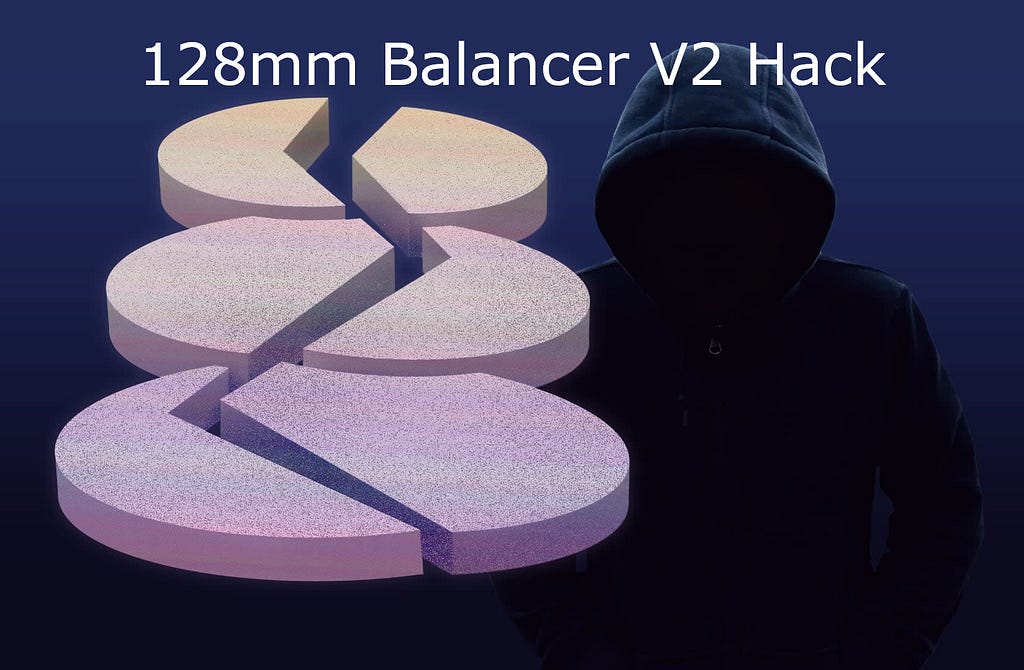
All Been Crypto — Week 14 Nov 2025 Apologies for the missing letter last week — was not that nothing had happened but I was traveling. Been a bloody week this week with many calling for the official end of the bull market after BTC broke below 100k again -4% WoW and ETH at 3200 also -4%. DATs have been a big focus this time with scary headlines of them trading under water and even MSTR now affected. Probably more a gage of the overall sentiment than anything. In the news we had Greyscale filing for IPO, Perp DEX Lighter raised 68mm at a 1.5bn valuation, a Balancer Hack that spooked market and raised concerns about DeFi Vault curators and backdoor deals. Stay safe out there and enjoy reading! Bat Tai Chi — [email protected] HEADLINES: Balancer Hack — Multi-chain Mayhem and DeFi’s Tough Lesson Balancer’s flash loan exploit was like a nasty wake-up call. Over $120 million drained in minutes from interconnected pools across multiple chains: Ethereum, Arbitrum, Berachain, and more. This multi-chain exposure made the impact feel like a tsunami sweeping through DeFi. The attack exploited a vulnerability in Balancer’s “manageUserBalance” function, allowing unauthorized swaps and draining assets rapidly. What’s scary is how quickly the exploit cascaded across networks sharing the same codebase but with different security postures. Berachain for example paused the chain and did a reorg coz the code sat so deep on protocol level while others went for freezing out attackers address. For OG DeFi protocols like Balancer, reputation takes a hit, and confidence in cross-chain operational security drops sharply. This, combined with USDX’s synthetic stablecoin depeg on PancakeSwap and Lista DAO, shows DeFi’s risk disclosure is still weak — with some backdoor deals and emergency liquidations happening behind the scenes. DeFi is maturing, but the scars of trust remain fresh. Non-US Stablecoins Backed by Gold — Central Asia Leads New Era Kyrgyzstan just launched USDKG, a government-issued stablecoin fully backed by physical gold reserves, pegged 1:1 to the USD. Kazakhstan is also eyeing a 1bn crypto reserve fund, using seized assets to back its initiative by 2026. These moves mark a bold push by governments historically skeptical of digital assets to embrace Web3, yet on their own terms. Meanwhile, across the pond, the UK’s Bank of England announced strict stablecoin holding limits — just £20k per coin for individuals and £10mm for businesses. It’s clear regulators remain wary of stablecoins becoming the “new Euro dollars,” nervous about systemic risks and financial sovereignty in the 21st century crypto economy. A fascinating clash between innovation and regulation is unfolding. Coinbase Launches ICO Platform — Back to the ICO Future? November 10 saw Coinbase unveil its new ICO platform aiming to “set a new industry benchmark” for token issuance. The platform promises more sustainable, decentralized token sales, pulling lessons from past frenzies and the rise of airdrop controversies. Bitwise’s Matt Hogan recently highlighted that crypto capital formation is evolving, with institutional flows ramping up but requiring new transparency standards. This comes as debates rage over token allocation disclosures, notably around Wintermute’s market-making. The era of opaque token deals is facing scrutiny like never before — but will institutional and public crypto users find common ground? QUOTES: Haseeb Quershi — Managing partner at Dragonfly Willy Woo Paul Grewal — Chief Legal Officer coinbase All Been Crypto — Week 14 Nov 2025 was originally published in Coinmonks on Medium, where people are continuing the conversation by highlighting and responding to this story

Author: Medium
The 5 Best Meme Coins to Buy? Analyzing Community Hype vs. Real Value (Using $NNZ Token as an Example)

The 5 Best Meme Coins to Buy? Analyzing Community Hype vs. Real Value (Using $NNZ Token as an Example)

As retail traders pile back into high-volatility tokens, the hunt for the best meme coins to buy is intensifying. The […] The post The 5 Best Meme Coins to Buy? Analyzing Community Hype vs. Real Value (Using $NNZ Token as an Example) appeared first on Coindoo.

Author: Coindoo
Quilibrium: Can We Build an Internet That Nobody Owns?

Quilibrium: Can We Build an Internet That Nobody Owns?

In the space of a decade, the internet has gone from “open and wild” to something that often feels tightly controlled. Quilibrium is a Web3 project built around the idea that this doesn’t have to be the deal. Instead of being another financial blockchain or a shiny new token, Quilibrium is trying to rebuild the plumbing of the internet itself: how traffic moves, where data lives, how apps run, and who gets to decide what stays online. Its goal is a network where privacy is built in, scalability isn’t an afterthought, and no single company sits in the middle. What Quilibrium Actually Is At its core, Quilibrium is a decentralized network protocol designed for real-world internet workloads: messaging platforms, social apps, content storage, and even games. Technically, it’s a multi-party computation network. In plain English, that means lots of independent machines around the world cooperate to process data and run applications, but no single machine ever needs to see your raw, private information. The network handles encrypted traffic, storage, and computation in a way that makes spying, censoring, or quietly owning everything far more difficult. If you wanted a shortcut description, you could think of Quilibrium as: rolled into one backbone. What’s Wrong With Today’s Internet? To understand why Quilibrium exists, it helps to look at how the modern web2 is structured. Most of what we do online passes through a few choke points: big cloud providers, large content delivery networks, and centralized platforms. If your app or site sits behind one of them, they effectively hold the keys. A change in rules, a quiet shutdown, or a political decision can remove you from the map. Your data is usually stored in large data centers, often unencrypted or only partially protected. The companies running those centers can scan it, analyze it, sell insights derived from it, or hand it over when asked. The business model of much of Web2 is still simple: collect everything, then figure out how to make money from it. Privacy tends to arrive late in the process, bolted on in the form of “end-to-end encrypted chats” or “private browsing modes” that don’t change the underlying economics. Quilibrium starts from the opposite direction: assume the infrastructure cannot be trusted, and then design a system where even if parts of it are compromised, users and data stay protected. How Quilibrium Works — Minus the Maths Under the hood, Quilibrium uses a combination of new consensus rules, cryptography, and network design. You don’t need to be a developer to grasp the main ideas. Beyond Pointless Mining: Proof of Meaningful Work Bitcoin miners burn electricity solving random puzzles. The work is intentionally useless; the security comes from how hard it is to cheat. Quilibrium keeps the “work secures the network” principle, but changes the nature of that work. In Quilibrium, machines earn rewards by performing useful tasks: validating transactions, executing computations requested by applications, and helping maintain the network’s services. This is called Proof of Meaningful Work. Instead of endless guessing, the energy and hardware go into doing things that directly benefit users. The more verifiable, valuable work a node performs, the more it can potentially earn, so security and utility are tied together. From Chains to Time: A Different Ledger Design Most blockchains are one long chain of blocks; every transaction has to find its place in that single line. That design is simple but becomes a bottleneck when you try to scale to global messaging or social media-level activity. Quilibrium uses something closer to a timechain, a global sequence of proofs that keeps everything in order without forcing every action into one narrow lane. Transactions and computations are timestamped, linked, and verified, but they can be processed in parallel. The result is more throughput and less waiting, which is essential if you want to support chat apps, games, or media platforms. Sharding: Many Lanes, Same Road To avoid one giant traffic jam, Quilibrium splits the network into multiple “shards.” Each shard handles a piece of the workload, its own users, data, and transactions, while still staying coordinated with the rest of the system through the global sequencing. This means the network can scale horizontally. As demand increases, more shards and more nodes can be added without forcing everything through a single bottleneck. It’s the same principle used by high-performance databases and large-scale web services, but applied to a decentralized network. Computing Without Seeing: MPC and Zero-Knowledge Proofs Two cryptographic ideas sit at the heart of Quilibrium’s privacy model. The first is Multi-Party Computation (MPC). Picture several people solving a puzzle together, each holding a different part of the information. They cooperate to reach the answer, but none of them ever sees the full picture. On Quilibrium, multiple nodes can jointly perform a computation — like checking whether a transaction is valid — without any of them getting access to the underlying sensitive data. The second is Zero-Knowledge Proofs. These allow someone to prove a statement is true without revealing the actual data behind it. For example, you can prove you’re old enough to access a service without telling anyone your exact age or date of birth. Quilibrium uses such proofs to verify that computations and transactions are valid, without exposing what’s inside them. Together, these techniques allow the network to function, stay honest, and process useful work while users remain largely invisible at a data level. Built-In Anonymity for Traffic Quilibrium doesn’t stop at encrypting data; it also protects the paths that data travels. Borrowing ideas from onion routing and mixnets, the network routes traffic through multiple hops, encrypting and shuffling messages so that it becomes extremely difficult to trace who is talking to whom. This is important not just for privacy, but for censorship resistance. When it’s hard to see where traffic originates and where it’s going, it’s much harder to selectively block specific users, applications, or conversations. The Quilibrium Ecosystem: Tools in the Wild For non-developers, the most interesting part of any protocol is often the app layer: what can you actually use? Quorum Messenger: Private Chat With No Phone Number Quorum Messenger is the first major application built on Quilibrium. It’s a messaging app designed for people who don’t want their communications tied to a phone number or harvested for metadata. Creating an account involves generating a passkey and choosing a display name. There’s no requirement to hand over a SIM card, personal ID, or payment details. Messages are end-to-end encrypted, large group chats are handled efficiently, and the service is built not to log metadata in the background. Mobile versions of Quorum Messenger started rolling out in beta in 2025, with integrations into Farcaster for feeds and mini-apps, and options for privately routed traffic. On the surface, it feels familiar — join groups, chat with friends, — but underneath it runs on a very different kind of infrastructure. QConsole: A Dashboard for the Network QConsole is the main interface for interacting with Quilibrium’s services. Through a web-based dashboard, users and builders can create accounts, view balances, connect to APIs, deploy small websites, and experiment with token creation using the network’s contract language (QCL). It turns what would otherwise be command-line and configuration work into something more approachable: a control panel for storage, keys, and on-network applications. QStorage and QKMS: Storage and Keys With Privacy in Mind QStorage acts as Quilibrium’s decentralized storage layer. It uses a familiar “bucket” model — similar to Amazon S3 — but the contents are encrypted and spread across the network’s shards and nodes. The system is designed to handle large volumes of media and data without relying on a single location or provider. QKMS (Key Management System) is where cryptographic keys are generated, stored, and managed. Instead of keys sitting in a single vault, QKMS uses the same multi-party computation techniques to keep them safe even while they’re being used. This is crucial for things like secure token transfers, shared access to resources, and long-term account security.The Quilibrium Ecosystem: Tools in the Wild For non-developers, the most interesting part of any protocol is often the app layer: what can you actually use? The $QUIL Token: Incentives and Economics Quilibrium’s native token, $QUIL, powers the network’s economics. It is not a pre-allocated asset: there was no premine, no venture-capital carve-out, and no early airdrop to insiders. Instead, $QUIL is earned by contributing work to the network through Proof of Meaningful Work. In other words, miners and node operators are rewarded for doing the computational and storage tasks that keep the network running. To interface with the wider crypto ecosystem, a wrapped version $wQUIL exists on Ethereum via a bridge. This allows liquidity and integration with existing DeFi infrastructure, while the core utility remains on the Quilibrium network itself. One of the more unusual aspects of Quilibrium’s tokenomics is its generational issuance model. Instead of fixed halving events, emissions are tied to computational milestones and network difficulty. Each “generation” runs until a target threshold (for example, 100 million iterations in the current one), with issuance gradually slowing as difficulty rises. When the network hits certain hardware and difficulty inflection points, a new generation begins with adjusted parameters. The intent is to keep participation attractive for honest operators over the long term, while avoiding a future where only massive industrial players can profitably secure the network. Over time, as real usage increases, transaction fees are expected to play a larger role in rewarding participants. As with any crypto asset, it’s important to stress that understanding the technology and its purpose should come before any decision about buying or speculating on a token. From Secure Chat to Internet Stack: The Quilibrium Story Quilibrium didn’t begin as a grand plan to redesign the internet. It started with a very specific, very practical problem: how to build a private, secure alternative to mainstream chat platforms. In 2018, developer Cassandra Heart started work on a project initially called Howler, which later evolved into Quorum Messenger. The early focus was on end-to-end encryption, peer-to-peer networking, and giving users a way to communicate without living inside a data-harvesting machine.Cassie Heart — Quilibrium Founder and Dev As the work progressed, a deeper issue became clear. Even if the app itself was private, the underlying infrastructure — the servers, routing, and storage — was still controlled by a small set of powerful intermediaries. That realization pushed the project from “secure messaging app” toward “secure, decentralized internet infrastructure.” In August 2021, that pivot was made explicit. Heart publicly committed Quilibrium to a fully decentralized model aimed at replacing not just chat, but many of the centralized services that modern apps depend on. From 2019 through 2022, the project went through an intense redesign. The simple blockchain-style architecture was replaced with the timechain-like global proof sequencing system, sharding was reworked to allow massive parallelism, and the data layer was rebuilt around a hypergraph model better suited to complex relationships and large-scale storage. In April 2023, Quilibrium ran “The Ceremony”, a global event where participants from almost every non-embargoed country contributed randomness to help seed the network’s cryptographic foundations. That entropy was used to strengthen the security of core functions, making it much harder for any single actor to bias key processes. By late 2023 and early 2024, the protocol entered what the team calls the Dawn and Dusk phases: stress-testing the consensus mechanism, refining cross-platform compatibility, and rolling out features like autoscaling, onion routing, mixnets, and the Ethereum bridge. The Midnight phase brought the first single-shard mainnet online, enabled basic token functions, and launched Quorum Messenger as a live, real-world app. QStorage, QKMS, and QConsole followed, moving Quilibrium from theory into practice. By late 2025, enrollment for version 2.1 is nearing completion, mobile versions of Quorum Messenger are in beta, and the team is looking ahead to future phases — Equinox and Event Horizon — which aim to turn Quilibrium into a full-blown platform for serverless functions, fast distributed databases, encrypted streaming, and even distributed AI model training. Why Quilibrium Matters If You’re Not a Developer For someone who lives in Web2 and only dabbles in Web3, it’s fair to ask: why should any of this matter? The answer is less about the finer points of consensus, and more about what kind of internet you want to live in. Quilibrium is trying to make it possible to: use messaging apps without tying your identity to a phone number or having your social graph quietly mined host content and applications on infrastructure that isn’t owned by a single giant company with opaque moderation policies share data and collaborate online without giving up full visibility into your personal or business information participate in securing the network — and potentially earn — in ways that don’t require custom industrial hardware dedicated to useless number-crunching In other words, it is an attempt to give people modern online services without the usual tradeoff of “convenience in exchange for surveillance.” The Road Quilibrium is still early. Many parts of the ecosystem are in beta, user experience will need refining, and the project faces the same challenges all ambitious protocols do: attracting developers, growing real usage, navigating regulation, and maintaining security over time. It is not a guaranteed success story. But it is a serious attempt to answer a question that more and more people are quietly asking themselves: What if the next version of the internet didn’t belong to anyone, and finally worked for the people using it rather than the platforms mining them? If you’re curious about where Web3 can go beyond speculation and trading, Quilibrium is one of the projects worth watching, not just for its token, but for its willingness to rethink the foundations of how we connect and communicate online. Sources Website: https://quilibrium.com/ Overview of Quilibruim: https://medium.com/%40Qrim/quilibrium-network-a-new-era-in-decentralized-computing-04e8adcb8c31 Wrapped QUIL: https://www.coingecko.com/en/coins/wrapped-quil Quilibrium Documentation: https://docs.quilibrium.com/docs/discover/security-audits-of-quilibriums-cryptographic-protocols/ Quorum Messenger: https://www.quorummessenger.com/ Network Dashboard: https://dashboard.quilibrium.com/ Quilibrium: Can We Build an Internet That Nobody Owns? was originally published in Coinmonks on Medium, where people are continuing the conversation by highlighting and responding to this story

Author: Medium
25 Harsh Truths Every Crypto Trader Needs to Hear

25 Harsh Truths Every Crypto Trader Needs to Hear

You want to make money in crypto? Then stop sugarcoating it. Here are 25 brutal truths no one tells you — but every serious trader eventually learns the hard way.AI Generated Image

  1. Most traders lose money. Because most trade emotions, not data.
  2. Timing beats talent. You can be smart, but if you’re early or late, you’re broke.
  3. Bull markets make fools look like geniuses. Don’t mistake luck for skill.
  4. You will never “catch the bottom.” Stop fantasizing about perfect entries — you’ll miss the move waiting for them.
  5. No one cares about your conviction. The market doesn’t reward beliefs. It rewards execution.
  6. Your ego is your biggest position. And it’s probably the one that’ll wreck you first.
  7. You’re not a long-term investor — you’re coping with losses. Holding isn’t a strategy when it’s just denial.
  8. That influencer you follow? They’re probably dumping on you.
  9. Diversification won’t save you if everything bleeds. In a bear market, correlation goes to one.
  10. If you can’t handle a 50% drawdown, you’re in the wrong game. Volatility is the fee you pay for crypto gains.
  11. Greed and fear aren’t emotions — they’re market cycles. Master them, or get swallowed by them.
  12. The best traders are boring. No hype, no FOMO — just consistent process.
  13. You don’t need more coins. You need more conviction in fewer plays.
  14. Charts don’t predict the future — they map your emotions. Most people read confirmation, not data.
  15. Airdrops and memes won’t make you rich. Discipline and patience will.
  16. Cash is a position. Sometimes the smartest trade is no trade.
  17. You’ll miss multiple 100x runs — and that’s fine. Your job isn’t to catch every rocket. It’s to avoid every crash.
  18. The market doesn’t owe you a recovery. If you blew up, start over — not with revenge trades.
  19. Leverage doesn’t make you a pro. It just speeds up your liquidation.
  20. Don’t fight liquidity. If the big players are selling, your conviction means nothing.
  21. A plan is useless if you can’t stick to it. Execution > strategy > talk.
  22. Nobody went broke taking profits. But everyone went broke chasing one last pump.
  23. You can’t trade if you can’t sleep. If a position ruins your peace, it’s too big.
  24. You’re your own worst enemy. Every bad decision starts with “just this once.”
  25. The goal isn’t to win every trade. It’s to stay in the game long enough to catch the right ones. Final Word: Crypto doesn’t reward passion — it rewards discipline. You can’t control the market, but you can control yourself. And in this space, that’s the only real edge.
What Crypto Traders Need to Do to Stay Strong Bitcoin’s ‘Dead’? This Quiet Phase Could Make You Rich 25 Harsh Truths Every Crypto Trader Needs to Hear was originally published in Coinmonks on Medium, where people are continuing the conversation by highlighting and responding to this story

Author: Medium
Best Crypto Presale to Buy Now For 100x Growth. Which Tokens Are You Still Early On?

Best Crypto Presale to Buy Now For 100x Growth. Which Tokens Are You Still Early On?

The next crypto bull cycle is brewing, and early presale entries are once again becoming the go-to strategy for traders chasing 100x gains. Projects like Opter, BFX, and BDAG still give early buyers a serious edge. Each one targets a different sector of blockchain, but which has the best upside potential? Opter: The future of [...] The post Best Crypto Presale to Buy Now For 100x Growth. Which Tokens Are You Still Early On? appeared first on Blockonomi.

Author: Blockonomi
After a seven-year wait, Aztec finally launched its token, but its return with a privacy narrative has been embroiled in controversy surrounding its initial coin offering (ICO).

After a seven-year wait, Aztec finally launched its token, but its return with a privacy narrative has been embroiled in controversy surrounding its initial coin offering (ICO).

Author: Nancy, PANews As signs of a shift from a bull to a bear market become increasingly apparent in the crypto market, more and more projects, such as Monad, MegaETH, and Meteora, are rushing to launch their own tokens in an attempt to seize the last window of liquidity. Recently, Aztec Network, a once-star project, announced its token launch, returning to the market after seven years, riding the wave of the privacy trend, but its token sale has sparked controversy. TGE's airdrop was absent, and mutual funds with over 70% valuation discounts faced dissatisfaction. After years of waiting and multiple cycles of change, Aztec has finally announced the launch of its own cryptocurrency. On November 13th, Aztec disclosed its token economic model, with a genesis supply of 10.35 billion AZTEC tokens. Of these, 27.26% is allocated to investors and early supporters, 21.06% to the core team, 11.71% to the foundation, 10.73% to ecosystem subsidies, 4.89% to future incentives, 2.41% to Y1 Network Rewards, and the remaining 21.96% (approximately 2.273 billion tokens) is allocated to token sales, including the Phase 2 public auction (14.95%), Uniswap V4 liquidity pools (2.64%), the Phase 1 genesis sequencer sale (1.93%), and Bilateral reservations (2.44%). Tokens will primarily be used for sequencer staking, network governance, and network fee payments. The annual inflation cap will not exceed 20%, determined by governance. As announced by Aztec, it is launching TGE through an AZTEC token sale. The Genesis Sequential round sale will run from 22:00 on November 13 to 22:00 on December 1, while the open auction will take place from 22:00 on December 1 to 22:00 on December 6. This token sale will be conducted based on Uniswap's newly launched Continuous Liquidation Auction (CCA) . This scheme aims to drive liquidity and facilitate open price discovery for newly issued or low-liquidity tokens on Uniswap v4. It operates entirely on-chain, with a single liquidation price set per block. Higher bids are prioritized for execution, and bids at the same price are distributed proportionally, with all successful bidders paying the same price. Proceeds are automatically pooled in v4 after the auction concludes. Aztec is the first project to adopt this mechanism and can opt to use the ZK Passport module for private and verifiable participation verification. However, Aztec's token sale plan has been met with criticism from the community. As a privacy project with substantial funding and high visibility, Aztec was initially a prime target for arbitrageurs, but the official announcement that there would be no airdrops rendered the time and money invested by long-term users meaningless. Instead, Aztec emphasizes community priority, opening up early bidding opportunities to network contributors, including testnet node operators, Aztec Connect users, zk.money users, and active community members. Currently, over 300,000 addresses have been whitelisted. More attention is focused on the valuation and lock-up conditions. Aztec tokens have a starting FDV of $350 million, with a public sale ratio of 14.5%. Although the official statement claims this price represents a discount of approximately 75% to the implied valuation of the latest equity funding round, many community members still believe the valuation is mismatched with the project's current output. Meanwhile, Aztec's initial coin offering (ICO) has been criticized for its long lock-up period. Both the genesis sale (minimum staking requirement of 200,000 AZTEC) and the open auction require a 12-month lock-up period, with tokens from the public auction subject to a governance vote after 90 days to determine whether they should be immediately unlocked. Given the current depressed market sentiment and the poor performance of most projects after their TGE (Time-Based Event), these lock-up conditions amplify the financial risk for participants. It's worth noting that the white paper indicates 0.12% of the tokens (approximately 12.42 million) will be allocated to "non-internal early contributors, community members, and related stakeholders," with most of this distribution to be completed before the token sale begins. Furthermore, for compliance reasons, Aztec requires participants to complete KYC and mint NFTs before entering the auction process. However, this requirement, which contrasts with its privacy narrative, has become another focal point of community discussion. After raising over $100 million, the company is transforming its business and launching its own cryptocurrency to capitalize on the resurgence of the privacy sector. Aztec, a once-popular project, has been dedicated to building privacy solutions on Ethereum since its launch in 2018. Public information shows that Aztec completed four rounds of financing between 2018 and 2022, raising a total of over $119 million. Investors included heavyweight institutions in the industry such as Vitalik Buterin, ConsenSys, Paradigm, a16z, Ethereal Ventures, and Coinbase Ventures. However, despite its large funding and high market attention, Aztec's ecosystem development has not progressed ideally. Especially after Tornado Cash was sanctioned by the US OFAC in 2022, the regulatory risks for the entire privacy-related project sector increased significantly. In March 2023, Aztec announced a business transformation, gradually shutting down its DeFi privacy bridge project, Aztec Connect, and discontinuing the deposit function of zk.money. The official statement indicated that no regulatory agencies had contacted them, and that this move was driven by commercial considerations, shifting their focus to the development of the zero-knowledge universal language Noir and next-generation crypto blockchains. This decision impacted the Aztec ecosystem, which at the time had accumulated tens of millions of dollars in transaction volume and hundreds of thousands of users through Aztec Connect and zk.money. After a period of weakening privacy narratives, Aztec continued to update its products, but market enthusiasm clearly declined. According to DeFi Llama data, Aztec's total value locked (TVL) fell from a peak of $21 million to a low of approximately $4 million. However, the privacy sector began to show signs of recovery at the end of last year. In November 2024, a US court ruled that OFAC's sanctions against Tornado Cash were illegal and removed it from the sanctions list in March of this year, bringing positive signals to crypto privacy projects. Taking advantage of this opportunity, Aztec announced the establishment of its foundation in February of this year, immediately sparking speculation about its token issuance plans. Subsequently, Aztec launched its public testnet, attracting user interaction and driving a rebound in TVL (Total Value Limit). Within just four weeks, the platform saw the development of over 30 new applications, with more than 17,000 node connections. Following this, Aztec also completed network upgrades, expanded its developer ecosystem, and implemented cross-chain and performance optimizations. Recently, with the significant price increases of privacy coins such as Zcash, market attention to the privacy sector has risen again, providing a relatively favorable window of opportunity for Aztec's token launch. However, given the current sluggish crypto market environment and rapidly changing narratives, whether Zcash can sustain its ecosystem development and attract long-term developer and user participation after gaining short-term attention and liquidity through its token launch remains to be seen.

Author: PANews