Lending

Lending protocols form the backbone of the decentralized money market, allowing users to lend or borrow digital assets without intermediaries. Using smart contracts, platforms like Aave and Morpho automate interest rates based on supply and demand while requiring over-collateralization for security. The 2026 lending landscape features advanced permissionless vaults and institutional-grade credit lines. This tag covers the evolution of capital efficiency, liquidations, and the integration of diverse collateral types, including LSTs and tokenized RWAs.

16171 Articles
Created: 2026/02/02 18:52
Updated: 2026/02/02 18:52
Major U.S. Bank Shocks Wall Street With Sudden Pivot Into Crypto Finance

Major U.S. Bank Shocks Wall Street With Sudden Pivot Into Crypto Finance

The post Major U.S. Bank Shocks Wall Street With Sudden Pivot Into Crypto Finance appeared on BitcoinEthereumNews.com. AltcoinsBitcoin A bank that spent decades operating as a traditional community institution in Texas has suddenly reappeared with a very different mission. Now called Monet Bank, the firm has repositioned itself as a crypto-focused financial institution, joining a small but fast-growing group of regulated US banks racing to serve the digital-asset industry. Key Takeaways Monet Bank has fully rebranded into a crypto-focused institution with nearly $6B in assets. The bank positions itself as a digital-asset infrastructure provider under billionaire owner Andy Beal. It joins a new wave of US banks – like Erebor and N3XT – building regulated services for the crypto industry. A Radical Transformation Years in the Making Monet Bank did not start out as a crypto player. The institution opened its doors in 1988 under the name Beal Savings Bank, long before anyone imagined digital currencies. But after decades of quiet community banking, the firm has accelerated through two rapid identity changes — first XD Bank, and now Monet Bank — signaling a strategic pivot into the digital-asset sector. The bank’s owner, Andy Beal, a billionaire investor and long-time supporter of President Donald Trump, is steering the institution into territory that most US banks still avoid. Federal filings show Monet holds just under $6 billion in total assets and roughly $1 billion in capital, giving it the balance sheet needed to pursue specialized services. Positioning Itself as a Digital-Asset Infrastructure Bank Rather than marketing itself as a bank that merely accommodates cryptocurrency accounts, Monet is presenting a more ambitious vision. Its public mission statement describes an institution built to support the architecture of the digital economy, offering business-grade services tailored for companies engaging with blockchain-based finance. The overhaul appears nearly complete: new branding, new positioning, updated regulatory filings, and an infrastructure shift that suggests the bank intends…

Author: BitcoinEthereumNews
Weekly: Ethereum Fusaka Update, BNB Chain Prediction Market and Strategy Problems

Weekly: Ethereum Fusaka Update, BNB Chain Prediction Market and Strategy Problems

The Incrypted editorial team has prepared a fresh weekly digest of key events in the Web3 and AI sphere. In it we will tell you about the launch of the BNB Chain blockchain prediction market, vetoing of the crypto market bill in Poland, problems of crypto-treasury companies, $1.1 billion in illegal mining, Fusaka update on […] Сообщение Weekly: Ethereum Fusaka Update, BNB Chain Prediction Market and Strategy Problems появились сначала на INCRYPTED.

Author: Incrypted
Weekly Preview | The Federal Reserve FOMC announces its interest rate decision; the Stable blockchain mainnet will officially launch on December 8th.

Weekly Preview | The Federal Reserve FOMC announces its interest rate decision; the Stable blockchain mainnet will officially launch on December 8th.

Breaking News Preview: The stablecoin blockchain Stable will launch its mainnet at 21:00 Beijing time on December 8th. At 3:00 AM Beijing time on December 10, the Federal Reserve FOMC released its interest rate decision and summary of economic projections. HashKey Holdings is expected to begin accepting subscription orders from investors for its Hong Kong initial public offering as early as next week; Rainbow will announce the specific timing of TGE early next week; Aptos (APT) will unlock approximately 11.31 million tokens at midnight Beijing time on December 12, representing 0.83% of the circulating supply, with a value of approximately $19.3 million. December 8 France's second-largest banking group, BPCE, will support customers in buying and selling cryptocurrencies starting December 8th. BPCE, France's second-largest banking group, will begin allowing customers to buy and sell cryptocurrencies on its banking app on December 8, 2025. The service will launch initially across four entities within the group (out of a total of 29), belonging to the Banque Populaire and Caisse d'Épargne networks. The service will gradually expand throughout France, reaching BPCE's approximately 35 million retail customers. Currently supported assets include Bitcoin, Ethereum, Solana, and USDC. Project Updates: The Stable mainnet will launch on December 8th at 21:00. Stablecoin blockchain has announced that its mainnet will officially launch at 21:00 Beijing time on December 8th. Jupiter: The HumidiFi (WET) token public sale will resume at 23:00 on December 8th. Jupiter announced on its X platform that the WET public sale phase will restart on December 8th at 11 PM (UTC+8). The public sale phase scheduled for December 4th at 10 AM (Eastern Time) has been cancelled, and all addresses that participated in that phase will receive a refund in USDC. New WET tokens will be deployed, and old WET tokens will become invalid. Users who successfully participated in the Wetlist and Jup Stakers phases will retain their allocated shares and can claim them on TGE day through the DTF claim page. Previously, it was reported that HumidiFi would restart its public sale and airdrop new tokens next Monday, distributing them proportionally to Wetlist and JUP staking users. Blockchain analytics platform Bubblemaps published an article on its X platform stating that it has identified the WET token snipeer, "Ramarxyz," who used over 1000 wallets to purchase 70% of the HumidiFi presale tokens and subsequently demanded refunds. December 9 Macroeconomics: At midnight Beijing time on December 9th, the US released the New York Fed's 1-year inflation forecast for November; Exchange: Binance will support the Polygon (POL) network upgrade and hard fork, and will suspend deposits and withdrawals on December 9th. According to a Binance announcement, in order to support the Polygon (POL) network upgrade and hard fork, the platform will suspend the deposit and withdrawal services of POL network tokens starting at 17:00 (UTC+8) on December 9, 2025. The upgrade is expected to take place at block height 80,084,800 (approximately 18:00 UTC+8). Project Updates: Twenty One Capital will list on the NYSE on December 9. Jack Mallers, CEO of Bitcoin finance company Twenty One Capital, stated on the X platform that Twenty One expects to begin trading on the New York Stock Exchange (NYSE) on December 9th, under the ticker symbol XXI. As part of the transaction completion process, over 43,500 bitcoins will be transferred from escrow accounts to its own custody accounts. Proof of reserves will be updated accordingly. Previously, it was reported that Twenty One would seek to trade under the ticker symbol "XXI" after the business merger was completed. Linea: The airdrop claim window closes on December 9th, and all airdrop tokens are fully unlocked. The Layer 2 project Linea opened its airdrop application window in September this year and ended on December 9. 85% of the total supply of LINEA was allocated to the ecosystem, with 10% allocated to early users and developers, 75% going to the ecosystem fund, and no allocation to the team or VCs. All airdropped tokens were fully unlocked. Token unlocking: BounceBit (BB) will unlock approximately 29.93 million tokens at 8:00 AM Beijing time on December 9th, representing 3.42% of the circulating supply, with a value of approximately $2.7 million. December 10 Macroeconomics: At 3:00 AM Beijing time on December 10th, the Federal Reserve's FOMC released its interest rate decision and summary of economic projections; at 3:30 AM, Federal Reserve Chairman Powell held a press conference on monetary policy. Exchange: Binance Futures will delist several USDT-margined perpetual contracts, including SKATEUSDT and REIUSDT, on December 10th. Binance Futures will automatically liquidate the SKATEUSDT, REIUSDT, FISUSDT and VOXELUSDT U-margined perpetual contracts at 17:00 (UTC+8) on December 10, 2025, and will delist the above perpetual contract trading pairs after the liquidation is completed. Token unlocking: Linea (LINEA) will unlock approximately 1.38 billion tokens at 7 PM Beijing time on December 10th, representing 6.67% of the circulating supply, worth approximately $11.1 million. December 11 Exchange: Binance will delist several FDUSD leveraged trading pairs on December 11. Starting at 14:00 (UTC+8) on December 11, 2025, the platform will remove several cross-margin and isolated margin trading pairs, including PENGU/FDUSD, NOT/FDUSD, FLOKI/FDUSD, and INJ/FDUSD. Isolated margin lending for these pairs will be suspended on December 8, and forced liquidation and liquidation will be triggered on December 11. Binance advises users to close their positions and transfer their assets out of the market in a timely manner to avoid potential losses. Project Updates: Do Kwon faces up to 25 years in prison; sentencing is expected to be announced on December 11. Terraform Labs founder Do Kwon pleaded guilty in New York to conspiracy to commit fraud and wire fraud related to the crash of TerraUSD and Luna, which resulted in approximately $40 billion in losses for investors. Prosecutors allege he concealed the manipulation of TerraUSD prices by high-frequency trading firms, misleading investors. Kwon agreed to pay an $80 million fine and was banned from participating in cryptocurrency trading. Sentencing is scheduled for December 11, with a maximum sentence of 25 years. Prosecutors agreed to recommend a sentence of no more than 12 years after his guilty plea. December 12 Macroeconomics: At 9:00 PM Beijing time on December 12, Paulson, a 2026 FOMC voting member and president of the Philadelphia Federal Reserve, will speak on the economic outlook; at 9:30 PM, Hamak, a 2026 FOMC voting member and president of the Cleveland Federal Reserve, will speak. Project Updates: CNBC: xAI raises $15 billion in Series E funding round, which will close on December 12. According to CNBC, citing sources, xAI has raised $15 billion in its Series E funding round. The round will close on December 12th. Token unlocking: Aptos (APT) will unlock approximately 11.31 million tokens at midnight Beijing time on December 12, representing 0.83% of the circulating supply, with a value of approximately $19.3 million. December 13 Token unlocking: Cheelee (CHEEL) will unlock approximately 20.81 million tokens at 8:00 AM Beijing time on December 13th, representing 2.86% of the circulating supply, with a value of approximately $10.8 million. December 14 None available Specific time to be determined Exchange: Bloomberg: HashKey will begin accepting subscription orders from investors next week for its Hong Kong IPO, aiming to raise at least $200 million. Cryptocurrency trading operator HashKey Holdings Ltd. is expected to begin accepting subscription orders from investors as early as next week for its Hong Kong initial public offering (IPO). HashKey aims to raise at least $200 million in the IPO and plans to list as early as this month, though details such as the IPO size and timing are still subject to change. HashKey did not immediately respond to requests for comment. Project Updates: The Rainbow Foundation will hold a 20% stake in the project, and the specific timing for TGE will be announced early next week. The Rainbow Foundation announced that it will hold a 20% stake in the project during the Token Generation Event (TGE). This stake will be held by the Foundation on behalf of all $RNBW token holders, ensuring that token holders can share in the project's future growth. To this end, Rainbow has created a dedicated Class F stake for the Foundation. The $RNBW token will be deeply integrated into the Rainbow ecosystem, becoming the core of the platform's rewards and equity system. Users will generate income through Rainbow's features (such as trading and prediction markets), with a portion of the revenue used to buy back $RNBW tokens and distribute them to token holders in real time. This reward mechanism is based on real economic activity, not simply token release. If the Rainbow project is acquired in the future, the foundation will be dissolved, and 20% of its equity proceeds will be distributed to $RNBW token holders. Currently, Rainbow plans to announce the specific timeline for TGE early next week and prioritize completing the relevant procedures for the foundation's equity distribution. The prediction market DeFi layer Gondor will launch its beta version next week. Gondor, a prediction market DeFi layer, announced the completion of a $2.5 million funding round. It will launch a beta version next week, which will support lending using Polymarket holdings as collateral and trading with 2x leverage. Later, it will expand the leverage to 4-5x through cross-margining. Doodles has announced that it will release 25,000 Doopie Cubes on Solana next week. Doodles has announced that it will release 25,000 Doopie Cubes on Solana next week, which community OGs and Dooplicators holders can claim for free.

Author: PANews
New DeFi Coin Growth Analysis: Top Crypto Investors See Up to 650% Upside Potential After V1 Activation

New DeFi Coin Growth Analysis: Top Crypto Investors See Up to 650% Upside Potential After V1 Activation

One of the projects in DeFi crypto is emerging and commands a mark of growth, and investors seek high-upside ventures ahead of 2026. As new development progress is proven and the pace of developments builds up, an increasing number of the major crypto traders believe that this new token is about to take one of […]

Author: Cryptopolitan
Ethereum Stablecoin Transfers Near $6T in Q4, Surpassing Visa and Mastercard Volumes

Ethereum Stablecoin Transfers Near $6T in Q4, Surpassing Visa and Mastercard Volumes

The post Ethereum Stablecoin Transfers Near $6T in Q4, Surpassing Visa and Mastercard Volumes appeared on BitcoinEthereumNews.com. Ethereum’s Q4 2025 stablecoin transfers reached nearly $6 trillion, surpassing Q3 volumes and exceeding recent Visa and Mastercard transaction levels, according to Token Terminal data. This surge highlights growing blockchain adoption in financial settlements, driven by major stablecoins like USDT and USDC. Ethereum stablecoin volume hit near $6T in Q4 2025, outpacing Q3 figures early in the quarter. Transfers exceeded recent quarterly volumes from Visa and Mastercard, showcasing blockchain’s efficiency in high-value movements. USDT and USDC accounted for the majority of flows, with over 80% of total activity, per Token Terminal analytics. Ethereum Q4 stablecoin transfers surge to $6T in 2025, topping Visa and Mastercard volumes. Discover key drivers and implications for DeFi. Stay informed on blockchain trends—explore now for investment insights. What Are Ethereum’s Q4 2025 Stablecoin Transfers and Why Do They Matter? Ethereum’s Q4 2025 stablecoin transfers refer to the total value of stablecoin movements on the Ethereum network during the fourth quarter, amounting to nearly $6 trillion as reported by Token Terminal. This figure not only exceeded the previous quarter’s volumes but also surpassed recent transaction levels from traditional payment giants like Visa and Mastercard. The growth underscores the increasing reliance on blockchain for secure, efficient financial settlements in decentralized finance ecosystems. How Did USDT and USDC Contribute to Ethereum’s Stablecoin Surge? USDT (Tether) and USDC (USD Coin) dominated the stablecoin transfers on Ethereum in Q4 2025, comprising the bulk of the nearly $6 trillion in activity. Token Terminal data indicates USDT alone handled over 50% of the flows, facilitating rapid liquidity shifts in DeFi protocols and exchanges. USDC followed closely, supported by its transparency and regulatory compliance, which appealed to institutional users amid rising on-chain demand. Experts from the blockchain analytics firm noted, “The dominance of these dollar-pegged assets reflects a maturing market where stability meets…

Author: BitcoinEthereumNews
Solana’s Jupiter Lend Under Scrutiny for Potential Risk Misrepresentation in DeFi Lending

Solana’s Jupiter Lend Under Scrutiny for Potential Risk Misrepresentation in DeFi Lending

The post Solana’s Jupiter Lend Under Scrutiny for Potential Risk Misrepresentation in DeFi Lending appeared on BitcoinEthereumNews.com. Jupiter Lend risk allegations center on claims of false advertising regarding isolated vaults and rehypothecation practices on Solana, potentially leading to DeFi contagion. Critics argue the platform misled users about zero risk, but executives clarified limited exposure while acknowledging collateral reuse for yields. Backlash stems from Jupiter Lend’s initial ‘zero contagion’ statements, contradicted by evidence of rehypothecation in vaults. Kamino Finance blocked migrations to Jupiter Lend, citing full cross-contamination risks despite advertised isolation. Despite controversy, Jupiter Lend saw $36.5 million in daily inflows on December 6, 2025, with no major outflows reported per DeFiLlama data. Explore Jupiter Lend risk allegations shaking Solana DeFi: false advertising claims, rehypothecation dangers, and market reactions. Stay informed on lending protocol controversies—read now for key insights and takeaways. What Are the Jupiter Lend Risk Allegations? Jupiter Lend risk allegations have emerged in the Solana ecosystem, focusing on accusations of misleading users about the platform’s risk isolation and rehypothecation practices. Critics, including founders from rival protocols like Kamino and Fluid, claim that Jupiter Lend falsely advertised its vaults as completely isolated, potentially exposing the broader DeFi space to contagion during market stress. In response, Jupiter Lend’s co-founder Kash Dhanda admitted the initial “zero contagion” assertion was not fully accurate, emphasizing that while rehypothecation occurs to generate yields on collateral, the risk remains limited and contained at the asset level. This controversy highlights ongoing tensions in decentralized lending, where transparency is crucial for user trust. Rehypothecation, the practice of reusing borrower collateral to pursue additional yields, is common in traditional finance but amplifies risks in volatile crypto markets. Past incidents, such as the November depegging of Stream Finance’s xUSD stablecoin, underscore how such mechanisms can trigger widespread losses during liquidation cascades or rapid redemptions. The allegations gained traction after public statements from industry figures pointed to discrepancies…

Author: BitcoinEthereumNews
‘We have limited risk:’ Jupiter Lend addresses Solana DeFi contagion fears

‘We have limited risk:’ Jupiter Lend addresses Solana DeFi contagion fears

The post ‘We have limited risk:’ Jupiter Lend addresses Solana DeFi contagion fears appeared on BitcoinEthereumNews.com. Jupiter Lend, a leading lending platform on Solana, has faced backlash amid allegations of ‘false advertising’ about risk. According to critics, the platform ‘lied’ about its isolated risk and its rehypothecation could spark a wider DeFi contagion.  Responding to the allegations, Jupiter Lend’s Kash Dhanda acknowledged that the initial ‘zero contagion’ claim from his team was not ‘100% correct’ and added, “There is a very limited risk of contagion…But the vaults are actually isolated, even at each asset level. It is true, there is rehypothecation…this is where the yield on collateral comes from.”  For the unfamiliar, rehypothecation involves a lender reusing a borrower’s collateral, like securities for banks or tokens in the crypto space. This directly increases leverage that can be risky during liquidation events or bank runs (widespread instant redemptions).  Notably, the above risk triggered the depegging of Stream Finance’s yield-bearing stablecoin xUSD and related assets in November. Investors incurred hefty losses. As such, Jupiter Lend critics feared the protocol could expose broader Solana DeFi to a similar explosion.  Kamino slams Jupiter Lend The scrutiny began after Samyak Jain, founder of Fluid, acknowledged that Jupiter Lend vaults re-use users’ collateral for yield hunting and are ‘not completely isolated.’  Marius, founder of another Solana lending DeFi Kamino, noted that Jain’s statement contradicted his (Jupiter Lend) rival’s earlier claims of ‘no contagion’ risk.  For him, this meant “misleading users” and denting trust. As a result, Marius said Kamino blocked a migration tool to Jupiter Lend to mitigate the risk.     “There is no isolation here and full cross-contamination, contrary to what is advertised and what people are being told.” Source: X For Tushar Jain, Managing Partner at Multicoin Capital, the team at Jupiter was either ‘incompetent’ or ‘misleading users to attract deposits.’  Market reactions Despite the crisis, there were no massive outflows…

Author: BitcoinEthereumNews
PA Daily | Jupiter and Kamino, lending platforms, are embroiled in internal strife over risk disclosure; Li Feng, co-founder of Moore Threads, touted as the "first domestic GPU stock," is accused of i

PA Daily | Jupiter and Kamino, lending platforms, are embroiled in internal strife over risk disclosure; Li Feng, co-founder of Moore Threads, touted as the "first domestic GPU stock," is accused of i

Today's top news highlights: 1. Macroeconomic Outlook for Next Week: A highly controversial rate cut by the Federal Reserve is imminent, triggering significant volatility in gold prices. 2. South Korea plans to legislate to require virtual asset operators to bear "no-fault liability" for hacker attacks. 3. Li Feng, co-founder of Moore Threads, touted as the "first domestically produced GPU stock," has been exposed for issuing cryptocurrency to raise funds and defaulting on a loan of 1,500 BTC. 4. Analyst: Bitcoin on-chain activity is rising, demand remains positive, and this cycle may not be over yet. 5. Jupiter's Chief Operating Officer admitted that its lending product Jupiter Lend's claim of "zero risk of infection" was false. 6. Binance responded to questions about the timing of its official Twitter post being close to the launch of its token, stating that it has launched an internal review. Macro Macroeconomic Outlook for Next Week: A highly controversial rate cut by the Federal Reserve is imminent, triggering significant volatility in gold prices. With US economic data such as the ADP Nonfarm Payrolls and PCE largely supporting expectations of a Federal Reserve rate cut next week, Wall Street's panic was short-lived, and investors returned to betting on low volatility and high certainty in risk assets. The Fed's interest rate decision will be the focus next week, and following recent weak US employment data, the market widely expects the Fed to lower rates. Here are the key points the market will be watching in the new week: At 0:00 on Tuesday, the US November New York Fed 1-year inflation forecast will be released. At 23:00 on Tuesday, the US October JOLTs job openings will be released. At 3:00 AM on Wednesday, the Federal Reserve FOMC will release its interest rate decision and summary of economic projections; at 3:30 AM, Federal Reserve Chairman Powell will hold a press conference on monetary policy. At 21:30 on Thursday, the US initial jobless claims for the week ending December 6 and the US trade balance for September will be released. At 1:00 AM on Friday, the Federal Reserve will release data on the financial health of U.S. households in its Q3 2025 Flow of Funds report. At 21:00 on Friday, Paulson, a 2026 FOMC voting member and president of the Philadelphia Federal Reserve, will speak on the economic outlook; at 21:30, Hamak, a 2026 FOMC voting member and president of the Cleveland Federal Reserve, will speak. At 11:35 p.m. on Friday, Chicago Federal Reserve President Goolsby participated in a moderator's dialogue before the 39th annual economic outlook symposium of the Chicago Federal Reserve. The Federal Reserve's September dot plot hinted at two rate cuts in 2026. In contrast, the market currently expects 63 basis points of easing in 2026, meaning a greater likelihood of three rate cuts next year. Caixin: Last year, 3,032 people were prosecuted for money laundering related to cryptocurrencies; establishing a firewall against virtual currencies is necessary to protect normal economic and trade activities. Caixin.com published an article titled "Building a Firewall Against Virtual Currency to Protect Public's 'Wallets'," which points out that recent speculation in virtual currencies has resurfaced. Establishing a firewall against virtual currencies requires not only the full cooperation of various departments but also the improvement of relevant regulations, enhanced supervision, strengthened technical monitoring capabilities in key areas, and protection of normal economic and trade activities. Data shows that in 2024, relevant departments prosecuted 3,032 people for money laundering crimes, including using virtual currencies to transfer criminal proceeds. Many were drawn into these crimes due to a lack of legal awareness. A scholar's analysis of 283 judgments in cases of money laundering using virtual currencies revealed that criminal groups heavily exploit marginalized youth as tools for their crimes, exhibiting significant geographical clustering and a predominantly high school or junior high school education. South Korea plans to legislate to require virtual asset operators to bear "no-fault liability" for hacker attacks. South Korea's Financial Services Commission is reviewing a plan to add a clause to the draft "Second Phase of Virtual Asset Legislation," which would hold virtual asset operators liable for damages even if they are not at fault in the event of a hacking attack or computer accident. The plan aims to impose the same "no-fault liability" on operators of virtual asset exchanges as financial companies in response to hacking attacks or computer accidents. From 2023 to September 2025, the five major South Korean won exchanges (Upbit, Bithumb, Coinone, Korbit, and GOPAX) experienced a total of 20 computer system incidents. Furthermore, a plan is currently under discussion to increase penalties for hacking incidents to the level stipulated in the Electronic Financial Transactions Act. The South Korean National Assembly is currently reviewing an amendment to the Electronic Financial Transactions Act, which proposes fines of up to 3% of a financial institution's sales revenue for hacking attacks. If this bill is passed, virtual asset operators could also face similar fines. Currently, the maximum fine for virtual asset operators is 5 billion won. Market news: French bank BPCE has allowed customers to buy and sell cryptocurrencies. According to market sources, French bank BPCE has allowed its customers to buy and sell cryptocurrencies. Opinion Vitalik: A trustless on-chain gas futures market needs to be established. Vitalik Buterin stated in an article on the X platform that the industry urgently needs a "trustless on-chain gas futures market," similar to a "base fee prediction market," to address users' uncertain expectations regarding future fee trends. An on-chain gas futures market can clearly understand people's expectations of future gas fees and can even hedge against future gas prices, effectively prepaying a specific amount of gas for a specific period. Analysis: Bitcoin's profitability indicator has fallen to a two-year low, potentially indicating that a local bottom is forming. CryptoQuant, an on-chain analytics platform, reported that the Bitcoin SOPR ratio (LTH-SOPR / STH-SOPR) has fallen to 1.35, its lowest level since early 2024. This drop coincides with Bitcoin's price correction to around $89,700. A higher ratio typically indicates that long-term holders (LTH) are actively profiting compared to short-term holders (STH). The plunge to 1.35 suggests that the large-scale distribution phase of older cryptocurrencies has significantly subsided. The gap in actual returns between experienced and new entrants is narrowing. This decline indicates that the market is undergoing a large-scale "reset," and the speculative bubble that previously drove the ratio up has been deflated. Historically, when the SOPR ratio falls to these lower limits during an overall bull market cycle, it typically indicates that the selling pressure is nearing its end. If the ratio stabilizes or rebounds from the 1.35 level, it may suggest that a local bottom is forming, laying a more solid foundation for the next round of gains. Bloomberg ETF analyst: Even if Bitcoin performs poorly in 2025, occasional cooling of the asset is normal. Bloomberg ETF analyst Eric Balchunas wrote that, looking back at Bitcoin's performance over the past year, it has actually (at least so far) only retraced last year's extreme gains. It has risen 122%, five times the price of all other assets. Therefore, even if 2025 ends up being a flat or slightly declining year, as long as it still maintains an average annual gain of around 50%, Bitcoin will still be able to retain its value. Assets occasionally cool down, and stocks are no exception. US SEC Chairman: The entire financial system will shift to Bitcoin and cryptocurrencies within a few years. According to market sources, the chairman of the U.S. Securities and Exchange Commission stated in an interview that the entire financial system will shift towards Bitcoin and cryptocurrencies within a few years. "This is the future of the world." Analysts: ETH holdings on CEX platforms have fallen to a record low of 8.8%, and tight supply may drive prices up. Analyst Milk Road wrote that the amount of ETH stored on centralized cryptocurrency exchanges has fallen to unprecedented lows, potentially leading to supply shortages. According to Glassnode data, ETH holdings on exchanges are at a low of 8.8%, essentially the lowest level since the network launched in mid-2015. The amount of ETH on exchanges has decreased by 43% since the beginning of July, which coincided with a period of accelerated growth in Digital Asset Treasury (DAT) purchases. In contrast, Bitcoin holdings on exchanges are higher at 14.7%. Milk Road believes that ETH is being pulled into areas where it's difficult to sell, such as staking, restaking, Layer 2 network activity, DAT, collateralized cycles, and long-term custody, suggesting that tightening supply could drive up prices. "Currently, market sentiment is low, but market sentiment doesn't determine supply. ETH's supply is tightening subtly, and the market is deciding the next move. When this gap disappears, the price will rise." Analysts: Bitcoin on-chain activity is rising, demand remains strong, and this cycle may not be over yet. Analyst @TXMCtrades stated on the X platform that Bitcoin's activity metric is rising, potentially indicating that the current market cycle is not yet over. Activity is the sum of all on-chain lifecycle spending and holding activity. Activity increases when tokens are net traded; it decreases when tokens are held, and adjusts based on the token's issuance date. In a bull market, activity typically increases as supply changes hands at higher prices, indicating new capital inflows. As demand weakens, momentum slows, and the indicator declines. It's a concise indicator, similar to a long-term moving average of on-chain activity. Despite the price decline, activity in this cycle continues to rise, indicating a bottom in spot Bitcoin demand that is not yet reflected in price action. While activity typically lags far behind price movements and is therefore not a market signal, the momentum remains positive from this perspective. Several large entities are active in the market; it's just unknown who they are. Nvidia CEO Jensen Huang: Bitcoin is absorbing excess energy and storing it as a new currency. According to market sources, Jensen Huang, CEO of Nvidia, a company with a market capitalization of $4.5 trillion, said, "Bitcoin is absorbing excess energy and storing it as a new currency that you can carry around and take anywhere you want." The president of the Solana Foundation called for an end to the infighting among lending agreements and a focus on expanding the market. Solana Foundation President Lily Liu posted on the X platform, urging lending protocols Kamino and Jupiter Lend within the ecosystem to stop attacking each other and focus on expanding the market. Liu pointed out that the Solana lending market is currently worth approximately $5 billion, while the Ethereum market is 10 times larger, and the traditional financial collateral market is trillions of times larger. Liu stated, "We can attack each other (one-click lending position switching, taunting and rude remarks, etc.), or we can focus on taking market share from the entire crypto market and the TradFi market." Previously , Jupiter Exchange COO Kash Dhanda responded to community concerns about its lending product, Jupiter Lend, acknowledging that claims in previously deleted social media posts regarding the "zero risk of infection" in Jupiter Lend vaults were inaccurate. Solana lending platform Kamino blocked Jupiter Lend's migration tools due to concerns that Jupiter was misleading users about its risk model. Kamino's co-founder also criticized Jupiter's claims about vault segregation in a post on the X platform. Project Updates Jupiter's Chief Operating Officer admitted that its lending product, Jupiter Lend, falsely claimed to have "zero risk of infection." Jupiter Exchange COO Kash Dhanda recently responded to community concerns about its lending product Jupiter Lend, acknowledging that claims in previously deleted social media posts about the Jupiter Lend vault having "zero contagion risk" were inaccurate. Jupiter had previously promoted Jupiter Lend's vaults as having "isolation risks," with one post claiming that isolated vaults "mean that there is no cross-contamination between trading pairs, thus eliminating any risk of infection." After sparking controversy, the Jupiter team deleted the post containing the latter statement. Dhanda stated in a video posted on the X platform, "These vaults are indeed isolated." However, he also acknowledged that Jupiter Lend used recollateralized assets. Last week, Solana lending platform Kamino blocked Jupiter Lend's migration tool due to concerns that Jupiter was misleading users about its risk model. Kamino's co-founder also criticized Jupiter's claims of vault segregation in a post on the X platform. Aztec's public sale has ended, with a total subscription amount of 19,476 ETH and 16,741 users participating. Aztec announced on the X platform that the public sale of AZTEC tokens has ended. The total subscription amount for this public offering was 19,476 ETH, with 50% of the funds coming from the Aztec community. A total of 16,741 users participated. Li Feng, co-founder of Moore Threads, touted as the "first domestically produced GPU stock," has been exposed for issuing cryptocurrency to raise funds and defaulting on a loan of 1,500 BTC. Moore Threads, touted as China's Nvidia, debuted on the STAR Market on December 5th as the "first domestically produced GPU stock," opening at 650 yuan per share, a staggering 468.78% increase from its issue price of 114.28 yuan, pushing its total market capitalization above 300 billion yuan. The A-share market was ignited, with a single winning bid (500 shares) yielding a net profit of over 267,000 yuan, E Fund Management's unrealized gains nearing 1.9 billion yuan, and early investors like Tencent and ByteDance achieving returns exceeding 35 times. Peixian Qianyao achieved a staggering 6200-fold return. However, Li Feng, co-founder of Moore Threads and dean of Moore Academy, had previously been embroiled in controversy surrounding cryptocurrency transactions. The project "Malago Coin" (MGD) was embroiled in controversy in 2017. Li Feng, along with other prominent figures in the cryptocurrency world such as Li Xiaolai and Xue Manzi, launched the project, using the gimmick of "the first modern performance art based on blockchain in human history," and raised 5,000 ETH through crowdfunding. The token distribution plan reserved 10% for the year 2100; the team's background was packaged as "composed of a CEO, CTO, CFO, PhD, returnee, and investment banker," but this was largely fabricated. Despite this, MGD completed its fundraising within a week of its launch. However, the project was quickly summoned by relevant departments due to the sensitive nature of its name and was forced to change its name to "Alpaca Coin MGD." The dispute with OKX founder Star over a 1,500 Bitcoin debt : In June 2018, Star publicly accused Li Feng on his WeChat Moments of refusing to repay a loan of 1,500 Bitcoins (worth approximately 80 million yuan at the time) and even "disappearing." He posted the loan agreement and video evidence, and announced that he had filed lawsuits in courts in both China and the United States, applying for asset preservation. In mid-2018, 1,500 BTC were worth approximately $10 million; currently, their value is as high as $135 million. Li Feng responded via group chat, claiming that the loan was actually Star's investment in the MGD project, and because the project failed to launch, Star regretted it and wanted the funds back. Both sides maintain their own versions of events. The agreement posted by Star shows that, with Hu Zhibin's guarantee, Star renewed the Bitcoin lending agreement with Li Feng. The "Bitcoin Lending Agreement" was first signed on December 17, 2014, and expired on December 16, 2016. However, due to the borrower's personal reasons, the loan period needed to be extended, so the agreement was renewed on March 30, 2017, extending the loan period to December 31, 2017. Star responds to debt dispute with Li Feng of Moore Threads: Debt issues should be left to the law; we cannot remain in a negative shadow forever. OKX founder Star responded on the X platform to the debt dispute with Li Feng of Moore Threads, saying, "People cannot stay in the shadow of a negative history forever. Look to the future and contribute more positive energy. Let the law handle the debt issue. Best wishes to every entrepreneur." Previously, it was reported that Li Feng, co-founder of Moore Threads, the "first domestic GPU stock," was exposed for issuing cryptocurrency to raise funds and borrowing 1,500 BTC without repaying. Binance responded to questions about the timing of its official Twitter post being close to its token launch, stating that it has launched an internal review. Regarding the crypto community's point that "Binance's official Twitter account tweeted at 30 minutes past the hour, but the coin was announced at 29 minutes past the hour, and the correct image was used," Binance responded, "We are aware of the feedback and are conducting an internal investigation. We have zero tolerance for any behavior involving coin listings or other forms of corruption. Once the investigation is confirmed, we will inform the community of the progress as soon as possible. Our reporting channels are open and transparent, and we welcome any leads regarding coin listings or other forms of corruption." Important data The average cash cost for public miners mining Bitcoin has reached $74,600, with a total cost of $137,800. According to CryptoRank, the average cash cost for a public miner to mine one Bitcoin has reached $74,600, while the total cost, including depreciation and SBC, has climbed to $137,800.

Author: PANews
Best Crypto to Buy Now? XRP Price Prediction December 2025-2026

Best Crypto to Buy Now? XRP Price Prediction December 2025-2026

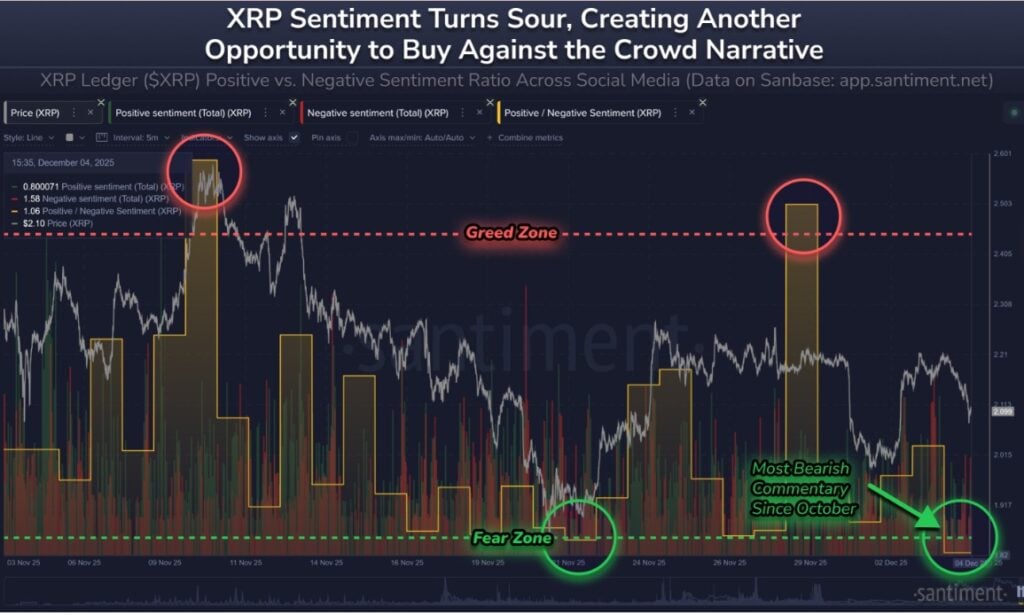
For years, XRP has been at the center of intense debate in the crypto world. Once viewed as a top solution for global payments, it has become controversial due to regulatory pressure, volatile price swings, and shifting investor confidence. $XRP previously surged to $3.65 during major bull runs but retraced sharply afterward. Now the token […]

Author: The Cryptonomist
What Does a 10% Referral Reward Mean in $LILSHIB? A Complete Breakdown for New Crypto Users

What Does a 10% Referral Reward Mean in $LILSHIB? A Complete Breakdown for New Crypto Users

LILSHIB has entered the market spotlight as the project officially opened its presale at an initial price of $0.0002. For the new project, which hopes to combine practical utility with meme-coin culture, this is a significant step. Early buyers also have access to a 10% payback reward for every confirmed

Author: Thenewscrypto