RWA

RWA (Real World Assets) refers to the tokenization of tangible assets—such as real estate, private credit, and government bonds—on the blockchain. By bringing traditional financial instruments on-chain, RWA protocols like Ondo and Centrifuge provide DeFi users with stable, real-yield opportunities. In 2026, the RWA sector is a multi-trillion-dollar bridge between TradFi and DeFi, enabling fractional ownership and global liquidity for previously illiquid assets. Follow this tag for insights into on-chain credit markets, regulatory compliance, and asset-backed security innovations.

42990 Articles
Created: 2026/02/02 18:52
Updated: 2026/02/02 18:52
How BlackRock and Goldman Sachs are bringing Wall Street’s hottest asset class to 401(k)s

How BlackRock and Goldman Sachs are bringing Wall Street’s hottest asset class to 401(k)s

The post How BlackRock and Goldman Sachs are bringing Wall Street’s hottest asset class to 401(k)s appeared on BitcoinEthereumNews.com. Wall Street’s largest firms are championing a new cause. They are bringing alternative assets — once reserved for the ultra-wealthy — to the portfolios of individual investors. Chief among the proponents are BlackRock and Goldman Sachs. But, as is usually the case in investing, the potential of greater returns comes at a risk. “The alternative market is becoming less alternative,” said Jon Diorio, head of alternatives for wealth at asset management giant BlackRock. Alternatives are assets outside of stocks, bonds, and cash — including private equity, private credit, real estate, infrastructure, cryptocurrencies, and more. “It’s growing very rapidly as public markets are shrinking,” Diorio told CNBC in a recent interview. Interest has been fueled by shrinking public market opportunities and a softening regulatory environment. President Donald Trump signed an executive order earlier this month that paved the way for alternative assets in 401(k) retirement accounts — an idea vehemently opposed by the Biden administration. Diorio, who also leads product strategy for BlackRock’s U.S. wealth advisory business, said that giving more investors exposure to alternatives — which have traditionally been part of the portfolios of ultra high net-worth individuals, hedge funds, and pension funds — can improve returns over the long run. “In some cases, you can get enhanced diversification [and] amplify return streams,” he added. Giving individual investors the same access to different asset classes as the pros has been championed as further democratizing Wall Street. However, it also comes with its own risks. These assets are not publicly traded, which means they are more difficult to value and less liquid. BlackRock’s Diorio and peers at other major financial firms are acutely aware of this and strive to make sure investors are, too, as they challenge the decades-old focus on the traditional retail portfolio split of 60% stocks and 40%…

Author: BitcoinEthereumNews
Finding The Next Shiba Inu? Top 3 Low-Cap Memecoins That Could Turn Into The Next 11,000x Phenomenon

Finding The Next Shiba Inu? Top 3 Low-Cap Memecoins That Could Turn Into The Next 11,000x Phenomenon

The post Finding The Next Shiba Inu? Top 3 Low-Cap Memecoins That Could Turn Into The Next 11,000x Phenomenon appeared first on Coinpedia Fintech News Every investor dreams of having bought Shiba Inu (SHIB) when it was still a low-cap gem. The token’s 11,000x rally transformed small bets into lifetime fortunes, but for many, that opportunity is now in the past. Yet, the allure of finding the next Shiba Inu remains strong. The good news? Several promising meme projects are …

Author: CoinPedia
the9bit Shines at Coinfest Asia 2025, Hits 1 Million Users, and Launches Giveaway

the9bit Shines at Coinfest Asia 2025, Hits 1 Million Users, and Launches Giveaway

The post the9bit Shines at Coinfest Asia 2025, Hits 1 Million Users, and Launches Giveaway appeared on BitcoinEthereumNews.com. the9bit, the innovative gaming platform that turns game purchase into rewarding experiences, delivered a standout performance at Coinfest Asia 2025, a leading Web3 festival. Drawing an impressive 10,000 attendees to its booths and events, the9bit generated buzz among gamers and industry participants, who expressed strong interest in its features, vision, and future direction. the9bit enables users to earn rewards through activities like buying games, credit top-ups, built in social games, and content creation. It features official IP from Capcom, including popular titles such as Monster Hunter and Resident Evil, and collaborates with partners like Yield Guild Games (YGG). Focused on Southeast Asian mobile gamers and creators, the platform emphasizes accessibility and real value. Quote from Martin Hoon, Head of Web3, The9 Limited “The atmosphere at Coinfest was invigorating. Attendees were truly engaged and eager to get involved once they learned more about how we’re making gaming more rewarding. We’re thankful for the enthusiastic support that’s driven us to this exciting point.” In a remarkable achievement, the9bit announced it has surpassed 1 million users in less than one month since its launch. To celebrate this milestone and express gratitude to its vibrant community, the9bit is launching a giveaway with a total prize pool of $600,000. The campaign’s highlight is a lucky draw awarding $100,000, $50,000, and $30,000 to three winners. Running since August 1, the ongoing August Fiesta has already distributed $400,000 of its planned $1 million giveaway, and continues to build momentum. Users can participate by completing straightforward tasks on the platform, such as daily check-ins or joining community Spaces. the9bit extends sincere thanks to its users for their continued support, which has been key to this rapid success. Looking ahead, the platform plans to expand with additional mobile reload options, creative tools, and esports integrations. For more details, visit…

Author: BitcoinEthereumNews
MetaMask Launches Google and Apple Social Login for Crypto Wallets

MetaMask Launches Google and Apple Social Login for Crypto Wallets

TLDR MetaMask adds social login with Google & Apple, easing wallet creation. Simplify crypto: MetaMask now supports Google & Apple logins for wallets. No more seed phrases—MetaMask enables wallet login via Google & Apple. MetaMask brings social login, making crypto wallets simpler than ever. Secure wallets meet easy access: MetaMask now supports social sign-ins. MetaMask [...] The post MetaMask Launches Google and Apple Social Login for Crypto Wallets appeared first on CoinCentral.

Author: Coincentral
How to Mine Crypto Without Buying a $5,000 Rig: BlockDAG X1 Miner App Pays Daily

How to Mine Crypto Without Buying a $5,000 Rig: BlockDAG X1 Miner App Pays Daily

Discover how to mine crypto without buying a $5,000 rig using BlockDAG’s X1 app and X10 hardware. Earn daily rewards with zero technical setup and join over 2.5M users already mining BDAG during its $383M presale.

Author: Blockchainreporter
Trump Media Group Launches $6.42B CRO Treasury Strategy

Trump Media Group Launches $6.42B CRO Treasury Strategy

Trump Media, Crypto.com, and Yorkville Acquisition Corp. have unveiled a $6.42 billion digital asset treasury company. This move establishes the first publicly traded CRO-focused entity. Today, Trump Media & Technology Group, Crypto.com, and Yorkville Acquisition Corp. revealed plans to launch Trump Media Group CRO Strategy, Inc. The new company will serve as a dedicated treasury vehicle for Cronos (CRO), the native token of Crypto.com’s blockchain. This partnership marks the first time CRO will be the centerpiece of a publicly traded entity. The new entity will be majority-owned by Yorkville, Trump Media, and Crypto.com. As a result, these stakeholders will have direct influence over its direction and growth. Yorkville, a special purpose acquisition company (SPAC), will bring the business public. To achieve this, it plans to list its Class A ordinary shares on Nasdaq under the symbol MCGA, short for Make CRO Great Again. The symbol change is expected to take place before the merger is finalized. After the business combination closes, the new ticker will then transfer to Trump Media Group CRO Strategy. Yorkville has said it will provide a separate announcement once the exact timing of the symbol change is confirmed. Treasury Breakdown: Cash, CRO, and Credit The company’s funding package totals an impressive $6.42 billion, making it one of the largest dedicated crypto treasuries ever announced. The structure of the deal comprises several components, including $1 billion in CRO tokens, which is equivalent to approximately 6.3 billion CRO. This amount represents roughly 19% of CRO’s market capitalization. It also contains $200 million in cash reserves and $220 million in warrants. In addition, Yorkville affiliate YA II PN, Ltd. will provide the company with access to a $5 billion equity line of credit. Separately, Trump Media & Technology acquired $105 million of CRO tokens, while Crypto.com purchased $50 million of Trump Media stock (DJT). Combined, these transactions push Trump Media Group’s total CRO holdings close to 7 billion tokens. This accumulation establishes Trump Media Group CRO Strategy as the largest CRO-focused treasury company in existence, giving it unprecedented influence over the Cronos ecosystem. Following the announcement, Cronos (CRO) token surged 41% to $0.2037, pushing its market value to $6.87 billion and ranking it as the 23rd largest cryptocurrency worldwide. Truth Social Adopts CRO as Platform Token As part of this broad strategic partnership, Truth Social will adopt CRO as its official platform token. This step signals Trump Media’s deeper commitment to blockchain integration and future monetization through digital assets.  Trump Media CEO Devin Nunes described the project as a “bold step forward,” highlighting the company’s long-term commitment to cryptocurrency in the digital economy. Crypto.com CEO Kris Marszalek described the scale of the venture as “unmatched in the industry,” adding that the CRO acquired will be held forever as a cornerstone asset. Marszalek also compared the size of the deal to Ethereum, noting that for an ETH-focused treasury to achieve similar buying power, it would need to acquire “hundreds of billions” in tokens. https://twitter.com/kris/status/1960321095309144508 Validator Node and Staking Strategy Beyond accumulation, Trump Media Group CRO Strategy aims to foster active engagement with the Cronos blockchain. The company will operate a validator node, contributing to the network’s security and governance. By running its own validator, the company can directly validate transactions, secure the chain, and strengthen community trust. At the same time, it will reinvest staking rewards back into the treasury, compounding holdings over time. This approach not only cements the group’s role as a CRO whale but also integrates it as an active contributor to the blockchain’s growth and sustainability. Lock-Up Period Shows Long-Term Focus To ensure stability and demonstrate commitment, the founding stakeholders, Trump Media, Crypto.com, and Yorkville, have agreed to a strict lock-up period. Their founding shares and warrants will remain locked for one year, followed by a gradual release over the next three years. Such restrictions are often used in high-profile deals to prevent early sell-offs and to align incentives for long-term value creation. This structure suggests that the backers view the CRO treasury as a multi-year project, rather than a short-term bet. Advisors and Legal Guidance A strong advisory and legal team supports the business combination. Clear Street is acting as the exclusive capital markets advisor, while DLA Piper LLP and Skadden, Arps, Slate, Meagher & Flom LLP are handling legal matters.

Author: The Crypto Basic
Quantum Computing: IBM and AMD Forge Powerful Alliance After Generative AI Setback

Quantum Computing: IBM and AMD Forge Powerful Alliance After Generative AI Setback

BitcoinWorld Quantum Computing: IBM and AMD Forge Powerful Alliance After Generative AI Setback In the rapidly evolving digital landscape, where blockchain innovations and decentralized finance often capture headlines, the underlying computing power driving these advancements is undergoing a revolutionary shift. For cryptocurrency enthusiasts and tech investors alike, understanding the foundational technologies shaping tomorrow’s digital infrastructure is paramount. While the buzz around generative AI has dominated recent tech discourse, two industry titans, IBM and AMD, are quietly — yet powerfully — pivoting their strategies towards quantum computing, aiming to carve out a definitive edge in the next era of computational prowess. This strategic alliance promises to unlock unprecedented capabilities, potentially impacting everything from cryptographic security to complex market simulations, offering a glimpse into the future of high-performance computation. What Exactly is Quantum Computing, and Why is it Considered the Next Frontier? The recent announcement of a partnership between IBM and AMD signals a significant strategic shift, as both companies look to regain ground after falling behind in the rapidly accelerating generative AI boom. Instead of solely focusing on the current AI wave, they are setting their sights on the next computational frontier: quantum computing. But what exactly is this enigmatic technology, and why does it hold such immense promise? Unlike classical computers that store information as bits—either a 0 or a 1—quantum computers leverage the principles of quantum mechanics, using ‘qubits.’ These qubits can exist in multiple states simultaneously (superposition) and can be entangled, allowing for exponentially greater processing power. This fundamental difference enables quantum machines to tackle problems that are intractable for even the most powerful supercomputers today. The potential applications are vast, spanning fields from materials science and drug discovery to financial modeling and advanced artificial intelligence itself. This pivot underscores a belief that quantum will be a critical differentiator in the coming decades. How are IBM Quantum Systems Paving the Way for the Future? IBM has long been at the forefront of quantum research, developing robust IBM Quantum systems that are steadily advancing towards commercial viability. Their commitment to an open-sourced approach is a critical component of this partnership. By making quantum resources more widely accessible, IBM aims to foster a broader ecosystem of developers and researchers. This strategy is designed to accelerate innovation, allowing a diverse community to experiment with quantum algorithms and identify novel applications. IBM’s vision extends beyond simply building powerful machines; it is about creating a platform where groundbreaking solutions can emerge from collective intelligence. Their quantum roadmap, which includes increasing qubit counts and improving error rates, is a testament to their long-term dedication to making quantum computing a practical reality. This collaborative and open philosophy is essential for the nascent quantum industry to truly flourish and move beyond theoretical concepts into tangible, real-world impact. What Role Do AMD AI Chips Play in This Quantum Leap? Complementing IBM’s quantum expertise are AMD’s cutting-edge AMD AI chips. While quantum computers excel at specific types of complex calculations, they are not designed to replace classical computers entirely. Instead, the future lies in a ‘hybrid’ model, where quantum processors work in tandem with classical high-performance computing (HPC) systems. AMD’s specialized AI chips, known for their prowess in parallel processing and handling massive datasets, will serve as the crucial bridge in this integrated architecture. They will manage the classical components of quantum workloads, orchestrate data flow between classical and quantum processors, and execute the classical algorithms that prepare inputs for quantum circuits or interpret quantum outputs. This integration is vital for creating a practical, scalable, and commercially viable hybrid computing architecture. AMD’s contribution ensures that the quantum systems have the necessary classical muscle to support complex operations, making the entire setup more robust and efficient for real-world problem-solving. How Does the Generative AI Landscape Inform This Quantum Pivot? The recent explosion of generative AI, exemplified by large language models and advanced image synthesis, undeniably reshaped the tech landscape, creating new market leaders and investment opportunities. While IBM and AMD possess strong AI capabilities, they perhaps did not capture the immediate market dominance seen by some competitors in this specific segment. However, this perceived ‘falling behind’ has catalyzed a strategic re-evaluation, propelling them towards quantum computing as a differentiated advantage. This move is not a retreat from AI, but rather an aggressive push into the foundational technologies that will power the next generation of AI and beyond. It’s a testament to their long-term vision: recognizing that while generative AI is powerful today, quantum computing holds the key to unlocking even more profound computational capabilities that could redefine AI itself. This pivot signifies a strategic foresight, positioning them to lead in a domain with even greater transformative potential. Why is Hybrid Computing the Ultimate Goal for This Partnership? The ultimate goal of this collaboration is to establish a commercially viable, scalable, and open-sourced hybrid computing architecture. As IBM CEO Arvind Krishna articulated, this hybrid model ‘pushes past the limits of traditional computing.’ It envisions a seamless integration where classical high-performance computing resources, powered by AMD’s chips, can offload specific, computationally intensive problems to quantum processors. This synergy is critical because current quantum computers are still noisy and prone to errors, making classical processors indispensable for error correction, control, and pre/post-processing tasks. Imagine a drug discovery pipeline where AI algorithms on AMD chips analyze vast molecular databases, then feed promising candidates to an IBM Quantum system for precise simulations of molecular interactions, far beyond classical capabilities. This synergistic approach promises to accelerate scientific discovery and technological innovation across countless sectors, making previously impossible computations a reality. Benefits and Challenges: What’s on the Horizon for This Alliance? The convergence of quantum and classical computing, driven by this IBM-AMD alliance, promises significant advantages: Accelerated Discovery: Revolutionize fields like materials science, drug development, and chemistry by simulating complex molecular structures and reactions with unprecedented accuracy and speed. Optimized Systems: Tackle intractable optimization problems in logistics, supply chain management, financial modeling, and even traffic management, leading to significant efficiency gains and cost reductions. Enhanced AI: Power new forms of AI, including quantum machine learning, which could process data and identify patterns in ways currently unimaginable, leading to more robust and intelligent systems. Open Innovation: The commitment to open-source access will democratize quantum computing, fostering a global community of innovators, researchers, and developers, accelerating the pace of discovery. Strategic Advantage: Positions IBM and AMD as leaders in a burgeoning, high-growth sector, differentiating them from competitors primarily focused on classical AI solutions. Despite the immense promise, the path to widespread quantum adoption is not without hurdles. Quantum systems are incredibly delicate, prone to errors (decoherence), and require specialized environments to maintain their quantum states. Developing robust error correction mechanisms, scaling qubit counts while maintaining coherence, and creating user-friendly programming interfaces are ongoing challenges that require significant research and engineering efforts. Furthermore, identifying ‘quantum advantage’ – problems where quantum computers definitively outperform classical ones – is still an active area of research. This partnership will need to navigate these technical complexities while simultaneously building a robust software and developer ecosystem to unlock the full potential of hybrid computing. Real-World Applications: Where Could We See the Impact of Quantum-AI? The practical implications of a successful hybrid computing architecture are profound and far-reaching. In medicine, it could drastically cut down the time and cost of developing new drugs and therapies. By accurately simulating molecular interactions at a quantum level, researchers could design highly effective compounds with fewer experimental iterations, accelerating the path from lab to patient. For materials science, it promises the creation of novel materials with bespoke properties, from super-efficient batteries and advanced superconductors to catalysts that could revolutionize industrial processes. In finance, quantum algorithms could optimize complex investment portfolios, detect fraud with greater accuracy by analyzing vast datasets, and model intricate market dynamics with unprecedented precision. Even in areas like climate modeling and agricultural optimization, quantum capabilities could lead to more precise predictions and innovative solutions for environmental challenges and food security. The ability to simulate the natural world and represent information in entirely new ways opens up possibilities that were once confined to science fiction. Future Outlook: What Does This Mean for the Race for Quantum Supremacy? The collaboration between IBM and AMD signals a significant escalation in the race for quantum supremacy. While other tech giants and startups are also investing heavily in this space, this partnership brings together a unique blend of quantum hardware leadership from IBM and classical high-performance computing expertise from AMD. Their joint effort to deliver a scalable, open-sourced, and commercially viable quantum computing architecture could set a new industry standard. It underscores a strategic pivot that recognizes the long-term transformative power of quantum technology, beyond the immediate allure of generative AI. This is not merely about catching up; it’s about leading the charge into the next computational era, preparing for a future where quantum capabilities become an indispensable part of our technological infrastructure. The success of this alliance could accelerate the timeline for practical quantum applications, reshaping industries and creating new economic opportunities globally. A Bold Leap Forward into the Quantum Future The strategic alliance between IBM and AMD represents a bold and necessary leap forward in the tech industry. By pooling their strengths – IBM’s pioneering IBM Quantum systems and AMD’s powerful AMD AI chips – they are laying the groundwork for a future where the limits of computation are dramatically expanded. This pivot towards hybrid computing, driven by a commitment to open innovation, promises to unlock solutions to some of humanity’s most complex challenges, from accelerating scientific discovery to optimizing global logistics. As the world watches the evolution of AI, this quantum-focused partnership reminds us that the next revolution in computing may already be taking shape, quietly transforming the very fabric of our digital world and setting the stage for unprecedented technological advancements. To learn more about the latest quantum computing and generative AI trends, explore our articles on key developments shaping AI, quantum systems, and their institutional adoption. This post Quantum Computing: IBM and AMD Forge Powerful Alliance After Generative AI Setback first appeared on BitcoinWorld and is written by Editorial Team

Author: Coinstats
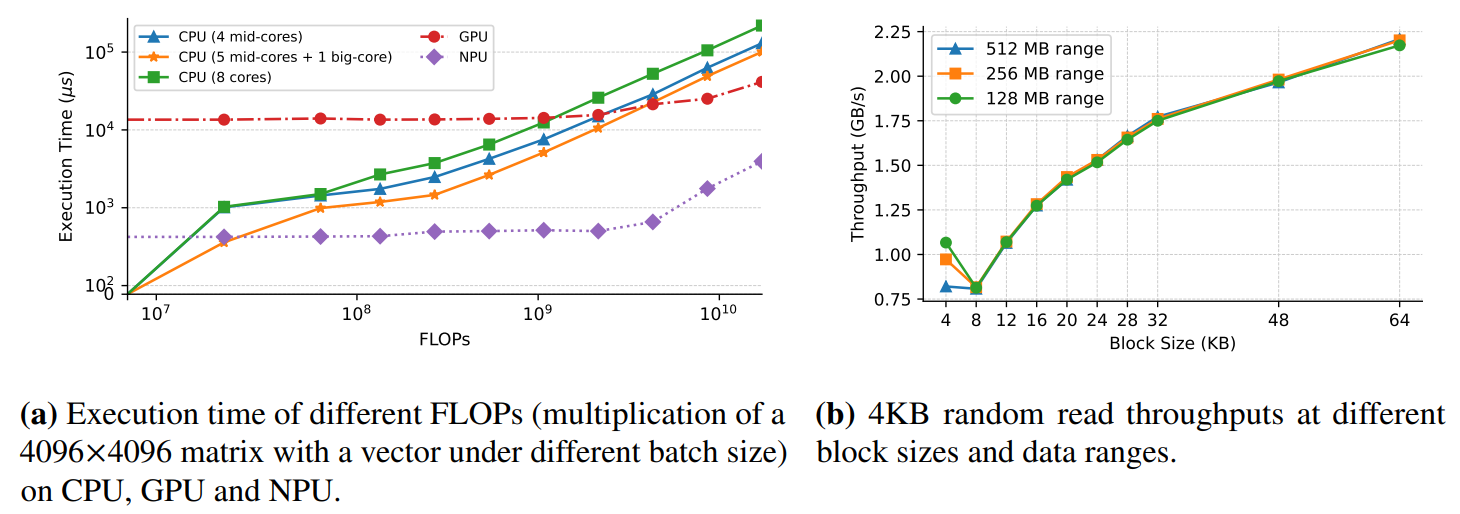
Why Your Phone's AI is Slow: A Story of Sparse Neurons and Finicky Flash Storage

Why Your Phone's AI is Slow: A Story of Sparse Neurons and Finicky Flash Storage

This analysis breaks down on-device LLM inference challenges, from compute stages to the unique performance quirks of smartphone storage.

Author: Hackernoon
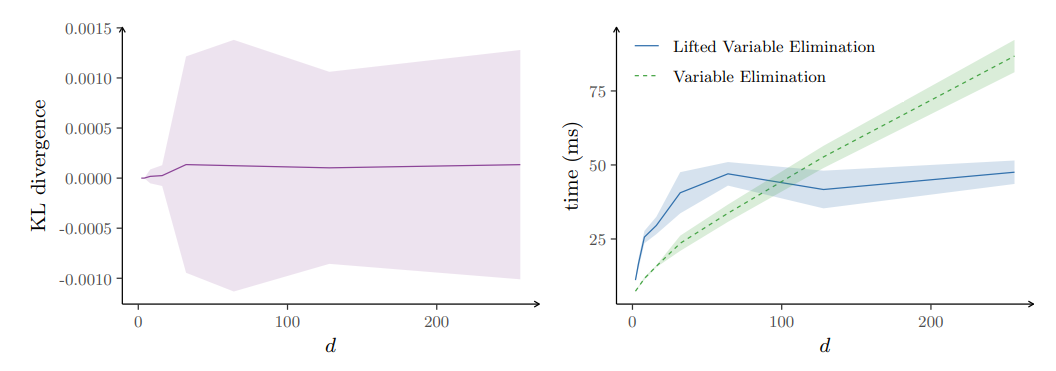
When Graphs Have Gaps: LIFAGU Finds Symmetry and Speeds Up Inference

When Graphs Have Gaps: LIFAGU Finds Symmetry and Speeds Up Inference

Experiments show LIFAGU achieves near‑zero error vs. ground truth and speeds up inference via lifting, generalizing colour passing to unknown factors.

Author: Hackernoon
Minecraft, Engineering, and The Incremental Mindset

Minecraft, Engineering, and The Incremental Mindset

Minecraft is a game that has become a huge hit with children and adults alike. The game has changed the way many of us think about software development. It has also changed how we think about how we build software and the tools we use.

Author: Hackernoon